

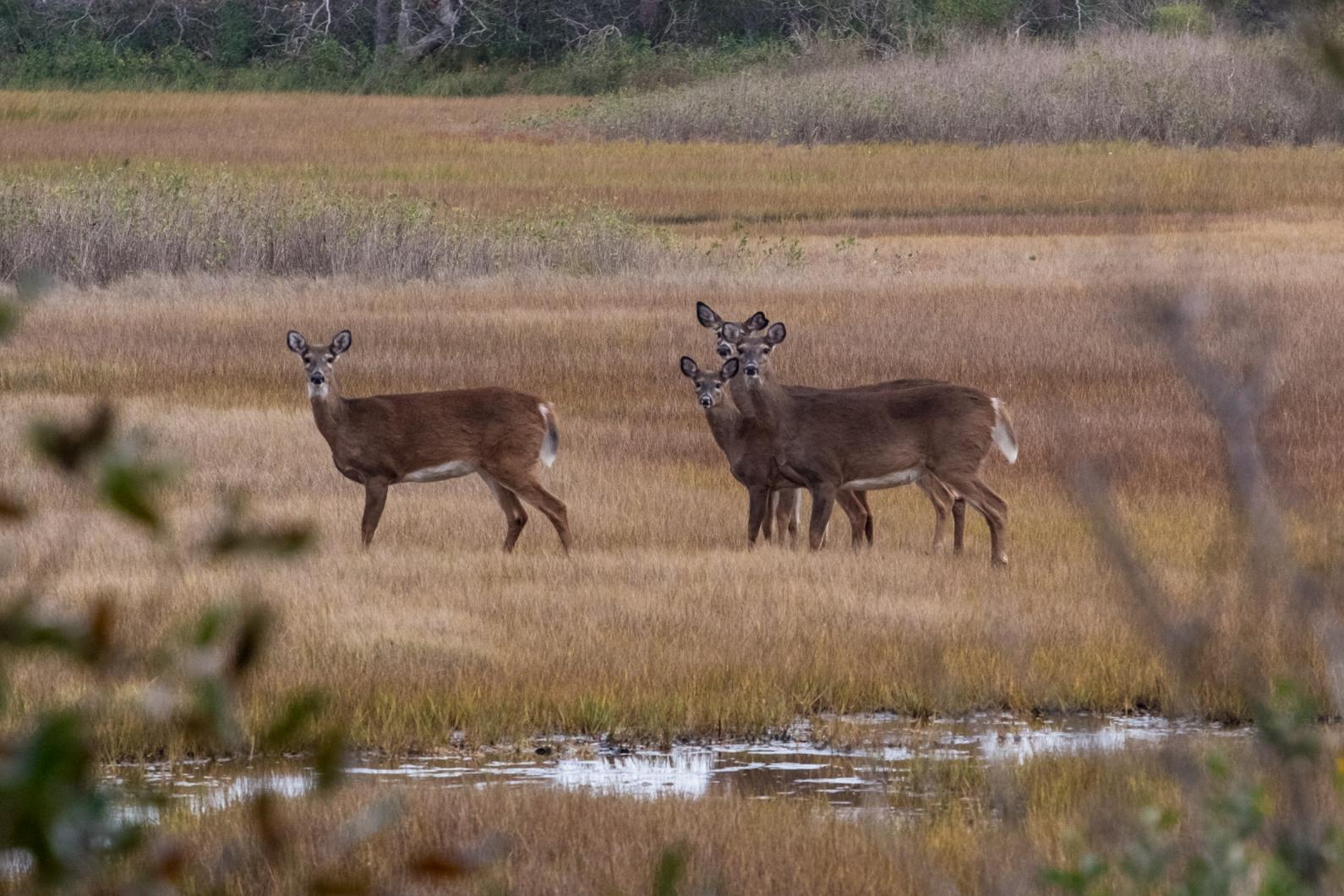
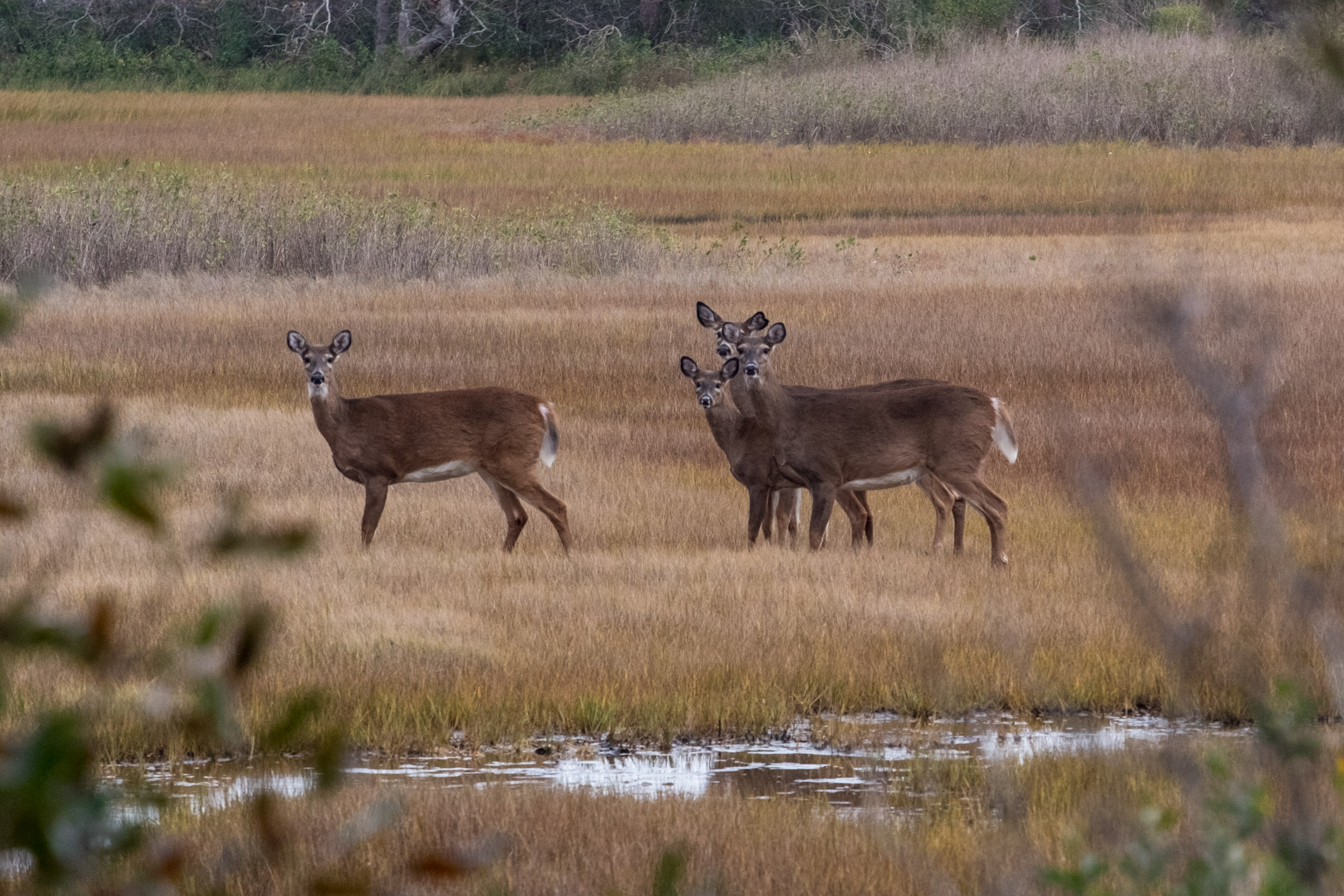
In August, the Vineyard Gazette conducted a survey to determine how citizens viewed the threat of tick-borne diseases.
In August, the Vineyard Gazette conducted a survey to determine how citizens viewed the threat of tick-borne diseases on our Island and what steps should be taken to diminish the threat of this significant medical problem. The results were very positive and the Gazette should be applauded for constructing and conducting this poll.
The results of this survey found that tick–borne diseases were considered to be a serious medical issue for the Island and a threat to our way of life. The poll also indicated that an action plan was required, with help from our local hunters, and that many local hunters were willing to assist in addressing this medical scourge by reducing the size of the deer herd on the Island.
It will take some time for the state and town authorities to piece together practical solutions together with the all-Island boards of health. Meanwhile, with the start of this season’s hunting season, we should do all we can to encourage local hunters to help in this medical problem by increasing, wherever possible, the number of deer taken.
When I listened to a forum on citizens concerns and questions run by a panel of experts from the medical and scientific community under the auspices of the Gazette and the Tick-Borne Illness Prevention Program, I was struck by the passion of all present and the immediacy required to tackle this serious challenge to the Island’s health.
It has been pointed out in several articles published in Island papers that the infestation of deer ticks is responsible for transmission of three of the known major illnesses borne by these insects Lyme disease, babesia, and anaplasmosis. Recently, another public health concern has also been identified: transmission of babesia and anaplasmosis from blood transfusion. All blood in our neighboring state of Rhode Island, and some blood (if requested), in our state of Massachusetts, is being screened for the presence of babesia.
These articles draw attention to the fact that the measurements of the actual number of cases of Lyme disease, babesia and anaplasmosis cannot be truly ascertained. Moreover, the actual size of the deer herd can’t be accurately assessed, and the extent of the spread of these tick–borne diseases via other smaller animal species be approximated. Lastly, it is difficult to model the actual effects of reducing the size of the deer herd on Martha’s Vineyard and how much the reduction will have on lowering of the number of ticks carrying these potentially lethal diseases on this Island.
As has been pointed out by the articles written by Dick Johnson, a leading expert in the life cycles of deer ticks and the diseases borne by the varieties of ticks, we will not have the luxury of time to assemble and study the answers to these issues. However, studies supporting the deer herd reduction have been recently published by Dr. Kirby Stafford, chief scientist and state entomologist in Connecticut. Those studies show that significant reductions in the deer herd strongly correlate with a reduction in number of deer ticks and the number of recorded cases of tick-borne diseases. Thus, reducing the deer herd, the larger animals that are essential in the life cycle of the deer tick and other ticks — offers the greatest chance for reducing the incidence of these diseases.
There are estimates of approximately 4,000 deer on Martha’s Vineyard, representing a population of upwards of 40 deer per square mile of wooded habitat. All the scientific publications emphasize that to be an effective remedy, the deer population needs to be drastically reduced to between eight to 10 deer per square mile, since the results upon number of deer ticks is not linear with the number of deer removed. As alarming and unwelcome this target may sound, these are the facts based on the best science available.
From my perspective the community should support a plan that has the greatest possibility of success. Waiting and thinking that there may be alternative solutions awaiting us is just not an option. We have to act now and offer support for the board of health and do the best for their community.
Dr. David J. Morris, is emeritus professor of pathology and laboratory medicine at Alpert Brown University School of Medicine. He is a longtime homeowner in Vineyard Haven.
Comments
Human health is more
David H EdgartownHuman health is more important than the deer population.
I agree. Just wish there was
Margaret Vero BeachI agree. Just wish there was a way to get rid of the disease. What about killing the ticks? Sad to see those beautiful creatures killed.
Without controlling the
Joseph A. Capece West TisburyWithout controlling the population through hunting, however, they will suffer through disease, starvation, and motor vehicle collisions. I've witnessed one case this season and heard of three others of perfectly healthy deer on MV losing mobility in their legs. A bit of research points to meningeal worm which is common in white-tailed deer in high density areas. Without hunting to reduce the population numbers, parasites such as these will continue to infect the animals leaving them paralyzed in the middle of the woods unable to drink or eat and eventually starve to death.
Research has shown that deer
Sande EdgartownResearch has shown that deer are only one of last vectors. Targeting the mice should be where our efforts go.
BTW I do think thinning the herds is an excellent idea!
With respect to Dr. Morris
David Damroth ChilmarkWith respect to Dr. Morris what I know after studying the environment for many years is how much we don't know about how ecosystems really work. Ticks have been around for a long long time and I bet they will find another animal on which to feed to complete their life cycle. How many times have I seen mice, rabbits, skunks, and all manner of animals with attached ticks. What if we eliminate the deer which species will be next on the kill list. At what point of species depletion will the ecosystem collapse? One reader suggests that human health is to be considered above all. I would suggest that it is humans who must adapt to the spectrum of natural hazards.
If you are interested, here
David Small West TisburyIf you are interested, here is the abstract from the study. Apparently, the ticks did not find another host, but experienced a 76% reduction. I'll take those odds. Also, venison.
The Relationship Between Deer Density, Tick Abundance, and Human Cases of Lyme Disease in a Residential Community
Howard J. Kilpatrick, Andrew M. Labonte, and Kirby C. Stafford, III
White-tailed deer (Odocoileus virginianus Zimmerman), serve as the primary host for the adult blacklegged tick (Ixodes scapularis Say), the vector for Lyme disease, human babesiosis, and human granulocytic anaplasmosis. Our objective was to evaluate the degree of association between deer density, tick abundance, and human cases of Lyme disease in one Connecticut community over a 13-yr period. We surveyed 90–98% of all permanent residents in the community six times from 1995 to 2008 to document resident's exposure to tick-related disease and frequency and abundance of deer observations. After hunts were initiated, number and frequency of deer observations in the community were greatly reduced as were resident-reported cases of Lyme disease. Number of resident-reported cases of Lyme disease per 100 households was strongly correlated to deer density in the community. Reducing deer density to 5.1 deer per square kilometer resulted in a 76% reduction in tick abundance, 70% reduction in the entomological risk index, and 80% reduction in resident-reported cases of Lyme disease in the community from before to after a hunt was initiated.
David, thank you for
Lorraine EdgartownDavid, thank you for interjecting science and facts and figures into the discussion. We are constantly being taken to task by the emotionally distraught when it comes to deer ticks, vaccinating and inoculating one's children, and other forms of emotionally powered non-fact discussions. A few people stir up emotions and listen to movie stars and woefully uneducated people in disciplines such as the tick problem. Keep up the work of educating the populace so the rest of us do not suffer, needlessly.
This is a poor excuse to kill
Steve Boyleston Summerdale AlabamaThis is a poor excuse to kill Deer., you could kill every one on the island and Ticks will be there in the same numbers. 10,000 years they have been there., we now depend on killing everything that moves out of fear. When I lived on Deep Bottom Pond the Deer came everyday And I fed them., never had one Tick. To me it's shameful that any group would kill these beautiful animals off golf a bogus excuse to rid ticks., they are not Deer Ticks., just a name. One day you can look off of Gayhead and see a Baby Whale., then say oh now we have to kill all of the babies., it is just a name. The Ticks have no clue that's what they are. I hope the " Smart People" stop this right now.
Why not cull the herd and see
Steve FalmouthWhy not cull the herd and see what happens? If lyme disease and ticks get better as expected, great; keep the population low
If not, the deer population will rebound rapidly anyway... deer could even be imported from the mainland if you wanted.
Add new comment