

<p>One Big Home, director Thomas Bena’s first feature-length film, which took more than a decade to shoot and edit, makes its Island debut Wednesday as part of the Martha’s Vineyard Film Festival summer series.</p>
One Big Home, director Thomas Bena’s first feature-length film, which took more than a decade to shoot and edit, makes its Island debut Wednesday as part of the Martha’s Vineyard Film Festival summer series.
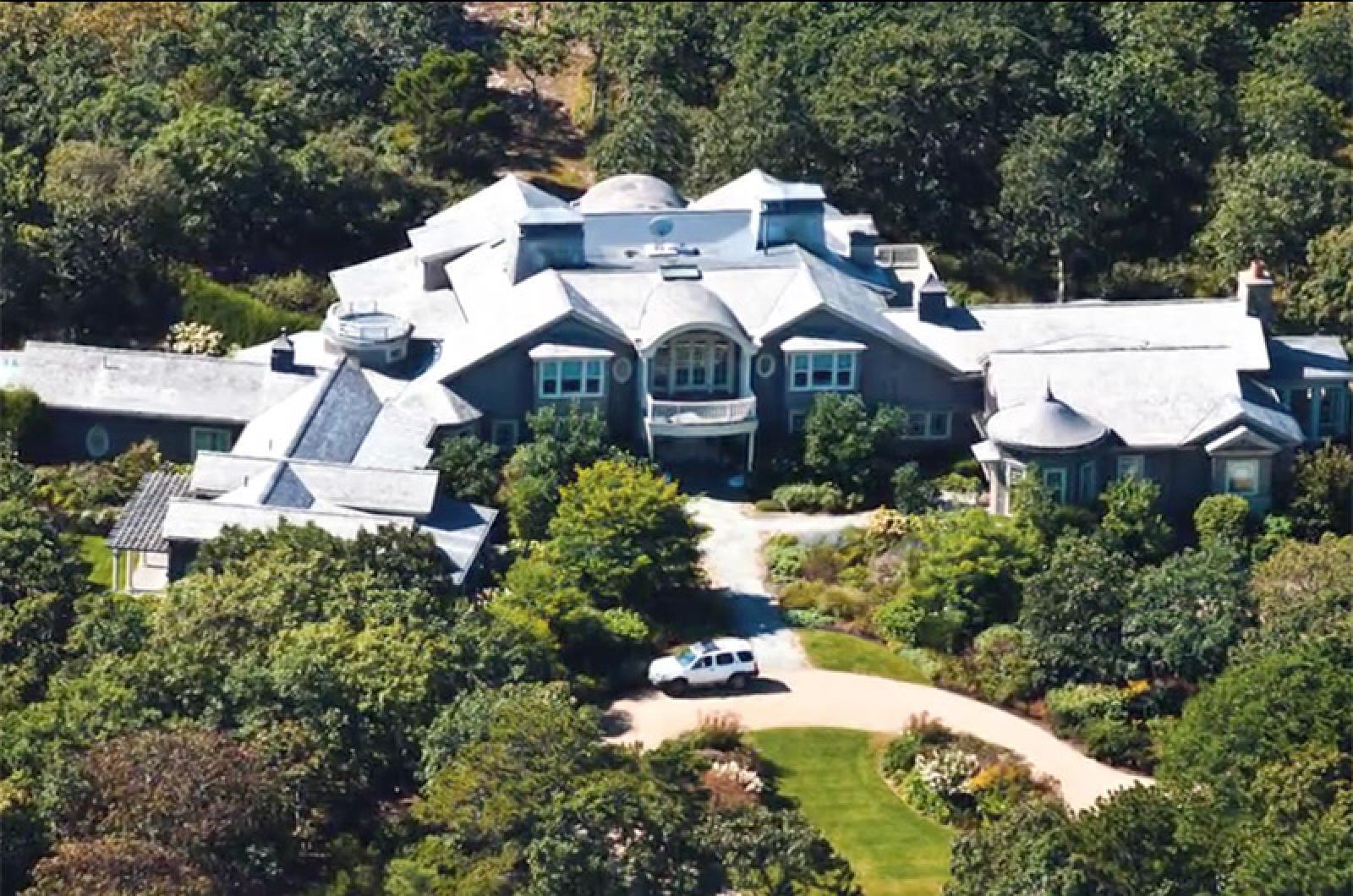
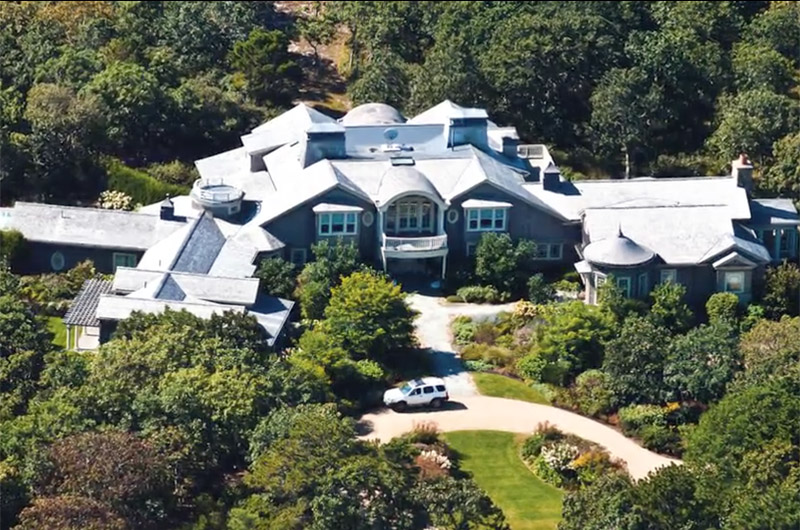
The film chronicles Mr. Bena’s crusade against the proliferation of outsized homes in Chilmark, where he lives with his wife, Mollie Doyle, and daughter Emma. Eventually his efforts in the film expand to the community at large, which voted in 2013 to effectively limit the size of houses in Chilmark to 3,500 square feet. But getting there was no easy feat.

Thomas Bena spent more than 10 years making his film.
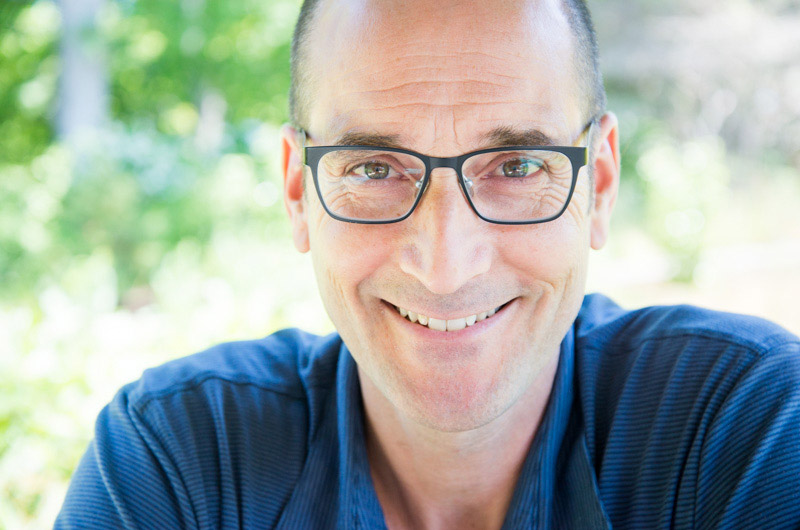
Thomas Bena spent more than 10 years making his film.
“I had no idea how hard it would be emotionally, especially in a small community,” Mr. Bena said in a recent interview. “Going to Cronig’s and seeing people, I could tell they were hating on me — or the idea of limiting house size.”
He also said he underestimated the challenges of producing and directing a film when he began shooting around 2003. He soon learned that directing, in particular, was not the walk in the park he thought it would be.
“The amount of psychic energy, and the kind of space it holds in one’s life — if you attack projects the way I do, which is with all of myself — that was also a surprise,” he said.
In perhaps an ironic twist, Mr. Bena and the festival he founded 16 years ago have both drawn heat in recent weeks over plans by the festival to buy 12.5 acres and a farmhouse in the heart of West Tisbury. The controversy took yet another turn this week when festival leaders said they would drop their plans to build a campus on the former Walsh property.
An idealist to the core, Mr. Bena said the mission remains unchanged. “I founded this thing to spark discussion, debate and action,” he said of the festival. “That’s what the film did, that’s what the festival does, that’s what this land is already doing.”
In the film, the community and Mr. Bena come a long way, with conversations becoming more focused and nuanced by the end. Mr. Bena’s own outrage at the size of new homes popping up around him evolves into a kind of enlightened resignation as he marries, has a daughter and builds his own 3,000-square-foot home in Chilmark.
After about 10 years of shooting and editing, he was even ready to call it quits. The crusade was over.
But that was just the beginning.

Chris Murphy became a mentor on the journey.
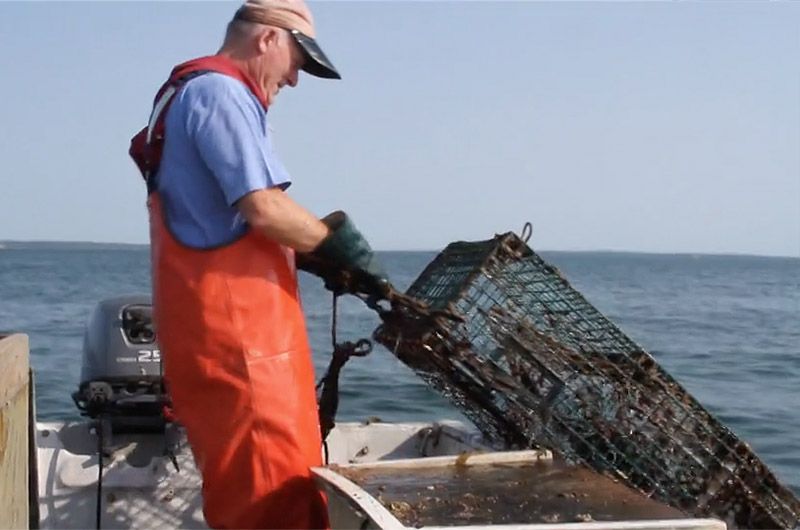
Chris Murphy became a mentor on the journey.
While out clamming with his wife and daughter one day, he looked up and saw the beams and rafters of a new 8,200-square-foot house looming over the shore at Quitsa Pond. The scene became a new call to action.
Over the next year and a half, he filmed nearly every meeting of the Chilmark planning board as it grappled with the Zoia house construction and later the creation of the big house bylaw, which passed by a landslide 162-51 vote at the 2013 annual town meeting at the Chilmark Community Center.
It was a storybook ending to the film, with Mr. Bena victoriously climbing into his wet suit to go surfing and reflecting on the recent town meeting vote.
“It’s one of the proudest days of my life to be a part of that movement,” he says in the film before the end credits roll with a stunning four-minute shot of Quitsa Pond taken from an ascending drone.
Mr. Bena said he remains devoted to the Island community and to the democratic process. And he owes much of that faith to the film, which he said exposed him to many people who changed the way he thought about the issues and his own role in the community.
The change is evident in the hour-and-a-half film, when comparing a younger Mr. Bena — with ponytail, sideburns and a chip on his shoulder — to the older husband and father who cares far more about his family than about the size of people’s houses.
“It’s part of a bigger conversation, this film,” said Chris Murphy, a former Chilmark planning board member, who joined Mr. Bena in his office during the interview. “How do you live in a confined space without fouling your own nest? That’s been the issue right along.”
Mr. Murphy figures prominently in the film, as both a town leader and a mentor, as Mr. Bena learns the ropes of small-town politics and community activism.

Wide range of interviews, including one with Chilmark resident Doug Liman, paint complex picture of Island.
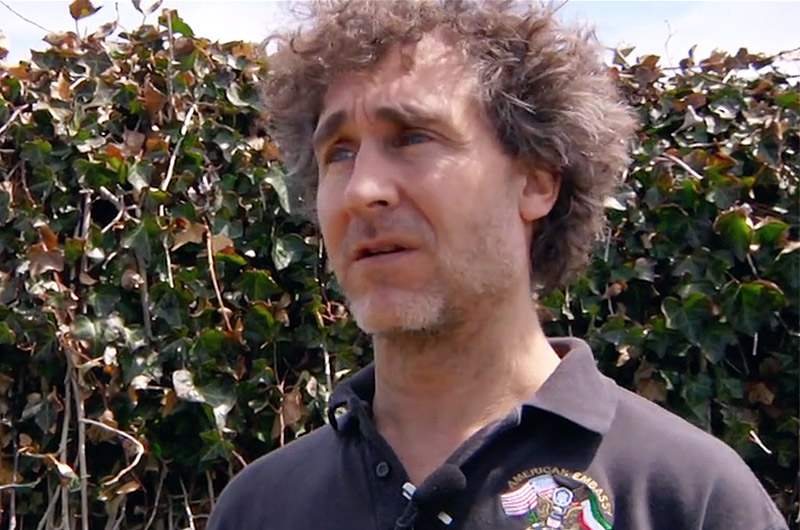
Wide range of interviews, including one with Chilmark resident Doug Liman, paint complex picture of Island.
“I look at every kid that comes along and lives in town as an investment in our future,” Mr. Murphy said. “So here’s Thomas, full of beans, full of ideas, ready to go tear up the world, and if every once in awhile I could just stick my oar in and guide him a little bit — not to tell him what to do, but just to keep him from falling off a cliff. Because then they don’t come back.”
Mr. Bena recalled a moment in the film when Mr. Murphy suddenly dashes his hopes of finding any sort of quick solution to the big house problem, instead pointing to the need for consensus before moving forward with a town meeting vote.
“That was perhaps one of my biggest lessons — to really slow down and listen to people and work together,” Mr. Bena said. He said familiar arguments along the way became an opportunity for deeper discussion.
“So to dig in and to have hard conversations, and to be humble and to listen — those are the things I learned,” he said. “And to stick to my guns.”
Assembling the more than 300 hours of footage that Mr. Bena shot over 12 years was also a community effort. Editors Liz Witham, Jim Cricchi and James Holland, all filmmakers in their own right, shaped the film at various stages in the process, and a mostly local crew helped create a homespun Island feel.
Wide-ranging interviews shot on location and in people’s homes paint a complex and often contradictory picture of the Island. Archival material from the past 50 years sets a backdrop of countercultural values clashing with some of the most valuable real estate in the country.
Mr. Bena and Mr. Murphy were joined by Peter Breese, an Island architect who provides some key balance in the film as an opponent to the big house bylaw. Mr. Breese still opposes the bylaw, but said the film has changed the way he thinks about rural development.
“What the film is doing is making this sort of sweeping macro judgment over development in rural towns across the whole country,” he said. “And that part of it is absolutely, unarguably true. The film just clocks you over the head in that sense, and I had a massive wakeup call just watching it. But I’m still against the bylaw.”
Mr. Bena envisioned a scenario where Mr. Breese could help educate his clients about Island character, as an alternative to the bigger-is-better approach. But regardless of where that conversation goes, Mr. Bena sees its very existence as an accomplishment.
“It was one of the most quietly profound moments of my life,” he said of showing Mr. Breese the film and knowing that it had left a positive impression.
Looking ahead, he said he hopes the film will continue to spark discussion, debate and action, in line with the film festival’s mission. At the Newport Beach Film Festival in California, where it premiered this spring, he said many in attendance shared similar stories of feeling helpless in the face of development and disappearing open space. “Honestly, it was an epiphany that we can really just get involved and change the laws where we live,” Mr. Bena said of his experience in Chilmark.
The film will also show at the Woods Hole Film Festival in August, and Mr. Bena hopes to bring it to the Hamptons in October, followed by a wider festival release.
One Big Home screens on Wednesday, June 29, and Monday, August 8, at the Chilmark Community Center. Both screenings begin at 8 p.m. and will include discussion with Mr. Bena, editors Liz Witham and James Holland, and people who appear in the film. For more information, visit tmvff.org.
Comments
I also have a wife and child
Brian Smith Oak BluffsI also have a wife and child and live in a 4 bedroom, 3 bath home that's half the size of this guys house and we're perfectly happy. I don't begrudge him his desired home but it seems to me he's part of the problem, not the solution.
You have to love people in $1
Nice Oak BluffsYou have to love people in $1.5 million dollar 3,500 square foot or less homes in Chilmark hating on people that want something larger and are willing to drop $5, $10, $20 million or more. Larger homes equal more revenue for everyone that participates in the building and maintenance or that home. In addition, not to mention the increased tax revenue and Land bank fees. Basically you are limiting investment in the town and island with this type of rule.
It's not just about telling
Washashore EdgartownIt's not just about telling people you can't build a big house it's also about asking them why do you want to use up all those resources for your oversized dwelling? Especially telling are these homes that are occupied for two weeks a year and are tremendous. Just plain disgusting.
To Brian's credit above, it
Arnold Plotkin Oak BluffsTo Brian's credit above, it seems too strange that a guy building a 3000sqft house has concerns about large houses looming when his own home exceeds that of the average American. "America's biggest homes are getting even bigger. The average size of homes built last year hit 2,600 square feet, an all-time high that surpassed even the housing bubble years, when homes averaged around 2,400 square feet, according to the Census Bureau.Jun 4, 2014.
As another Chilmark resident,
JoAnne RiseboroughAs another Chilmark resident, I appreciate all of your efforts. Thank you!
I am against the big houses,
John MI am against the big houses, and glad for the size limit in Chilmark, but I too find it ironic that a person living in a 3000 sq ft home is the one driving the movement. I live with my wife, three kids and a dog in a 1300 sq ft home. Yes, it is small, but nobody is suffering! The things Americans get used to having, and the way they expect to live, never ceases to astound me...
John, welcome to pseudo
Rex Treadwell EdgartownJohn, welcome to pseudo-populism.
Where else but Martha's
Rex Treadwell EdgartownWhere else but Martha's Vineyard is a social justice crusader someone who voluntarily limits themselves to a 3000 square foot house in one of the most expensive zip codes in America? This island truly has come unhinged from reality.
I hope that John M, Arnold
Thomas J Bena ChilmarkI hope that John M, Arnold Plotkin, and Brian Smith (who all commented above) will come and see the film. I assure you all that I ask myself those very same questions. Who am I to criticize anyone? Is my house too big? Why do I "need" so much space?
Oh my, this is a good one.
Inquiring Minds MVOh my, this is a good one. The fellow who owns 8 acres and a 3,000-square-foot house in one of the most expensive towns in the state and most exclusive neighborhoods on the island takes a stand to make sure nobody with more money than him can build a bigger house. So glad to know that you've agonized about the seeming hypocrisy of it all Mr. Bena. I'd love to hear what you have to say about it but I can't afford your $20 ticket price. All of my money goes to paying the mortgage on my family's 1,400-square-foot house.
We all brag about how good
Brian Smith Oak BluffsWe all brag about how good our schools are on this island and how much we spend per student. Eighty percent of the taxes raised for these schools are paid for by summer people, many of whom have "big houses". "Big Houses" also employ thousands of islanders for their building and up keep. It doesn't make sense to me to promote a cause that hurts working class people and hurts our school system.
Thomas has really gone the
Julian Wise ChilmarkThomas has really gone the distance to make this happen- I remember years ago he was working away on it and not giving up even when facing the headwinds every documentary filmmaker comes up against. Kudos for going the distance- can't wait to check it out.
Since taxpayers funded this
Inquiring Minds MVSince taxpayers funded this project through nearly a decade of annual Cultural Council grants I'm wondering why the island public is now asked to pay $20 a head to see it. How much did we all spend on it, anyway?
$20 to see a documentary film
Tom Hastings Oak Bluffs$20 to see a documentary film? Please tell me this is a joke.
What a dichotomy. In LA,
Santo Masina Los Angeles, CA.What a dichotomy. In LA, there are over 40,000 homeless people, and over 4000 people living out of their cars. Be glad you have a house, regardless of the size. At least Mr. Bena's film points out the conspicuous consumption of trophy homes, which I don't think 3000 square feet represents.
I can't wait to see this.
AriI can't wait to see this. Good for Thomas for having the courage to make this film.
This Bena guy is delusional,
mike s. w.t.This Bena guy is delusional, a documentry only to throw stones at someone elses glass house thats bigger then his already large house?
as someone who was born here, most people that hate on large homes never take into account the amount of service jobs they provide
house cleaners, landscapers, etc
who cares if they only spend 2 weeks here?
the land bank tax might appeal to some?
the property tax alone pays a lot of town positions, bigger fire stations, more infrastructure
schools get tax money from these homes
roads get paved
town sewer systems get bigger
town water systems get bigger
roads get snow plowed in the winter whether or not there even here
all this adds to an infrastructure that they barely partake in
I for one could care less what my neighbors have, but I guess mr. Bena is jealous he doesn't have another few hundred sq ft on his starter home?
Maybe it's germane, maybe not
Rob Burnside Kingston, PAMaybe it's germane, maybe not, but the very same thing has happened to pickup trucks. Hard to find one smaller than a school bus these days! You can't see over them, you can't see around them, and you certainly can't see through them. In my 'umble opinion, these latter day land yachts present a serious road hazard, particularly to small car drivers and occupants. And, despite all the chrome and glitz, they're aesthetically atrocious.
I've only been on Martha's
CJ Martha's VineyardI've only been on Martha's Vineyard since 1972 so I'm relatively a newbie. In that time growing up here I've seen a lot of change driven by a huge shift in the mentality people. For the most part people who have come by money more quickly and easily have lost a sense of traditional values which is reflected in every way in which they live their lives. In the 1970s and 80s there were a lot of very wealthy families here who had modestly sized but very nice homes. The 90s in the 2000's saw a lot of new multimillionaire's . As easy(er) money has less value to people who have too much they do more unnecessary things with it. Oversized houses is one of the most evident forms of conspicuous consumption because it's in everybody's face. I think we can agree that often it is putting more strain on precious resources as more exotic forests are cut down to fuel the consumption. But just for a second lets look at what people really need. Comfort good designs, high quality finishes, good landscaping sure I can agree with all these things. But when the size of these seasonal home exceeds a place commonsense dictates is rational I think it's right for us to draw the line. Go take a drive to Leesburg Virginia or some other place where McMansions are the norm. It's wrong and it's disgusting. I certainly can't live in a Martha's Vineyard that looks and feels like that. Our trades people on Martha's Vineyard are very busy and if the house is 3000 or 10,000 feet the only difference is how long is that job going to last and how much service will there be when it's done. There is no shortage of work and as it is, we have to import thousands of people to this little island just to fill the void. When all these new houses and old houses are done or redone we still have a significant economic engine to support all the trades people whom get the joyful task to maintain these creations. Just look over the last five years at the number of the new landscaping painting and service related companies on Martha's Vineyard, from caretakers all the way down. Martha's Vineyard is the American dream in action as anyone who wants to make a living and have a quality-of-life can as long as they are not lazy and willing to work hard. This is the long way of my saying I don't Buy into any whiny arguments that overly large houses are good for us as a community nor add anything to how we the local population support ourselves, except driving up hourly wages to places where most people cannot afford them anymore. I make my living working with people in this market and I support what I would like to turn the "conscious construction movement". Build nicer small houses and with the smaller footprint not only will it cost you less money to build and maintain the house , it's something you can be proud of for having held back from unnecessary extravagance at the expense of common sense and aesthetics. Please fuel your ego in some other way.
I love how people are
Tim L West TisburyI love how people are throwing stones before they've seen the film. Go see the movie! If you can't afford the ticket price call up the folks at the film festival. They're really good about giving comps to people who can't afford it. They've done it for me before.
There should be no charge to
Susan Brown EdgartownThere should be no charge to see this film. The taxpayers paid for the film through taxes. That is where the money for the Cultural Council comes from. Mr. Bena applied for and received money from the Cultural Council to help produce the film.
It is an important subject. But, the general public, the taxpayers, should not have to pay again.
Many interesting observations about Mr. Bena living in a fairly large home!.
The film festival can afford
Al Rogers TisburyThe film festival can afford to drop $1.4 million on a piece of property but needs to charge $20 for a showing when these kinds of things are usually free of charge. What am I missing, people?
I have yet to see Mr. Bena's
Shane McGovern EdgartownI have yet to see Mr. Bena's film but the out front hypocrisy of it is obvious (8 acres, 3000 SF in Chilmark, cmon). I hope this film is centered around the goal of making the island more sustainable in both an environmental and economic sense. The negative environmental effects of large homes is well documented but I believe the negative feedback cycle of large homes has changed the outlook of the island economy and population. The incentive to build bigger, more expensive homes, leads contractors & municipalities on an unsustainable cycle of higher and higher real estate values. The significant appreciation of island real estate values has now created a market that is unreachable for the next generation of islanders. Is will be a sad day when the only islanders who can buy homes are the ones who are members of the vacation home economy, and an even sadder day when they cannot.
I appreciate Shane McGovern's
al AquinnahI appreciate Shane McGovern's comment and I think it's time that we all think about the effects of trophy houses on the Island landscape. Luckily some of the Towns have taken steps in the right direction and placed limits on size, and or visibility. This is not only about maximum square footage, but about having to look at these monstrosities, often in the most scenic places that should remain unspoiled for all to enjoy.
The impact on the rural character of a delicate Island is immeasurable and the damage often cannot be undone. As far as jobs connected to these buildings, there will always be homes built and repaired on MV, and there's enough to go around, but killing the goose that lays the golden egg (the beautiful unspoiled pristine nature) will definitely reduce future employment on the Island.
Kudos to the person (in this case Thomas Bena) for having the courage to speak out against this sort of wasteful management of the land, and destruction of the landscape, more power to him. Who cares what size home he lives in.
Way to give away the ending
Billy Saterndarea EdgartownWay to give away the ending of the movie! Ugh
I recall after 2008 all the
RD WTI recall after 2008 all the tradesman looking for work, and all seemed to have the vacant stare of Henry Fonda in Grapes of Wrath. Our economy is tied to construction, and quite often the construction of large "trophy" homes. Come up with a way to employ the population on this island the way construction jobs can(and past the few summer months), and I say great! Until then we need to realize that almost every person on this island benefits from the trickle down effect of construction, and we all benefit by the tax base, and Land Bank income generated by these homes. While I know of a few gigantic homes here in West Tis which go unused except for the month of August. I also realize that these homeowners are paying huge tax dollars, little waste treatment/nitrogen, and between upgrades, and landscaping/contractors working the months outside of August they provide jobs even when they are unoccupied. Come up with a viable alternative and again - I'm in.
I am one of the Executive
Jeffrey Kusama-Hinte West TisburyI am one of the Executive Producers on the film. I am gratified to see that the film has prompted so many people to passionately discuss land use, the character of the Vineyard economy, and the importance of community decision making — I do wish our detractors would see the film as I think it would answer many of the questions that they raised and, perhaps, prompt them to rethink some of their assumptions about the film and filmmaker. I would also like to point that while we deeply appreciate the grants from the Massachusetts Cultural Council, they came to less than 1% of the budget. I wish we lived in a place where there was significant government support for documentaries that examined issues vital for our communities, but the reality is that the vast majority of the production funds came from the contributions of incredibly generous individuals and from the filmmaker himself.
After further consideration I
Rob Burnside Kingston, PAAfter further consideration I've concluded the real problem is this: there is no "Small" anymore, except, of course, in A.A. Milne's delightful fiction.
Add new comment