



<p>Escalating concern about the heroin epidemic, and how the Island is dealing with support for addicts and their families, was discussed.</p>
Escalating concern about the heroin epidemic, and how the Island is dealing with treatment and support for addicts and their families, was the primary topic at a meeting of the Dukes County Commission this week.
“I lost a family member. I’ve had family members in and out of treatment. I myself have been in recovery for over 30 years. I see people every day who are out there struggling,” said Bill Croke, chairman of the Dukes County Health Council substance abuse committee.
Mr. Croke and Juliette Fay, executive director of Martha’s Vineyard Community Services, addressed the county commission Wednesday about the issues confronting the Island amid the opioid crisis that is sweeping the nation.

Commission chairman Christine Todd: “To organize and collaborate, I think is critical.”
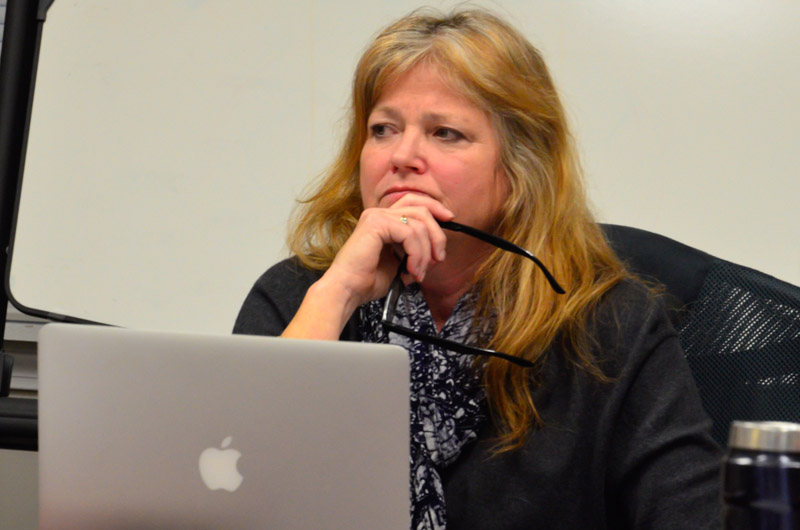
Commission chairman Christine Todd: “To organize and collaborate, I think is critical.”
Commission chairman Christine Todd said heroin addiction and other forms of substance abuse are a priority for the county commission.
“To organize and collaborate, I think is critical,” she said. “I hope this is just the beginning of collaboration between the county and the important constituencies that are dealing with substance abuse treatment and recovery.”
“The good news is that it’s on the table, and we’re talking about it,” Mr. Croke told the commissioners.
He said the health council subcommittee plans to send out a survey to social service stakeholders on the Island, including social service agencies, elected officials, doctors, pharmacists, teachers and members of law enforcement.
Survey questions are aimed at documenting what services are available, assessing how many people need treatment and finding where services overlap.
Ms. Fay outlined what Community Services is doing through a variety of groups and programs for people struggling with heroin addiction. She spoke about New Paths, an intensive outpatient addiction program for adults that currently serves 26 people participating in educational and therapy sessions five days a week. Funding for the program came from a hospital mini-grant that ran out in September. The hospital has extended the grant while Community Services looks for other long-term funding, Ms. Fay said.

Health council member Bill Croke: "I see people every day who are out there struggling."

Health council member Bill Croke: "I see people every day who are out there struggling."
Community Services also launched a support program this week for families and loved ones of people suffering from addiction. Called Ripple, the program will run for six weeks and is for people over the age of 18.
Another support program called Pathfinders is for people 18 and under.
Community Services also recently received funding to help with travel costs and expenses for people who have to go off-Island for addiction treatment.
Ms. Fay said there are no waiting lists for programs, and no one is turned away, but funding to keep the programs going is a continual challenge. “Front and center on our list of priorities is, how are we going to sustain this,” she said. “The difficulty for us, or for any agency on the Island, when you try to run a program with fixed costs, there are such scale issues,” she said. “You never have the volume to cover your overhead.” County commissioner David Holway asked Ms. Fay what resources are needed to provide addiction services for those who are not receiving treatment. She said housing is the biggest barrier.
“Housing for staff as we try to get licensed individuals to come to work at Community Services,” she replied. “We recruit two or three to come to the Island, and two or three leave.”
She said Community Services has 12 people working directly on substance abuse programs. And she was enthusiastic and optimistic about a collaboration with the Martha’s Vineyard Hospital on a new crisis stabilization program.
Called the Red House project, Community Services eventually plans to house its substance abuse program in the red house just steps away from the hospital emergency room. The unit will have two beds for patients in crisis, who can stay from two to seven days, while longer term treatment is coordinated.
Community Services executive director Juliette Fay said her agency has 12 people working directly on substance abuse programs.
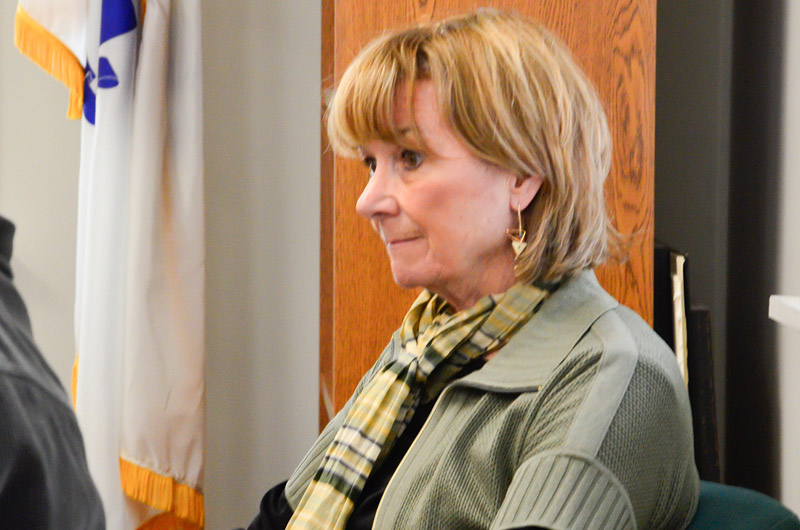
Community Services executive director Juliette Fay said her agency has 12 people working directly on substance abuse programs.
“If we could co-locate our emergency services and all of our substance abuse programs, including New Paths, we would have a critical mass of clinicians,” Ms. Fay said. “Every other community in Massachusetts has a crisis stabilization unit for kids and adults. This is something that is readily available off-Island in every community.”
She said renovations on the building, which the hospital agreed to lease for $1 a year, will begin next fall.
Meanwhile, Victor Capoccia, a past president of Community Services who works as a health care consultant nationally, has begun researching available data to help define the size and scope of the opioid problem on the Island.
Using state and national data from 2013 (the most recent available), Mr. Capoccia found an estimated 1,450 people on the Vineyard with substance abuse disorders. Among that group, 200 had sought treatment. After factoring in other information from population and behavioral health statistics, his early research concluded that at the time there were roughly 260 to 400 people on the Vineyard needing treatment for substance abuse. Among that group, two thirds were alcohol abusers and a third were drug abusers.
Mr. Capoccia attended the meeting Wednesday and later emailed a brief summary of on the topic to the county commission chairman.
Speaking to the Gazette by telephone on Thursday, Ms. Todd said she plans to set aside time at every county commission meeting this year to address the topic of the heroin epidemic.
She noted a program begun by the Barnstable County commission last year, and said the first step is to take a regional approach.
“What are we doing to address the needs on the Island,” Ms. Todd said. “What are we not doing that needs to be done, what priorities are we going to have with regard to what needs to be done, and then how much is that going to cost, and then how do we get it.” She continued:
“Each group has their own specific area of expertise, and they can individually tap into resources that are out there. If the county brings it all together and aggressively and comprehensively goes after funding, we might stand a chance to get more than we do operating with all these different organizations.”
Comments
A great beginning-- long
Rob Burnside Kingston, PAA great beginning-- long overdue but much better late than never.
If two thirds of the
KirkIf two thirds of the population of drug users on the Vineyard are using alcohol as their primary drug of choice and you have data to prove this then how come nobody ever makes an effort to make alcohol harder to buy or use?
Well, my guess is that most
juat a readerWell, my guess is that most folks who fall into that category are over age 21, which legally allows them to purchase and drink alcohol. State and Federal laws surrounding alcohol are meant to protect children and young adults while the brain develops and to allow adults 21+ to exercise free choice. It's regulated sales, which help protect that vulnerable group and generate tax monies (a big part of why prohibition ended and legal sales began again). The difference between alcohol and heroin is that heroin has no regulation of sales, has no oversight into what is gut into it and what effects the mixing of drug components can have. That's a huge part of it. Also, most folks who become alcoholics do so because they drink often at the start which leads to addiction; for heroin someone could use once or twice and become addicted because of how powerful and potent the drug is, especially with the additional substances that get cut into the drug.
I just have to say that you
Kate wtI just have to say that you must live under a rock as far as your comment about alcohol only being used/abused by adults over 21. Hate to break it to you but there are many children all over not just on the Vineyard who abuse alcohol that they get right in their own home from irresponsible "adults" who do not lock it up. Along with prescription drugs that are not locked away.
I would not be so foolish as
@ KateI would not be so foolish as to disagree with your statement, however, that problem with minors, is for the most part, still an abuse by those legal aged persons who purchase alcohol and don't take measures to protect the vulnerable groups I mentioned previously. Unfortunately, the Government and the regulatory bodies, and to some degree, even law enforcement, can't do much if certain persons like parents, allow their children to drink which will undoubtedly lead them down the road of alcoholism. I was intending only to state that laws and regulations on the part of alcohol offer at least some protections to vulnerable parties while allowing adults to choose, while drug dealers have no incentive other than whatever moral compass they may possibly have, to not endanger youth and the mentally or physically ill with their narcotics.
Very true Kirk. I would guess
Timothy The VineyardVery true Kirk. I would guess the reason they dont is because several "politicians" family members are on the stuff and some are dying or close to it. If kids were dying and ODing at this rate from drinking that might get their attention like this is now.
ALSO, once they start admitting that heroin / drug addiction is NOT a Brain Disease, It is a Choice (in 99% of the time) they might gain more momentum.
You don’t hear people constantly referring to cancer as “the disease of cancer” – it’s just “cancer”, because it’s obvious that cancer is a disease, it’s been conclusively proven that the symptoms of cancer can’t be directly stopped with mere choices – therefore no qualifier is needed.
On the other hand, addiction to drugs and alcohol is not obviously a disease, and to call it such we must either overlook the major gaps in the disease argument, or we must completely redefine the term “disease.”
Tough and stricter control of the flow of drugs into our country, Tough and stricter prison sentences for mules and dealers, Tough and stricter sentences and fines for carrying and being in the presence of.
Get rid of all this BS Liberal coddling & PC crap and you will see a drop in this epidemic and many of our other social ills pretty quick in my humble opinion.
With all due respect, Timothy
BeBop4000 Cold Spring, NYWith all due respect, Timothy, you may want to leave discussions of substance abuse (be it alcohol or heroin) and it's widening path of destruction, to those better equipped. At first, I thought you were joking when you mentioned that relatives of politicians who drank in excess were the cause of alcohol playing second fiddle to heroin in the world of enforcement. But after reading on I realized that you actually believed this. By the time you began to denounce the advances in modern medicine that clearly and factually, brought about new thinking regarding addiction, by targeting "pleasure centers" and other areas of the brain as a huge clue in potential diagnosis and treatment of substance abuse as a disease.. One of the first human beings to shine a light on this was both a doctor and an alcoholic, colloquially known as Dr. Bob. He described "cravings" and in such a way that it got the booze soaked brains of many an alcoholic to sit up, take notice and say..."Holy **** ! This guy is talking about what I go through." Thus, this helped greatly in the advancement of Alcoholics Anonymous that saw the meeting of two garden variety drunks morph into help for millions and millions around the world. I cite Dr. Bob's writings about "cravings" and the first hand accountings of people who kept drinking despite the mounting evidence that something bigger than "a choice" was going on as each bender got worse and worse. It's not much different in the world of heroin, although, booze is obviously a legal commodity and heroin is outlawed everywhere. To disprove, or at least offer a different voice to the contention that all drunks and junkies are really just bad decision makers, I offer, with Dr. Bob's help, the definitions and real life adventures of those living constantly with obsession and compulsion. For those who have never experienced either, I suppose I should not expect that you could know any different. And for those of you who have experienced obsession and compulsion, (in spades,in my case, at different points in my life)) may you never forget. I assure you, the last thing true alcoholism/addiction is, is about "choice", because it is only the bottle and the bags that make any kind of choice by the time you have stepped over the line of "normalcy" into active alcoholism/addiction. Thank God for the great advances modern medicine has made in research and treatment of substance abuse. Let us all hope those advances continue so that so many of us need not lose our lives , as this disease continues to spread....sorta like another disease they call cancer. I believe that education is the answer. It is the answer to the question "What is wrong with reality, that so many people feel the need to alter it?" Why can't we be satisfied with foregoing substances and instead, look to find life fully satisfying on it's own?
p.s. Just as an aside, I was listening to a member of one of the Mexican Cartels being interviewed, and he said...and I quote..."Not a drop of heroin is brought into the US from Mexico without Fentanyl in it". Fentanyl, is being mass produced in Mexico these days, to give some "Oooomph" to the heroin. It is 60 to 100 times stronger than heroin itself. It is also being smuggled into the States on it's own, leaving dealers to provide the mix themselves. It is a recipe for continued disaster in the increase of lives lost from addiction/alcoholism.
Great comments. We still
Jim Bradberry Philadelphia/Vineyard HavenGreat comments. We still have much work to do to make people understand addiction. Thanks for taking the time to write!
Timothy:
JaredN Boston/ChappyTimothy:
It is long past time to admit that we lost the drug war long ago. Stricter laws and longer sentences won't do anything but fill up more jail cells and cost more money. Back in the 1920s, we tried Prohibition. That didn't stop people from drinking alcohol. All it did was to fund La Cosa Nostra and increase violence. Once alcohol was legalized in 1933, the violence that had been associated with rumrunning all but ended.
Prohibition of drugs hasn't stopped people from taking drugs. Even in our most secure locations in our nation -- prisons -- drugs are readily available. There is simply no way that we can eliminate the supply of drugs. Legalize it, regulate it, tax it, and use the money to fund treatment.
We've been fighting the drug war for 40+ years. We lost. It is long past time to try a different approach.
I Have contacted Vermont
Lisa Nagy M. D. Environmental Health Center of Martha's VineyardI Have contacted Vermont Health Commissioner, Congressional subcommittee on Veterans Health and am speaking at NIEHS in May on using Environmental and Integrative Medicine to treat many medical problems by getting to the cause of them. The drug and alcohol addicted might have endocrine problems like low adrenal fucntion, and dysautonomia which is well acknowledged medical problem that we have diagnosed at Beth Isreal by tilt table testing. If these kids are treated for their problems they will not seek relief in adderall, heroin , nictine and caffeine. I would like to be invited to bring patient , Dr. Silberstein and do a presntation on how we can fix these people at lower cost and with long term success compared to expensive rehabs facilities that do not approach the addiction issue from this scientific medical basis and fully resolve the problem.
I look forward to a meeting when I return form Lecturing this week in San Diego on Environmental Medicine treatment. Please watch an educational video at Penn Medical School on this website,thank you www.lisanagy.com 310 213 5472 text my cell anyone with interest! :)
Bravo, Commissioners, for
Caitlin McNally ChappyBravo, Commissioners, for putting heroin on the top of the pile, it's going to slither up there sooner or later, it became a disaster in my NJ community, in my sisters Concerd community, and as show in Hbos expose of her heroinon the cape and islands,, affecting our oun SSA EMPLOYEES, this last Sumer my friends daughter worked at an EMT. How heartbreaking to be popping and breathing away for an 18 her old jid who's already died ad was turning cond,
Add new comment