

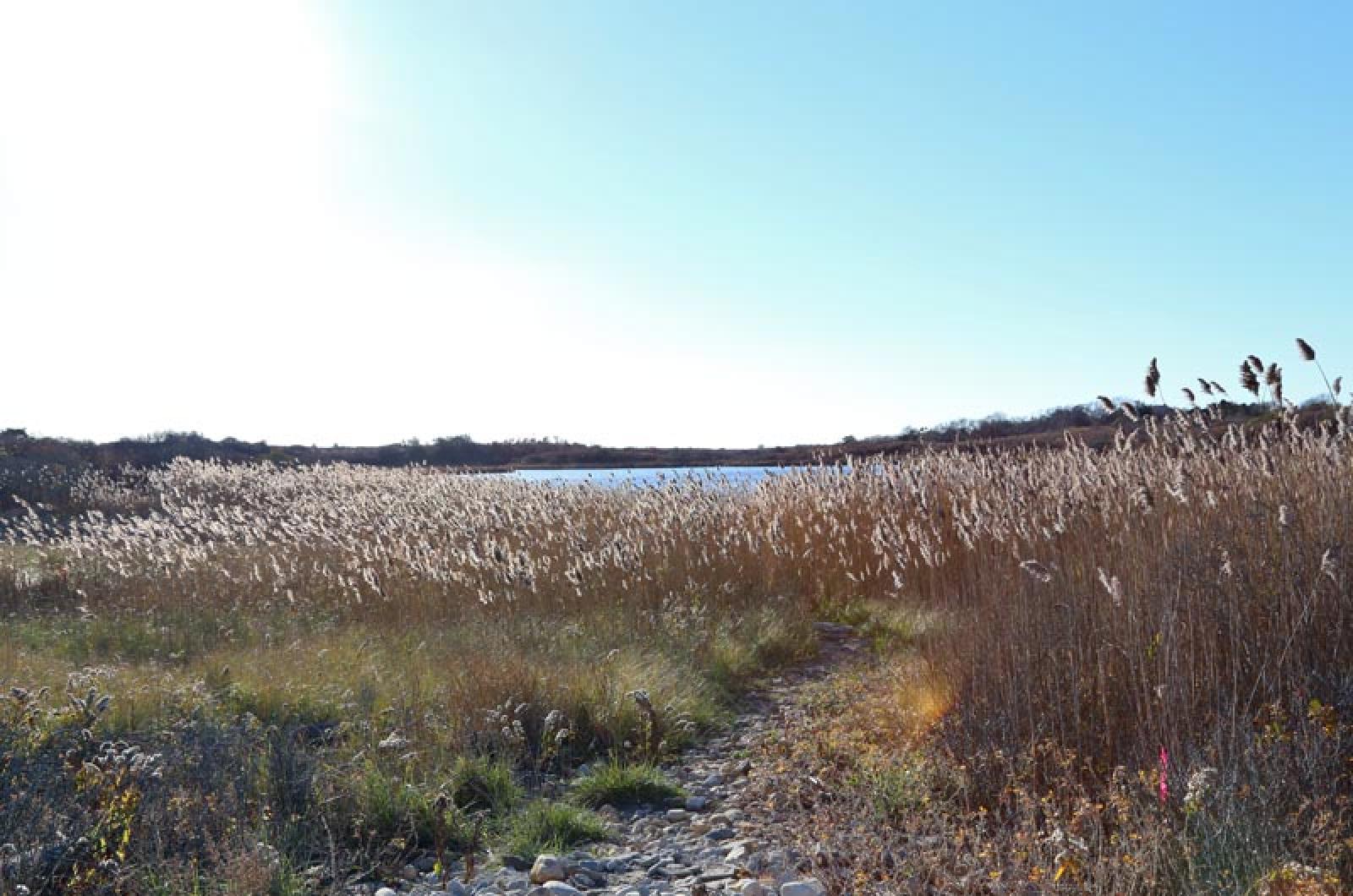
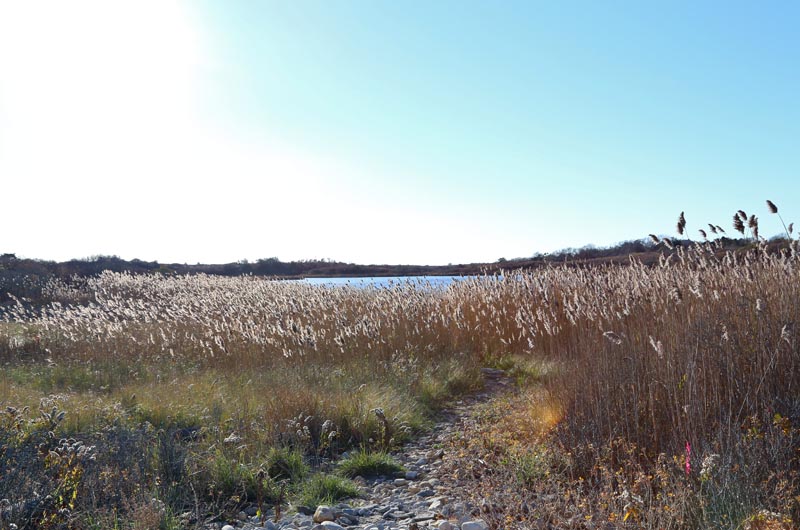
<p>A two-year effort by a group of Chilmark landowners to use herbicides to combat phragmites in Squibnocket Pond came to an end this week. The Hon. Gordon H. Piper on Monday vacated his own ruling from last January that had found a Chilmark bylaw banning herbicides on the pond was not valid.</p>
A two-year effort by a group of Chilmark landowners to use herbicides to combat the invasive weed phragmites in Squibnocket Pond came to an end this week with a brief judgment by a justice of the state Land Court.
The Hon. Gordon H. Piper on Monday vacated his own ruling from last January that had found a Chilmark bylaw banning herbicides on the pond was not valid because it was more restrictive than the state Pesticide Control Act.
Justice Piper noted that his earlier decision had been rendered moot by a special act of the legislature signed into law in November that specifically exempts Squibnocket Pond from the state pesticide law. The special legislation sought by the town of Chilmark does not bar herbicide use elsewhere on the Island.
Phragmites are a non-native species that are menacing wetlands.
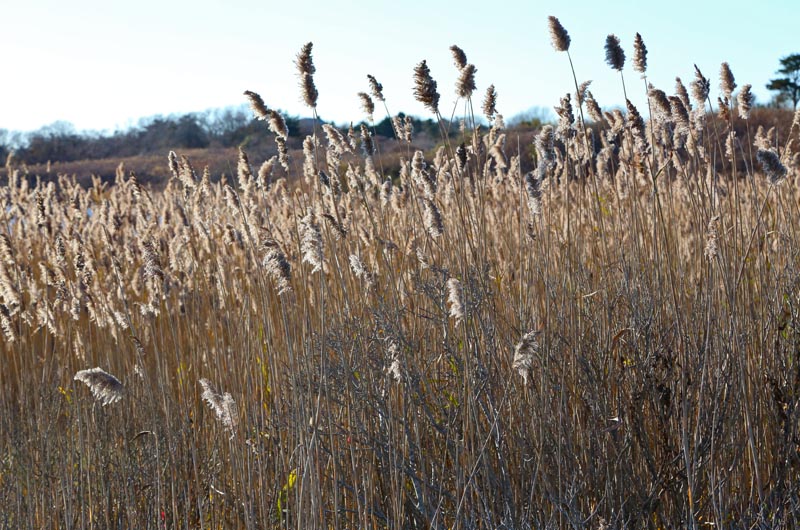
Phragmites are a non-native species that are menacing wetlands.
Chilmark town counsel Ronald H. Rappaport called the decision “a victory for the town’s right to protect its own natural resources,” and credited state Rep. Timothy Madden and Sen. Daniel Wolf with championing the town’s interests in the legislature.
“Squibnocket Pond is one of Chilmark’s treasures, and town voters have indicated repeatedly over many years that it should be treated with extra care,” he told the Gazette.
Chilmark resident Charlie Parker, one of six riparian landowners who make up the Squibnocket Pond Organization, said the group agreed to the judge’s action, acknowledging that Chilmark voters have made it clear that they don’t want herbicides used in Squibnocket Pond to control invasive plants.
“While we believe that the method we proposed to control phragmites has been proven to be both effective and safe, the voters did not agree. We have accepted that,” Mr. Parker said.
Phragmites australis, also known as common reed, is a non-native species that has become an increasing menace to wetlands throughout the country, especially on the East Coast. A tall, dense grass, the fast-growing phragmites crowd out native plants such as cattails, making habitats less hospitable to other forms of life. Managing the plants is difficult because they reproduce both by seed and via underground rhizomes. In order to eradicate the weeds fully, all the rhizomes must be eliminated.
On its website (squibnocketpond.org), the Squibnocket Pond Association says that phragmites apparently took root in the pond in 1991, in the wake of Hurricane Bob. A survey map of the site dated 2010 shows that the weed had spread to 20 different locations, covering at least four acres of shoreline.
“We are concerned that the spreading of phragmites will result in the loss of a significant portion of shallow, ‘open water’ in the eastern section of the pond where the water is between 2 feet and 3 feet deep, possibly as much as 50 acres of the Pond,” the website notes. “As important, the plants are destroying native species, reducing the Pond to a monoculture where few native plants or animals will survive.”
There are currently no biological control agents available for treatment of phragmites. While careful mowing, covering with plastic and increasing water salinity can help manage infestations, herbicides containing the active ingredient glysophate are considered the only truly effective method for eradication. On the Vineyard, successful phragmites elimination projects have been undertaken at Crystal Lake in Oak Bluffs, Black Point Pond in Chilmark, Edgartown Great Pond and Chilmark Pond. All the projects centered on the use of the herbicide Rodeo, which contains glysophate. Glysophate acts on plant enzymes to inhibit growth.
But Chilmark has long resisted herbicide use around Squibnocket Pond, contending it is more fragile than the Island’s other great ponds, in part because it is not regularly flushed by the ocean. As early as 1989, the town undertook an environmental assessment of Squibnocket Pond, which led to the adoption in 1990 of an overlay planning district bylaw that among other things restricts the use of chemical fertilizer, fungicides, herbicides and pesticides within 500 feet of the pond.
Still, when the Squibnocket Pond Association sought approval in January 2013 from the Chilmark Conservation Commission to use Rodeo on 20 phragmites colonies, the request was approved. Later, building inspector Leonard Jason Jr. refused to issue a permit on the basis of the town bylaw, and his position was upheld in May 2013 by the Chilmark Zoning Board of Appeals. The association appealed to the Land Court, and in a Jan. 8, 2014 decision Justice Piper overruled the town, finding that the state Pesticide Control Act superseded the bylaw.
Thwarted on the judicial level, Chilmark voters at the annual town meeting in April agreed unanimously to seek a special act from the legislature exempting Squibnocket Pond from the state pesticide law. The town also submitted affidavits from two environmental scientists, Charles Benbrook and Arthur G. Gaines Jr., describing the fragile nature of the pond. In a letter of support for the special bill, Mr. Rappaport described the detailed study that went into creating the Squibnocket Overlay District in 1990. Among other things, he noted that Chilmark lacks a public water supply and that there are 74 private wells near or in the overlay district.
Sponsored by Rep. Madden and Sen. Wolf, House Bill 4339 was passed and signed into law on Nov. 14.
In a response to the recent decision, the Squibnocket Pond Organization plans to look to the future.
“While we are disappointed, we will have to wait and see whether an organic method to control these plants is developed,” Mr. Parker said.
Comments
A controlled fire perhaps ?
George Stein EdgartownA controlled fire perhaps ?
Yes , there is an organic
Lover of Squibby ChilmarkYes , there is an organic method- get up off your oh so peachy and cut them under the water. Use goats to forage ( loaded with vitamin C ) keep at it. They can be managed without poison. Bentbrook is quite impressive. And not a paid shill of Monsanto.. Thanks to the voters,town counsel and Rep.Madden and Senator Wolf, we don't have to worry about what's coming out of our faucets. We have species here they don't have on the mainland because previous Islanders didn't buy the 'harmless' DDT nonsense. At least on this front a Happy New Year to us all.
Phragmites doesn't much care
thomas hodgson wtPhragmites doesn't much care whether or not you burn it. I've spent some time over the last few years researching how to control phragmites, especially in the early stages. I've learned that if you cut phragmites in the spring or early summer, it responds by sending out more roots, exactly what you don't want. The cutting regime suggested by several sources is to cut when the plants flower, and to recut every 3-4 weeks until frost stops growth. You have to keep at it for more than a year or two.
Really important piece
Michael West Vineyard HavenReally important piece cutting through the tangle of issues and points of view. Glyphosate is not harmless. In fact, it may be extremely hazardous to the health of people and animals over the longer term, yet it sails under the radar somehow, perhaps because Monsanto has such powerful political friends.
I understand feeling
Kate West TisburyI understand feeling passionately about protecting a place, and as much as anyone I feel passionately for protecting the beautiful, unique, and well-studied natural areas around Squibnocket Pond, which is why this misguided and misdirected crusade against herbicides at the expense of common sense and informed decision-making is so terribly heartbreaking. Phragmites represents a clear and present threat to the diversity and stability of the biological communities at Squibnocket, but rather than consider feasible options for protecting them by managing this threat, Chilmarkers chose instead to spend tens of thousands of dollars in legal fees to protect the principle of “home rule”— in this case, horribly misinformed and ignorant home rule—against the big bad state agencies who actually understood the issue much more clearly. People have been studying and experimenting with Phragmites control for years, and learned a great deal about what works and what doesn’t. As distasteful as their reputation may be, there was no evidence whatsoever that careful application of herbicides would threaten water quality, wildlife, or human health. And yet a vocal cadre of well-intentioned but uninformed residents managed to shout down and rule out the one technique proven effective in mitigating the threat of invasive Phragmites, and at the same time set a precedent that could easily threaten control measures statewide. We have the luxury of knowing more about the thousands of species of flowering plants, pollinating insects and other wildlife of the Squibnocket area than most other places in the state, but not a single self-proclaimed “lover of Squibby” bothered to learn very much about any of them—or even ask anyone who had—before blocking measures we desperately needed to protect them. What a shameful and embarrassing state of affairs it is when that such reactionary passion couldn’t have been channeled into a little more self-education. To those who led this charge and the representatives who helped them distract residents from solving an important problem, know that your legacy will not be one of protecting Squibnocket, but only another massive nail in the coffin of Island wildlife. What a deep and disgraceful disservice you’ve done to conservation on the Vineyard.
Kate, as it happens I've done
Lover of Squibby ChilmarkKate, as it happens I've done quite a bit of homework on the effects of Rodeo. Not all of it ,admittedly, American studies. French courts recently denied Momsanto permission to use roundup ( Rodeo is used in wet areas) and upheld their false advertising ruling on appeal. Sweden has linked glyphosate usage to hairy cell leukemia and endrocrine disruption. South American farm workers have had kidney failure. A recent study out of MIT is quite alarming. And try reading what Dr Charles Bentbrook said in the legal filing. He has quite a reputation for independence. And a dazzling CV. Disgrace you say? Most of the studies are paid for by Big Chem. Hey, it's a billion dollar business. They are very few real studies of the ingredients especially the humefacent due to 'trade secrets' . That's froma report from the US Forest service. The EPA ,charged with overseeing over 80 thousand chemicals in commercial usage, is out- gunned. They did however fine Monsanto for falsifying test reports, when they caught them, but that was in the early days. Monsanto probably became a good corporate citizen since. In fact they are now phasimg out Roundup due to the proliferation of super weeds . Their new weed killer is 2,4 d, formerly part of the cocktail used to create agent orange. I agree the phrags are problematic. But with the plans for the revetment removal, the ocean will probably take care of many of them. Because,call me crazy, but I believe nature is much smarter than the largest human brain. Now for some empirical evidence. We used to have purple loosestrife encroaching on the pond. Despite all the glares at the awful person pulling out those pretty purple flowers, I managed to keep after them and tho i still see a few .... I had phragmites in my wetlands. Keeping on them , cutting them more than twice a year has nearly eradicated them. So far. Why don't you ask if any of the people who wanted to use poison had ever considered or asked permission for any other method before going to the nuclear option? A ' nail in the coffin of wildlife' ??Please read the warning label on the can itself. No, really, have you read it ?
The manufactures own warning. And after you read the part about sensitive areas, research the 'bloody glove' method. Oh and the strictures on using it in an area that has any winds above 5 mph. Homework? Or 'Bother to learn 'or 'speak to anyone'? How about the organic farmer who was going to be hired to spray this stuff? When asked if he would use it on his farm he was silent.
I don't know what the town spent, but I'll bet it's in the budget and not 'tens of thousands' of dollars either. So before you accuse others of ignorance, might I suggest less shaming language and a bit more research? I would love to learn more about those muskrats myself.
Emma Green-Beach at the
Rick Karney West TisburyEmma Green-Beach at the Martha's Vineyard Shellfish Group, Inc. has conducted a study over the past summer and determined that significant amounts of nitrogen are stored/sequestered in the above ground tissues of Phragmites reeds. A harvest of the reeds may provide a means of removing excess nitrogen that is degrading water quality and at the same time may offer a management option to slow the spread of this invasive. The exact timing of the harvest to maximize nitrogen removal and reduce the spread of the invasive will require further scientific study.
The natural control is/was
Nathan Vineyard HavenThe natural control is/was muskrats. I grew up duck hunting on the Chilmark great pond in the 70's and large stands of phragmites existed even then. There used to be a half dozen colonies of muskrats living in the pond. They used the stalks of the plant to build some sizeable huts much like beavers. In the fall there would be rafts of shredded roots and stalks covering the water. I ask "what's different "? I would venture a guess that they've been driven out by human activity. The very folks who now dump poison in that once pristine ecosystem. It's sick. I had no idea that glyphosate is now being used in there. I wouldn't eat an oyster out of that pond if you paid me.
Lover of Squibby's derisive
Another Lover of SquibbyLover of Squibby's derisive tone well reflects the hysterical, unreflective and uninformed stance taken by many opponents of the use of glyphosate. Whether or not one likes Monsanto as a business has nothing to do with the most effective means of controlling invasive phragmites. (Note to Nathan: what you saw in the '70s was most likely native phragmites, not the invasive species.) Cutting the reeds under water is only effective when they are actually growing in the water; the majority of Squibby's phragmites is growing on land. Foraging by goats (a) provokes more robust growth by the roots and (b) is an expensive, long-term project that is not practical for four acres of scattered stands.
A thorough review of peer-reviewed scientific literature, and the experience of restoration ecologists and scientists nationwide, might help to convince all lovers of Squibby that a few liters of glyphosate used over four or five acres is not a harmful proposition, for anyone or anything. You need to understand the science and the methods of application in order to make a valid argument here, for or against.
I'm surprised that the
Common Sense VHI'm surprised that the uninformed Monsanto haters haven't called the Science based folks "racists".
That seems to be the strategy to win all other arguements.
If goats haven't been tried
W.F. Berkeley, CAIf goats haven't been tried perhaps they should be.
"Using an experimental wetlands site in Maryland, Brian Silliman, an ecologist with the Duke Marine Lab, found that goats were able to reduce phragmites cover by as much as 80 percent in a matter of weeks. The goats lived on a diet of roughly 80 to 90 percent phragmites during the study, and the culling allowed a variety of native plants to gain a foothold, Silliman said."
http://www.csmonitor.com/World/Making-a-difference/Change-Agent/2014/10…
Kate, my reply to your post,
Lover of Squibby. chilmarkKate, my reply to your post, citing studies in France, Sweden, South America appears to have gotten lost in the web. It was late, my phone had little power and I confess I said humectants when I mean surfactants, so I'll try again. IF there was a lag and my last night's post came through sorry of any repetition.
Forgive me but aren't you being just a bit presumptuous to state that i didn't speak to anyone? Or that I didn't bother to learn or ask anyone? Or in fact that i blocked anything? The Chilmark voters, our neighbors, must be included in the name calling 'ignorant' 'uninformed' 'reactionary' 'shameful'. One them did speak to someone who was going to be hired to apply it - turned out he was an organic farmer who when asked if he would use it on his farm was silent.
If you would be interested, might I suggest some foreign and American studies on the toxicity of Glyphosates? Just as a start, try the American Bird Conservancy website, click on the link for Pesticides and mammals, pesticide toxicity profiles ( neonicitoids are no joke either, brought to you by some of the same folks you appear to trust )lots of good science there. What happens to songbirds exposed to Rodeo etc is not pretty. I won't bother with the 'tree huggers' sites, because we could trade 'experts ( you could say they were nutters, I could counter with the bought (and I do mean bought) to you by Monsanto argument) endlessly. But, as you as appear to believe governments...I have some homework on that. Would you believe that US Forest Service admits that they don't have real toxicity studies because the surfactants cannot be studied due to 'proprietary trade secrets'? I think the EPA is out gunned and out spent by Big Chem. I'm not a Grassy Knoll type, nor anti-science/ birther type. With 80 thousand chemicals in commercial use today, EPA relies on the corporations Dow,Monsanto etc, to police the chicken coop. Even the hapless EPA caught Monsanto's hired lab falsifying reports ( U.S. Congress House of Rep.Committee on Government Operations 1984. Problems plague the EPA pesticide registration activities. House report 98-1147) that was in '79, maybe they've just gotten better at hiding it? Another problem with the Craven labs in 1994-also resulted in a US government report that led to jail time. I'm sure Monsanto has cleaned up their act and is now a good corporate citizen. Alas, the French courts don't think so. Le Tribune De Grande Instance ( gotta love the French) found it to ' blame for the poisoning' of one of their farmers ( Reuters and Bloomberg Feb 2012). Monsanto appealed to the Frenchies Supreme Court and was found guilty of falsely advertising that Roundup was 'biodegradable' and 'left the soil clean'. Apparently the European Union has classed Glyphosate as ' dangerous to the environment'. ( BBC news). Do find that study from Sweden. Apart from the Hairy Cell leukemia, it reports that no dilution is safe. Really, a good read for a frozen winter night. Even the recent MIT study, despite being attacked as not having the proper credential ( Bio-Chemist tsk tsk) is food for thought.
Now, I would have to disagree with Another Lover-who states 'whether or not one likes Monsanto as a business ' well, you do have a point there. Just in simple moral terms, non-scientifically speaking, it matters to me. I don't like corporations that; are irresponsible, found with their pants on fire and guilty in Supreme courts, that bully small farmers over GMO seed drift, that buy up seed companies. ( For the record, I'm not a big fan of the Koch industries either) Since you both use the word 'distasteful' to describe the company, please explain why should I trust them to then be a good citizen with only our best interests at heart? You don't have to footnote or cite examples. Although, I confess, I do admire them ( Monsanto) for admitting to the creation/problem of super weeds. Well, kind hard to miss that I guess.
Oh, and let me be 'hysterical' and 'uninformed' about the method of application and the dangers of drift for a moment.
It suggests on the label ( really, you have to read this stuff, you won't believe it ) that drift can occur in as little a 2 MPH. Talk about blowback! I've never been on Squibby beach on a perfectly still day- the wind was always blowing at more than the label recommended 2 MPH. Of course, you could put droppers of poison in each of the stems. Or use the 'bloody glove' method - that has a nice ring doesn't? Talk about expensive! The repeated applications necessary will get you into the 'tens of thousands' faster than the town's legal fees. ( BTW where is that in the published town budget, did I miss something?) But what about the cumulative effect on the fish and frogs, peepers etc? Or the kids on the beach, or well...me.
Sorry, I digress, back to the homework accusation. I hope I've established a few scientific studies or piqued your curiosity. Even the MIT, most recent one, linking it to endocrine disruption ( note- those folks have been attacked as not having proper credentials, only a Bio Chem degree) makes for compelling reading. But empirically, I have cleared purple loosestrife from Squibby pond myself- despite the grumbling from bystanders about picking pretty flowers. I've read the Squibby studies and Arthur Gaines report. And I urge you to read Charles Bentbrook's testimony and check out his CV, pretty impressive guy. And according to folks at NRDC- oophs sorry, tree hugger. I have rescued Eastern Box turtles, mud and snappers ( yipes) rescued birds and I realize that the Redwinged black birds are taking over that area of the pond ( east end), I've hand cut
and continue to, phrags in wetlands for three years now and I'm winning, so far. I'm under no illusion that they can be defeated. Maybe they can only be managed. Maybe graze, cut, use a machine called a harvester ( costs about 500-800$ an acre depending on when is important) 5 states use goats, Canada cuts 30 cm below the water- maybe the salinity of the ocean after the revetments are removed will solve this. All the ponds are unique here - what worked for one is not necessarily good for the other. Nature is after all smarter than our biggest brains - that's not anti-science it's real common sense.
I understand passion too but being called 'ignorant','hysterical' and 'racist' is repulsive and low. Cheeky, and irreverent, I'll own.
Lets start the new year right. How about we wipeout the toxic people posts and leave the plants to those muskrats?
I would love to learn more about them.
'Lover of Squibby's' comment
Data enthusiast Edgartown'Lover of Squibby's' comment that, "the salinity of the ocean after the revetments are removed will solve this" ignores facts from elsewhere on the island. Witness the large, dense stand of phragmites opposite Maciel Marine. That is a pure salt, tidal marsh and the phragmites have crowded everything else out. His other comments remind me of the fact that "correlation is not causation."
A recent review of scientific
Rick Karney West TisburyA recent review of scientific studies on the subject of Phragmites management can be viewed here
http://aobpla.oxfordjournals.org/content/6/plu001.full.pdf+html
Add new comment