

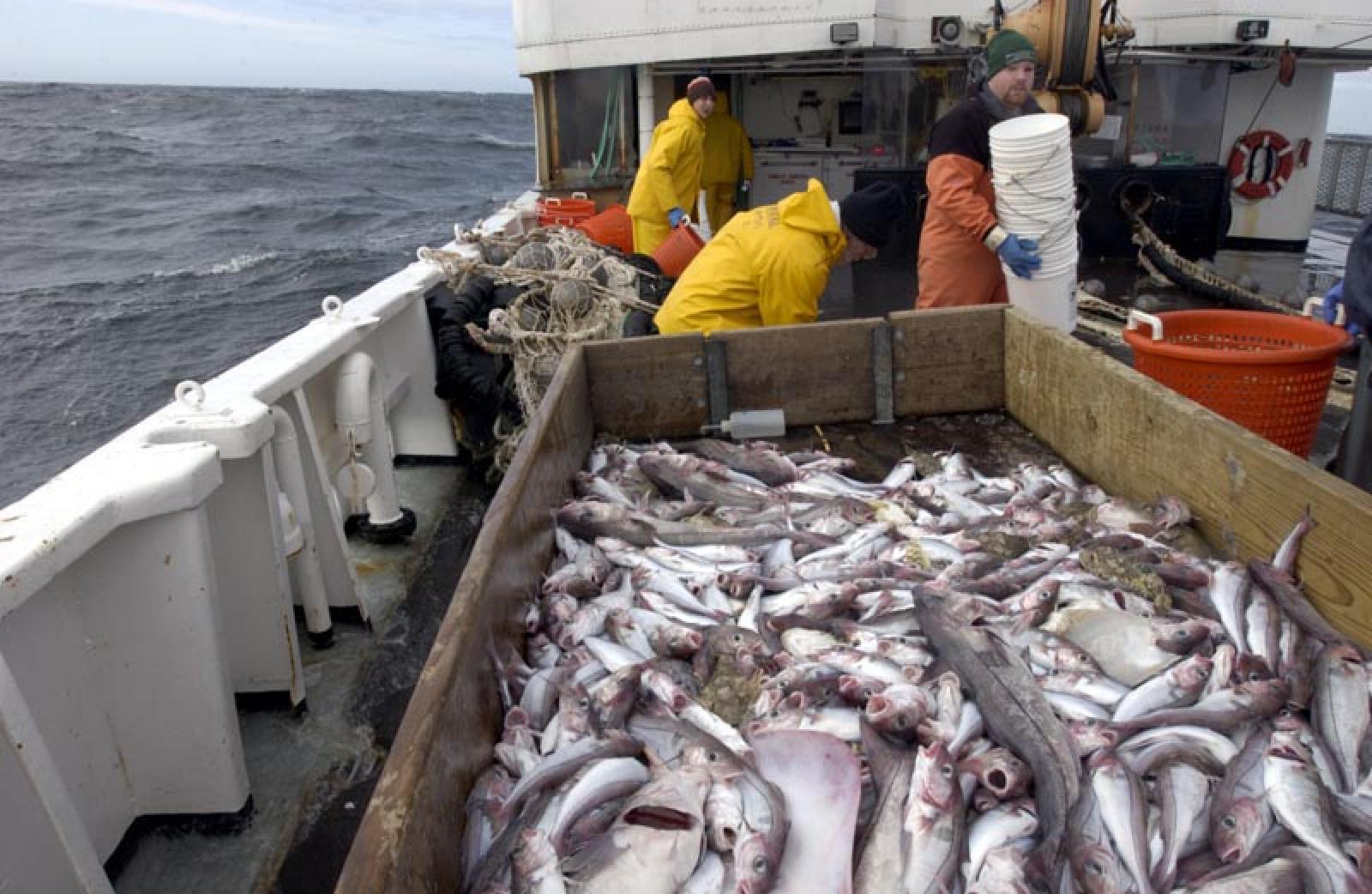
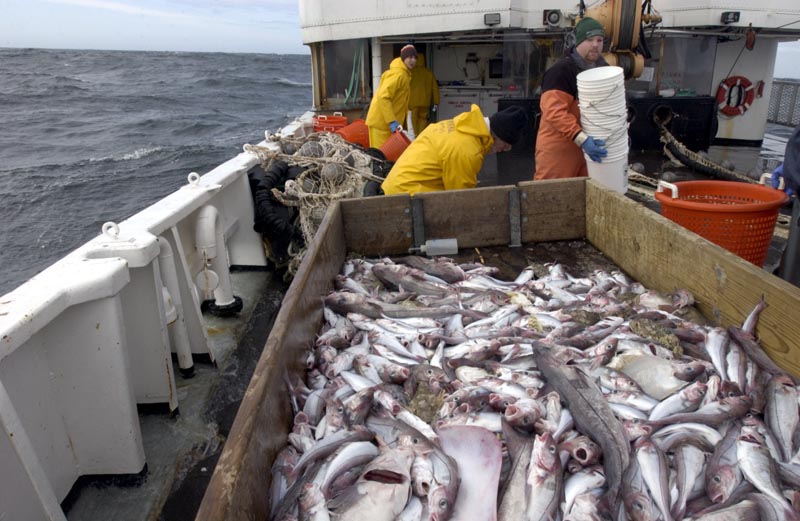
Vineyard fishermen no longer pursue cod in these waters. The fishing boats plying these waters left years ago. Cod are gone.
It wasn’t that long ago on Martha’s Vineyard when “Cape Cod turkey” was the talk of the waterfront this time of year. It was tied to the holidays, Thanksgiving and Christmas. But Cape Cod turkey didn’t have anything to do with real turkey. It was cod.
Cape Cod turkey was a stuffed large cod, delivered to the dinner table on a serving plate, and most likely landed at the dock from Menemsha, Vineyard Haven, Oak Bluffs or Edgartown.
But today Martha’s Vineyard fishermen no longer pursue cod in these waters. Those fishing boats plying these waters left years ago. Even the hardy local rod and reel recreational fishermen, who for sport ventured out at this time of year, aren’t going. Cod are gone.
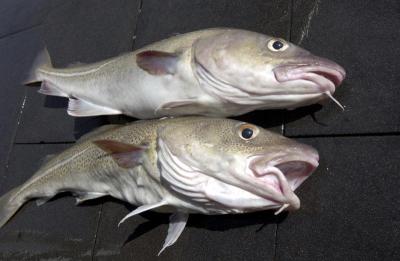
Cape Cod turkey.
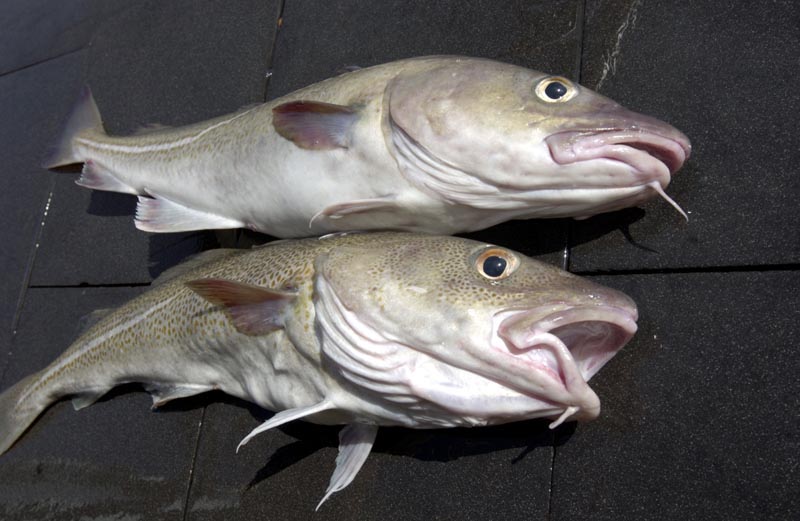
Cape Cod turkey.
By 1992 Newfoundland offshore cod was so overfished a moratorium was imposed. Local fishermen went into a panic. Communities that had fished for centuries faced immediate trouble. Today, more than 20 years later, the Northwest Atlantic cod are still in trouble, still fragile, and barely in recovery.
Earlier this month, federal fisheries managers and scientists, concerned about the plight of cod swimming in the Gulf of Maine, took extreme new restrictive measures to cut the fishing effort there. This will hit fishermen in that area hard, but the concern now is that the cod are so depleted that they may not be able to recover.
The sharp decline of cod is not just a story about overfishing. It remains a troubled cornerstone of a bigger story about any resource that fails to come back after it has been overexploited. But because cod has such a long history in this area and provided incomes for so many fishermen, the end of cod is especially hard to come to terms with.
Atlantic cod remains the Massachusetts state fish, and Cape Cod gets its name from a copious abundance of the fish going back to Bartholomew Gosnold. A century ago, Noman’s Land, the small island south of Aquinnah, was once a temporary seasonal home for a small makeshift shanty village called Codtown. Local fishermen set up temporary homes there. They caught the fish using a dropline, bait, hook and sinker and they easily filled their boats. Cod not only fed the mouths of Island folks, the fish were salted and shipped to the mainland in wooden boxes and by the barrel. Times have changed.
In 2005, the Vineyard Gazette came out with the story: Fisheries Managers Say Atlantic Codfish Stocks Near State of Collapse. Much of the impetus for that report was based on the Gazette’s spending more than a week on a NOAA research vessel, the Albatross IV, as it sampled the rough waters of Georges Bank. Though the vessel towed in 87 places across Georges Bank, from Noman’s to the eastern end of Georges Bank, near the Hague Line, very few cod were seen.
On that trip, I worked side by side as a volunteer with scientists and fisheries managers as they counted the fish coming aboard. We measured them and dissected some, all in an effort to gain insight into the status of the fisheries.
Make no mistake, every time we set the net astern, day or night, we shared a hope that the next tow would bring us a positive report that cod and other species were in better shape than it appeared.
For those men on deck working the big net, former commercial fishermen themselves, the growing anguish was seen and felt. I heard their stories of far better days in places like south of Noman’s Land, Georges Shoal and farther to the east, Little Georges.
Scientists told me that cod may be going the way of the heath hen and the carrier pigeon. They told me one does not need to net every last fish to make cod extinct. Rather, when a certain amount are taken the species approaches a certain irreparable low number which can tip the scale toward extinction. At some point in the decline, the resource reaches a place where it no longer has the ability to recover.
I have been out on Georges Bank several times going back to 1992 in pursuit of stories related to the declining cod. What is so striking to me is that in hindsight our American story about cod for the last two decades is about continuous loss.
Georges Bank is the size of the state of Massachusetts and it was for a long time the world’s most productive fishing ground. As we plied hundreds of miles across this huge expanse, there was then and there is now a prevailing sense that we’ve taken too much. Today, huge areas of that bank are closed to fishing in an effort to turn the bad news into good news.
And although the decision for the Gulf of Maine is a hard one and affects fishermen trying to earn a living, maybe it is time for us to give the fish a break. Maybe we should leave them alone, not just for those who would fish for them in the Gulf of Maine. Maybe we should leave the fish alone for all of us.
Comments
And they said that Cape Wind
robert skydell chilmarkAnd they said that Cape Wind would ruin the fishery...
And yet fishing for the
Dick AquinnahAnd yet fishing for the species continues. Cod fishing grounds, sizes, quotas continue to get scaled back for both commercial and recreational fishermen. Had the present day regulations been set in place 30 years ago or even 20, maybe the fish would have returned. Who knows. No one likes hard choices until there are no choices left to be made.
Sad story but beautifully
Scott Ryan West Caldwell, New JerseySad story but beautifully written! Well done!
Cod are really like the
SadCod are really like the canary in the coal mine. Terrific article.
This Ted talk is all about
Oceans in troubleThis Ted talk is all about the oceans - Alanna Mitchell, a journalist from Canada, spends full time writing about the oceans. https://www.youtube.com/watch?v=crPiV4C_t7k
And yet just a few weeks ago
Mike NahantAnd yet just a few weeks ago governor-elect Charlie Baker told the Boston Globe: "I’ve been struck by the dynamic in which the federal government says there are no fish and then fishermen go out and fish for a few hours and catch 10,000 pounds or 5,000 pounds." This kind of willful ignorance even in the face of cataclysmic evidence is what will doom the cod.
Striped bass fisherman take
Steve FalmouthStriped bass fisherman take heed!
Simple first steps: Don't
Mr. B ChilmarkSimple first steps: Don't buy cod. Forbid its sale. Get it off the menus.
Solution told to me twenty
Ed Metcalf Nantucket-Mass.Solution told to me twenty years ago, and it was simple. Close the fishing for Cod & Haddock during the two months of there spawning season. No use of artificial gear when commercial fishing for them, back to sisal & manila twine and rope.
This is yet another example
Tom Carson West TisburyThis is yet another example of the " Tragedy of the commons " , an economics theory by which says that individuals acting independently and rationally according to each one's self-interest, behave contrary to the whole group's long-term best interests by depleting some common resource. It happens time and time again whether it's fish or minerals or the old time common grazing lands. We don't have to repeat the past. We do have to insist on enlightened leadership. Don't elect self interested leaders.
The seaside villages in
Philip Walsh Miami, FloridaThe seaside villages in Canada's Maritime provinces are ghost towns now. Intent on keeping the processing plants that supported them open and those employed there off welfare, Canadian Parliament in far off Toronto was loath to restrict the cod harvests that supported the industry and ignored the declines, continually adjusting the minimum catch size downward. There's no question but that poor management caused this calamitous event, but experience tells me that when responsible, science-driven management that relies on marine sanctuaries, closures during spawn and individual quotas assigned to vessels is put in place, there will be a resurrection of commercial cod fishing; one which will finally return New England fishermen the true value of the fish. The day that wild, ocean caught fish is considered a luxurious exotic is at hand.
Stripers are next. The feeble
Dbar13 EdgartownStripers are next. The feeble and unsatisfactory move by the AFSMC to reduce commercial catch by 25% and rec bag catch to 1@28 for 1 yr is testimony to the biological ignorance of what species require to recover. We have not learned from the 80's moratorium. Take the hit now and go to zero catch for five years and following that make stripers a game fish and have zero commercial catch. If we keep on the way we are headed stripers are the next cod. Imagine the economic an recreational impact of that outcome.
The way our fisheries are
Ron MarylandThe way our fisheries are governed we are on a merry go round. Every year when a fish stock is considered depleted, the size limit is raised, the total allowable catch is reduced, this does not work. We must have a complete plan for our fisheries. Establish habitat, close fisheries in spawning seasons and promote aqua culture. There is a decline in the fisheries bio-mass and an increase in the worlds population, this means there will be a shortage of protein to feed the future generations. Promote aqua culture every fish raised can reduce the pressure off the natural stock. We have the technology and we need jobs for our fishermen,and all the related jobs that revolve around this industry. This will also address the billions of dollars we spend to other countries buying their fish that were raised via aqua culture.
Ron,
Steve MaineRon,
An issue with aquaculture that must be considered is where food to feed the fish is sourced from. Often, one has to catch fish to feed fish, so the answer is not that straightforward. Additionally, there are often water quality problems associated with fish farming, resulting from excessive feeding, fish waste, etc.
Left out of this tale of woe
Albie Scott NewburyportLeft out of this tale of woe is the fact that coastal herring stocks have been totally decimated. Herring is one of the most important forage fish for Tuna, Cod, Haddock, Pollock, and of course Striped Bass among others. 12-15 odd years ago NMFS allowed pair trawlers to fish inshore for herring. The result was that within a two years there was barely a herring to be had inshore on he Gulf of Maine.The Tuna were the first to react, and what had been a profitable summer fishery for ground fisherman within 15 miles of the coast dried up overnight, so to speak. No herring.....the tuna gave us a pass. There were plenty 200 miles out, but what dragger is going make that trip at 9 knots an hour ? NMFS has consistently made very bad decisions over decades, and they are still without a clue. All that inshore herring tonnage ? Ground up for fish meal and sold to the Third World for 10 cents a pound.
Thanks Scott! So true
Stevd FalmouthThanks Scott! So true
Herring, menhaden, mackerel,
Dick AquinnahHerring, menhaden, mackerel, northern mullet, needlefish. I haven't seen these inshore, or even much offshore, or years.
The only answer is to ban all
Fisionista New York CityThe only answer is to ban all fishing of Cod in North America. Why are these rules not hard set?
Very enlightening, we need
Paul YarmouthVery enlightening, we need more articles like this!
Add new comment