

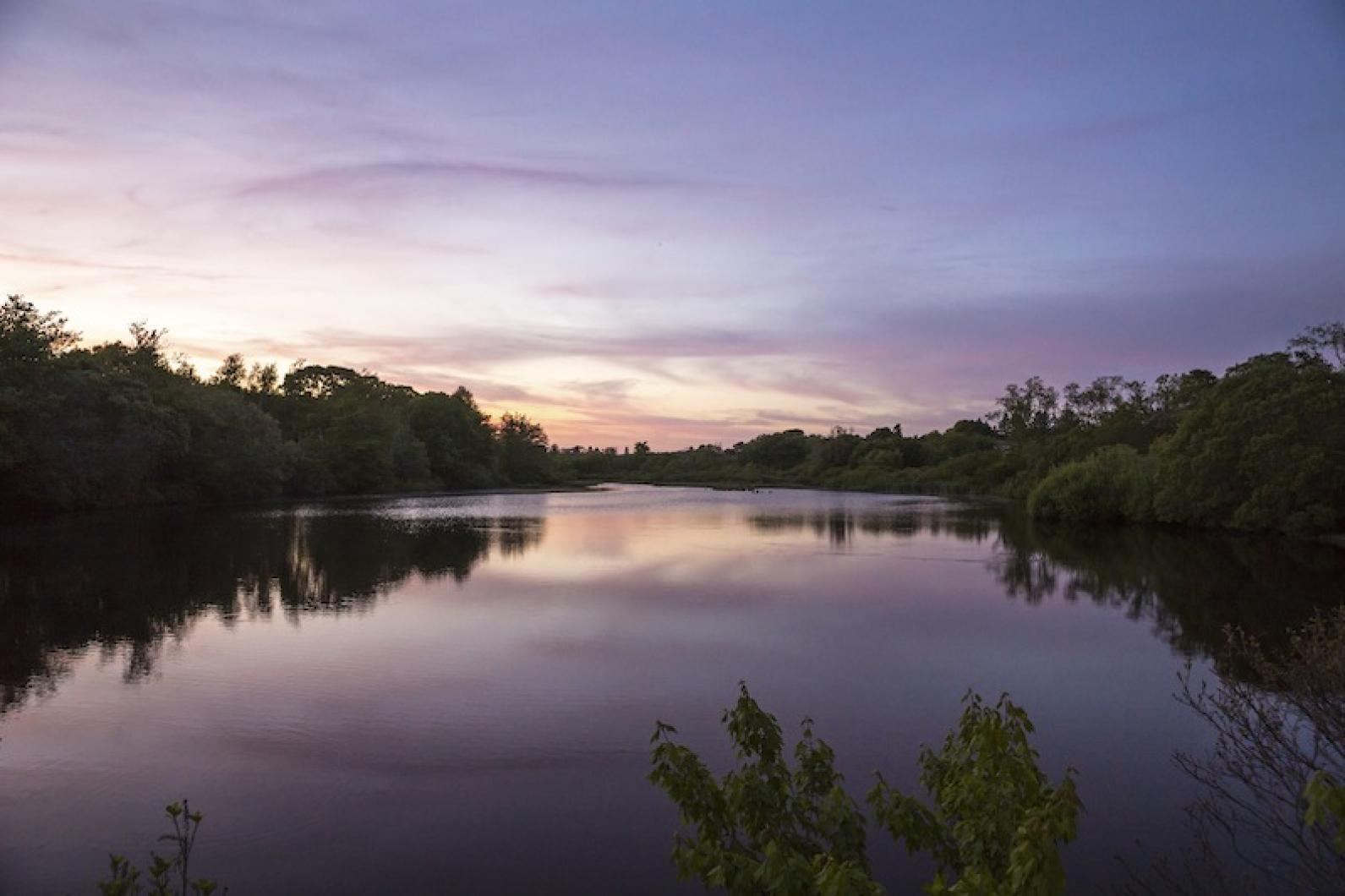
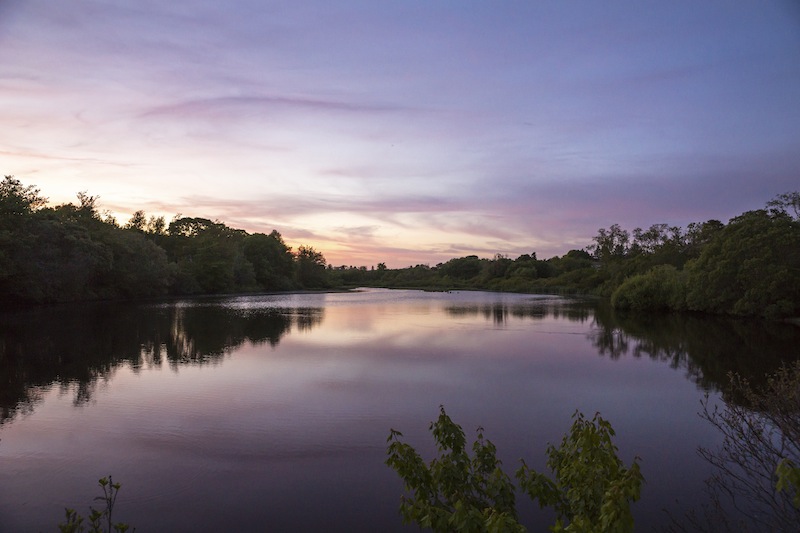
For over 50 years I lived on the edge of Look’s Pond, off Music street in West Tisbury. In the mid 1660s only the Tiasquam River ran through the valley on its way to Tisbury Great Pond.
I agree with Gus.
For over 50 years I lived on the edge of Look’s Pond, off Music street in West Tisbury. In the mid 1660s only the Tiasquam River ran through the valley on its way to Tisbury Great Pond. Then a grist mill was built and the stream was dammed to provide a pond which powered the mill. After 162 years, the mill was abandoned. Gradually the dams rotted away and once more the noble pond turned back into a narrow brook in a weedy, swampy meadow in which cows from a nearby farm grazed.
When my husband’s parents bought the property in the early 1920s, they restored the dams and the pond returned. It no longer served a business purpose, but became a lovely setting for several houses built around it. We enjoyed the trout that we caught from its waters, and even the herring that found their way up to the lower dam in early spring.
Nature prevailed and after awhile pickerel replaced the trout. A couple more ponds were built between Look’s and Tisbury Great Pond and the herring could no longer reach our dam, which now had a herring ladder to help them into the pond.
The loss of the trout and the herring did not diminish our pleasure in Look’s Pond. Our children learned to swim in it, we had skating parties during cold winters and reveled in the wildlife along its shores, in the air and even in its waters.
In the early 1960s I undertook a year’s study of the pond to fulfill requirements for a bachelor’s degree, which I had abandoned in order to get married in 1947. Ecology was a new word 50 years ago, and I learned that I was investigating the ecology of Look’s Pond. Ecology is defined as the relationship between all living things and their environment.
I worked with binoculars, a microscope and a butterfly net to catch things underwater. I set up an aquarium in my dining room to put them in so I could observe their movements, and a terrarium to put the tadpoles into when they turned into frogs. My equipment included a long pair of rubber boots so I could wade along the shores and a small rowboat so I could capture painted turtles and whatever else came up in my butterfly net. Not a very scientific endeavor, but I kept a journal and recorded what I saw. In 1973 my journal was published as a book called Seasons of a Vineyard Pond.
The visual delights were many — the various ducks and especially the Canada geese that flew into the pond to rest or feed, an occasional otter, the young painted turtles that would thrust their heads above the surface every once in awhile, the red-winged blackbirds and other species that nested in the bushes around the water, the cattails and wild iris that grew half in the water and half out, the duckweed on the surface of the pond and the jewelweed beside it. What amazed me most, however, was the life in the waters of the pond, some of which can only be seen with a microscope. Tiny though they might be, some even invisible to the naked eye, they are all part of the cycle of life we live in. I learned a lot that year.
Destroying a pond is probably not a big deal in these days of destroying whole countries, but I got a hint of how devastating it can be. In December 1964, a neighbor who controlled the Look’s Pond dams on his property decided to dredge Look’s Pond — not for ecological purposes, but for his own. He removed the boards from the dam and over the next few days Look’s Pond disappeared. What was left was three acres of mud, into which the turtles and frogs I had so carefully studied had buried themselves to escape the cold winter. The pond was left in this state for five months, just days after I had finished my study. And all life in the pond perished, as it will if the Mill Pond is drained.
How do you balance the lives of a few brook trout against all the other wildlife in the Mill Pond— the ducks and geese who use it as a way station, the swan family, the otters that are a delight to watch, and the children who line the banks every spring when the pond is stocked with fish for them to catch?
Shirley Mayhew lives in West Tisbury.
Comments
eloquently stated. one can
maureen fischer west tisburyeloquently stated. one can only wonder WHY the persistence of a few individuals has been allowed to dominate the decision to save the pond, which is the sparkling signature of our town. I have watched these endless meetings and am totally disgusted.
I love it that respected and
Lanny McDowell Vineyard HavenI love it that respected and longtime Island residents, known for their ecological awareness, their contributions to our community and their clear love of the Vineyard's natural treasures, are taking the time to write publicly about how important it is to not destroy the Mill Pond. As Shirley says, "I agree with Gus". And I agree with Shirley.
well described life of a
MTM* Wash, DCwell described life of a treasured pond and the consequences of man-made "improvements".
If it ain't broke, don't fix it.
Shirley-you have beautifully
Jim Powell Lambert's Cove West TisburyShirley-you have beautifully described the ecology of our West Tisbury ponds with eloquence, experience and artisty. They are an intrinsic part of our life. I remember skating on Look Pond as a lad, living in the Hamilton House, building wood duck boxes and chickadee feeders in 4H (my brother Ted was the leader) and placing them around the marshes of Look's pond. Look's Pond, Mill Pond, Seth's, Ice House-the list goes on and on. We must continue to cherish all the wildlife of our ponds in town and across the Island. The issue of draining Mill Pond needs to be laid to rest and keep our ponds the way they are.
Two thoughts, one historic,
Diane Crane NHTwo thoughts, one historic, one poetic:
The historic: "Bartholomew Gosnold... filled his boat with beaver and muskrat, sassafras and cedar before sailing back to England." Humans haven't been the only dam builders/pond creators on the island, according to this bit of history from the Dep't. of Housing and Community Development.
Second, the poetic: "No one drives fast on the road beside the Mill Pond. They would miss the changing view of wind on water, the quiet of a misty morning." -Dionis Coffin Riggs
I agree with Gus, Shirley and
Nancy Dole West TisburyI agree with Gus, Shirley and Lanny, and Nelson, and Bob, and all the other well respected thoughtful individuals who are speaking up in favor of preserving the Mill Pond. It is becoming increasingly clear that this is a matter of great importance and concern to those of us who live in West Tisbury, and in other towns as well. Thank you for publishing these opinion pieces and thank you to Gus and Shirley for adding your voices. I cannot imagine West Tisbury without the Mill Pond. (Except when I look at the Parsonage Pond, where our children skated for so many many years. Then I can imagine it, unfortunately. )
Quintissential Vineyard...and
Charlie Kernick West TisburyQuintissential Vineyard...and the loss of the beauty it imparts would be tragic for all of us, and for generations to come.
Thank you Shirley for your
Albie Scott Santpoort Zuid, the NetherlandsThank you Shirley for your eloquent piece.
When experience speaks so
Susanna J. Sturgis West TisburyWhen experience speaks so eloquently, please listen.
Add new comment