

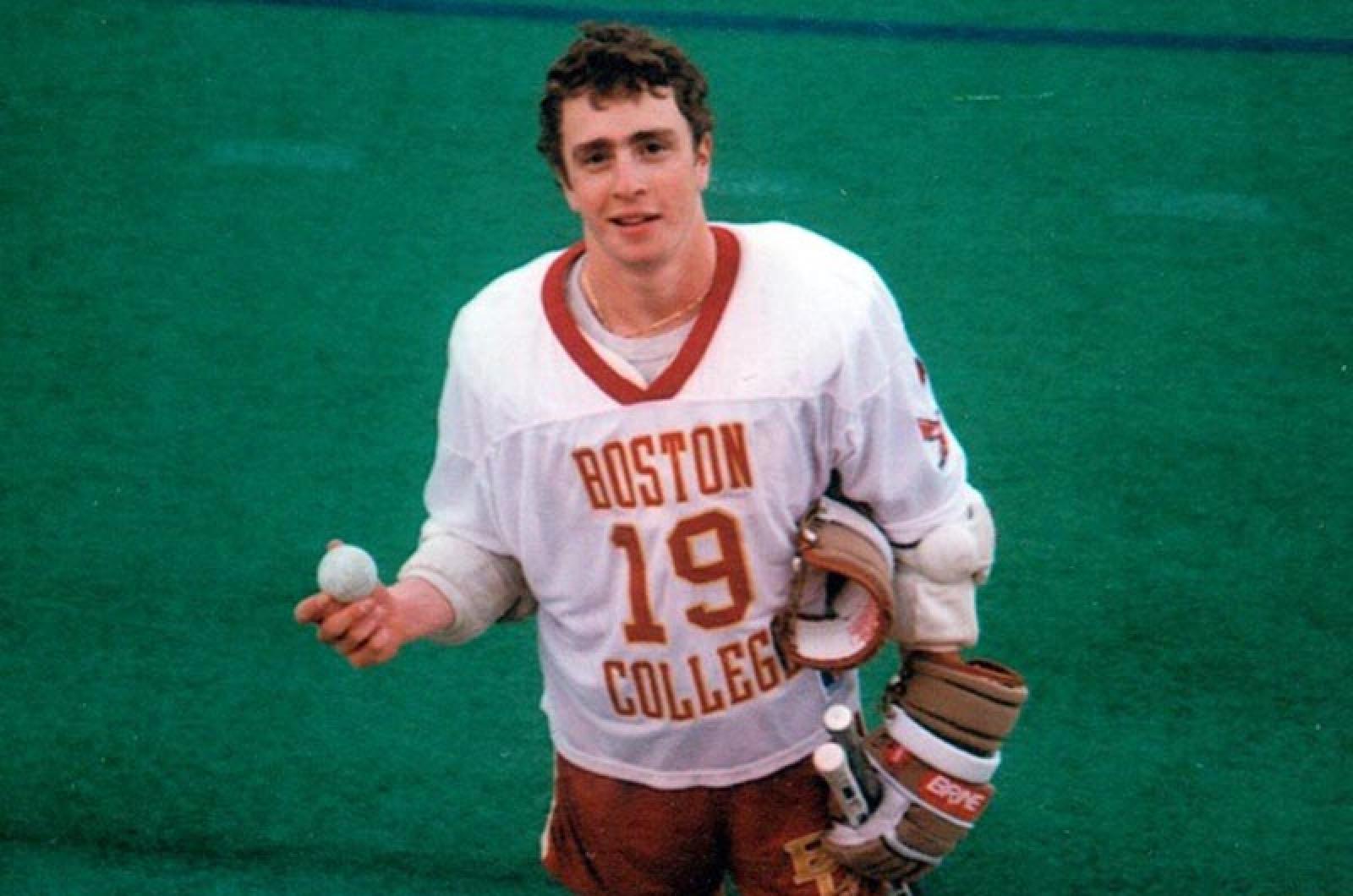
<p>At last month’s dedication of the 9/11 memorial and museum in New York city, President Obama paid special tribute to “the man with the red bandana,” who rescued at least 12 people from the burning and collapsing South Tower of the World Trade Center before being killed himself. Twenty-four-year-old Welles Crowther, the son of Jefferson and Allison Crowther, had spent early childhood summers at the Chilmark seasonal home of his late grandparents, Bosley and Florence Crowther. His grandfather was the longtime movie critic of the New York Times.
At last month’s dedication of the 9/11 memorial and museum in New York city, President Obama paid special tribute to “the man with the red bandana,” who rescued at least 12 people from the burning and collapsing South Tower of the World Trade Center before being killed himself. Twenty-four-year-old Welles Crowther, the son of Jefferson and Allison Crowther, had spent early childhood summers at the Chilmark seasonal home of his late grandparents, Bosley and Florence Crowther. His grandfather was the longtime movie critic of the New York Times. Young Welles was always an enthusiastic sailor with his grandparents.
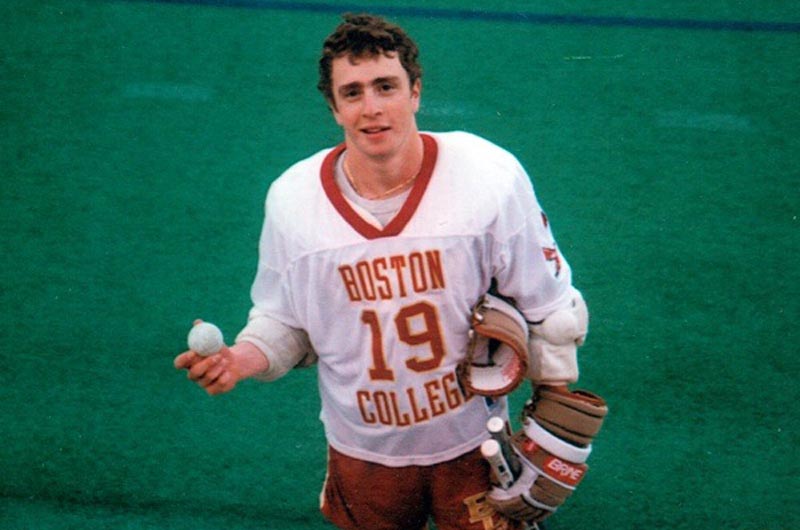
A native of Nyack, N.Y., Welles Crowther was a graduate of Boston College, where he majored in economics and played varsity lacrosse. Although his employment was as an equities trader with the firm of Sandler O’Neill & Partners, he had been enthusiastic about fire fighting ever since boyhood and, at 16, had become a junior member of the Empire Hook & Ladder Co. #1 in Upper Nyack, and later became a full member. He had often dreamed of firefighting, or the FBI, or the CIA as careers before getting his investment office job.
On 9/11, he had managed to get from the 104th floor of the South Tower, where his firm’s offices were, to the 78th floor. There he found a band of frightened and injured fellow escapees huddled, not knowing what to do next. He firmly ordered them down the staircase as he concerned himself with carrying one burned young woman to safety before going back after another with a broken arm and crushed ribs. He went back time after time into the burning building to help others get out before apparently succumbing himself. His body was not found until 2002.
Those whom he rescued simply referred to him as “the man with the red bandana,” for he had a red bandana over his nose and mouth as protection from the smoke. Ever since he was six, and his father had presented him with a red bandana, he had carried one with him — as something of a bond with his father who had always carried a red bandana. A red bandana heralding his sacrifice is among the museum’s exhibits.
”People can live 100 years and not have the compassion and wherewithal to do what he did,” one of those he had rescued told the president at the ceremony where Welles was honored. His parents have started the Red Bandana Project, a character development program for classrooms and camps, in his name and also established a charitable trust honoring him.
Comments
And what has the president
~Woody Williams~ Vineyard HavenAnd what has the president done about Sgt. Andrew Tahmooressi the U.S. Marine hero stuck in a Mexican prison for the past four months?
Obama “Doesn’t Give a Damn” About our Jailed Marine.
I will stop here hoping the Gazette will at least post this much..
Amen, Woody....Amen
Truthteller CAAmen, Woody....Amen
Just like a Rethug Wingnut to
Matt Burke O BJust like a Rethug Wingnut to use a lost hero to take a shot at Obama.
At long last sir have you no sense of decency.
You forgot to mention
Steven Holt VermontYou forgot to mention Benghazi!!
Dear Ms. Meras,
Alison Crowther Upper Nyack, NYDear Ms. Meras,
Thank you so much for writing this beautiful article about our son Welles.
The Crowther family enjoyed summers on the Vineyard for over 50 years, first renting the Parsonage in Chilmark in 1936. They purchased their summer home on State Road in Chilmark in 1955 and it was here that Welles spent his first, very happy childhood years. We were deeply honored that President Obama chose to recall Welles' final hour at the dedication ceremony of the 9/11 Memorial Museum. His example is inspiring many young people to strive to live better lives and be more caring of others. Welles believed that we are all connected, as one human family. That we are here to look out for, and to care for, one another. This is the precious meaning of life. He lived his convictions to the very end.
Add new comment