

Island police and members of the drug treatment community agree that heroin use on the Island is on the rise, along with fatal drug overdoses.
With police and health officials reporting a rise in fatal heroin overdoses throughout the commonwealth, a similar trend is developing on the Vineyard.
Island police and members of the drug treatment community said a shift in price and availability of prescription pills has drug addicts turning to heroin, which offers a cheaper way to get high — though at considerable risks.
While historical overdose statistics are unavailable, many say heroin use on the Island is on the rise, along with fatal drug overdoses.
Statewide the problem is now being described as a public health crisis. Massachusetts state police media relations director David Procopio said Tuesday that there have been 185 fatal heroin overdoses in Massachusetts in the past four months; the numbers do not include Boston, Springfield and Worcester.
This includes nine fatal heroin overdoses on the Cape and Islands. “These numbers absolutely represent an increased rate of fatal heroin overdoses,” Mr. Procopio said in a press release.
“It’s a growing epidemic,” Cheryl Bartlett, commissioner for the state department of public health, told the Gazette in an interview.
She said her agency does not have current overdose statistics and is relying on numbers provided by state police. On the Island, state police Sgt. Jeffrey Stone, director of the Martha’s Vineyard Drug Task Force, said he is aware of three fatal heroin overdoses on the Vineyard in the last year. One has been confirmed, he said, while the other two are suspected. It takes up to six months for a toxicology report to come back, he said.
Two of the overdoses were in Oak Bluffs and the third took place in Tisbury, Sergeant Stone said. He emphasized that many more overdoses were successfully halted by emergency personnel using the overdose reversal drug, Narcan, and were not fatal.
In Oak Bluffs, the two fatal overdoses were at the same home on Barnes Road, said Oak Bluffs Det. Nicholas Curelli, a member of the drug task force.

EMS Chief John Rose said Narcan has been administered to Oak Bluffs residents ranging from late teens to 50s and 60s.
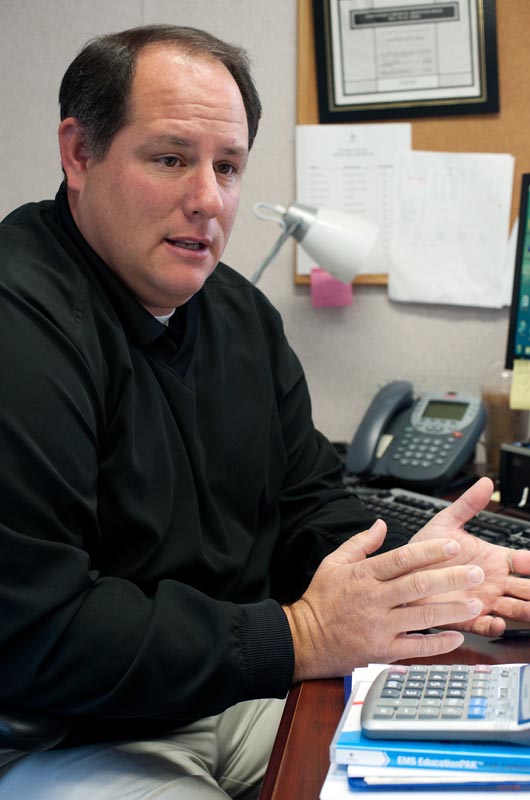
EMS Chief John Rose said Narcan has been administered to Oak Bluffs residents ranging from late teens to 50s and 60s.
He agreed heroin use is a growing concern. “It’s always been a problem but I would say it’s definitely, absolutely on the rise,” he said.
Mr. Procopio attributed the perceived overdose epidemic to a potent strain of heroin now flooding the streets, suppliers cutting heroin with synthetic substances that increase the drug’s toxicity, and people using heroin while using other drugs, such as prescription pills.
On the Island, police and health advocates said that as prescription pills have become harder to obtain and more expensive, heroin has become more prevalent. Doctors and pharmacies have been more strict about prescribing pills, Sergeant Stone said, so drug addicts have turned to heroin, which is far cheaper. Heroin is generally sold for $200 a gram, Detective Curelli said, with sometimes half a gram going for $150. Prescription pills used to be sold for $1 per milligram, he said, so a 30-milligram Percocet pill would go for $30. A pill of that strength would now be sold for $40 to $50.
But compared to prescription pills, heroin carries different risk factors.
“What happens often with people is if they go from prescribed medications to heroin, they can’t adjust the dosage,” said Tom Bennett, associate executive director of the Martha’s Vineyard Community Services who oversees the substance abuse program there. “That is when they overdose.”
“You don’t know the quality of the heroin,” Sergeant Stone said. With a 30-milligram pill of Percocet, “you know what’s going to happen,” he said, but heroin could have been cut with other substances.
Anthony Pettigrew, spokesman for the Drug Enforcement Administration in New England, said heroin is no newcomer to the state. What may be a new growing problem is fentanyl, a fast-acting narcotic already identified in heroin batches in other New England communities. Fentanyl makes something already dangerous and deadly all the more so, Mr. Pettigrew said.
Still, he said all heroin is unsafe. “When you use heroin, you are playing Russian roulette,” he said.
Detective Curelli said he wasn’t sure if fentanyl had made its way to the Vineyard, but “if it’s anywhere else, it makes its way here,” he said. “There’s no magic barbed wire fence separating us from the world.”
Numbers for non-fatal overdoses were not available from the hospital this week, though chief nurse executive Carol Bardwell said she wasn’t aware of an increase.
Since 2007 Narcan has helped Island emergency responders save lives.
The drug is administered immediately if a person is found unconscious for an unknown reason, according to protocol. It can reverse an overdose within minutes of the ambulance’s arrival, said Oak Bluffs EMS chief John Rose.
The key is getting the call early enough to act, he said.
“It’s really tricky because they are doing something they know is illegal and they know if they call 911, that ambulance and police personnel will be at their doorstep within minutes,” he said.
Over the years, Chief Rose said Narcan has been administered to Oak Bluffs residents ranging from late teens to 50s and 60s.
The state Department of Public Health has documented 2,500 overdose reversals since the initiation of a statewide Narcan program in 2007.
Other Vineyarders work to address addiction at earlier stages.
Mr. Bennett at Community Services said addiction is “a disease that can really grab a hold of your soul” and is not getting the kind of attention it should be getting at a local and national level.
“Hopefully these kinds of tragic experiences will help us to start to address it,” he said.
He added that he just took his youngest son to a treatment center. “No family is immune to this,” he said. Dr. Charles Silberstein, a psychiatrist at the Martha’s Vineyard Hospital who helps patients struggling with addiction, concurred. “It can’t be emphasized enough, most addicts don’t want to be addicts,” he said. Dr. Silberstein said he has seen a rise in fatal overdoses. “People are not using opioids for fun, they’re using them because they’re addicted and their brains have changed and they need them to feel normal,” he said.
He suggested a large public health effort is needed along with “massive public education about the risks of opioids.”
Elizabeth Berardi, a part-time Vineyard Haven resident, lost her son to a heroin overdose in January. Carter Berardi, who was 23 when he died, had just been released from a treatment center in Connecticut and was staying at a sober house.
“I am every parent’s worst nightmare, I have received the call, and I lost my son,” she said over the phone Thursday. Mrs. Berardi wrote an op-ed published in last week’s Gazette about addiction, based on her family’s experience.
She told the Gazette this week that while she knew her son’s life could be threatened by an overdose, she remained optimistic throughout his addiction.“Do we ever believe we will receive that call or that it will be our child? No,” she said.
Carter lived on the Vineyard for more than a year before he enrolled in college. During that period, he worked at the Plane View Restaurant and the Vineyard Haven Yacht Club. He loved writing, cooking and sailing. “He was extremely sensitive; he had a great, quiet but intelligent sense of humor and was just an incredibly kind human being,” Mrs. Berardi said.
She said family members had attempted to enroll him in the Vineyard House sober living facility on the Island but no beds were available.
His older brother Eugene said Carter found good and bad influences on the Island, and may have been introduced to heroin during his year here.
“The Island, being a small community, you saw both the best and the worst of it,” he said Thursday.
In the wake of his death, Ms. Berardi said she will continue to fight addiction — this time for other families. She wants to reduce the stigma surrounding heroin addiction, and increase oversight for sober living homes.
“I hope another parent does not have to stand in my shoes,” she said.
Comments
The trades are infected with
One way to stop itThe trades are infected with heroin users here. If there were a state law that required mandatory drug tests for workers in the trades that would be a big step in the right direction. The likelihood of that happening is slim, but companies that did it voluntarily would be the preferred hires due to the obviously superior quality of work. It is really pathetic to watch people working for you doing their jobs on drugs.
Why just drug testing for the
Ken Esq EdgartownWhy just drug testing for the trades? Shouldn't we mandate drug and alcohol testing for everyone?
I don't see how forming a
CarolI don't see how forming a police state is helpful. I'm a (non drug using or drinking) corporate finance professional, and I have not enjoyed the times I've had to provide a vial of urine, along with a resume, for employment. It's invasive and disgusting.
Addiction is a neurological disorder - a treatable one, though difficult to treat - and should be addressed accordingly. Depriving addicts of employment does not help them recover from their addiction. Sounds like perhaps the commenter has some personal issues of their own in this regard?
More rehab, not more jails. There's been plenty of research on what works in this area and it's medicine, not poverty and jail.
this is a glaringly obvious
frusrated vineyard haventhis is a glaringly obvious divide of the community here. drug test the trade workers?? i'd like to know what "One way to stop it" does for work. How about holding the prescribers of the medications that lead to cheaper addictions accountable, like doctors? - make it less accessible. as a woman who works in the trades, i can say it would be pretty difficult or perhaps impossible to mulch your flower beds in the hot sun on opiates. get real. have you ever actually seen someone on opiates working at your house? if so, they were probably in your hammock or sleeping in their work truck. shame on you, "One way to stop it"
And Paul Adler says
PleaseAnd Paul Adler says
***paul adler, west tisbury
This is a life and death issue. Many kids are resorting to drugs and drinking on MVY due to the lack of activities. Save a kid's life, and allow good quality safe activities.***
- See more at: http://mvgazette.com/news/2014/02/22/oak-bluffs-bowling-alley-plan-draw…
The place to begin is
Pia Webster EdgartownThe place to begin is removing the stigma of drug addiction. You are in no position to help addicts until you open your heart to them and their loved ones. Much addiction stems from self-loathing. Why drive them into a darker place with your harsh judgments? Be grateful for your own sobriety and try to help not judge.
Exactly. We are not going to
James P Edg/New HavenExactly. We are not going to arrest and shame our way out of this epidemic.
I truly agree. A bit less
opiates.com Los AngelesI truly agree. A bit less judgment and more compassion will open the path for people to reach for help.
Well said Pia!
Langston West TisburyWell said Pia!
This is all very sad but as we watch the wrong doings by addicts and drug dealers we must also remember that the majority of patients prescribed opioid pain medications do not become addicts, nor do they go on to use heroin. A recent government survey noted that just 3.6 percent of those using opioid meds for non-medical use will go on to use heroin. And those are people using them non-medically. There is a reason for concern, but are reaction should not curtail the real benefit opioid pain meds provide to those real chronic/trauma/cancer patients' lives. All addicts should get treatment. All drug dealers should do jail time and all legitimate patients should be treated with dignity and with medications that best remedy their suffering.
I empathize with families but
George Stein EdgartownI empathize with families but this is a community issue. This is a strictly cash business. ATM's provide many transactions on video. Other media alludes to local authorities going off Island on our dime to track these sources. Interstate transport is a federal offense. Charge these people with that level of jurisdiction or better yet cooperate with the local authorities at the sources and have them fund keeping these perps off Island. We can save the taxpayers here money with a little " common sense".
Just so NO!! Addiction is a
VeryAnnoyed Vineyard HavenJust so NO!! Addiction is a "PC" term. It starts with peer pressure and to be cool. If someone offers you drugs Say thanks but NO thanks! This is responsible choice, caving in a for weak minded loser!
Dear Nancy Reagan, you are
Neuenglander MVDear Nancy Reagan, you are out of touch. Thanks for ruining my lunch with your simpleton comment. The "just say no" [to drugs] campaign was not credited with any success, in fact, it was criticized as simplifying the larger societal issues. Furthermore, the target audience was for elementary school aged children and NOT adults. I wonder how that conversation would go with 'future addicts' and their doctor as he wrote them a medication prescription for an actual medical aliment, a prescription which would later be the catalyst for their heroin addiction! Your comment of "addiction" being a "PC term" suggests you did not read the article at all, or if you did you do not grasp any of the actual challenges (or human anatomy). Perhaps you should attend any AA or NA meeting and explain to them they just need to "say no" and stop trying to be "cool" (or maybe talk to a physician). They will pleased to hear the withdrawal hallucinations, tremors, and other physical and mental effects are actually not real. After all we're all just trying to be like Fonzi, right? Keep looking at the sun.
We need to offer humane and
opiates.comWe need to offer humane and effective treatment. Take shame and judgment out of the equation so more people will reach for the help they so desperately need and are so scared of. We need to provide education and awareness to our teenagers and young adults.
These comments don't make
Tim Martha's VineyardThese comments don't make sense. It is not shame that prevents an addict from accepting help. It is their addiction, which is often chosen over offered help. Sellers, addicts, and those in pain are not mutually exclusive; they overlap more often than not, so you cannot jail a seller without jailing the addict and/or person in pain. If every person who suffered with "self-loathing"-- very low self esteem-- became an addict, then we'd all be addicts. I am terribly sorry for the families who lose loved ones to this scourge, but it is not the stigma attached to addition that we need to fight. If stigma were the problem for addicts seeking help, no one would want to try heroin in the first place. And there certainly would not be the high rate of relapse. The problem on the island is that there is nothing to prevent people from wanting to use and try it. People here believe there is nothing wrong with teens using pot and alcohol. There are a lot of brain addled kids here who are ripe for heavy duty addiction and selling to support their habit. Parents who allow their kids to drink in the "safety" of their own home are typical. It's been a huge problem here for a long time. Compassion never hurts-- except when it is confused with enabling.
Drug testing in the building
john planet realityDrug testing in the building trades? Are you daft, man? What next ? Commercial fishermen ?
I can't wait for the first person to simply suggest stopping all the ferries.
Everyone on this island knows
ThisIsStupid EdgartownEveryone on this island knows where drugs are exchanged, or who sells them or uses them and these idiots need extra help... well done guys, keep up the "great" job.
"The United States makes up
National problem"The United States makes up only 4.6 percent of the world's population, but consumes 80 percent of its opioids -- and 99 percent of the world's hydrocodone, the opiate that is in Vicodin." (as of 2011 - it has to be more now...)
Are the police or the drug
ConcernedAre the police or the drug task force investigating these overdoses... the suppliers should be identified, especially the ones who are selling their prescriptions, and charged with accessory to someone's death.
As someone who once lived on
Anonymous New EnglandAs someone who once lived on the Island, and faced addiction - I can honestly say the available treatment options on MV which are effective are either non-existent, outrageously expensive, or simply unrealistic. For those suffering from pain, the increased issue with getting adequate prescription control can lead to people turning to other not-so-wise methods of self-treatment. Like another responder said, it all can overlap.
Perhaps a methadone maintenance treatment center would give people a viable option to halt the cycle. Unlike the myths, it is not trading one addiction for another. It allows people to stabilize, and transition back to being normal, contributing, active members of the community.
I tried in my time on the Island to enroll in a Suboxone treatment clinic after returning from a short stay at an overcrowded, understaffed, and un-individualized detox center. What I found was that those who prescribed Suboxone for dependancy did not accept insurances, and the out-of-pocket costs were outrageous. Maybe that has changed, but since then I have seen personally, where I am now, that Suboxone can be "streeted" and abused just like any other medication. Some do find effective relief from this option, but unlike methadone, you do not attend the clinic daily, and are not mandated to take part in individual plus group counseling. Regimented attendance, daily observation, intensive treatment, regular and surprise urinary analyses, patient oriented individual treatment plans, and earning your way to better priveleges - these are the things that can lead to a better future. Yes, someone may be on a drug, but it is a medication you are dependent on to maintain a functional life, not an illicit drug you are addicted to which keeps you from having a life.
Public education is also absolutely key as well. Addiction is a difficult subject, and it is much easier to paint the addict as a low income, low life, neer-do-well. Truth? I have met addicts from all walks of life, all income levels, doctors, lawyers, etc. Age is also not a factor. More and more people are coming forward who have faced addiction for the first time in their 70's and 80's.
So many people suffer in silence. More options are needed, options which are accessible, and can be very private if needed. Perhaps a more indepth research study should be done on the Island. There are many variables to take into consideration, more than most people would think of that can affect rate of addiction within a community. There is even a drug that first responders (Police, EMTs, Fire personnel, etc.) can carry to administer to overdose cases even sooner than the hospital - seconds can make a difference. Not all overdoses are addicts either, some can be, sadly, first time experimenters or very young children who get a hold of something and ingest even a small amount...
The need for more help, different avenues of care, is evident. I hope the community can open their minds and hearts to make this happen. No one wants the phone call that Mrs. Berardi received. My heart goes out to all who have dealt with addiction, and their families.
Stigmas have prevented care
Carol KellerStigmas have prevented care and life saving treatments for many decades in this country. Please take the time to educate yourself to be part of the solution to help our society in the epidemic called addiction.
http://www.huffingtonpost.com/a-thomas-mclellan-phd/philip-seymour-hoff…
why don't we start holding
frustrated vineyard havenwhy don't we start holding some people accountable?!! we all know and see the regulars. why can't police follow them and figure this out!? it seems too easy in such a small place. i don't get it...
Add new comment