

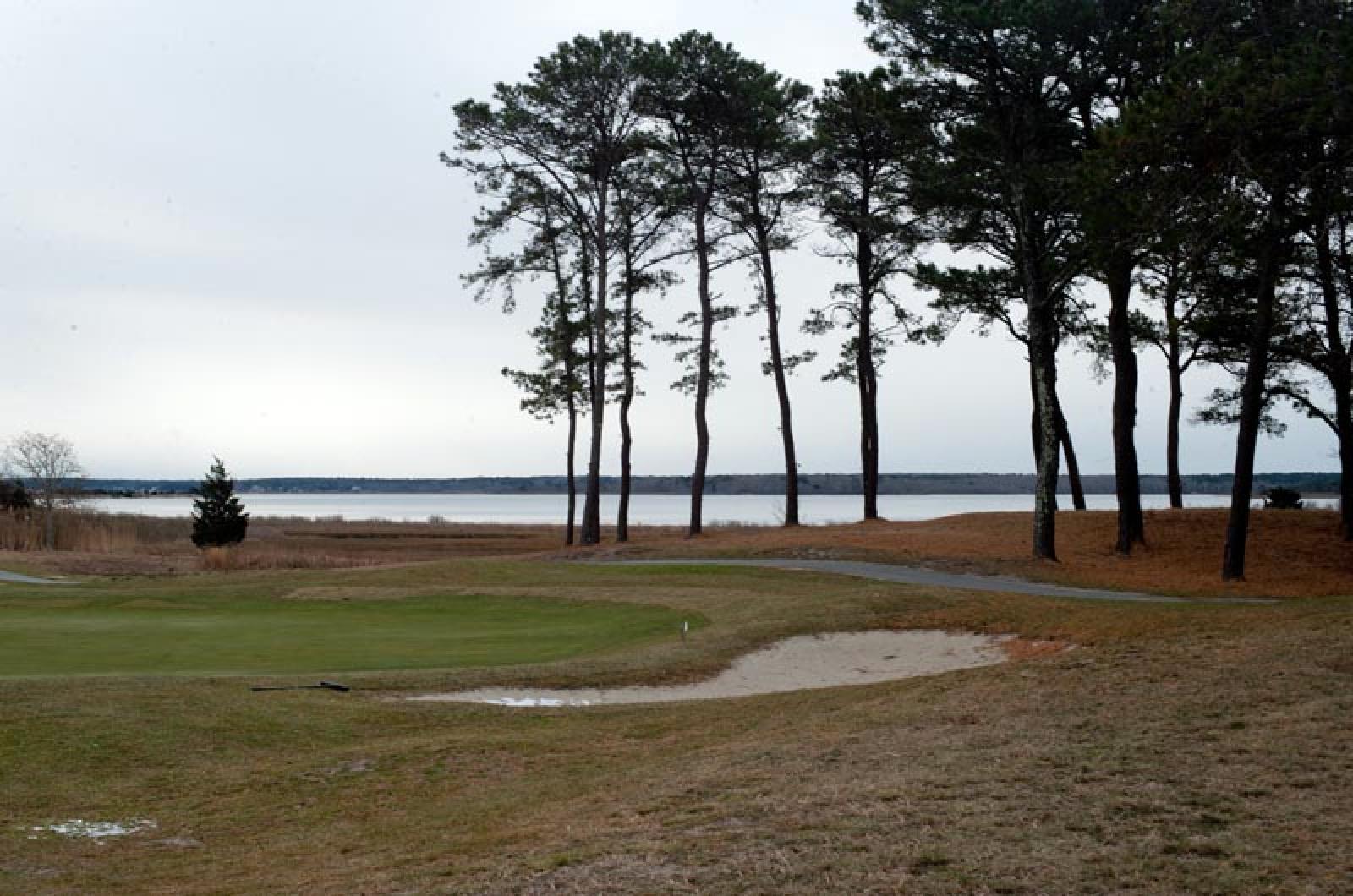
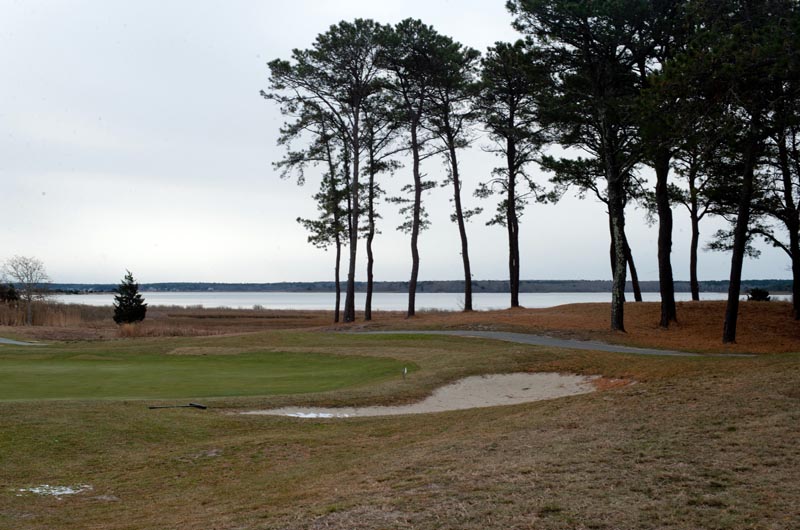
Island boards of health prepare regulations for fertilizer use to limit leaching of nitrogen and phosphorus into ponds and coastal waters. The proposal is modeled closely after one on Nantucket.
In an unprecedented regional effort to protect pond health, the Island boards of health have unveiled new potential regulations for fertilizer use on the Vineyard.
Though still in draft form, the regulations would create a licensing process for landscapers and golf course management to limit the leaching of nitrogen and phosphorus into the ponds and coastal waters of the Island.
Management from the Island’s golf courses participated in the drafting of the regulations.
Modeled after a 1992 coalition to regulate tobacco sales on the Island, the boards of health hope to raise public awareness and enact bylaws in each town to limit the quantity and type of fertilizer permissible on certain Vineyard lands. Agricultural and horticultural uses of fertilizers would be exempt from the regulations.
Enacting identical bylaws in each town would allow “us to speak with one vision about what it means to live sustainably here with nitrogen,” said Michael Loberg, a member of the Tisbury board of health, in a presentation to the All-Island selectmen last week.
The boards of health hope to take advantage of a temporary state regulatory window which allows the Cape and Islands to draft their own regulations. As early as January of 2015, regulatory control could fall back to the department of agricultural resources, which has yet to issue its own regulations.
“It was believed that our moraine had different issues than the rest of the state,” Mr. Loberg said later.
State-wide regulations are expected to curb phosphorus more than nitrogen. Nitrogen poses more of a threat to coastal waters, said Matt Poole, health agent in Edgartown.
In the case of the Vineyard, the bylaw will pass through a District of Critical Planning Concern (DCPC) process at the Martha’s Vineyard Commission. Warrant articles for a uniform bylaw will appear before each town meeting in the spring.
The regulations, which are modeled closely after Nantucket’s fertilizer regulations, propose to prohibit the application of turf fertilizer between November 16 and April 14, during rainstorms and near storm drainage systems.
Further, they limit fertilizer application to no more than a half pound of nitrogen per 1,000 square feet of turf, with cumulative applications not excessive of three pounds of nitrogen per 1,000 square feet per year. The regulations also stipulate that fertilizer applications not occur within four weeks of each other.
On golf courses, liquid fertilizer is to be restricted to a 0.1 pound of nitrogen per 1,000 square foot on a biweekly basis. Golf courses can apply fertilizer until Dec. 15.
In addition, fertilizer can only be applied if it contains at least 50 per cent slow-release nitrogen, a form that is generally accepted to lead to less environmental loss.
“If you apply in excess of the plant’s ability to take it up it is likely to wind up in the water table and therefore some coastal water body,” Mr. Poole explained later. “If you apply at a rate where the plant is able to process it, it becomes growth.”
The regulations are designed to teach Islanders that “putting down [a] product that the plants can’t take up is basically costing them money,” Mr. Poole said. “It’s primarily a public education effort that falls into this regulatory window that the state has opened up with us.”
The Island would also ban the use of phosphorus except in a case of proven phosphorus deficiency.
The fee structure for licenses and the relevant coursework required to gain a license is still up for debate. Arthur Smadbeck, selectman in Edgartown, said in order for the program to be embraced, it may be better to remove a fee structure entirely.
Enforcement duties are to be assigned to the town boards of health, but the authors noted that fertilizer is inherently difficult to monitor.
“The idea is for it to be a talking point and a center for conversation,” Mr. Poole said.
Comments
Excellent. Great policy move
Carol formerly ChilmarkExcellent. Great policy move, very smart.
Agreed! Thoughtful policy
Scott EdgartownAgreed! Thoughtful policy and good collaboration. Now, if we can just get our heads together on sewering the neighborhoods abutting the ponds...
Why do the local boards of
deshandra brown obWhy do the local boards of health fail to discuss a major contributor to the high fecal chloroform counts in our ponds? Dog waste from owners who do not clean up after their dogs. It washes into to ponds and contributes to the usual summer closings as much as the migratory waterfowl.
Can't happen soon enough.
Jeanne Barron West TisburyCan't happen soon enough. Must help our ponds stay clear and healthy!
A good first step in
steve East FalmouthA good first step in debunking the myth of the "healthy lawn"
This is a good idea. I would
Walt Vineyard HavenThis is a good idea. I would only add that the landscape companies that apply liquid fertilizers with spray equipment are possibly the most detrimental. Some are claiming to be organic but not necessarily so. The formulations used are meant to be mostly soluble with some suspended particulate. These need to be applied more frequently to attain the same results as a slow release dry fertilizer. To get that high nitrogen level with liquids, ammonium compounds are used and are supposed to be washed in completely to create that instant green look.
Add new comment