
Even if ants were a passion of his, William Harris Ashmead was not exclusive.
Even if ants were a passion of his, William Harris Ashmead was not exclusive.
This Philadelphia-born scientist observed and named 500 ant species, though his ant-ics went beyond those picnic preventers and deeper into the realm of insect obsession.
Ashmead was prolific in his study, naming, systematics work, and collection of Hymenoptera, the scientific order that includes ants, wasps, sawflies, and bees. So much so that the United States National Museum (now Smithsonian Institute) gave him an honorary custodial appointment over their collection and this unpaid position granted him the title hymenopterist.
His interest stemmed from his work in agriculture, especially fruit agronomy, but was not limited in scope to edible crops. An observation of a rose pest gained his attention and now has mine.
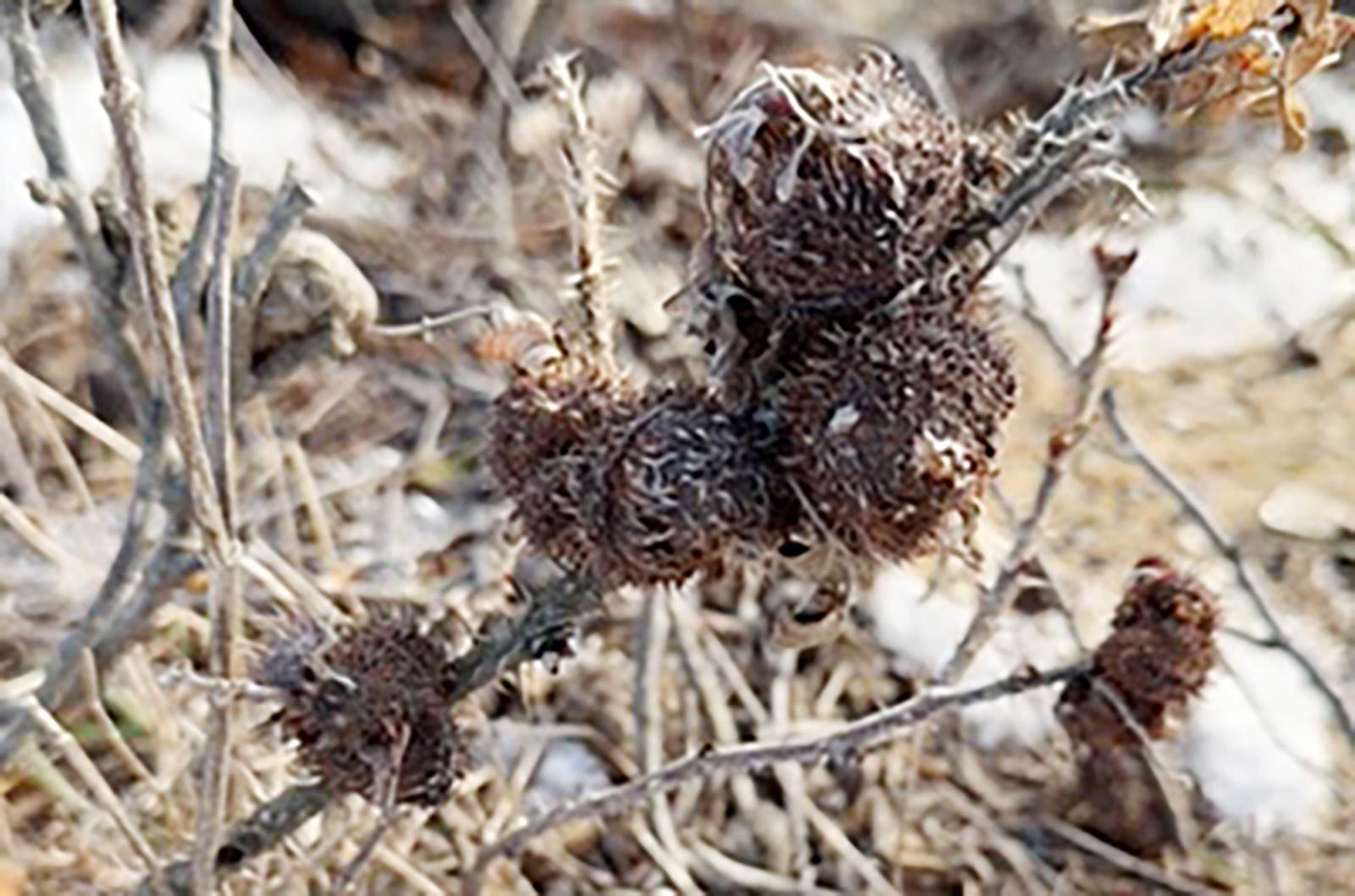
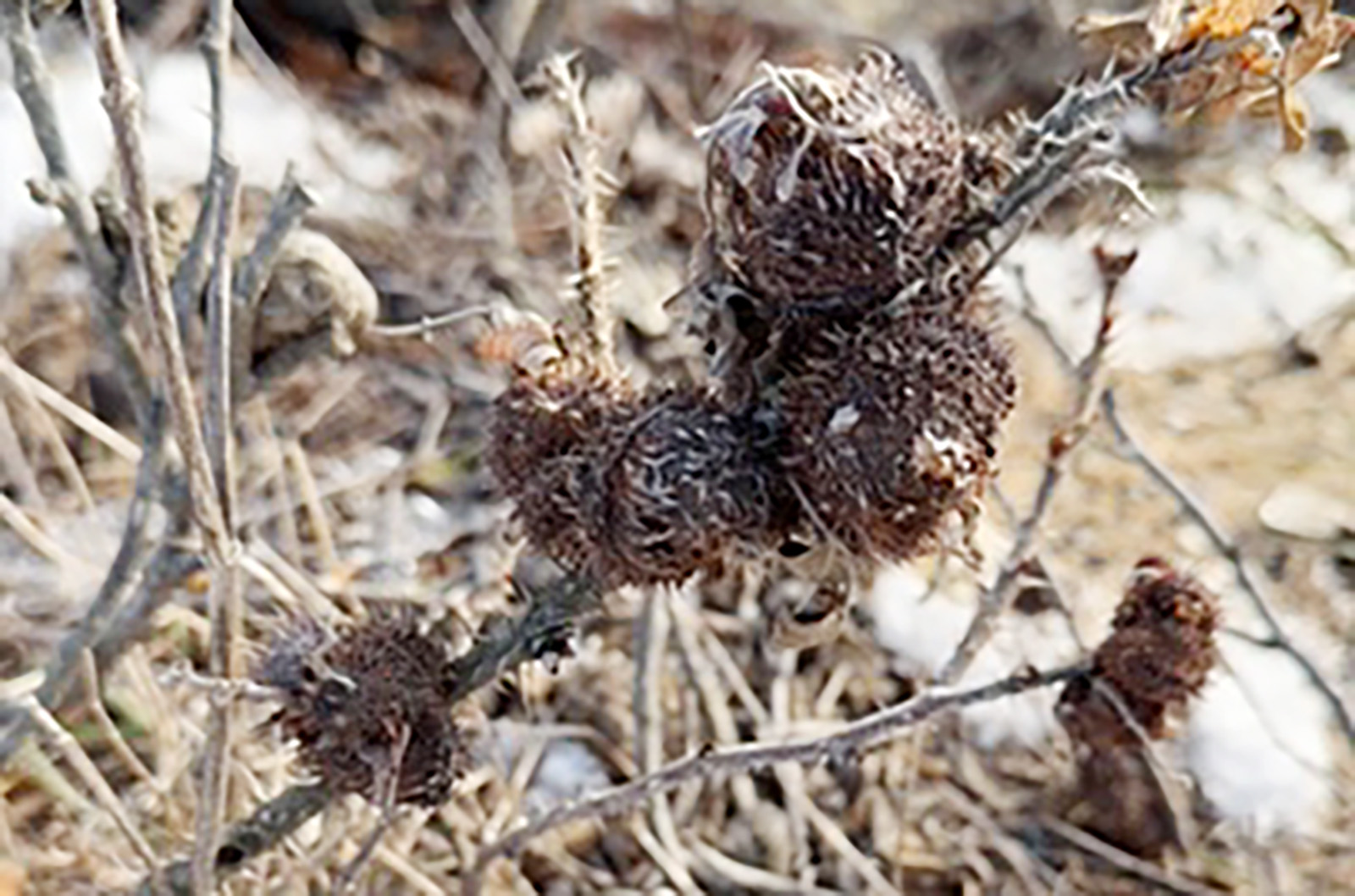
First documented by Ashmead, a Cynipid wasp he called Diplolepsis spinosa, commonly called many-spined twig gall, thrived for more than 125 generations since Ashmead’s observation before I recently observed it roadside at Lobsterville. To be most accurate, I didn’t observe the insect, rather I noticed its winter home ensconced in the care and comfort of its partner plant.
What I saw was many spiny, bulbous growths on the Rosa rugosa plants that lined the parking area. These growths are called galls and are plant swellings caused by the aforementioned wasp species.
The wasp in question has a quick life with its less than two-week existence in which it never eats, only mates and lays eggs. Each female twig gall wasp will find a suitable rose plant in the spring or summer and inject 16 or so eggs into the plant which will hatch in a few weeks’ time. As the emerged larva begins to eat the plant’s cells, the plant fights back by producing more cells around the larva, essentially building a swelled ball of plant tissue. This swelling is multi-chambered and is the perfect structure to protect the plant from the larva and provide a nursery for those larvae to grow.
Only one generation per year is housed in that gall and over the winter the larva will be cozy and protected by the gall. Because these galls are higher up on the shrub, they will not usually be covered by snow and with the help of glycerol, a natural antifreeze, the larva can survive the cold weather.
Come spring the larva will pupate and the emerging adult will chew its way out of the gall to start the cycle all over again. As garden columnist Lynn Irons likes to say, “Isn’t nature grand?”
The color and consistency of this multi-chambered wasp gall varies from a soft, yellow-green orb in the spring to a hard woody reddish-purple one in the fall. What stays mostly constant are the spines or spikes that seemingly serve as a deterrent to any other hungry creature that might want to snack on the otherwise tender plant parts.
This is only one type of gall which are ubiquitous on many Island plants. While this species was widespread on the rosa rugosa, and rose plants are a major host to gall wasps, it is not the only local gall. Willow, beech, and members of the composite family of plants are also susceptible to gall wasps, though I suspect that the galls most familiar to islanders are the oak apple galls, found on oak trees.
Luckily both wasp and plant species will survive and live happily ever after in the sun, sand, and surf, though it might seem that these wasps lead a more galling lifestyle in their parasite’s paradise.
Suzan Bellincampi is director of the Felix Neck Wildlife Sanctuary in Edgartown, and author of Martha’s Vineyard: A Field Guide to Island Nature and The Nature of Martha’s Vineyard.
Add new comment