



We had extended periods where snow covered the ground, hiding the grass that Canada geese and brant like to eat. So where do they go when the grass they prefer in Ocean Park is not available?
We had extended periods where snow covered the ground, hiding the grass that Canada geese and brant like to eat. So where do they go when the grass they prefer in Ocean Park is not available? They are both waterfowl, so they move to feed on vegetation growing in the ponds and nearshore waters. Are geese more abundant in Sengekontacket Pond? The brant range from West Chop to Chappaquiddick, and I spotted 55 brant in Sunset Lake on Dec. 31 when Ocean Park grass was unavailable.
On Jan. 9, I heard my first sign of the coming spring: a tufted titmouse was loudly singing in my Vineyard Haven yard! I am surprised that I have not heard Carolina wrens or black-capped chickadees yet.
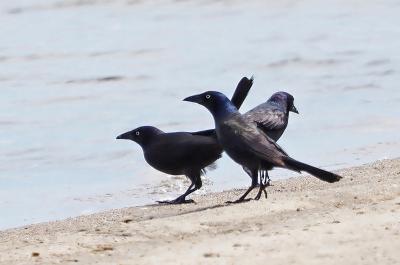
Common Grackles
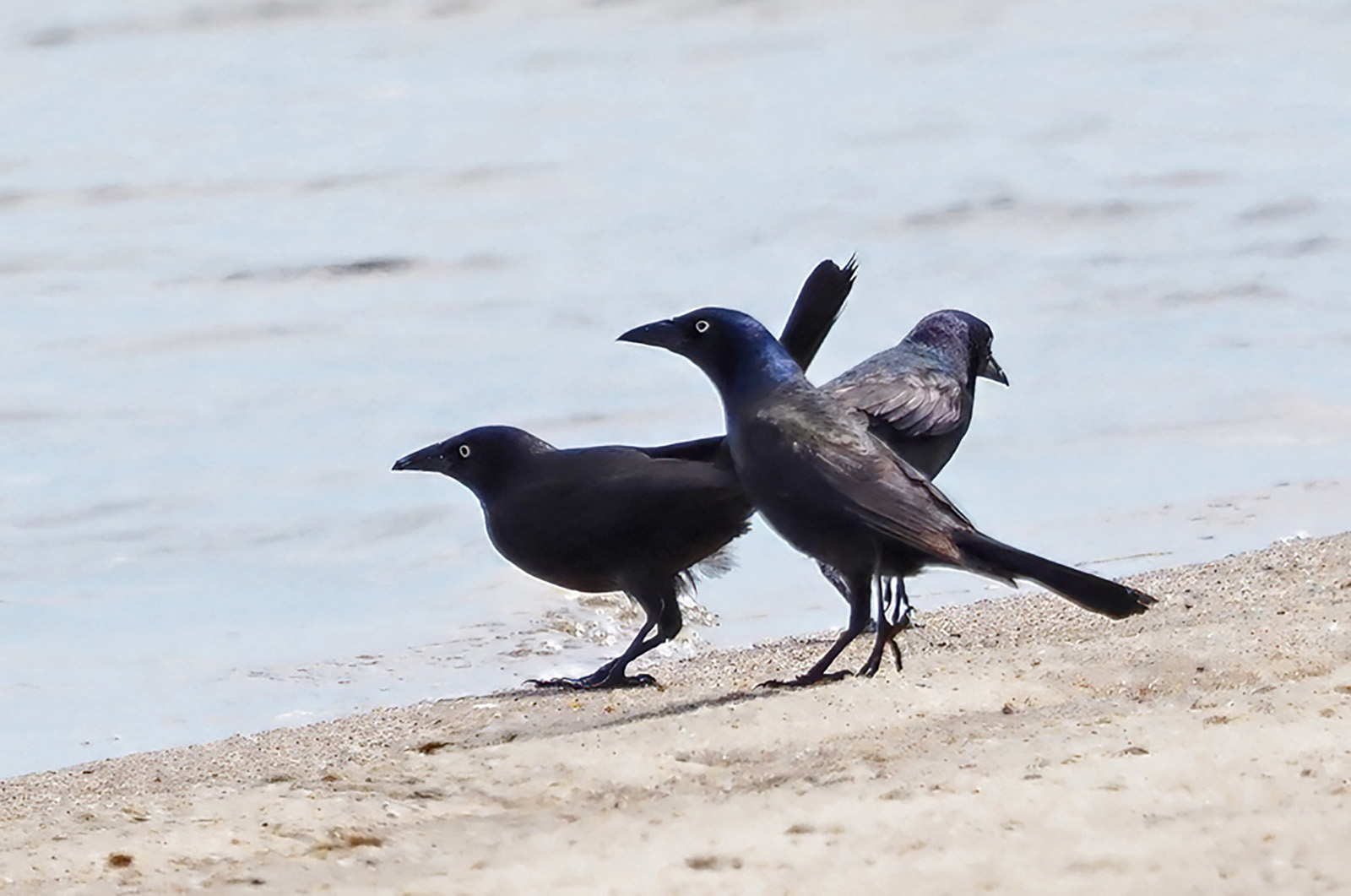
Common Grackles
New species for the winter include two white-winged gulls, so called because they differ from most gulls, which have some black on their wings. Charles Morano spotted one glaucous gull on Norton Point on Jan. 5, and the next day he saw both the glaucous and the smaller Iceland gull, as well as a large flock of 39 Bonaparte’s gulls. Ruth Richards found one black-legged kittiwake from Lucy Vincent on Jan. 4.
Winter waterfowl, like mallards, black ducks, common goldeneye, greater scaup, common eider and all three scoter species are widespread. More notable sightings on Jan. 8 include David Benvent and Cynthia Bloomquist finding two pintails in the Mill Pond, and David Benvent seeing a common merganser in Town Cove. A male Barrow’s goldeneye is lingering at the drawbridge. On Jan. 9, it was seen by multiple observers: Bob Shriber, Nancy Nordin, Charles Morano, Cynthia Bloomquist and me. Nancy Weaver and Lisa Maxfield observed a pair of northern shovelers at Brush Pond on Jan. 6.
Razorbills are the most common alcid around here. Matt Pelikan saw six in Menemsha Harbor on Jan. 5. On Jan. 6, Bob Shriber found five in Aquinnah on Jan. 6. Also on Jan. 6, Charles Morano estimated a flock of 215 from Norton Point, and he observed 14 razorbills and one dovekie from Pilots Landing on Jan. 10.

Fish Crow
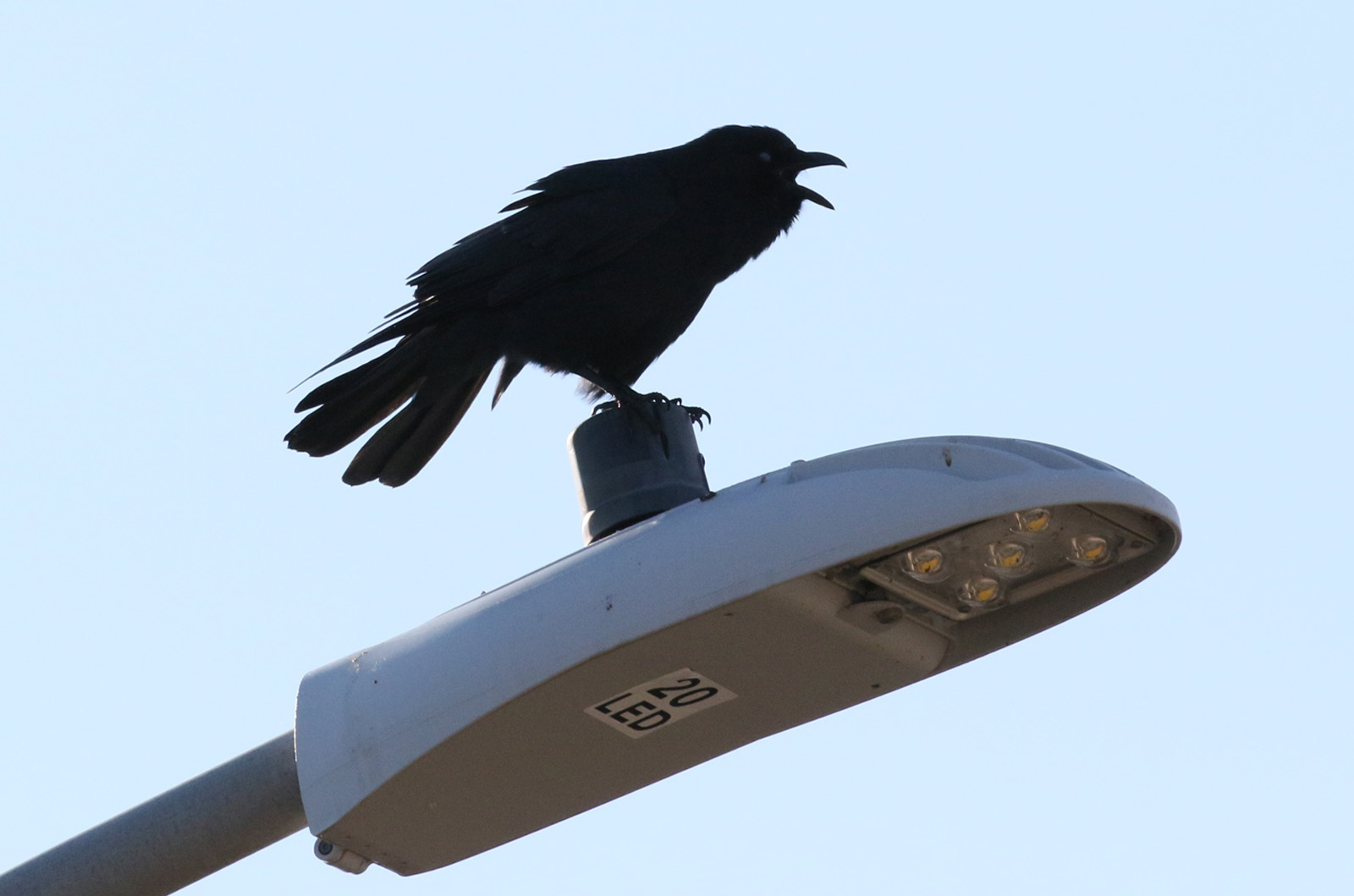
Fish Crow
Nancy Nordin, Shea Fee, Luanne Johnson and Margaret Curtin spotted another seabird, a northern gannet, near Eel Pond on Jan. 4.
David Benvent and Shawn Wallace found one pied-billed grebe on Cape Pogue on Jan. 4.
Charles Morano found a pair of eastern phoebes, one at Cove Meadow Preserve on Jan. 1 and another along Donaldbin Close on Jan. 8. Carolina wrens are the most common wren, but not the only one we see. David Benvent spotted two marsh wrens recently, one at Squibnocket Pond on Jan. 1 and another at Quansoo on Jan. 10.
Janet Woodcock counted 110 fish crows in downtown Vineyard Haven on Jan. 7.

Glaucous Gull

Glaucous Gull
Three ground-loving species have been observed. Charles Morano spotted 65 horned larks at Katama farm on Jan. 5, while Nancy Weaver, Bob Shriber and David Benvent all had one on nearby Norton Point on Jan. 9. Nancy Weaver, Janet Woodcock and Nancy Weaver spotted an American pipit at Eastville Beach on Jan. 1. And Shawn Wallace and David Benvent found three American pipits on Cape Poge on Jan. 4.
Two large flocks of cedar waxwings have been reported. On Jan. 2, Nancy Weaver estimated a flock of 100 of them along the Pocha Pond trail at Wasque, and David Benvent spotted likely the same large flock near the northern end of Pocha Road. Charles Morano counted 42 at Pilots Landing on Jan. 10. Numerous other smaller flocks have also been reported across the Island.

Iceland Gull
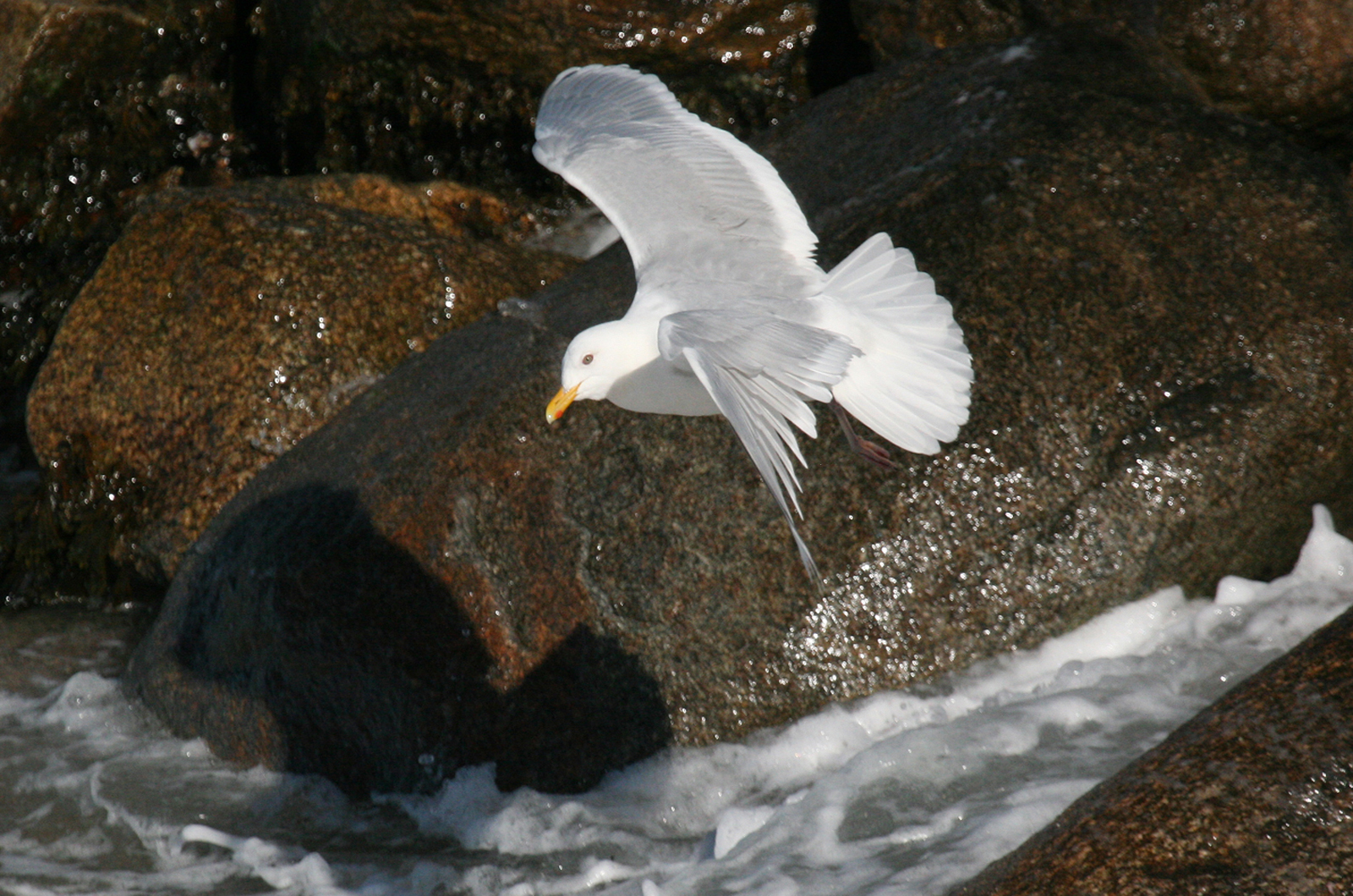
Iceland Gull
Two lingering blackbirds (they may or may not stay through the winter) were reported this week. Allan Keith had two common grackles visiting his Chilmark feeders on Jan. 8. There were also two reports of Baltimore orioles on Jan. 4. Lisa Maxfield saw one at Brush Pond, and Catherine Deese has one visiting her Chilmark feeders.
There are three lingering warblers other than the yellow-rumped or pine warblers, which are winter residents. Lisa Maxfield still has an orange-crowned warbler visiting her Oak Bluffs feeders as of Jan. 4, and the next day Nancy Nordin observed one at her West Tisbury feeders. On Jan. 5, Nancy Weaver spotted the lingering yellow-breasted chat at Tashmoo Springs, and Matt Pelikan found another along Flanders Lane in Menemsha.
Unfortunately, the avian flu has struck again, this time affecting a flock of 350 chickens at a farm in Katama. Edgartown health agent Brice Boutot has sent out a press release about this disease which includes the following about feeding birds: “The best practice is to abstain from feeding wild birds. Remove bird-feeders, bird-baths, standing water and other conditions which encourage congregation of wild birds, potentially allowing for the virus to spread more easily,”

Orange Crowned Warbler

Orange Crowned Warbler
I emailed him for clarification, asking whether there are some parts of the Island where this policy does not apply. His response: “The advisory to refrain from feeding birds is for the purpose of preventing conditions where birds congregate and spread the virus. It does not matter if they are in a woodland, far from waterfowl habitat or known affected sites or not visited by turkeys, etc. The advisory applies Island-wide, for all birds, in all locations, as they naturally will spread their wings and move around the Island.”
The Massachusetts Division of Fisheries and Wildlife asks for your help in tracking cases of the avian flu. If you find five or more sick or dead wild birds, please report them at mass.gov/reportbirds.
Please email your sightings to [email protected].
Robert Culbert is an ecological consultant living in Vineyard Haven.
Add new comment