


Mother Nature giveth and she taketh away.
Mother Nature giveth and she taketh away.
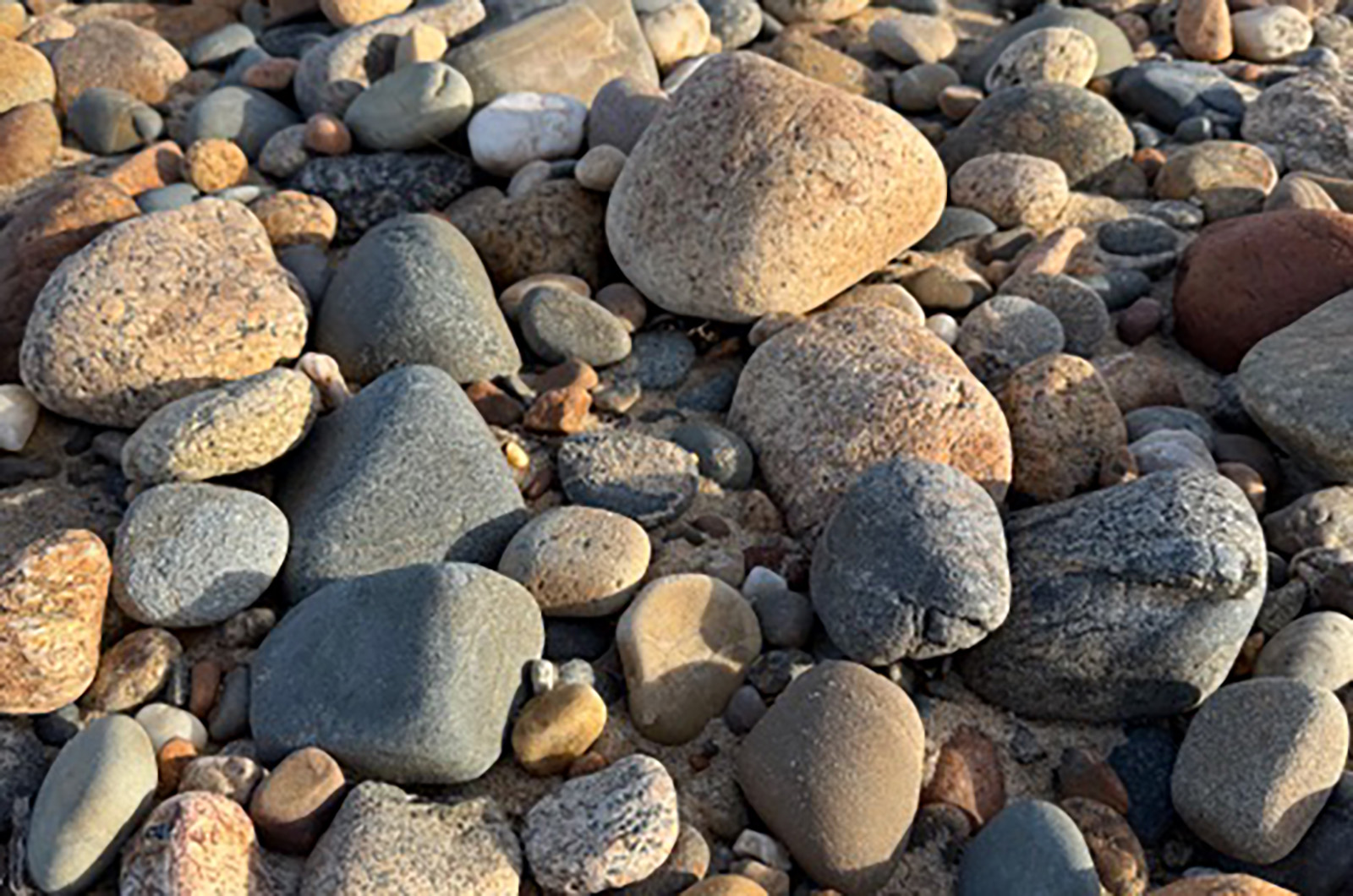
That adage is so very true when it comes to the sand on many of our coastal beaches. Last weekend, a walk on Lobsterville Beach made that fact quite apparent. The beach was covered with fist-sized rocks, not the sandy stretch that folks flock to come summer.
The surficial conditions of that and many other ocean-facing shorelines vary greatly, but especially seasonally. The rocky circumstance is an annual occurrence. Call it the winter beach.
Winter beaches are narrow and rocky, having less sand and more cobbles. Cobbles are classified as rocks sized two and a half to 10 inches. These are larger than pebbles (0.1-2.5 inches) and smaller than boulders (larger than 10 inches). Size-wise, sand comes in below pebbles, and then smaller particles go down to silts and clays, according to the Wentworth grain size chart from the U.S. Geological Survey.
A few important factors cause the winter beach profile. Stronger winds and storms create large and powerful waves that pull sand from the beach and deposit it in offshore sandbars, leaving the heavier cobbles behind.
High-energy tides and waves result not only from storms, but from tides that are enhanced by the orbits of the earth and the moon. Tidal extremes increase in the winter in the Northern Hemisphere as a result of the elliptical orbits of the earth around the sun and the moon around the earth.
The moon is closest to the earth monthly at its perigee, and the earth is closest to the sun during its perihelion. Tidal extremes occur when the moon’s perigee and the earth’s perihelion coincide. Due to the addition of these gravitational forces, a more powerful push and pull of the waves is experienced.
So, sand is pulled to those offshore bars. This, along with robust wave action, causes the beach slope to flatten and expose those cobbles. This winter beach is more susceptible to erosion and the undercutting of any cliffs or vertical-edged upper beach area. Sea caves or hollows get eaten away from the bluff, and eventually the areas above those cavities weaken and rock and sand falls or collapse occurs (think of changes at Lucy Vincent over the last few years).
But don’t despair, all is not lost. Summer will come again and with it, favorable changes to the beach. Waves and tides are smaller, gentler and are low-energy. Sand is then pushed from the offshore sand bars back onto the beach, filling in the spaces between the cobbles and overlaying them, bringing back the sandy beaches that are way easier on the feet. The beach profile becomes wider, though can have a steeper face.
Some love the sandy beaches and the summer coastline brings thousands to Island shores to dip a toe (but not stub it) on the soft sand. Others prefer a desolate winter beach that requires sturdy shoes and bundling up in more than just a bikini.
Either way, those of us who are able to experience the beach in all seasons should consider ourselves very fortunate and appreciate its variations. And if you can’t, know that life, and the conditions at the beach, are will always be a tradeoff.
Suzan Bellincampi is director of the Felix Neck Wildlife Sanctuary in Edgartown, and author of Martha’s Vineyard: A Field Guide to Island Nature and The Nature of Martha’s Vineyard.
Add new comment