

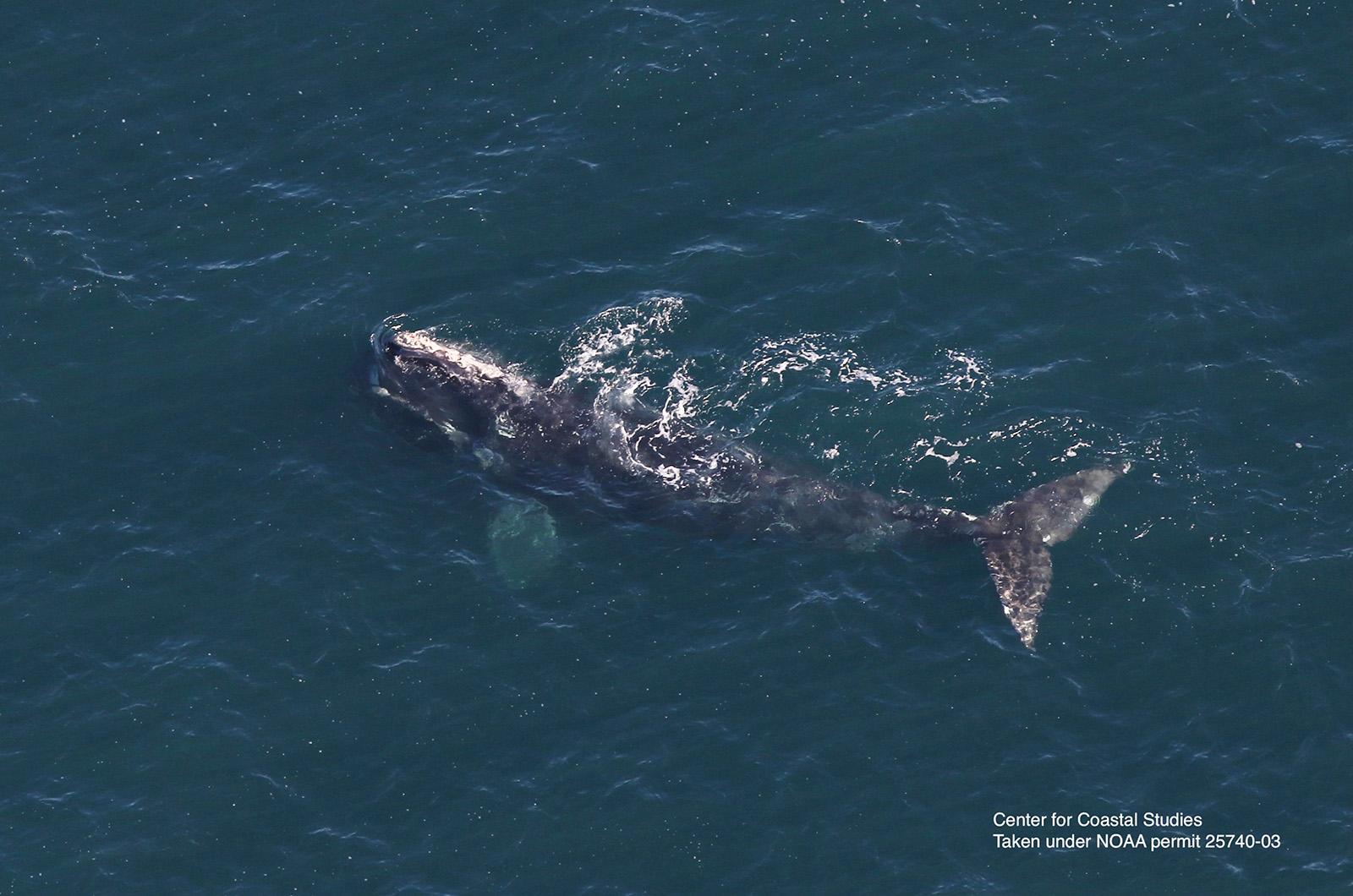
A right whale's trip from Ireland to Cape Cod Bay has surprised scientists and restored hope that some of the historic whale habitats may still be useful to the critically endangered species.
The sojourn of a critically endangered North Atlantic right whale from Ireland to the coast of Massachusetts stunned scientists last month.
A right whale last seen in Donegal Bay in the summer of 2024 traveled 3,000 to the Bay State and was spotted by scientists during an aerial survey in November. While there are rare instances of the whales traveling from the western Atlantic to the east and back, this appears to be the first documented case of a whale initially sighted in the eastern North Atlantic and later resurfacing off the U.S.
Researchers called the venture extraordinary and say it suggests that historical right whale habitats may still be important as the species searches for suitable habitat.
There are only about 380 North Atlantic right whales left on Earth, according to population estimates from the New England Aquarium. The species has been endangered since the 1970s and it has been under threat from fishing gear entanglements and vessel strikes.
The sighting means that right whales might still be able to live in its historical habitats.
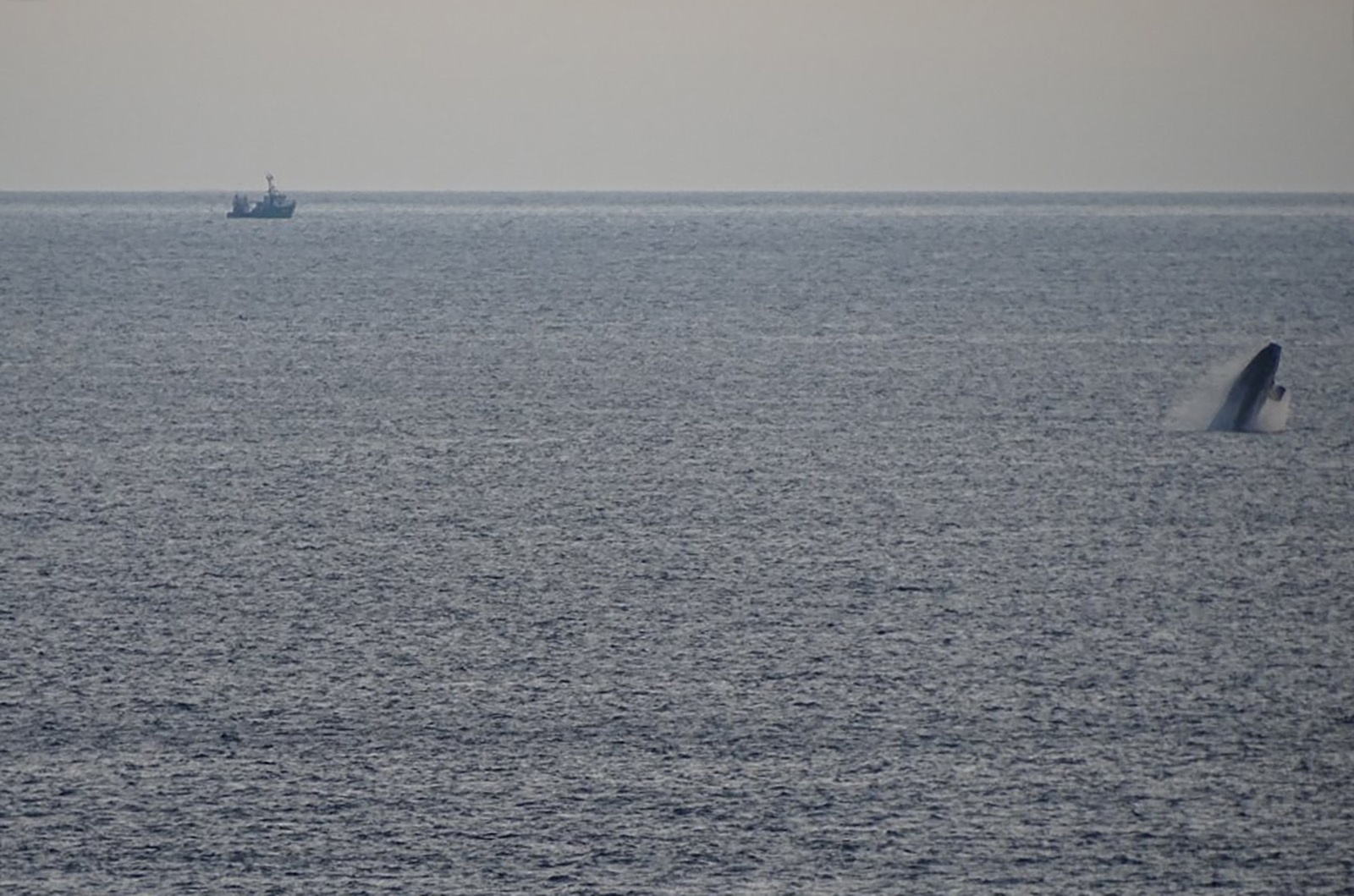
The sighting means that right whales might still be able to live in its historical habitats.
The species primarily lives in coastal western Atlantic waters and the Center for Coastal Studies documents half of the entire population in and around Cape Cod Bay each year. The whale traveling from Ireland was captured in an aerial survey on Nov. 19 and was also the first right whale sighting of the season.
“The first sighting of the year is always exciting, but we didn’t yet realize just how remarkable this one would turn out to be,” said Ryan Schosberg, a researcher at the center, in a press release.
Mr. Schosberg spotted the whale with his fellow researcher Annie Bartlett and said it was feeding alone at the surface near a group of humpback whales. They quickly snapped photos of the whale and noticed unique scarring on the right side of its head.
The scarring matched the 2024 photos taken in Donegal Bay.
“Securing any international photo ID matches of large whales requires a lot of effort and a fair bit of luck,” said Pádraig Whooley, a sightings officer at the Irish Whale & Dolphin Group. “When these matches are made across ocean basins, you need to get even luckier.”
“But where else would one expect to find a right whale with Irish connections if not off Boston?” Mr. Whooley said.
Historically, right whales were regularly found near Ireland but their population was eliminated in the days of whaling.
Right whale sightings in the region still trickle in every few years, though many aren’t photographed well enough to be compared on the North Atlantic Right Whale Catalog, a database filled with millions of photos tracking individuals over the course of their lives that is managed by the Anderson Cabot Center for Ocean Life at the New England Aquarium.
Scientists said the new discovery could suggest that historical habitats for the North Atlantic right whale may still be important as feeding grounds change under climate change.
“Seeing a whale photographed in Ireland reappear off Boston is extraordinary,” said Dr. Daniel Palacios, director of the Right Whale Ecology Program at the CCS. “Encounters like this highlight both their resilience and the importance of international cooperation to support their recovery.”
Editor's note: a previous version of this article incorrectly noted where the right whale was seen. It was seen off Boston.
Comments
LUCK OF THE IRISH! HOPEFULLY
JIMBOLUCK OF THE IRISH! HOPEFULLY THEY CAME HERE TO MATE!
Add new comment