


Islanders need not take advice from Dr. Potato.
Islanders need not take advice from Dr. Potato.
According to the Idaho Potato Commission, Dr. Potato “isn’t a real doctor but a team of potato experts ready to answer all of your potato questions.” Dr. Potato responds to all spud inquiries and has more than 900 potato advice columns to their name. One of those queries is related to potatoes that are partially green.
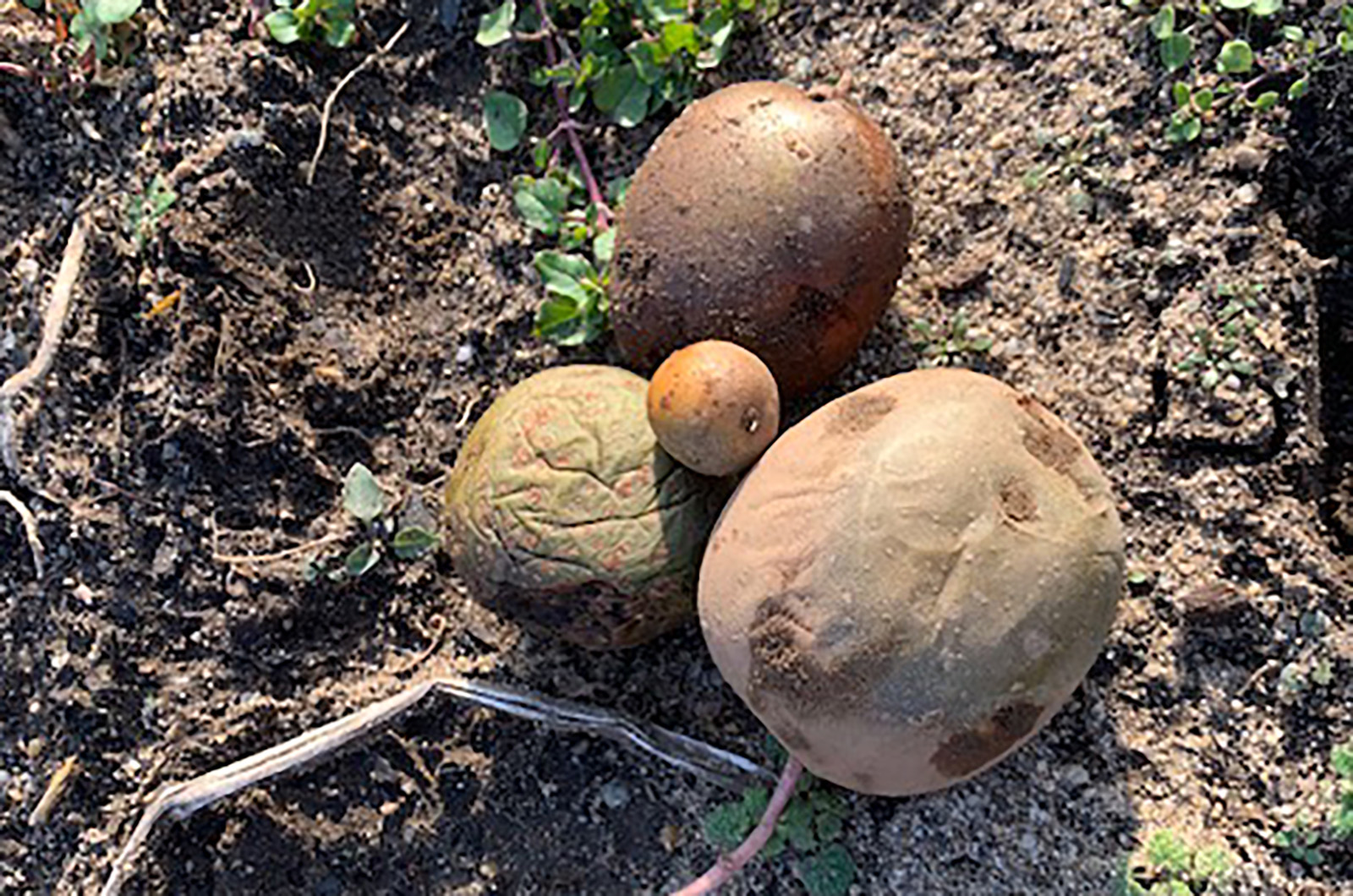
Dr. Potato has answers, but we have local expert farmer Layne Wheeler from Island Grown Initiative to help us navigate tuber troubles. Last week, during a potato glean, she gave the volunteers these instructions regarding the greenish potatoes that were partially or fully exposed, and sticking out of the soil. She advised us to harvest only potatoes that were covered with dirt, and “leave them if they have been kissed by the sun.”
Her poetic prose is great guidance and should be followed. Those kissed by the sun and not fully buried had been exposed to light and were eerily greenish. This color conundrum can happen in the field, at the farmstand and grocery store, or in your home. No matter if the cause is natural or artificial light, green potatoes are not good.
Often it is not the whole potato that appears green. The skin and sometimes a bit of the flesh below can be miscolored on sections of an otherwise brown or red spud. The greening results from light (natural and artificial), which causes the potato to produce chlorophyll, starting on its outer skin and working inward. Chlorophyll is fine if you want your potato to sprout and grow; however, it is not ok if the potato is destined for your dinner table.
That light-inspired, chlorophyll-fueled growth spurt activates a glycoalkaloid toxin called solanine. Solanine, and its derivative chaconine, are useful for the plant as they have pesticidal properties that serve as a natural defense against plant pests.
These two chemical compounds are also problematic for humans and can cause illness and even death if ingested. Symptoms can include gastrointestinal issues, vomiting, headaches, flushing, fever, brain fog, and disorientation and can be fatal. And these can befall a potato eater shortly after or as long as a few days after the consuming the stricken spud.
While there are the visual color cues to avoid a solanine-laden tater, taste is a tell-all. Potatoes with higher solanine content are bitter, so your tongue could tip you off. These impacted parts can be cut away, but why take chances?
Numerous cases of solanine poison have been documented, and while fatalities are rare, there have been 30 deaths from 2,000 cases reported between 1865 and 1983. The numbers of illnesses are likely underestimated and underreported due to the similarities of symptoms to general food poisonings and other medical conditions. Occasional mass poisonings have occurred in places such as schools and in the military.
Preventing illness is best served through avoidance of affected tubers and proper care of your potatoes. As Layne noted, leave the exposed green, or sun-kissed spuds in the field or garden. Better yet, make sure those tubers are always tucked in (and green-free) by planting them deep enough to stay underground, or by hilling or mounding the soil to provide coverage during their growth. And since artificial light can encourage the toxins, be sure to properly store your harvested spuds in dark places.
The meat and potatoes of the issue is clear. Get rid of the green ones like a hot potato. And always follow the advice of fabulous farmers like Layne who has a very green thumb, but never green potatoes in her pantry.
Suzan Bellincampi is director of the Felix Neck Wildlife Sanctuary in Edgartown, and author of Martha’s Vineyard: A Field Guide to Island Nature and The Nature of Martha’s Vineyard.
Add new comment