


Every year the Finch Research Network predicts whether winter finches will irrupt southward from the boreal forests of northern Canada.
Every year the Finch Research Network predicts whether winter finches will irrupt southward from the boreal forests of northern Canada. Their predictions are based on the success of the nesting season and their forecasts of the upcoming winter’s food supply. They predict that the following species may migrate south in heavier numbers than usual: purple finches, pine siskins, red-breasted nuthatches and evening grosbeaks, with redpolls and red crossbills coming later in the winter.
Red-breasted nuthatches are here in higher numbers.
Common Raven
Common Raven
A few purple finches have been reported, most recently Nancy Weaver spotted one near the intersection of Moshup Trail and Old South Road on Nov. 3.
The first pine siskin was seen by Greg Power at Felix Neck on Oct. 22, and now Tim Rush spotted the first evening grosbeak (a female or juvenile) in Coffin’s Field on Nov. 5. Hopefully this is just the beginning of the influx.
The most surprising find this week is a cackling goose. Allan and Lucy Keith and Susan Whiting found one in a flock of 30 Canada geese at the Keith Farm on Nov. 5. This relatively new species was split from the much larger and longer-necked Canada goose, making it fairly simple to distinguish. Bob Shriber and Nancy Nordin saw it on Nov. 7, and Ruth Richards and Nancy Weaver found it on Nov. 8.
Snow buntings are now arriving in force. Bob Shriber observed one at Black Point on Nov. 4. On Nov. 7 Nancy Weaver located one at the Gay Head Cliffs, and the trio of Chris and Ben Schmandt and Mason Bunker watched three at Long Point. The next day Sea Williams and Bridget Dunnigan counted four at Long Point, and the above trio found two at Squibnocket Pond Reservation South.
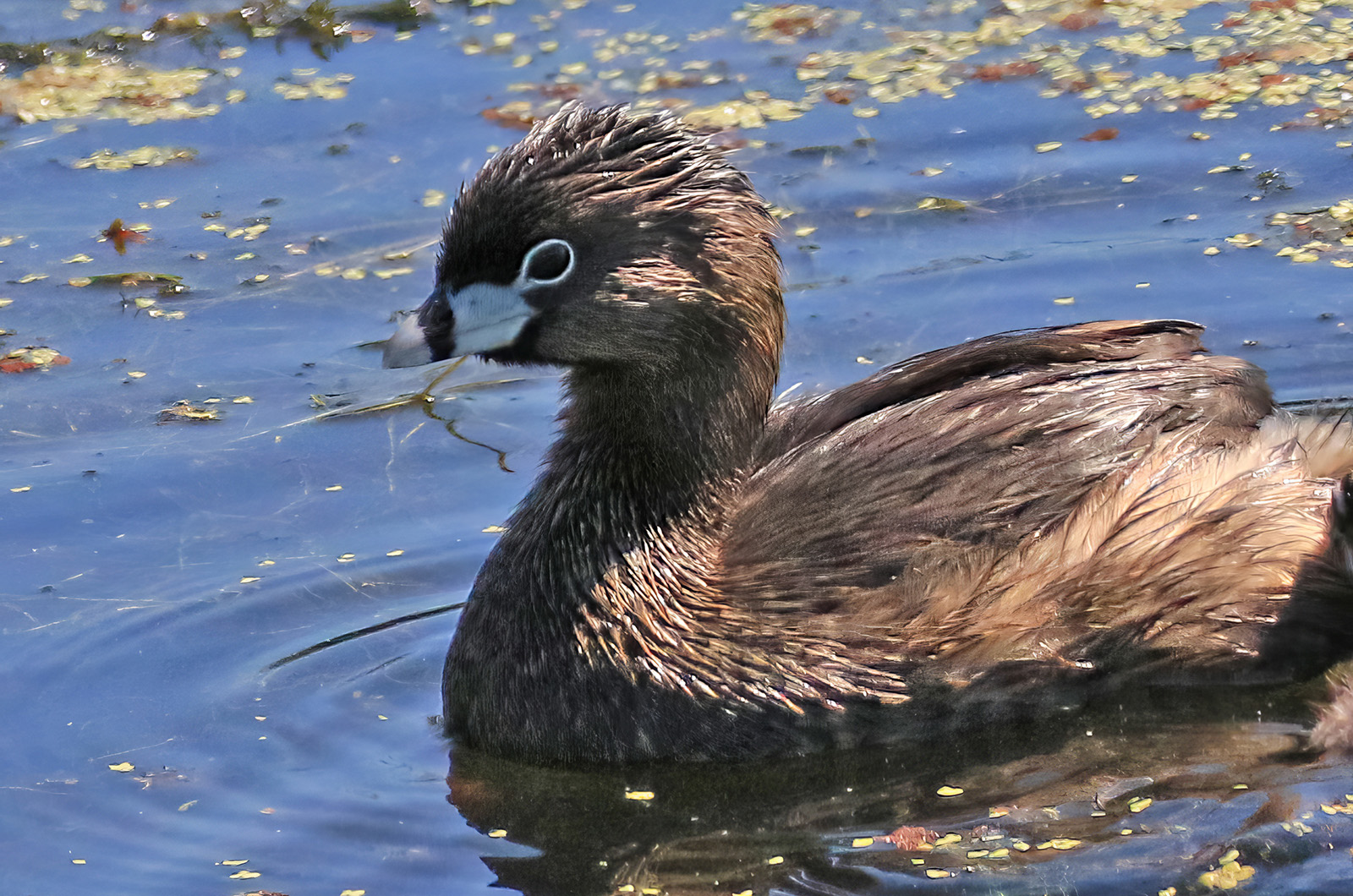
Nancy Weaver and Ruth Richards saw the first snow geese of the season, a flock of 15 flying westward past Long Point on Nov. 4. That same day Nancy Weaver saw a seasonal first pied-billed grebe on Middlepoint Cove.
Two eastern cattle-egrets are still present in Katama. as their name suggests, they frequent herds of cattle.

Tennessee Warbler
Tennessee Warbler
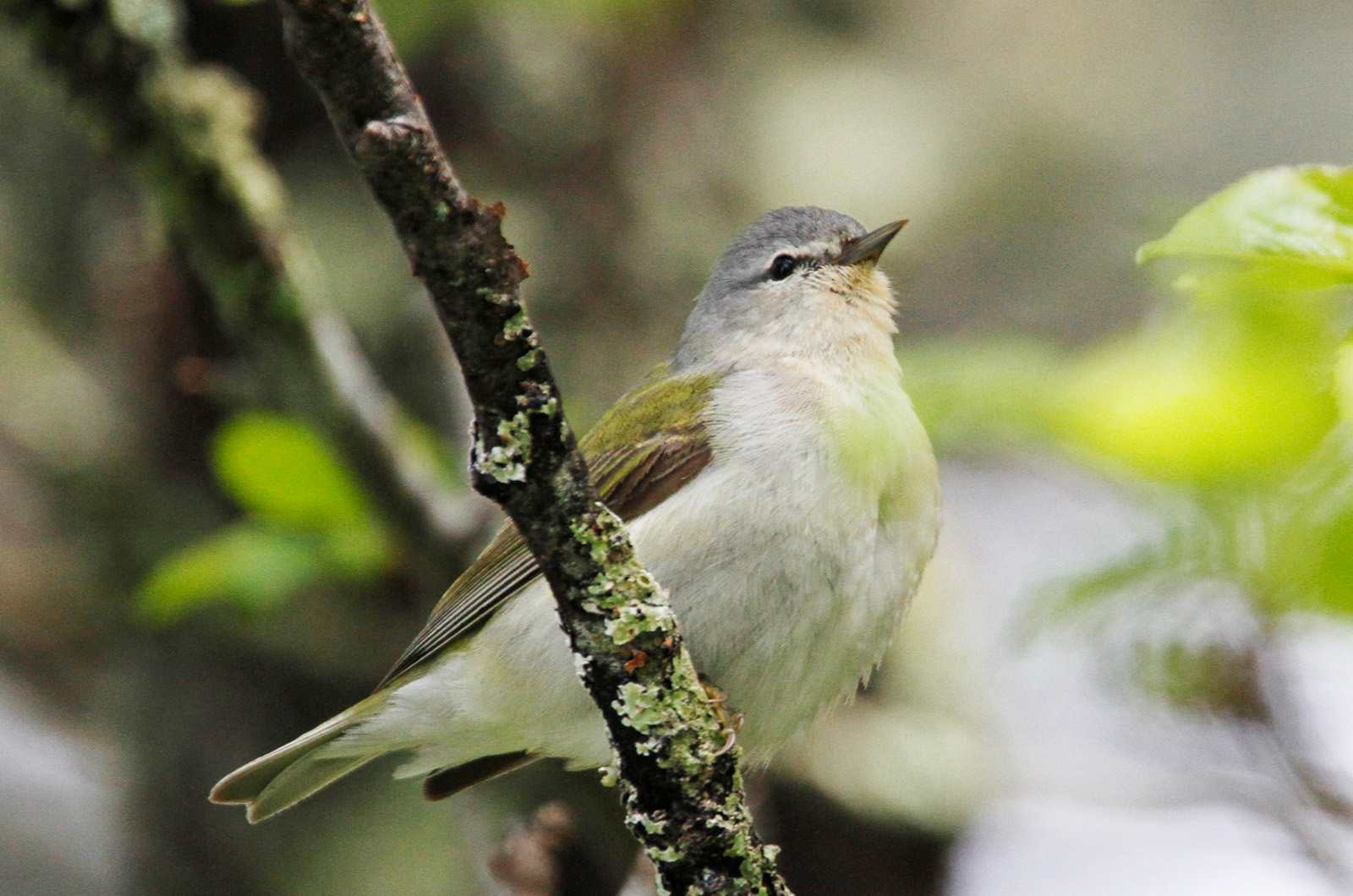
Ray Ewing first spotted this species at Slough Farm on Oct. 24, then they moved to Katama Farm but now they are back at Slough Farm. Ray Ewing spotted them again on Nov. 5, Jeff Bernier found them on Nov. 7 and on Nov. 9, John Nelson observed them.
Unexpectedly, John Freedman observed another one on the south side of South Road at the Allen Farm on Nov. 9.
Great egrets, great blue herons and black-crowned night herons were spotted by multiple observers this week.
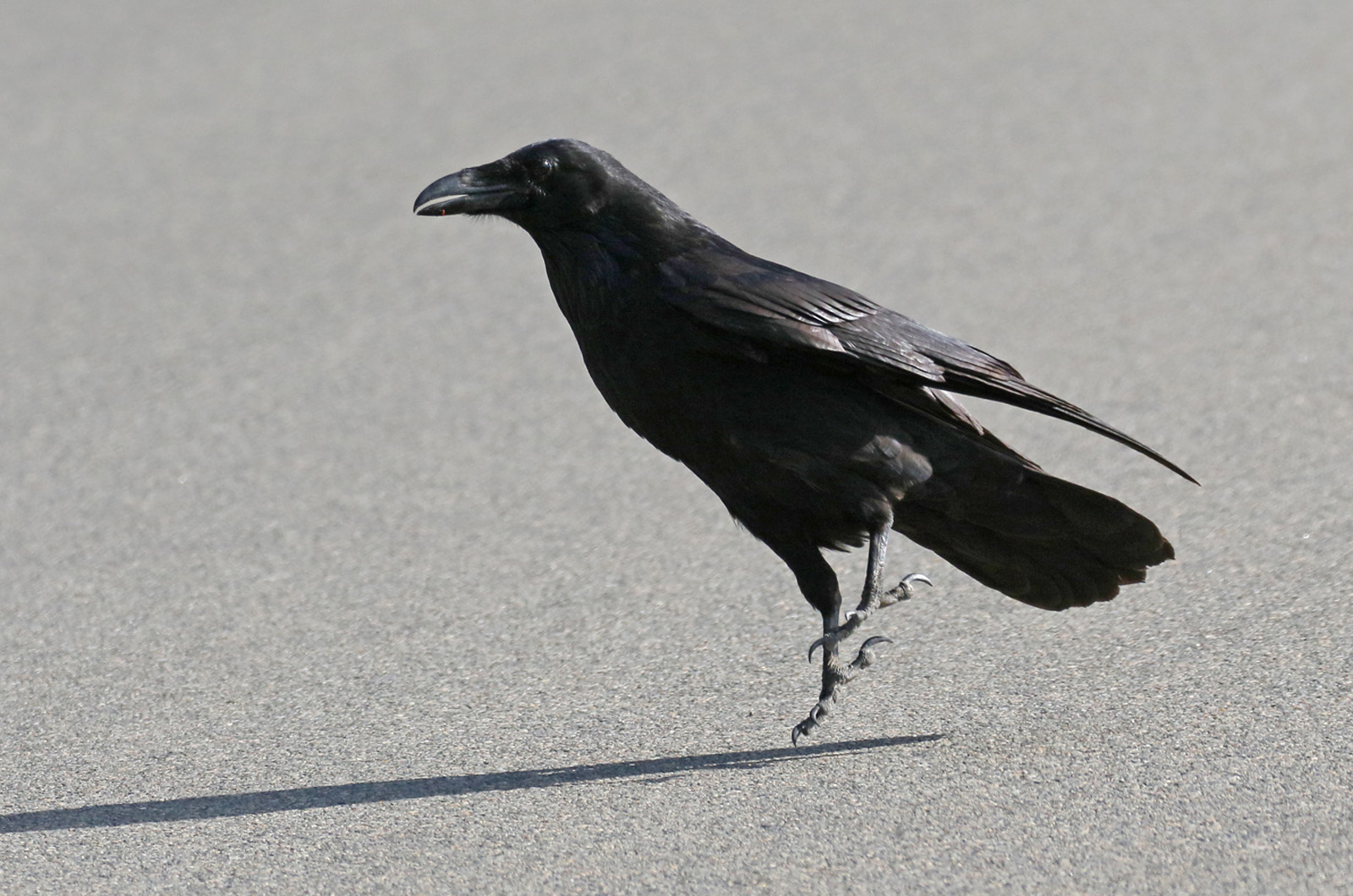
Four species of corvids (the crow family) are present. Blue jays and American crows are the most common. Bob Shriber spotted a common raven in Aquinnah on Nov. 3, Nancy Weaver found one at Long Point on Nov. 4, Allan Keith observed one at the Gay Head Cliffs on Nov. 7, and Bridget Dunnigan and Sea Williams saw one at Long Point on Nov. 8. T
he fourth corvid is the fish crow. John Nelson had at least 50 fish crows at the Little Bridge on Nov. 6, and Rob Bierregaard found a flock of at least 100 fish crows from Monroe Avenue on Nov. 8.

Cackling Goose with two Canada geese

Cackling Goose with two Canada geese
Carolina wrens are everywhere, with 20 sightings so far this month. Winter wrens are much less abundant and much less conspicuous, but Bob Shriber observed one along Old South Road on Nov. 5.
American robins and cedar waxwings are now flocking together. On Nov. 3, Bob Shriber counted 21 robins, 75 cedar waxwings and three hermit thrushes in Aquinnah. Chris Scott observed 25 robins and 12 waxwings at Felix Neck.
Eastern bluebirds sometimes join them too. Shea Fee spotted three bluebirds and two waxwings at the Presbury-Norton Preserve on Nov. 6.
Sometimes they are not in mixed species flocks. Jennifer Slossberg watched eight cedar waxwings along Prospect Hill Road on Nov. 5, Nancy Weaver had two hermit thrushes at the stone house in Aquinnahj on Nov. 7, and Shea Fee found six bluebirds at Long Point on Nov. 8.
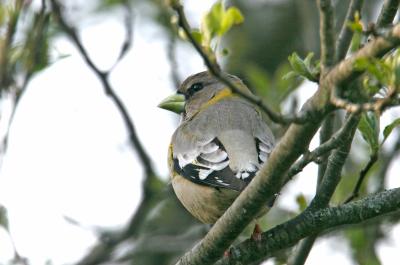
Evening Grosbeak

Evening Grosbeak
Abundant finches include American goldfinch, house finch, dark-eyed juncos and white-throated and song sparrows. Others finches are less common. On Nov. 3, Nancy Weaver spotted one swamp sparrow near the intersection of Moshup Trail and Old South Road, and Bob Shriber saw two swamp sparrows in Aquinnah.
I found a savannah sparrow at the Keith Farm on Nov. 6, Nancy Weaver observed one field and one savannah sparrow at the Gay Head Cliffs on Nov. 7. The same day that Allan Keith had both a field sparrow and a clay-colored sparrow at the cliffs, and the trio of Ben and Chris Schmandt and Mason Bunker discovered three vesper sparrows at the Gay Head Cliffs on Nov. 8.
When we think of warblers at this time of the year, we probably think first of yellow-rumped warblers, as they are the most common. Palm warblers have been spotted by Chris Scott (six at Felix Neck on Nov. 3), John Nelson (one at Katama Farm on Nov. 6), and Shea Fee (two at Long Point on Nov. 8).

Snow Buntings
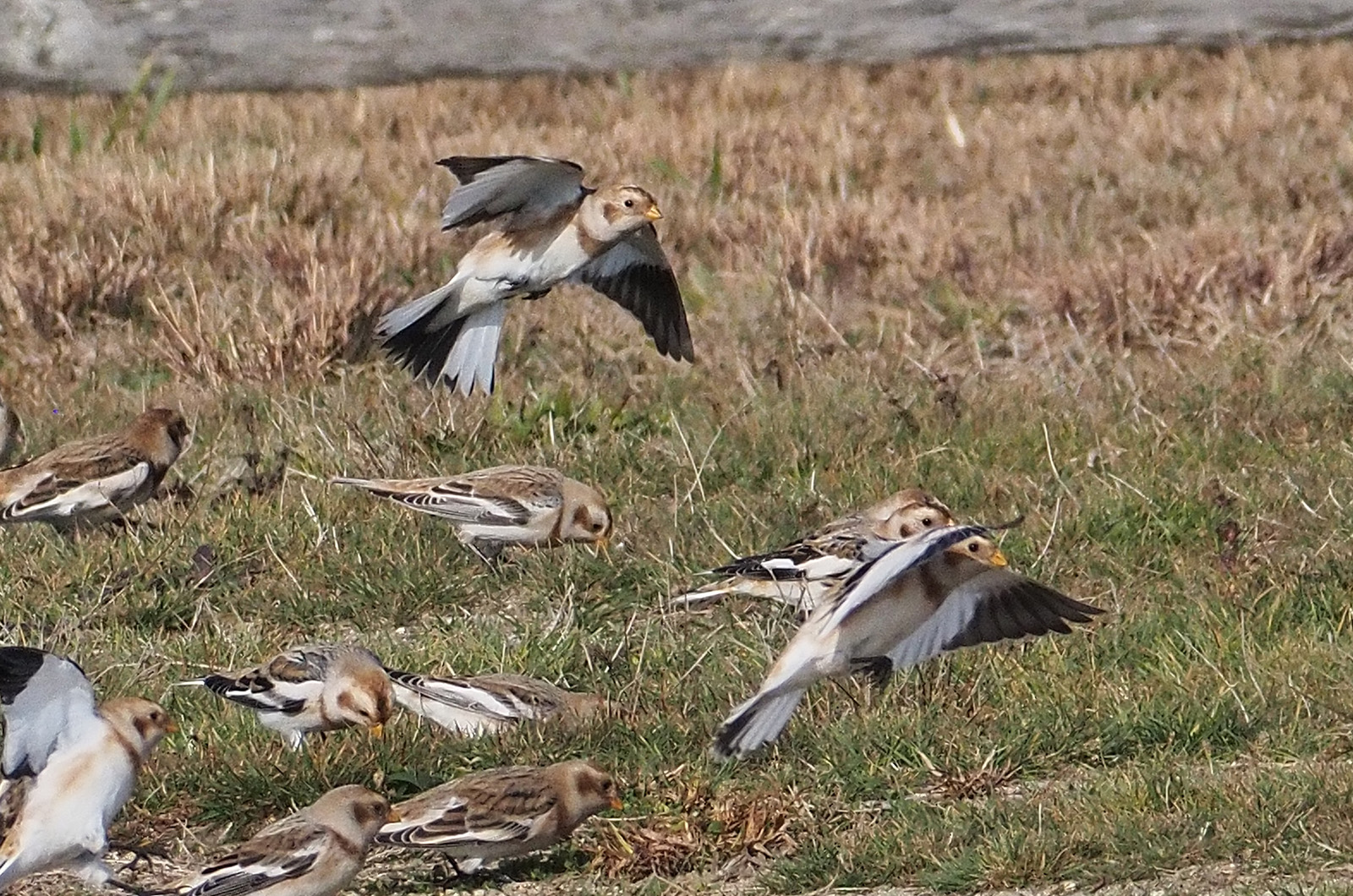
Snow Buntings
Other warbler sightings this week include Nancy Weaver’s and Bob Shriber’s one orange-crowned warbler at the Gay Head Cliffs on Nov. 3, Chris Scott‘s Tennessee warbler at Felix Neck on Nov. 3, and Nancy Weaver‘s Nashville warbler at the Gay Head Cliffs on Nov. 7.
On Nov. 7, Nancy Weaver saw a dickcissel, a blue-gray gnatcatcher and an eastern phoebe at the Gay Head Cliffs.
Lanny McDowell photographed the hummingbird at Penny Uhlendorf’s feeders on Nov. 4, and the photographs suggest that it is a ruby-throated, although it still could be the very similar black-chinned hummingbird.

Swamp Sparrow
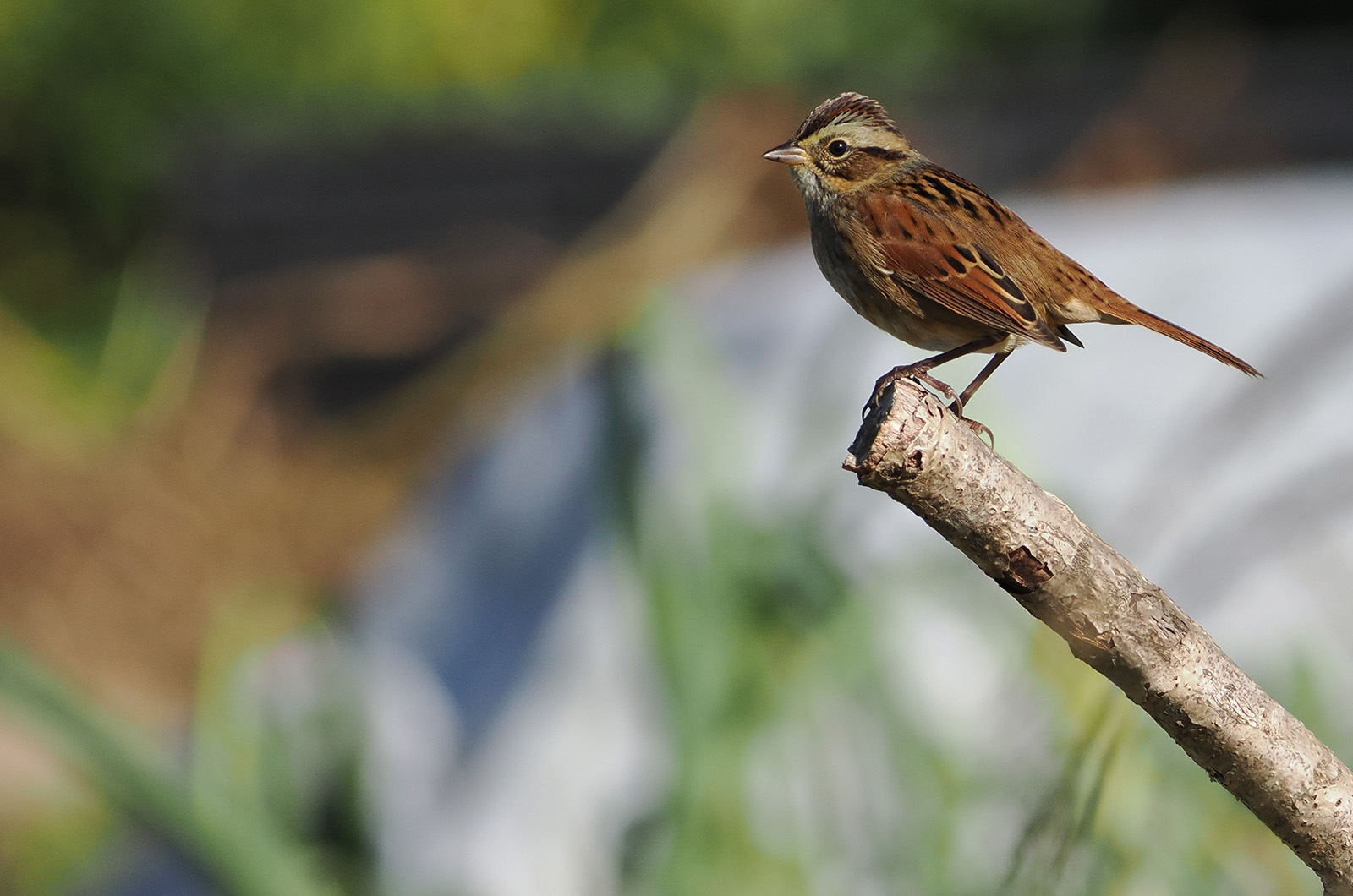
Swamp Sparrow
Barn swallows have been sighted this week. Bob Shriber found three in Aquinnah on Nov. 3, John Nelson observed one at Katama Farm on Nov. 6, Nancy Weaver spotted two at the Keith Farm on Nov. 7 and Ben and Chris Schmandt saw three at John Butler’s Mudhole on Nov. 8.
More expected are large flocks of tree swallows. Chris Schmandt and Nancy Weaver both estimated there were 1,000 at Long Point on Nov. 4. The next day, Jeff Bernier observed 150 at the Right Fork on Nov. 5 and again on Nov. 9, while John Nelson watched a huge flock in and around the bayberry bushes on State Beach that same day. Smaller flocks (25 or fewer) were spotted this week at the Gay Head Cliffs, Felix Neck, Long Point and the Aquinnah Herring Creek.
Please email your sightings to [email protected].
Robert Culbert is an ecological consultant living in Vineyard Haven
Add new comment