
You name it — everyone else did. Mullein has made a name for itself, and still so many folks have also bestowed their own label on this ubiquitous plant.
You name it — everyone else did.
Mullein has made a name for itself, and still so many folks have also bestowed their own label on this ubiquitous plant.
Truly, so many names, with my research yielding more than 40 unique terms. This plant’s scientific name, Verbascum thaspus, is perhaps the only agreed-upon term for this common plant. Its other aliases weave a path through history, culture and usage.
Ancient Romans and Greeks called this plant candlewick or candleflower, alluding to its long flower stem, which can reach three or more feet. That thick stem was dipped in flammable substances such as tallow, suet or oil, and lit as a torch, candle or light-producing staff.
Staff, shepherd’s staff or shepherd’s club are therefore alternate names for this plant, which was lightweight and long enough to serve as a walking cane. Biblically, Aaron’s rod (another alias for mullein) tells a story of a walking stick with astounding powers that exploded with blossoms and almonds to signify God’s approval of Aaron and his crew for their holy work.
Witches, heathens or not, were not unknowing of mullein’s power. For these sorcerers’ use, mullein was employed it for its mystical and magic powers of illumination, spirit-conjuring and incantations that lead to the phrase Hag’s tapers as its descriptive.
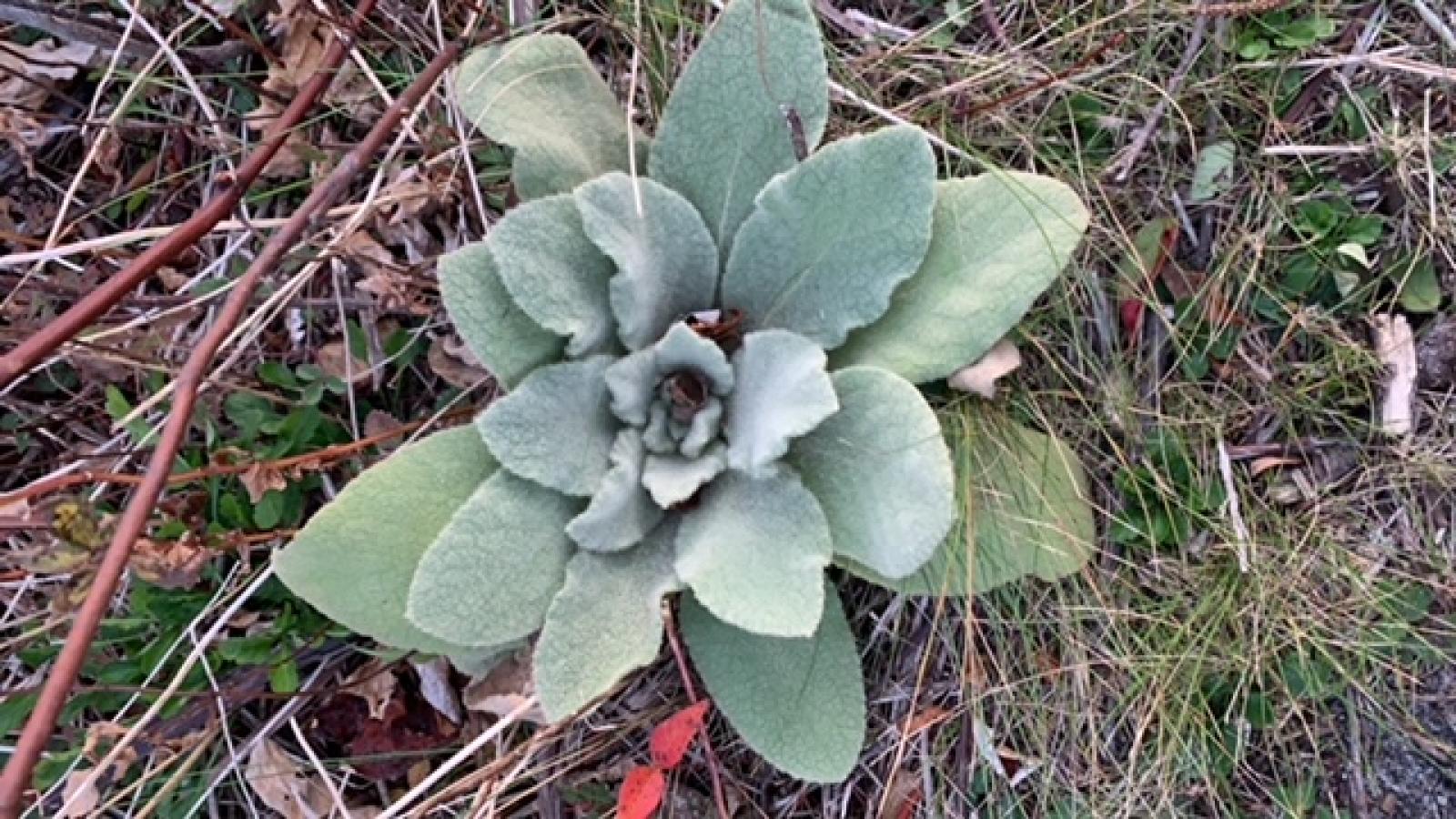
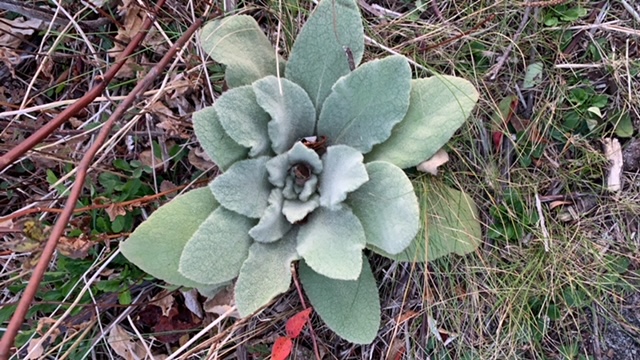
That potent and sizeable stem is not always present on the plant. As a biennial, the first-year plant consists of a rosette of fuzzy leaves, with the stem and flowers appearing in the second season.
Furry leaves provide fodder for a slew of additional names, starting with wooly mullein and velvet mullein. Author Louisa May Alcott’s character in Little Men insisted on this custom: “I know one thing about this mullein leaf: the fairies use them for blankets.” It wasn’t only fairies warming up with these thick, velour leaves. Other aliases — blanket mullein, Moses blanket, poor man’s blanket, Our Lady’s blanket and old man’s blanket — suggest a covering for warmth and comfort.
Along with the leaves, roots and flowers were also employed for healing and medicinal properties. Leaves could be drunk like tea, smoked, made into a poultice, infused into oils or tinctures to treat innumerable illnesses. From earaches to carbuncles, athlete’s foot, hemorrhoids, pulmonary diseases and frostbite, there is little that cannot be treated with this cure-all. The designations Clot-bur, Cuddy’s lungs, and bullicks lungwort speak to its health credentials.
Even if you are well, you still could find uses for mullein. Those thick leaves were put into shoes as soles for warmth, and they also contributed to beauty, as the leaves can be rubbed on cheeks to encourage a rouge-like ruddy blush.
The oddest customs for mullein come from colonial fishers and cowboys. The former somehow figured out that mullein seeds put into waterways could stun fish, which were then easily harvested. For the latter, when on remote journeys, those large and soft leaves, in a pinch, could serve as toilet paper.
Mullein, though not native, has colonized North American and is found just about everywhere, and even more so in disturbed areas. I found a stemless specimen recently at Squibnocket Pond Reservation along a new trail. Mullein is not known to easily self-spread, even with its more than 200,000 seeds per plant. Those seeds will not go far, with studies showing that more than seventy-five percent can found within a one-meter radius of the mother plant. Those seeds are survivors and can be dormant for more than one hundred years and still be viable.
You never know where a mullein specimen might be found or how it could have gotten there. Often solitary, mullein plants are not concerned with isolation since they can self-pollinate. Henry David Thoreau who knew this plant wasn’t too worried about isolation, either, when he noted that he was “no more lonely than a single mullein or a dandelion in a pasture.”
Suzan Bellincampi is director of the Felix Neck Wildlife Sanctuary in Edgartown, and author of Martha’s Vineyard: A Field Guide to Island Nature and The Nature of Martha’s Vineyard.
Add new comment