
It is one tough nut to crack.
It is one tough nut to crack.
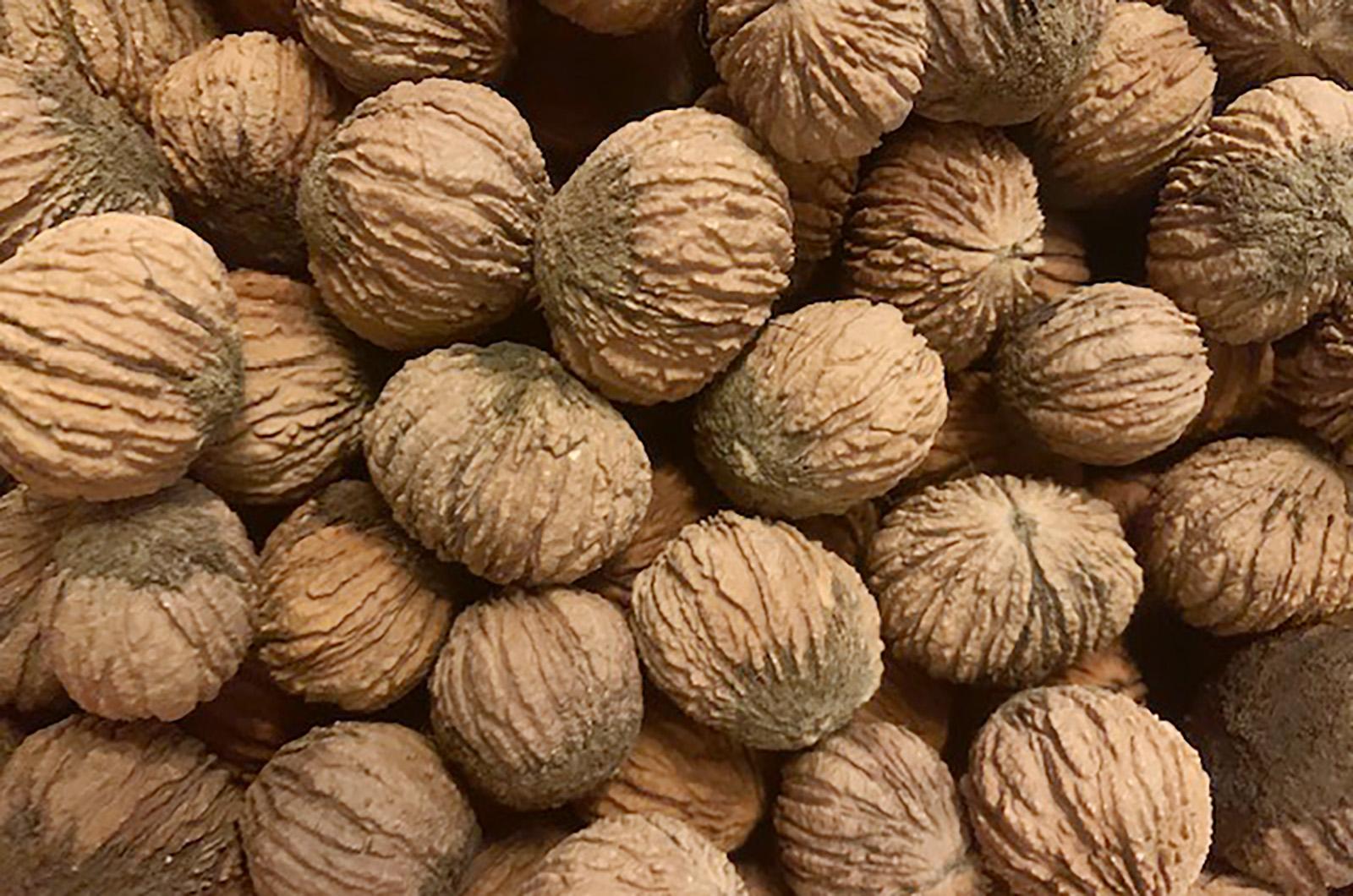
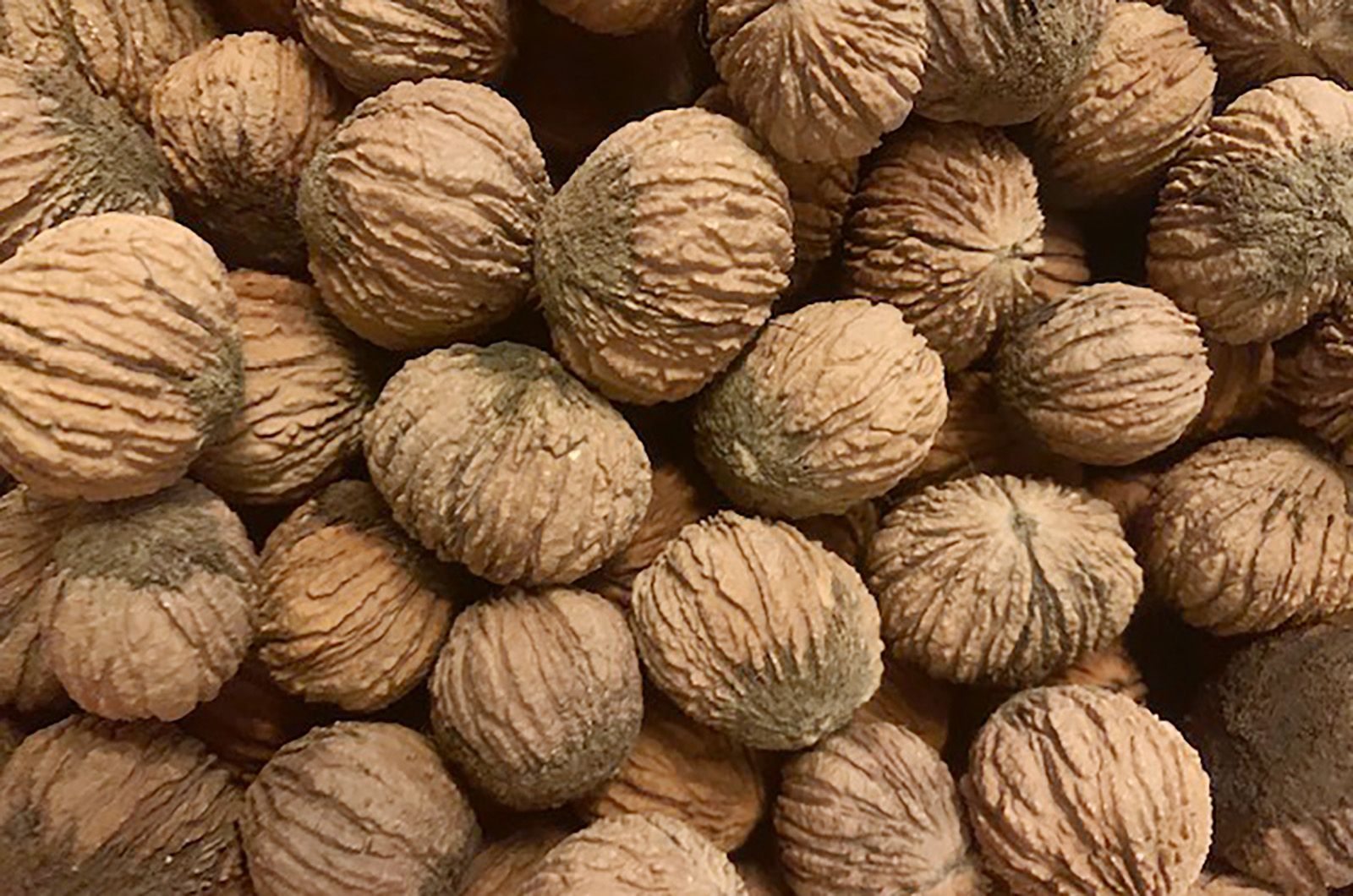
Wild black walnuts, Juglans nigra, are without a doubt the toughest nuts to crack. They are very much unlike the English, actually Persian, walnuts that we purchase in the grocery stores and put on our holiday table. The latter requires a simple nut cracker, while the former needs larger, more powerful tools, such as a hammer, vice, or custom gadget made exclusively for this purpose.
With wild walnut’s very thick and hard shells, the best way to open these natural nuggets might be to use Grandpa’s Goody Getter, a contraption created and sold by father and son team Basil and Dennis Bacon. In this case, the nut didn’t fall far from the tree.
On their website, the Bacons share the story of these curious crackers and boast that they are “made proudly in the Ozarks.” Missouri does lead the way in wild walnut harvest in the US, after all. You can purchase a Goody Getter through their website (or others), send a check to order yours (old school), and even call to speak with Basil (who doesn’t use email according to the webpage) if you have questions.
Wish I had one of these nutcrackers because I recently found a wealth of walnuts. It seems to be a mast year, which is the occasional occurrence of a large crop of nuts. The squirrels are happy, as am I, having contentedly collected, hulled, and cleaned the nuts ahead of curing and cracking them.
Black walnuts are not native to New England, but have long been planted due to their many qualities and uses. The wood is strong and beautiful and is a popular tree for woodworking and wood products, such as furniture, flooring, coffins, and gunstocks, among many other items.
And the wood is just the beginning. The husks of the nuts can make a dye, tinctures, and other products for wellbeing. For health nuts, consider the hull’s antifungal and antibacterial qualities, and the green rinds have even been employed as a dewormer for animals and treatment for human parasites. The walnut tree purportedly produces sap that can be made into a syrup, and the leaves can be steeped or infused. Luna moth caterpillars consume the leaves also.
It is the nut, however, that has been given much of the attention. Eminently edible (assuming you can crack that nut), it was used by Indigenous people as a regular food source and reportedly as a substitute for mother’s milk after liquifying the cooked nuts.
With a strong, earthy flavor, the nuts can be more (or less) favored than English walnuts. The wild ones are better for you, having 57 per cent more protein than their cultivated brethren.
Unripe nuts (the ones still on the tree) can be pickled or made into an Italian liquor called nocino. Massachusetts-based wild food afficionado, Russ Cohen, helpfully suggests pushing a knitting needle through the nut to make sure they are good for this use. It is too late for pickles or liquor once the nuts fall from the tree (they are ripe and ready for nut consumption then, though).
It will be a few weeks before I can get cracking, since my nuts need time to cure before they are ready to eat. Then the real works starts. It is not just open sesame, but rather (or in a nutshell) a whole lot of work to extract the morsels from their hardened home. With or without Grandpa’s Goody Getter, I hope I will crush the task.
Add new comment