
Charles Kingsley was a condescending chap.
Charles Kingsley was a condescending chap.
This 19th-century Church of England priest, professor, social reformer and poet coined the term “pteridomania.” Pteridomania means fern madness, or fern craze, and describes the Victorian Era’s obsession with all things fern.
In Kingsley’s book, Glaucus, or the Wonders of the Shore, he explains female interest in ferns this way: “Your daughters, perhaps, have been seized with the prevailing ‘Pteridomania’... and wrangling over unpronounceable names of species (which seem different in each new Fern-book that they buy) ... and yet you cannot deny that they find enjoyment in it, and are more active, more cheerful, more self-forgetful over it, than they would have been over novels and gossip, crochet and Berlin-wool.”
Condescending, indeed, but at least he was giving them credit for not spending their time on what he considered lesser pursuits.
The go-to fern books of the time that Kingley was happy were in every fern-crazy daughter’s library were one of the multiple fern tomes authored by Thomas Moore. Thomas was a botanist and gardener known for his expertise in those plants. During his time at the Chelsea Physic Garden (one of the oldest in England), he increased fern species cultivated at the garden by fifty percent.
Moore is credited with describing and/or naming more than one thousand species, many of which were ferns. Of these, he redescribed and thus renamed the fern commonly called hay-scented fern. He wasn’t the first to describe this plant. That honor goes to the eighteenth-century French botanist and explorer Andre Michaux. However, it was Moore’s scientific name that has stuck and still in use today.
Dennstaedtia punctilobula is the nomenclature that brings another man into this complicated nonfiction of flora. Describing and honoring another plantsman, Dennstaedtia honors German botanist August Wilhelm Dennstaedt.
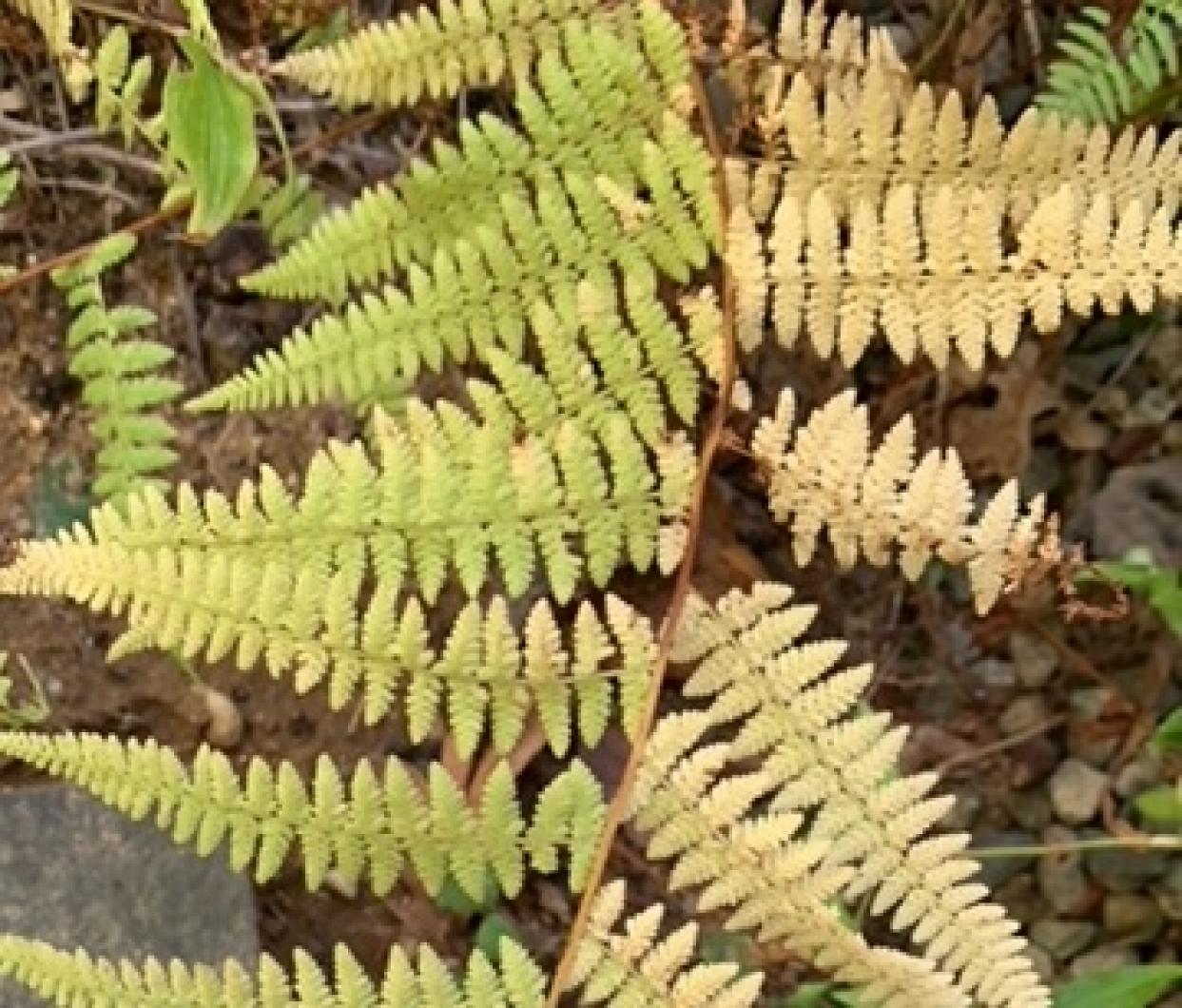
For those similarly encumbered with a love of ferns, be assured that they are easily found island-wide, with multiple species thriving in wild and human-made habitats. One, hay scented fern, is turning its telltale fall yellow color as it seasonally fades. This annual is easy to cultivate, is drought and deer tolerant, and spreads easily. As a pteridomaniac myself, this pleases me immensely, and could have counteracted the overzealous collectors of yesteryear (and the developers of today).
Pteridomania, in fact, did cause trouble for natural populations of ferns at the height of the plant passion. Enthusiasts could come from all walks of life, and a naturalist of the time wrote that “even the farm labourer or miner could have a collection of British ferns which he had collected in the wild and a common interest sometimes brought people of very different social backgrounds together.” It isn’t surprising that this lead to losses and even extinction of wild populations of plants.
Luckily, hay scented ferns, so called due to the fresh cut hay scent they give off when dried or crushed, are still quite common, having survived the domestic fern fever and the invention of the Wardian Case. That terrarium-like invention by Nathaniel Bagshaw Ward protected ferns and other plants, allowing them to thrive in indoor spaces and maintain life and health on long land and overseas journeys. With this new device, commercial collection and import/export were a threat to all fern populations worldwide.
With their tenacity, beauty, and likely some good fortune, ferns have endured collectors, development and habitat loss, and so many threats to their health and survival.
Henry David Thoreau (another nineteenth-century author Charles Kingsley might have wanted in his daughter’s library) understood that the ferns’ impressive staying power went beyond their scientific value. He explained: “If we were required to know the position of the fruit dots or the character of the endusium, nothing could be easier to ascertain, but if it is required that you be AFFECTED by ferns, that they amount to anything, signify anything to you, that they be another sacred scripture and revelation to you, help you to redeem your life, this end is not so easily accomplished.”
Better than a novel, gossip, crochet, and Berlin-wool, indeed.
Suzan Bellincampi is director of the Felix Neck Wildlife Sanctuary in Edgartown, and author of Martha’s Vineyard: A Field Guide to Island Nature and The Nature of Martha’s Vineyard.
Add new comment