

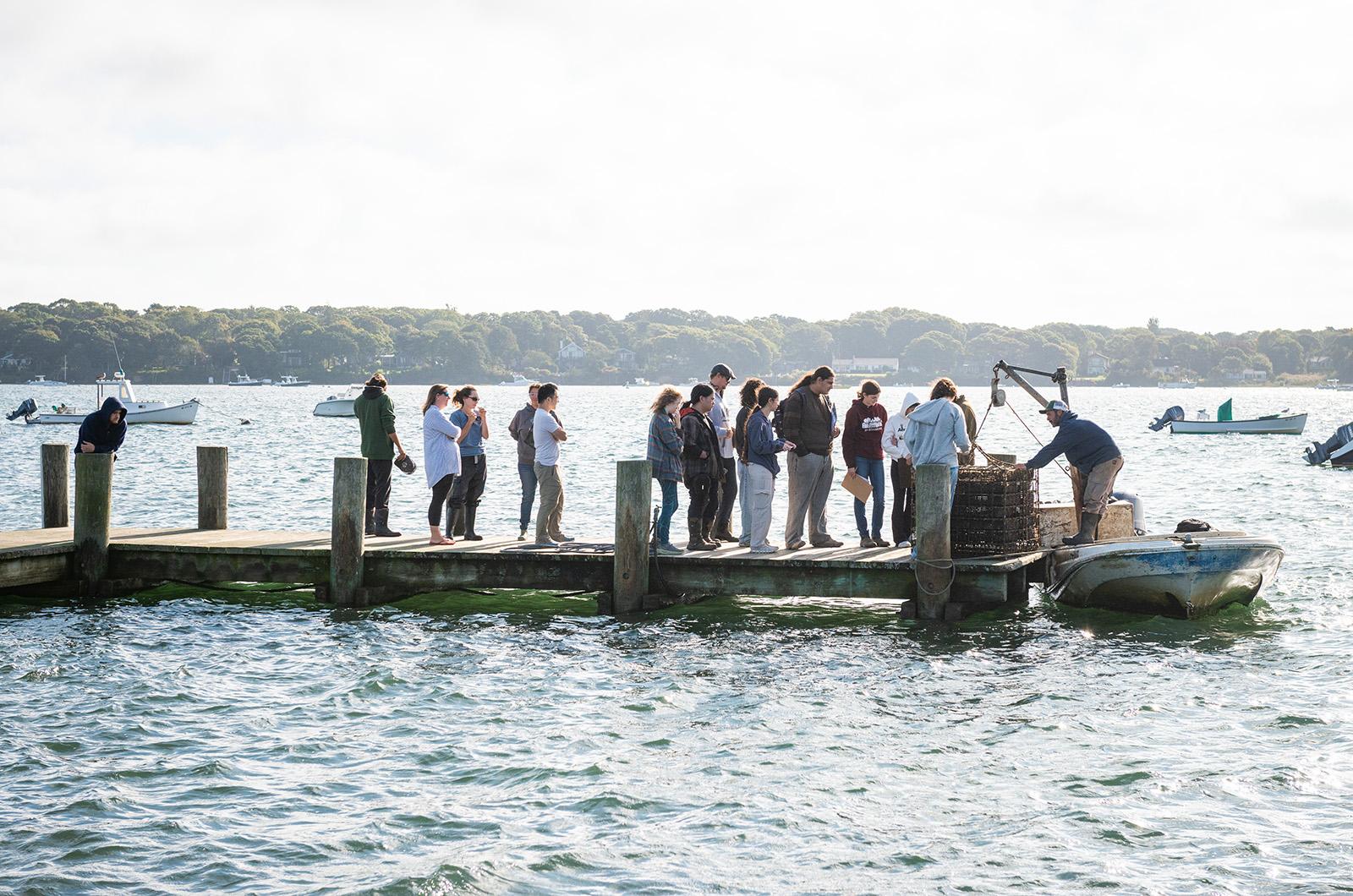

Students from the Martha’s Vineyard Public Charter School and the regional high school gathered at the Vineyard Haven Lagoon landing Tuesday morning as part of a multi-faceted aquaculture education initiative.
Students from the Martha’s Vineyard Public Charter School and the regional high school gathered at the Vineyard Haven Lagoon landing Tuesday morning as part of a multi-faceted aquaculture education initiative.
Titled Ocean Stewards Workshop Series, the pilot program is introducing Island students to the business of bay scallop and oyster harvesting, with the goal of both educating them and getting their feedback as budding scientists.
The program is the brainchild of Kevin Yuen, an Island resident and the innovator-in-residence at Tufts Food & Nutrition Innovation Institute. He wanted to combine his passion for aquaculture and the expertise of various Island individuals.
“It’s teaching them about a blue economy, [that] it’s not just about the business of oceans, it’s really about the sustainability of oceans,” he said on Tuesday as the students stood by, clipboards at the ready and asking questions. “It’s teaching them about human centered design and about putting users in the center of what you’re trying to create.”
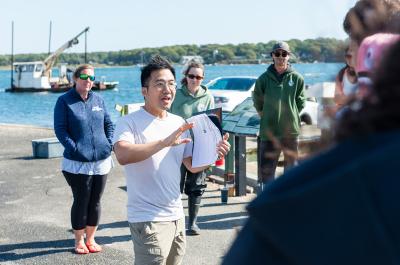
Kevin Yuen spearheaded the new initiative.

Kevin Yuen spearheaded the new initiative.
Joining him were MV Shellfish Group executive director Emma Green-Beach, Cottage City Oysters founder Dan Martino, charter school science teacher Ben Waldrop and regional high school science teacher Anna Cotton.
Eventually, the aim is to have the students develop their own prototypes and present them to the community.
“It’s not just homework or a project, it’s a real, impact driven challenge,” Mr. Yuen said.
While bay scallops have been harvested on the Island for generations, according to Ms. Green-Beach, shellfish farmers have had to adapt over the years due to climate change and a shifting market. New ideas are always welcome, she said.
“Let’s get some fresh minds who aren’t bogged down with all the things that we do, and let’s just present them with what’s possible and see what they can come up with,” Ms. Green-Beach said.

Oyster farmer Dan Martino shares his knowledge.
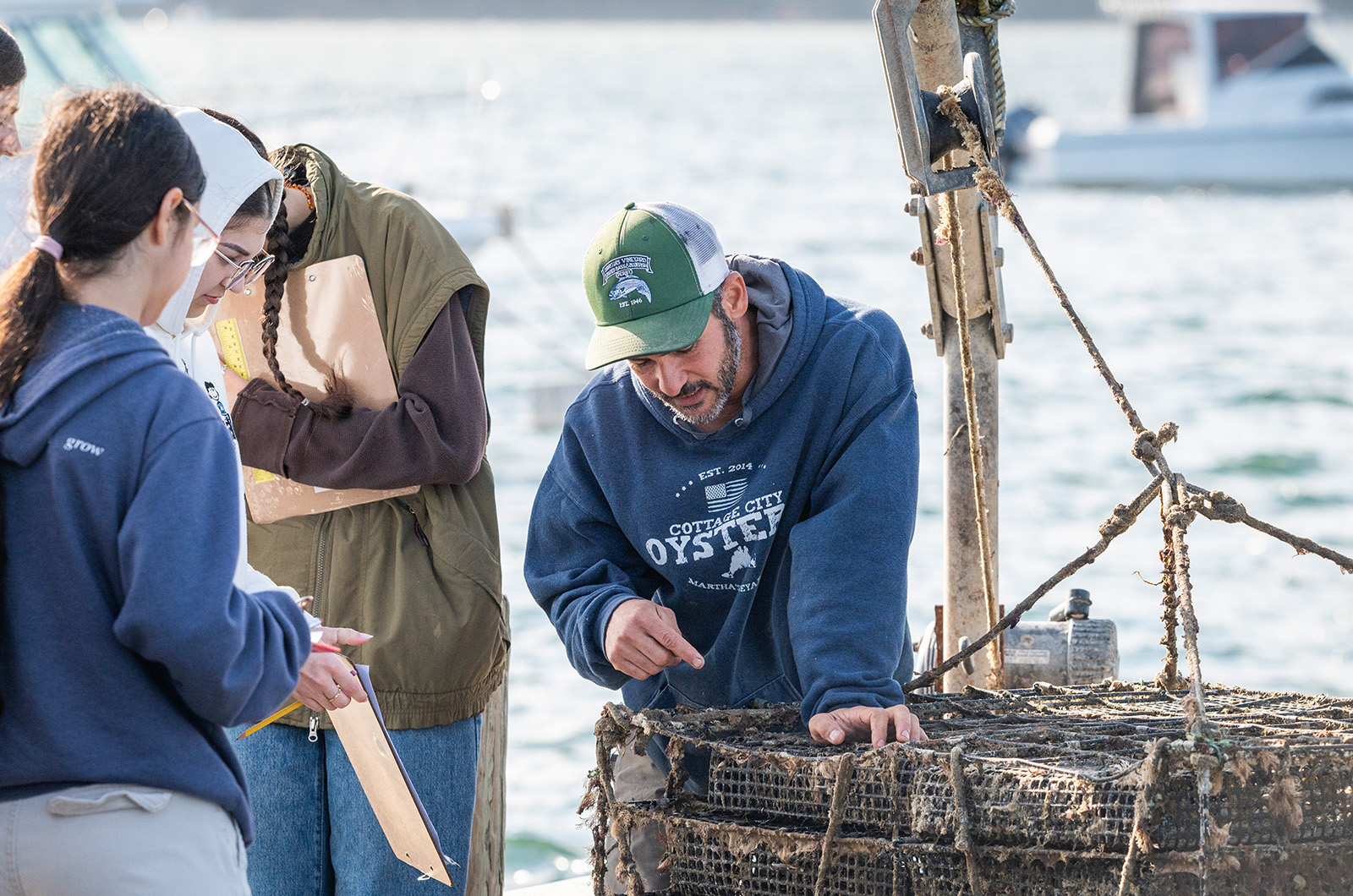
Oyster farmer Dan Martino shares his knowledge.
The seeds of the workshop were planted last year, when Mr. Yuen and Mr. Martino received a grant from MIT Sea Grant and NOAA.
Bringing students in and challenging them to solve a problem in the local shellfish economy has been rewarding for everyone involved, according to Mr. Waldrop.
“From a teacher’s perspective, it’s been exciting to see the kids ask questions that show me that they’re diving deep into the topic themselves and to see the kids really empathize and put themselves in the shoes of a bay scallop fisherman,” he said.
Highlighting the similarities and differences in the two species and the industries they represent was important, the experts said.
“What we’re doing here is, we’re showing them the different materials and what they tend to use, and then how an oyster farmer grows oysters,” Ms. Green-Beach said. “Like, hold this oyster. It’s alive. Whereas with bay scallops, it looks and feels different.”

Ben Waldrop, science teacher at the charter school, talks to students.

Ben Waldrop, science teacher at the charter school, talks to students.
As Tisbury Shellfish Constable Danielle Ewart answered questions about water flow and the challenges of harvesting bay scallops, she lifted up a net used to harvest bay scallops and pulled out some tiny mud crabs.
“Bay scallops do have a lot of predators,” she explained. “Everything in the ocean is trying to eat these things.”
Mr. Martino said he was excited to share his knowledge with the next generation.
“It’s almost a crash course 101 in Island economics and aquaculture farming,” he said.
Mr. Yuen said the enthusiasm from students at both schools has been consistent throughout.
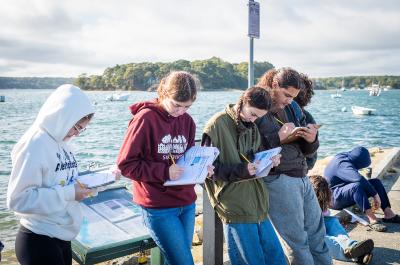
In class and taking notes.
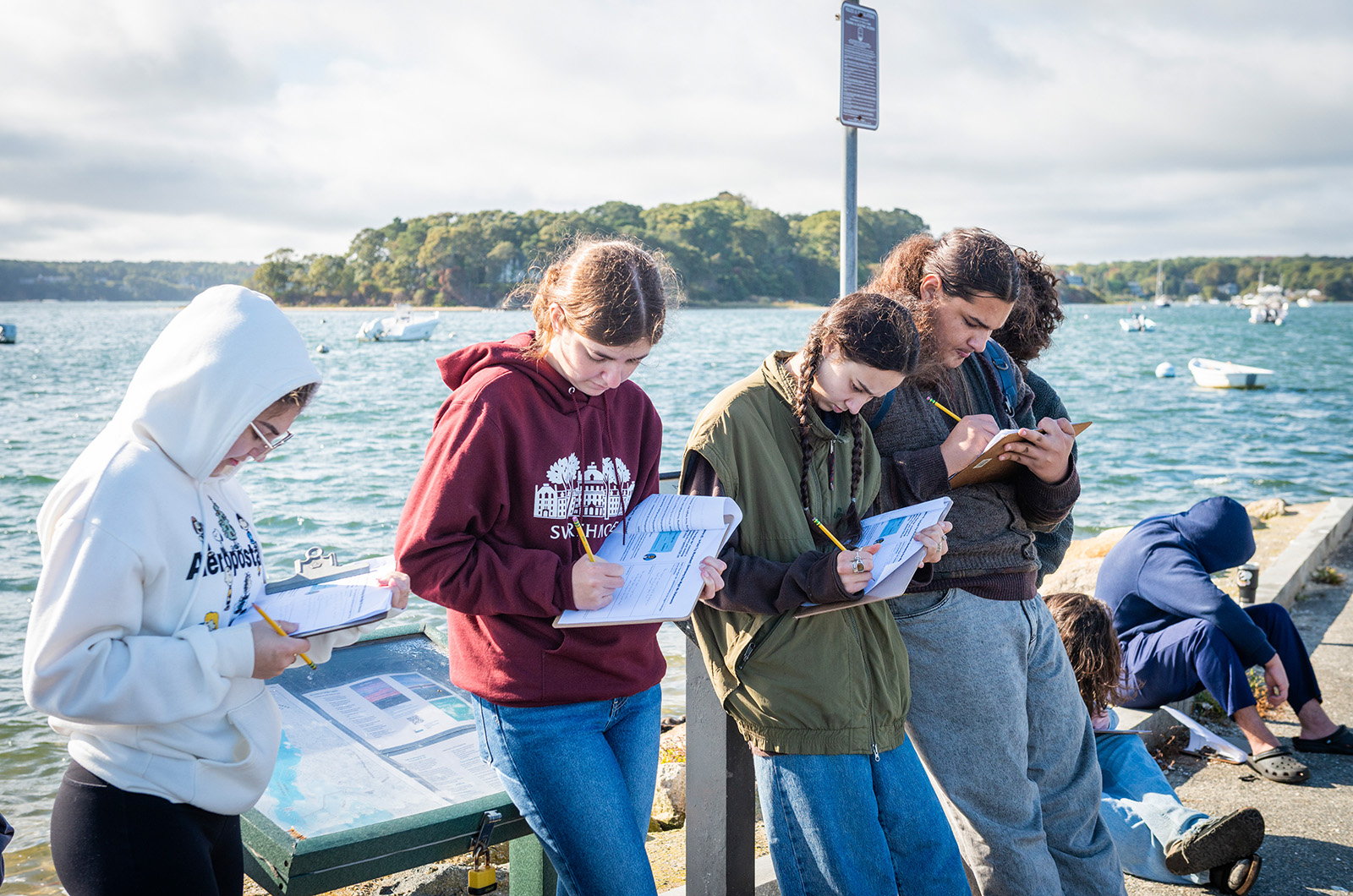
In class and taking notes.
“The charter school students are not only thinking about the design challenge, they’re also thinking about the marketing of it,” he said. “For the high schoolers, they’re more focused on anatomy. A lot of interesting questions from both sides and different perspectives.”
The hope is to make the pilot program a permanent one and apply it to other aspects of the natural environment.
“If this works out really well, maybe we could replicate this doing other challenges as well, whether it’s aquaculture, ocean conservation or even [land] farming as well. That would be really cool,” Mr. Yuen said.
Comments
Fantastic Project !
Barbara Gould Plesser Sengekontacket / Oak BluffsFantastic Project ! Congratulations on
bringing in the Students, three of whom
could be my grandkids ! I’d LOVE to see them consider careers on the waterfront !
Please Continue ! Well Done story, too !
Add new comment