


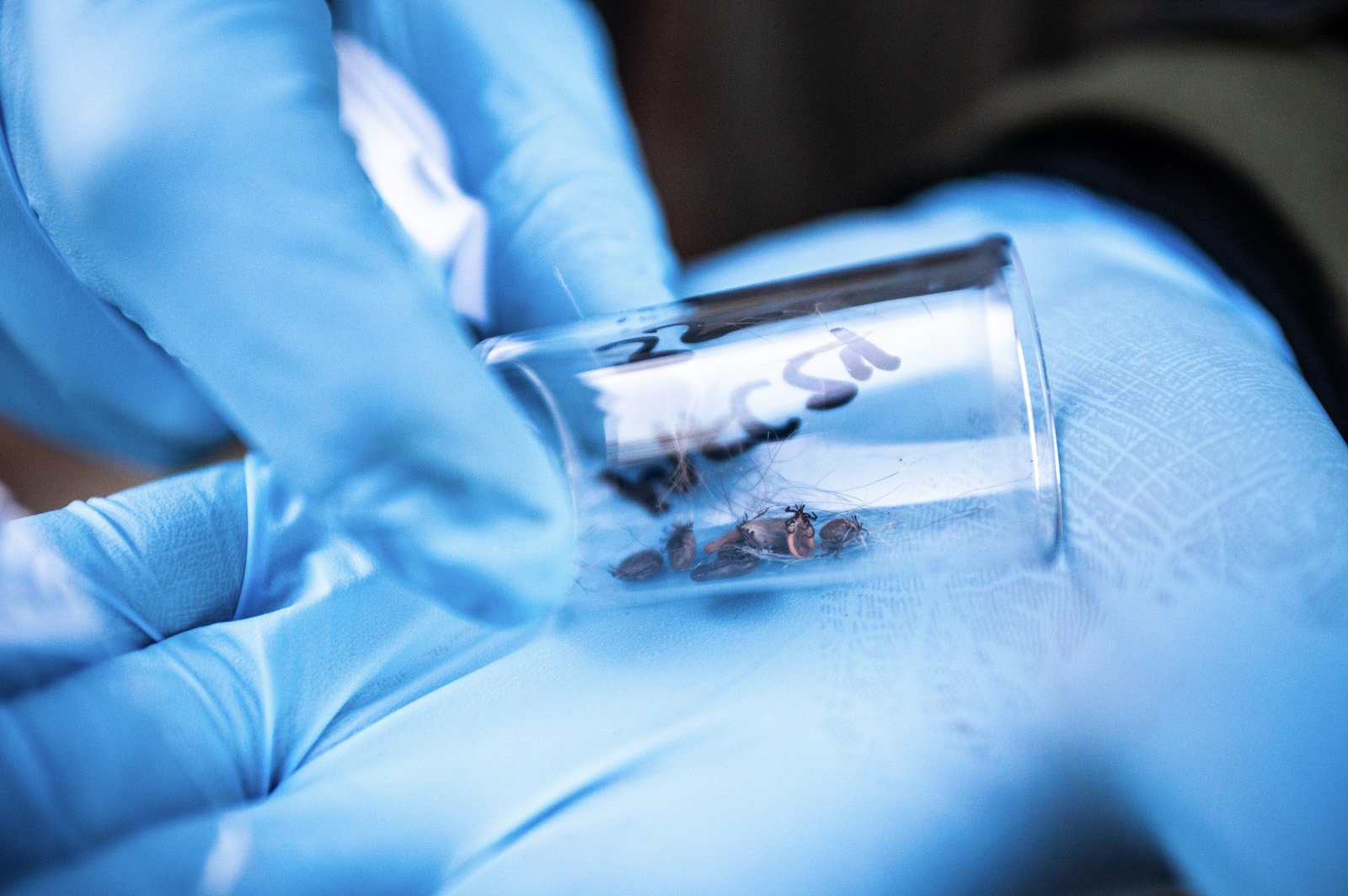
A team of researchers at the University of Massachusetts Chan Medical School announced last week that they have teamed up with a pharmaceutical company to shepherd a Lyme antibody to phase two and three trials, the next step before getting approval with the federal government.
Scientists in Massachusetts say they have produced a new shot that can prevent Lyme disease ready to go to later stage clinical trials.
A team of researchers at the University of Massachusetts Chan Medical School announced last week that they have teamed up with a pharmaceutical company to shepherd an antibody to phase two and three trials, the next step before getting approval with the federal government.
The milestone is the latest in the effort to prevent Lyme, a tick-borne illness that has hit the northeast, and especially Martha’s Vineyard, hard in recent years. Dukes County, according to Johns Hopkins University, had the highest rate of Lyme disease in the U.S. in 2023, with its 337 cases for a population of about 20,000 people.
The new shot is a monoclonal antibody similar to the preventative measures taken for RSV in children, said Dr. Mark Klempner, the head researcher on the project.
Ticks pass the infection onto humans from other animals.
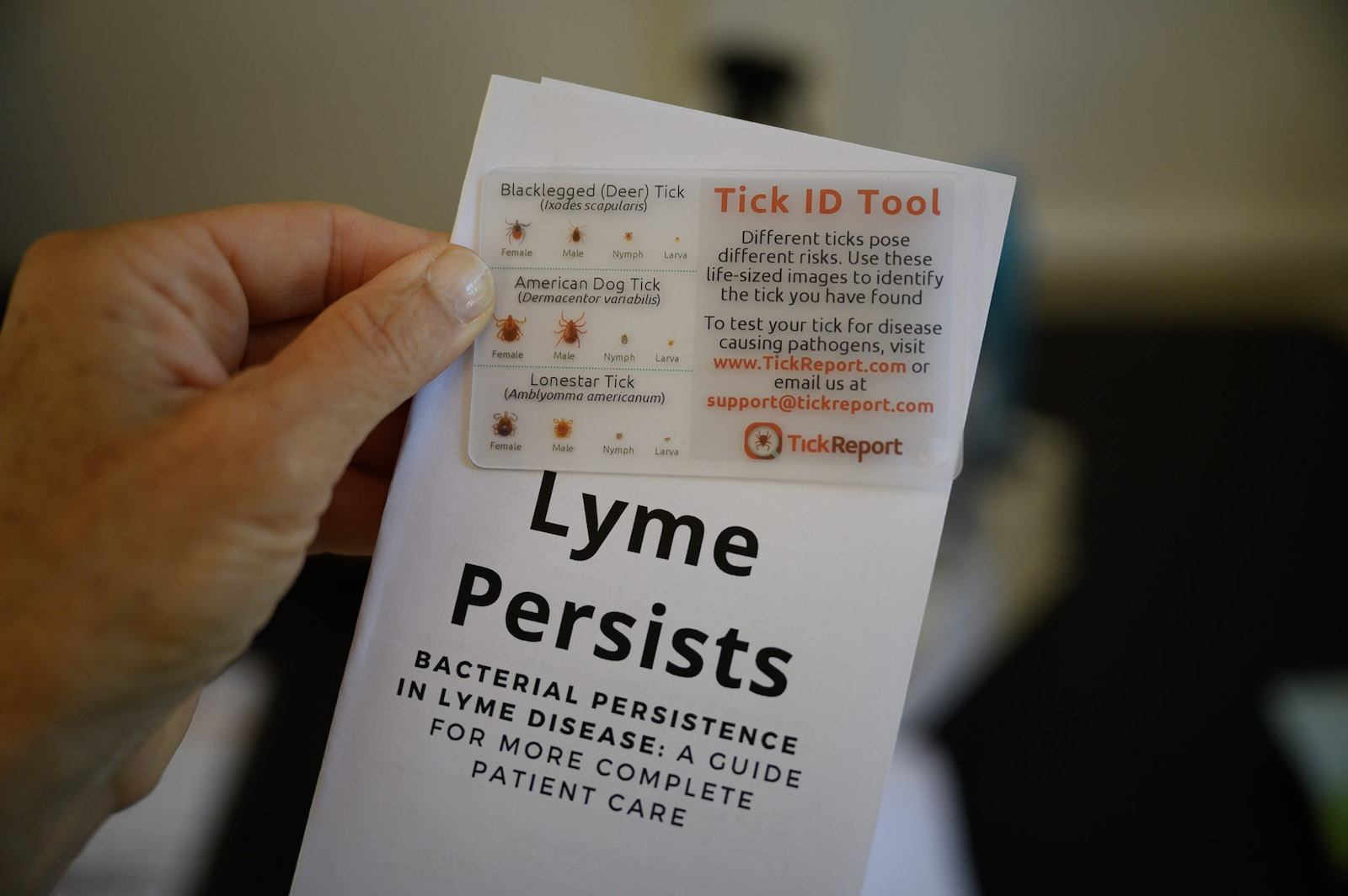
Ticks pass the infection onto humans from other animals.
“Preventing Lyme disease is an urgent public health priority, and more than 30 years of clinical experience confirm that monoclonal antibodies can be delivered safely and can be effective in preventing infections,” he said.
What is exciting about this breakthrough for Dr. Klempner is the speedy nature of the antibody. While a vaccine for Lyme, which is in the works and was previously tested on the Island, may need to be taken months ahead of prime tick season, the doctor said the antibody only needs about 24 to 48 hours to grant immunity.
“The rapid onset of immunity has attractive advantages for this medicine,” he said.
The antibody would also prevent Lyme in a much different way than a vaccine, according to Dr. Klempner. While a vaccine builds up immunity by imitating a pathogen, the antibody prevents the disease-causing bacteria from entering the body in the first place.
Lyme, the most common vector-borne disease in the country, is spread when a tick infected with the Borrelia burgdorferi bacteria bites a human. Ticks get the bacteria from other animals they feed on, typically rodents such as shrews.
When the infected tick bites a human and feeds on their blood, the bacteria travels from the tick’s gut to its salivary glands and then into the human body. A person with the antibody would be able to kill the bacteria in the tick’s gut before it had the chance to get to the salivary glands, preventing the transmission.
The shot would need to be administered annually to keep immunity.
There are currently no preventative medicines for Lyme, which can cause fever, fatigue, aches and, in more extreme cases, can spread to the heart and nervous system.
Dr. Klempner investigated this method of prevention after a Lyme disease vaccine was taken off the market in the early 2000s due to limitations. Because monoclonal antibodies were used to safeguard premature infants from RSV, he felt that it could be a good candidate for Lyme.
“We know it is safe in the most vulnerable population imaginable,” he said. “We were convinced it was going to be effective [against] infection.”
A first phase of human trials took place in 2021 in the Midwest, an area of the country where Lyme isn’t endemic, to see how long the antibody would last and if there would be any adverse reactions. Results have been promising so far, and the partnership with Tonix Pharmaceuticals is hoped to continue tests into the latter stage trials.
Even if all goes smoothly, it will likely still be several years before the antibody is available to the public. Dr. Klempner guessed that, after going through all of the preliminary steps, the next phase of trials could begin in 2027.
“There are a lot of preliminaries you have to do, going to the FDA to get buy-in for your trial,” he said.
The Umass-backed antibody work is one of several different prongs in the battle against Lyme. Pfizer has partnered with a French pharmaceutical company to test out a vaccine. Though some testing locations were pulled after issues with the company administering the trials — including the Vineyard site — Pfizer said last summer that they are in phase 3 and will monitor patients for the disease through the end of the 2025 Lyme season.
Researchers at M.I.T are also looking into the ability to make mice, a large driver of Lyme, immune to the disease, cutting off a critical link in the transmission chain.
Lea Hamner, a Vineyard epidemiologist who specializes in tick-borne illnesses, applauded the different efforts to curb Lyme.
“Any tool to mitigate the suffering that Lyme disease causes on Martha’s Vineyard is great,” she said. “We really need every tool in the toolbox. Our Lyme disease burden is astronomical.”
Until those efforts come to fruition though, local tick experts continue to advise people to wear tick repellents, do frequent tick checks and take other preventative measures. Ms. Hamner urged people to get their clothes treated with permethrin, wear long pants and sleeves, and carry a lint roller to pry off any smaller ticks.
“Tick bite prevention still is king,” she said.
Add new comment