


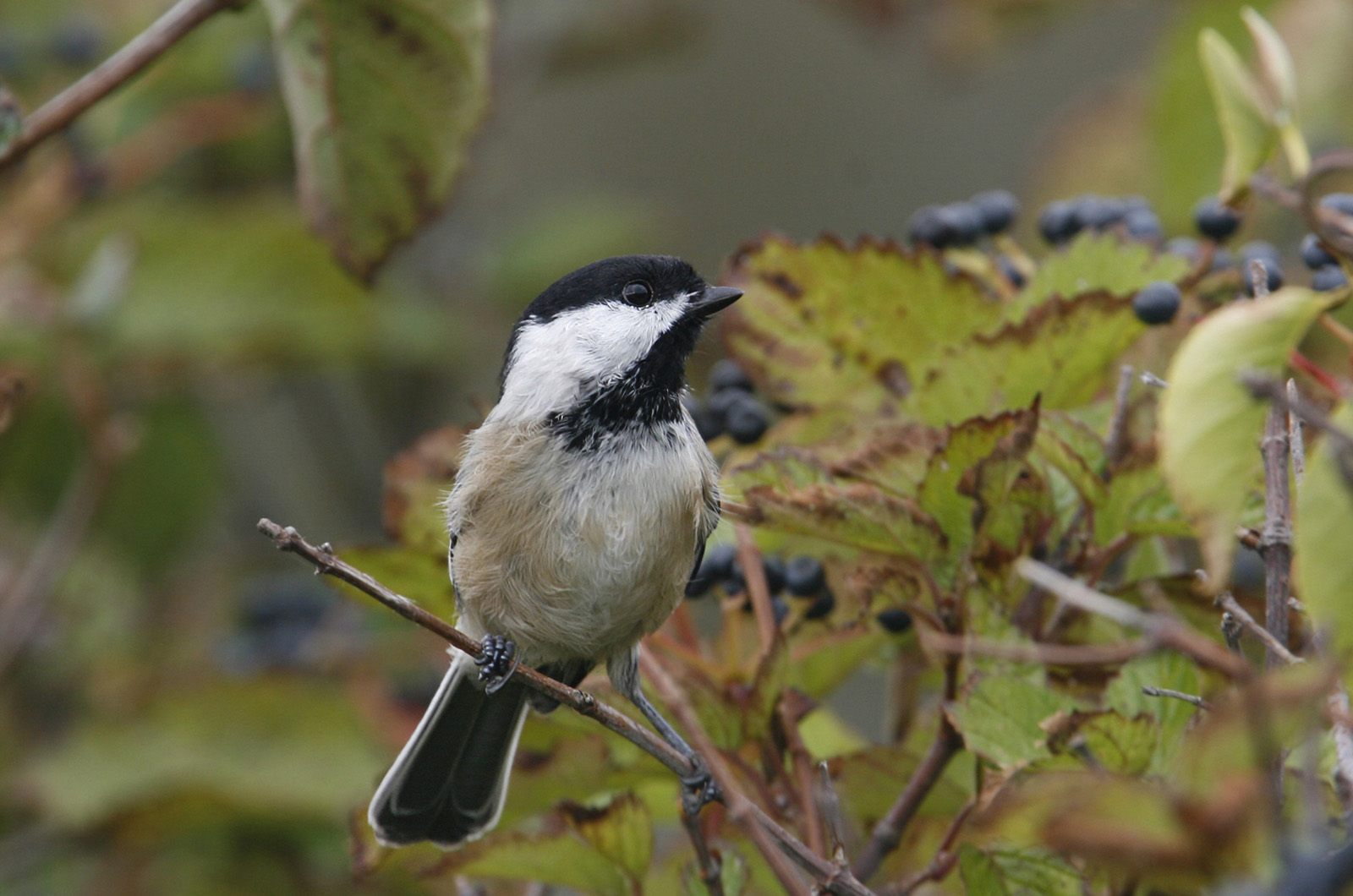
Woodlands birds are starting to form multi-species foraging flocks that rove around woodlands in search of food.
Woodlands birds are starting to form multi-species foraging flocks that rove around woodlands in search of food. The rationale for these flocks is that many eyes provide help finding both patchy food and potential predators.
Our common black-capped chickadees are often the ringleaders of these flocks, and they are also the spokesbirds, as they often vocalize their chickadeedeedee call, communicating between flock members. Other species commonly present in these flocks include white-breasted nuthatches, tufted titmice, Carolina wrens, blue jays, downy, hairy and red-bellied woodpeckers, and woodland species that are migrating from further north. Birders like finding these flocks to help locate the migrant warblers, vireos and flycatchers tagging along within these foraging flocks.

Yellow Throated Warbler
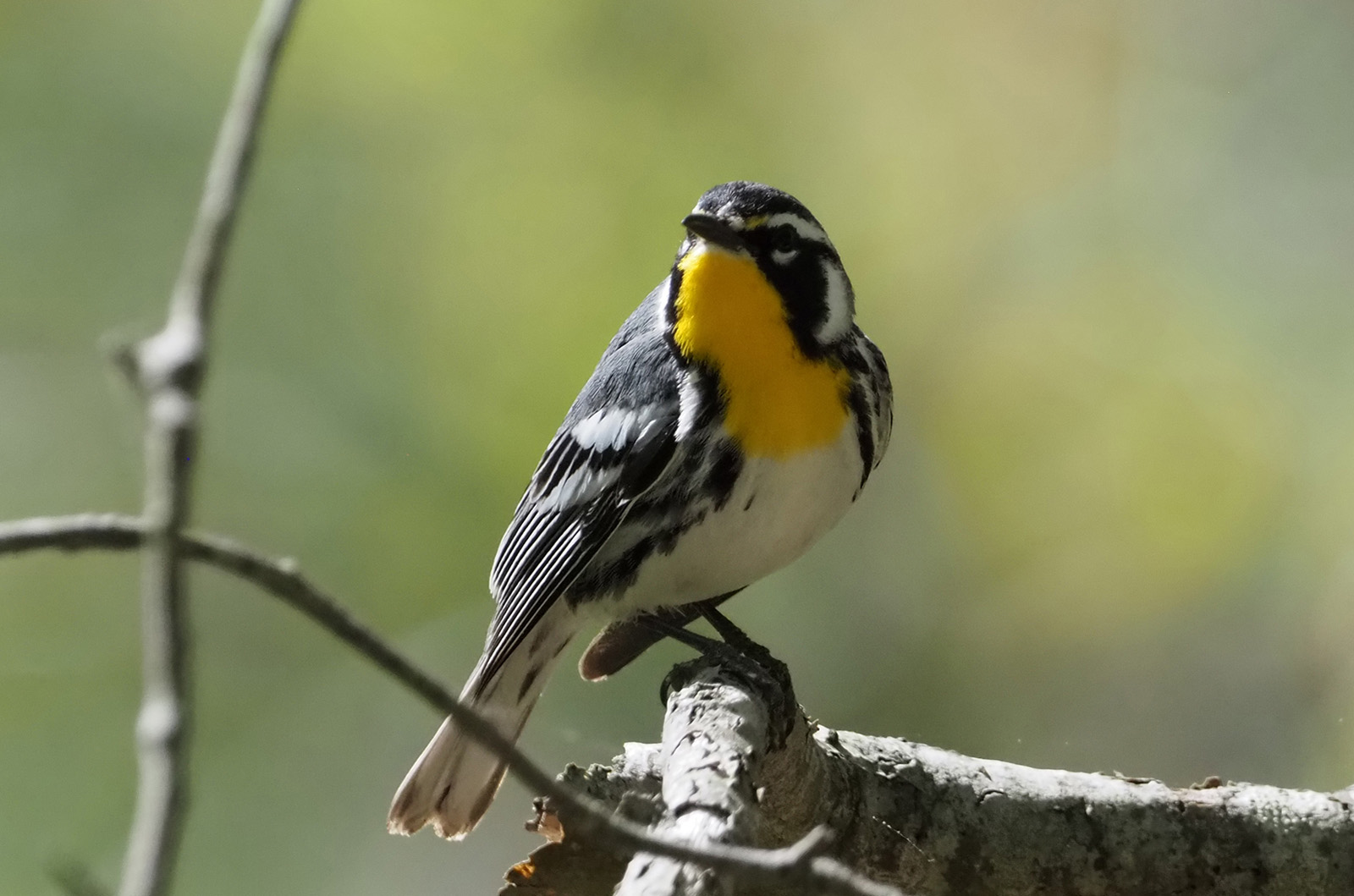
Yellow Throated Warbler
Migrating warblers are abundant now. Charles Morano had a productive trip to Wasque on Sept. 8, finding six common yellowthroats, two American redstarts and one northern parula. He also found the following 10 species with warbler as the last word in their name: one black-and-white, one Cape May, one magnolia, one yellow, one chestnut-sided, one blackpoll, 24 pine, six prairie, one black-throated green and one Canada.
Also on Sept. 8, an anonymous observer spotted one black-and-white warbler and three yellowthroats at the Gay Head Cliffs.
On the same day, Christine and Richard Audette observed two yellowthroats and two pine warblers at Sepiessa Point, and Bob Shriber located one black-and-white warbler and two yellowthroats in Aquinnah. The next day he added two redstarts and one Cape May warbler in Aquinnah.
Diane, Richard and Christine Audette watched three pine warblers at Felix Neck on Sept. 10.
Eastern Phoebe
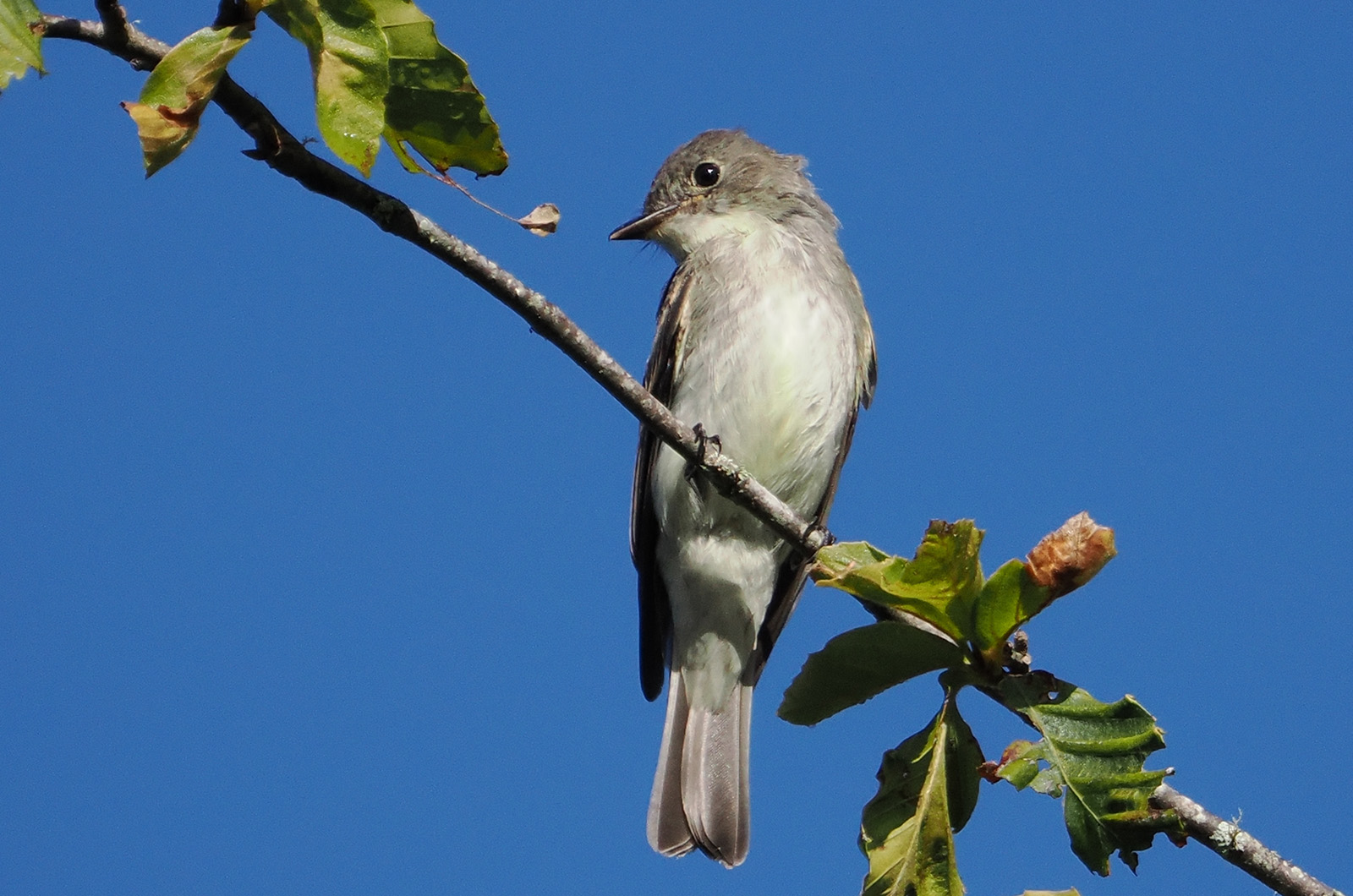
Eastern Phoebe
Shea Fee discovered two redstart, one Cape May warbler, one pine warbler, one black-throated green warbler, one prairie warble, and two firsts for the season: a yellow-throated warbler and two palm warblers at Wasque on Sept. 12.
Jennifer Slossberg watched one Cape May warbler and two pine warblers near the state forest headquarters on Sept. 14.
Red-breasted nuthatches are more frequently observed now that their southward migration has started. The following six observers found them: Lanny McDowell one in Aquinnah on Sept. 4; Laura Lennihan three on West Chop on Sept. 5; Charles Morano one at Wasque on Sept. 8; Bob Shriber three in Aquinnah on Sept. 9; Tim Donovan one near Stonewall Pond on Sept. 10; and Jeff Keiser one at Pocha Pond Preserve on Sept. 12. Will these migrants stay for the winter? Stay tuned!
Two species with brown in their names were spotted this week. Christine Audette saw a brown creeper at Felix Neck on Sept. 10, and Charles Morano found one along Donaldbin Close on Sept. 12. Chris Scott observed the other species, a brown thrasher, at Squibnocket Pond North on Sept. 13.
Flycatchers were also observed this week. Christine and Richard Audette found a lingering great crested flycatcher near Stonewall Pond on Sept. 8, and Diane, Christine and Richard Audette located an eastern phoebe at Felix Neck on Sept. 10.

Brown Thrasher
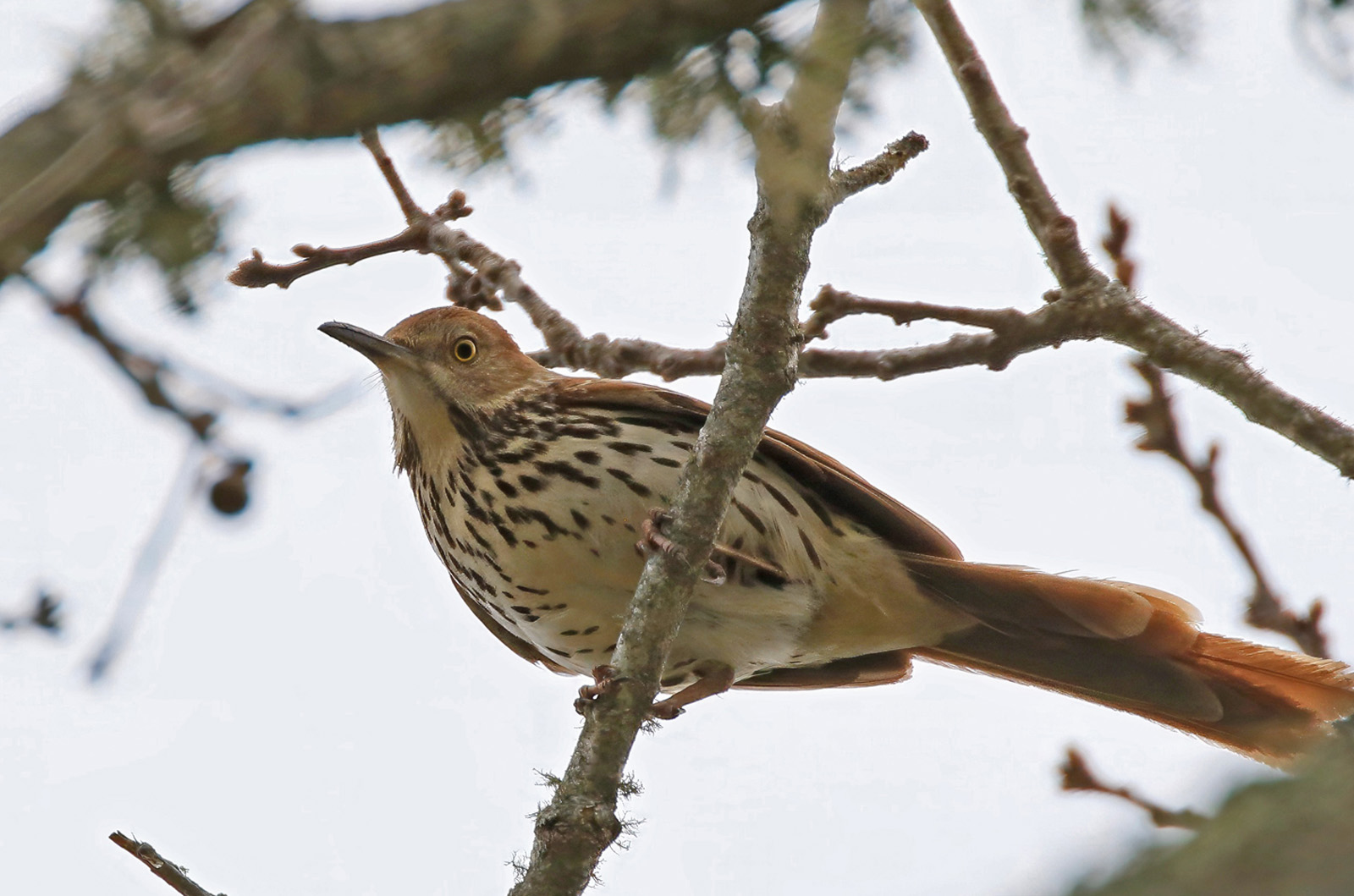
Brown Thrasher
Two observers found a migrant least flycatcher, which is difficult to identify without hearing it: Shea Fee at Wasque Reservation on Sept. 12 and me at Waskosim’s Rock Reservation along the Mill Brook on Sept. 13.
As usual in the summer, red-eyed vireos are the most common vireo seen. Charles Morano spotted three at Wasque on Sept. 8 and another along Donaldbin Cloise on Sept. 14. Bob Shriber found one in Aquinnah on Sept. 9, Richard, Christine,and Diane Audette observed one at Felix Neck on Sept. 10, and Shea Fee saw one at Wasque on Sept. 12.
The following two vireo sightings tell us that it is indeed the southward migration. Chris Scott located a yellow-throated vireo at Squibnocket Pond North on Sept. 13, and multiple observers found Philadelphia vireos. Bob Shriber watched two in Aquinnah on Sept. 8 and one on Sept 9, Shea Fee located one at Wasque on Sept. 12, and Charles Morano identified one along Donaldbin Close on Sept. 14.
For the second week in a row, the Felix Neck Early Birders spotted a bald eagle flying by right in front of them on Sept. 11. The 13 birders observed 28 other species.
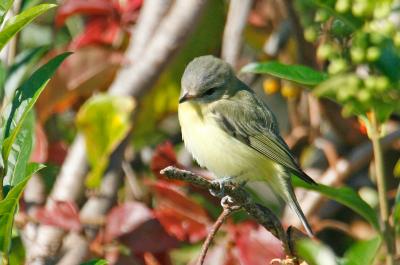
Philadelphia Virea

Philadelphia Virea
Falcons are also in the news. Charles Morano saw one merlin at Wasque on Sept. 8, John Nelson found a peregrine falcon at Katama Farm on Sept. 9, Susan Whiting observed a merlin at Katama Farm on Sept. 10, Shea Fee spotted a merlin at Brush Pond on Sept. 11 and two merlins at Wasque on Sept. 12.
Whimbrels must be many a birders favorite shorebird. Their large size and long down-curved bill makes them quite distinctive. Jennifer Slossberg watched one at Tashmoo Springs on Sept. 9, Lanny McDowell found one at Katama on Sept. 12, Shea Fee spotted two at Wasque on Sept.12, Richard Goldenberg had one on Chappy on Sept. 12, and Susan Whiting saw a flock of five at Dike Bridge on Sept. 14.
But whimbrels are not the only large birds with a down-curved bill. Hugh Carey found a glossy ibis at Felix Neck on Sept. 13.
Other shorebirds of interest include red knot, American golden plover and lingering piping plovers. On Sept. 9, Christine and Richard Audette found a golden plover and two piping plovers on Norton Point, Janet Woodcock observed two piping plovers at Lobsterville Beach, and Bob Shriber spotted one red knot in Aquinnah.

Canada Warbler

Canada Warbler
Four blue-gray gnatcatchers were found recently! Susan Whiting had one at Old Fields Path on Aug. 29, Charles Morano observed two at Wasque on Sept. 8, Bob Shriber saw one in Aquinnah on Sept. 9, and Chris Scott watched one at Squibnocket Pond North on Sept. 13.
Jeff Keiser reports one yellow-billed cuckoo at Pocha Pond Preserve on Sept. 13.
The MV Bird Club’s Book group counted a remarkable 28 wood ducks arriving to a pond in the evening at the Hoft Farm on Sept. 9, and Jennifer Slossberg found a northern house wren at Peaked Hill on Sept. 2.
Bobolink are regular southbound migrants now. An anonymous observer counted 14 at the Gay Head Cliffs on Sept. 8, and Bob Shriber observed seven bobolinks in Aquinnah on Sept. 9.
Please email your sightings to [email protected].
Robert Culbert is an ecological consultant living in Vineyard Haven.
Add new comment