
Oleander aphids take matriarchy to the next level.
Oleander aphids take matriarchy to the next level.
Patriarchy isn’t even possible since all individuals of this species are female. That is correct: not even a single male in the mob. Interestingly, scientists have produced males in the laboratory, but the fellows do not exist in nature.
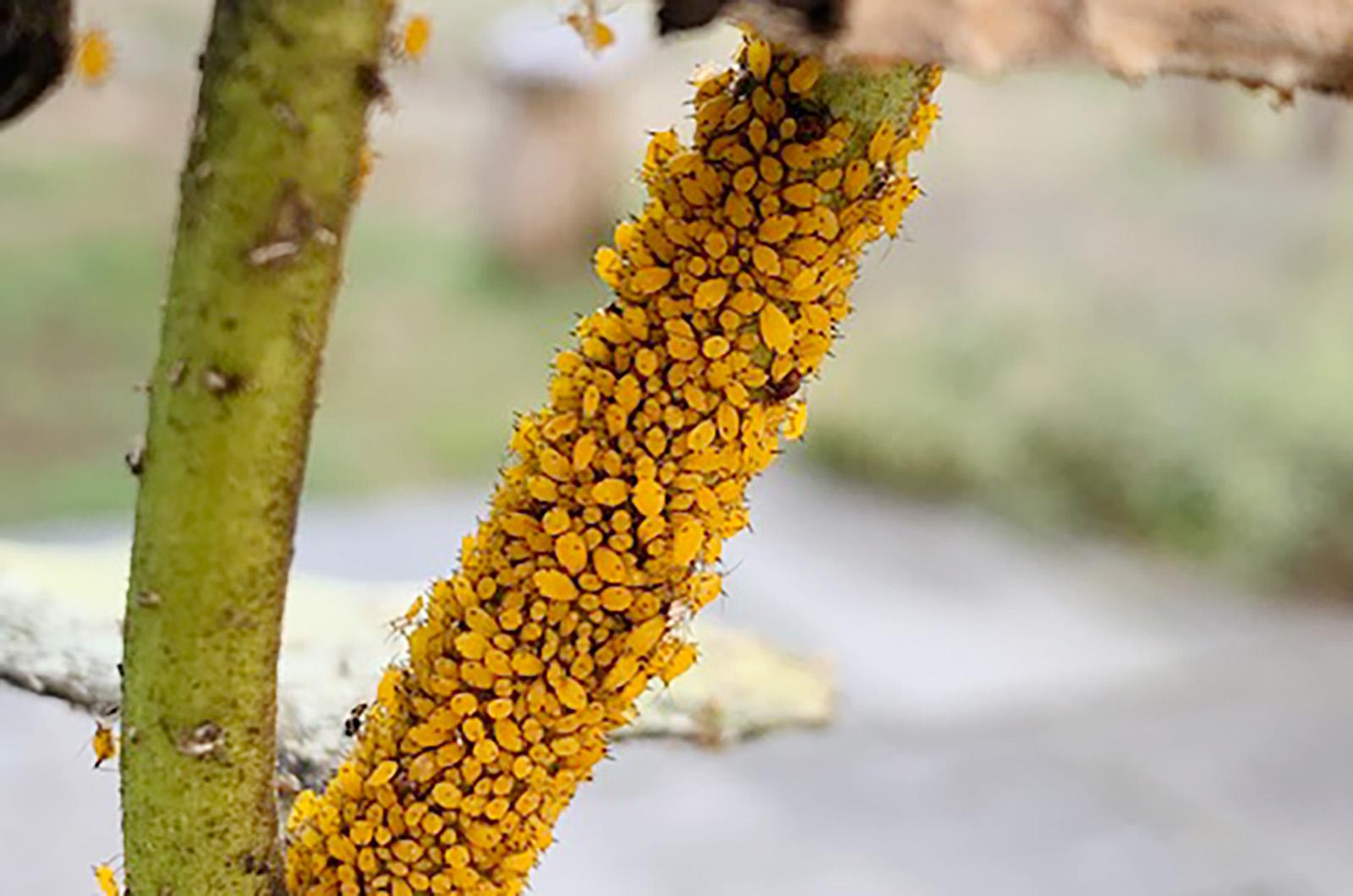
If you have milkweed, it is likely that you know these masses of mommas. Small bright orange (or yellow) aphids with black legs, antennae, and cornicles (tubes that extend from the abdomen) explode onto the scene in late summer, often feeding on and covering the stems, leaves and even flowers of milkweed.
It is multiplying madness as the females reproduce by parthenogenesis (asexual reproduction), birthing live young that are exact copies of themselves. And each mother can produce lots of those clones, up to 100 nymphs per female. No wonder we get wall-to-wall or leaf-to-leaf aphid coverage.
The sap-sucking throng take no time getting busy on milkweed and other favorite plants. Oleander aphids are also called milkweed aphids or sweet pepper aphids, and scientifically are known as Aphis nerii. They fixate and feed on plants in the dogbane family. Besides oleander and milkweed, they can consume periwinkles and occasionally plants in the bindweed, daisy, and spurge families.
Pat Tyra of Edgartown called last week with concern about the orange crowds covering her milkweed and competing with the last of the season’s monarch caterpillars. Oleander aphids are not native, and she wondered if she should manage them or leave them be.
The first concern is that they are competing with monarch caterpillars. While they do hang out on the same plants, the two can coexist. These aphids usually thrive on plants that are already stressed, so having a healthy population of milkweed can provide for both of these and other milkweed munchers. Be sure to keep milkweed healthy and watered in drought conditions, as this will deter oleander aphids, which can eventually harm and kill the plant if it is weak or otherwise vulnerable.
What you shouldn’t do is fertilize your milkweed if you have an infestation, since research shows that oleander aphids reproduce more quickly on plants with higher nitrogen content. Another no-no is insecticides. Even though they effectively kill oleander aphids, these chemical compounds also harm monarch caterpillars and other pollinators and insects that are in the line of fire.
First line of attack is to rely on natural partners and predators of the aphids. Ants have a symbiotic relationship, in which they consume the sugary honeydew that the aphids produce and will, in turn, protect their aphid food source from harm. And, like the monarch caterpillars, the oleander aphids do sequester the toxic cardenolide compounds that protect them from some predators.
There are other predators that can and will consume the aphids, and these are your allies if you want aphid-free milkweed. Ladybugs, lacewing larvae, hoverflies and some parasitic wasps will eat aphids. The parasitic wasps’ macabre methods include laying eggs inside the aphid which then hatch and eat the aphids from the inside, eventually leaving brown papery shells called mummies behind. Look for those brown bodies to know that you are not alone in the fight.
Some sources suggest that a strong stream of water aimed at the aphids will blow them off. That is true, but that water will also do the same for monarch eggs and caterpillars. The best suggestion is to squish them with your finger or brush them off of the milkweed plants, since they usually won’t be able to get back to their favorite watering hole from ground level. Gloves are highly recommended, as is a strong constitution.
Ultimately, Pat will decide how to go forward with a passive live-and-let-live approach, or she might choose to be heavy handed and squash the infestation. Whatever she chooses, it is only a matter of time before these aphids return. And for this species at least, the future is female.
Suzan Bellincampi is director of the Felix Neck Wildlife Sanctuary in Edgartown, and author of Martha’s Vineyard: A Field Guide to Island Nature and The Nature of Martha’s Vineyard.
Add new comment