

Samuel Latham Mitchill was a jack of all trades.
Samuel Latham Mitchill was a jack of all trades.
This 19th-century American was a doctor, lawyer, politician, naturalist, professor and ichthyologist (fish scientist). A true Renaissance man, Mitchill was described as having “irrepressible energies... polyglot enthusiasms... [and] distinguished eccentricities,” and was also not “afraid to speak out loud about the loves of plants and animals.”
Zac Sweeney might have found a kinship with Mitchill. Zac is an Islander, angler, nature lover, contractor and animal aficionado who also has a variety of skills and interests like Mitchill, and showed up at Felix Neck last week. He was quite excited and arrived with a bucket of marine curiosities, a few of which were unusual for this locale. There was a larval mantis shrimp and a few fantastic fish finds from the previous night. The evening’s catch included pompano, permit, anglerfish, butterflyfish and moonfish — fish species that are more often found in southern United States and Caribbean waters.
Even though the ranges for these fish include Massachusetts and even as far north as Nova Scotia, sightings of these vagrants are unusual locally. Moonfish, for example, have only one documented occurrence in Martha’s Vineyard waters in Inaturalist, the online community species observation platform. These fish most likely surfed up north on the Gulf Stream and were pushed to the coast through winds, tides and eddies.
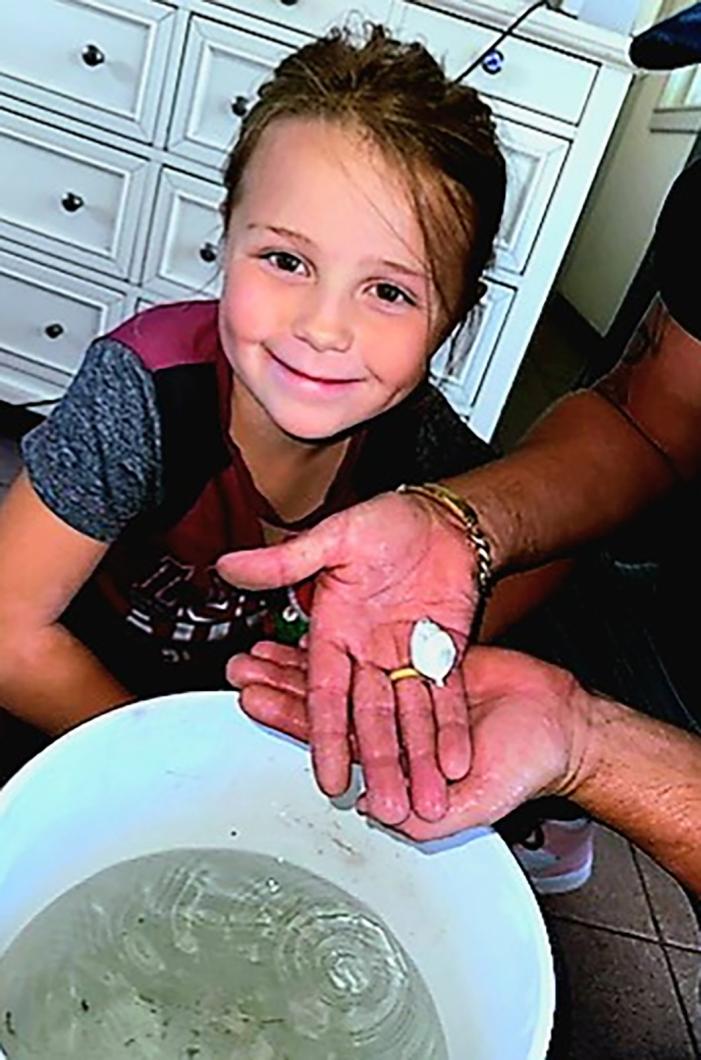
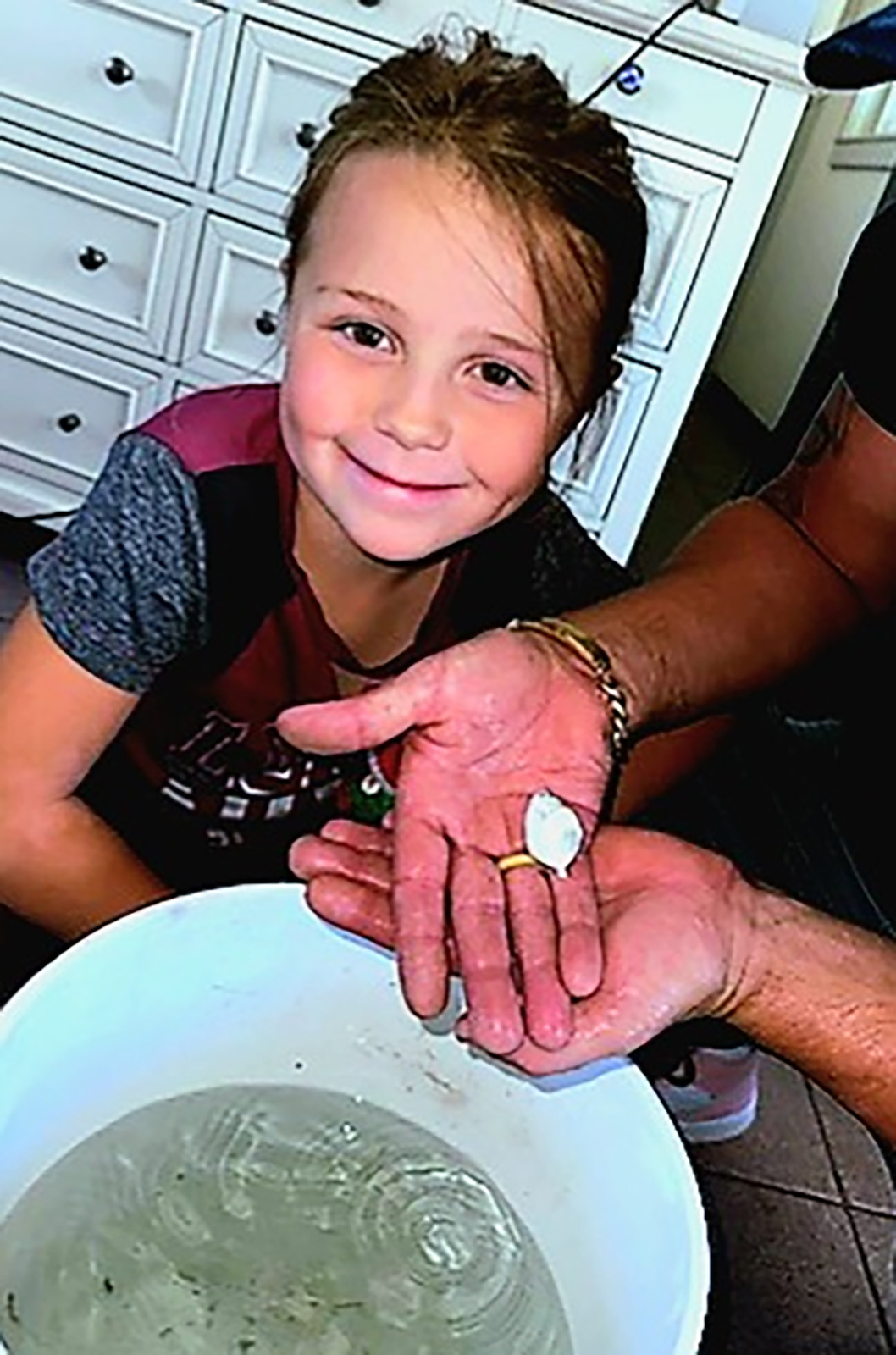
Moonfish and the others came to be in that bucket through the skill of another. Credit six-year-old Arayah Faith Sweeney, Zac’s daughter, who caught all of these little fish with dipnet and determination. Night fishing with her dad at Menemsha yielded a bonus of beasts. For him, striped bass; for her, half a dozen denizens of the tropics.
Of the variety collected, it was the moonfish that linked Samuel, Zac and Arayah. Arayah caught the fish, Zac identified it and, in a time long ago, Samuel documented the species in the scientific literature. In 1815, in what he called the Bay of New York, Samuel bestowed the swimmer its first scientific name. He christened the disc-like fish Selene setapinnis. Selene is Greek for moon and setapinnis describes the bristled fins of the species.
Atlantic moonfish are a very distinct, shiny, flattened fish that are almost circular in body shape, so the “moon” moniker fits. While the species can grow to a foot and a half, Arayah’s specimen was a juvenile, only an inch or two in length.
A schooling fish, adult moonfish prefer to be at the bottom of inshore waters. The young, however, can be found at or near the surface. They prey on crustaceans and other small fish. Adults are not usually prioritized for human consumption, though they are edible according to some. A completely different fish that is also commonly known as moonfish is opah (Lampris guttatus) is valued as a food fish, and the shared name might confuse those just searching the name moonfish.
It was doubtful that Mitchill had dinner in mind when he found his first moonfish. He was too busy with his scholarly pursuits to consider the culinary uses of that thin little sliver of a specie. He was a man known as a “living encyclopedia,” and while his reputed “chaos of knowledge” was great, it appears not to have included recipes for his fish finds.
Nor did Zac and Arayah plan to eat those delicate beauties. They were just over the moon to find such a smattering of special species.
Suzan Bellincampi is director of the Felix Neck Wildlife Sanctuary in Edgartown, and author of Martha’s Vineyard: A Field Guide to Island Nature and The Nature of Martha’s Vineyard.
Add new comment