


As a medical doctor working in Israel, Dr. Yasmeen Abu Fraiha has had firsthand experience with the tragedies of the conflict between Jewish and Arab populations.
As a medical doctor working in Israel, Dr. Yasmeen Abu Fraiha has had firsthand experience with the tragedies of the conflict between Jewish and Arab populations. But it’s exactly the diversity of the people she and her colleagues have treated — Arab and Jewish doctors together, treating Palestinian and Jewish patients alike — that gives her hope for the future of the area and its deep-seeded conflicts.
“There are people who believe that we need to save lives and that every life is sacred,” she said at a talk at the Hebrew Center Sunday night.
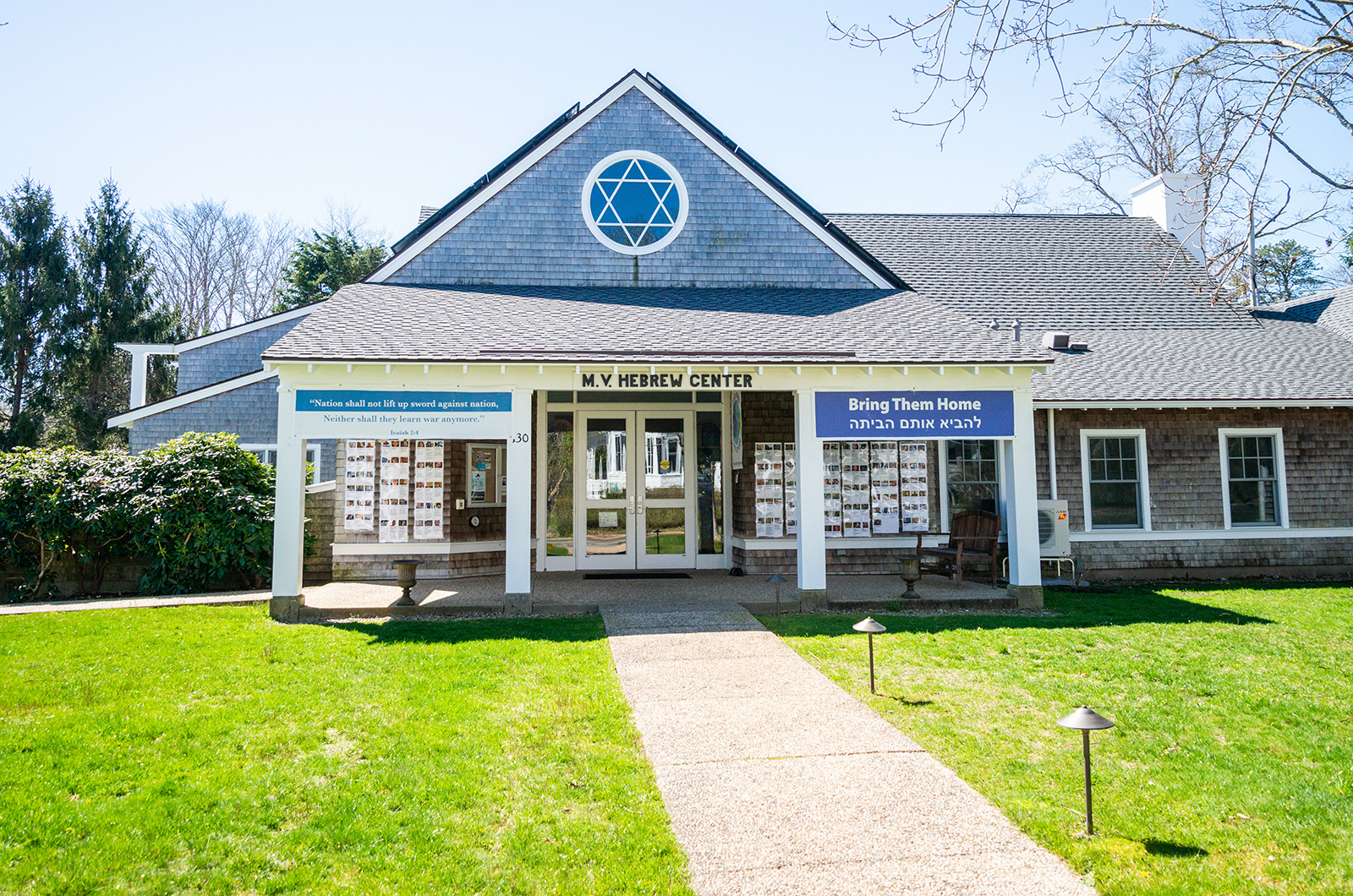
Rabbi Caryn Broitman introduced Dr. Fraiha to the congregation.
“This talk and our conversation between us and with you all is about building bridges,” Rabbi Broitman said. “You all are here doing that, as is Yasmeen, and I feel very moved by that.”
Dr. Fraiha spent 16 hours working in the emergency room at Soroka Medical Center after October 7 attacks.
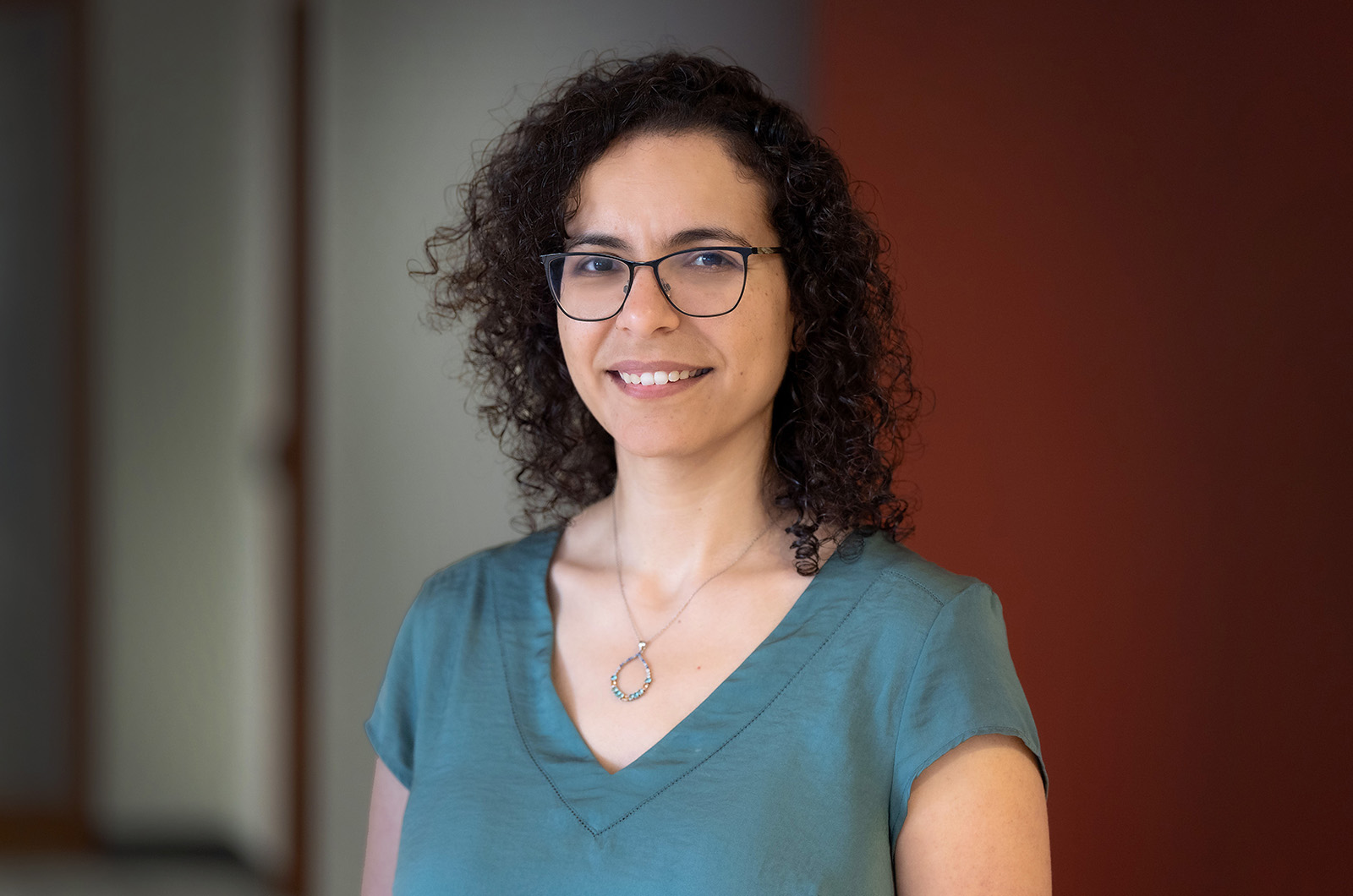
Dr. Fraiha spent 16 hours working in the emergency room at Soroka Medical Center after October 7 attacks.
Dr. Fraiha, a medical doctor who is both Palestinian and Israeli, spoke about her identity, the October 7 attacks and how a divided population of Israeli Jews can begin to move forward from the conflict that has gripped the country since before its inception.
“There’s a tension between Jewish and democratic,” she said. “This tension was never addressed, and we see it today in very, very high levels, in the inner conflict within Israeli society.”
Dr. Fraiha was born in a small Bedouin town in southern Israel, but raised in an affluent Jewish town close by.
“The distance between the two places is five minutes by car, but it’s like driving through time, because the difference in development is basically 100 years,” said Dr. Fraiha.
It’s symptomatic of a larger problem of systemic inequality in Israel, she said. Out of around 1,200 towns in Israel, only seven are “mixed,” housing both Arab and Jewish populations. Many Palestinian residents in cities such as Jerusalem are not citizens of Israel, meaning they do not have the right to vote in Israeli elections. The medical system is especially unequally accessible, something Dr. Fraiha has witnessed first-hand while working in hospitals.
“I would hear from parents of patients I used to work with in the pediatric ward that they had to bribe officials in the Ministry of Internal Affairs just to get their kids to be hospitalized,” she said, speaking about Palestinian families from East Jerusalem and the West Bank. “I can’t believe how easy it is for me to get medical care if I need to, and how difficult it is to someone that lives just a few miles from me.”
Dr. Fraiha recounted her experience after the attacks of October 7, when she spent 16 hours in the emergency room at Soroka Medical Center treating people from the Nova music festival, tourists, agricultural workers and people “coming with their limbs in bags.”
Dr. Fraiha acknowledged that day’s “unprecedented, unimaginable” tragedy that killed over a thousand people, but also said “it does not justify 694 October 7ths,” referring to the number of days since the attacks.
“To revenge in order to deal with trauma is not healthy,” she said. “Everyone is saying, October 7 was the largest massacre of Jews since the Holocaust. Why continue then? Enough is enough. That’s enough killing.”
She said the larger question that must be addressed goes to the very heart of Israel’s identity as a Jewish state.
“Today, the Zionist story is a story of Jewish supremacy,” she said. “Homeland for the Jewish people does not mean Jewish state. This is where you will need to decide what it actually means to have a Jewish state.”
An “ethnocratic Jewish state” is at odds with democracy, she explained. For many people, a Jewish state means a majority Jewish population, no Muslim cemeteries in Jewish towns, and no work or public transportation on Saturday, the day of Shabbat, according to Dr. Fraiha. “That contradicts democracy, individual rights and freedom of religion, right? It doesn’t work together.”
“The question that we need to ask is, do we believe in the equal rights of Israelis and Palestinians?” said Dr. Fraiha. “And the truth is, there’s no consensus about this.”
She added that the current government under Benjamin Netanyahu is a symptom of Israel’s failure to confront the problem of democracy in a Jewish state.
“I think Jews worldwide, but specifically in Israel, should think of a new Zionist story,” she said. “We can say that this, this holy land, is a homeland of both the Jewish people and the Palestinian people. Once we agree on that, then the rest is technicality.”
Dr. Fraiha spoke about her current activism for Gaza, which includes trying to fund humanitarian aid and facilitating medical evacuation for children. She has also connected Israeli journalists with physician friends and volunteers in hospitals, allowing the Israeli media to document the starvation and obstruction of humanitarian aid that continues to push up the death toll in Gaza.
“This is also your job, to be honest, as people who are friends of Israel,” said Dr. Fraiha, addressing the audience. She encouraged the attendees to support organizations providing humanitarian aid in Gaza, and others that are working towards long-term national solutions such as the New Israel Fund, whose board she serves on.
“We must put everything we can, all efforts. If you know people who are influential in the US government, or have connections with the Israeli military, or who have connections with the authorities in Israel, put your effort and pressure them to open the gates,” she said.
“Eventually we need the Israeli military and government and society to understand that this is — this is wrong,” she added. “And we should stop this immediately.”
Comments
I expect that such a
James Kozak Vineyard HavenI expect that such a realistic, compassionate viewpoint as Dr. Yasmeen Abu Fraiha holds would not see her in a denial of service situation from many food vendors.
Thank you for the work you do to improve humanity.
Add new comment