

Cartoonists work specifically for reproduction. As a cartoonist, I enjoy looking at the surface of such work, but a lot of cartoonists’ work looks better printed.
Cartoonists work specifically for reproduction. As a cartoonist, I enjoy looking at the surface of such work, but a lot of cartoonists’ work looks better printed. It’s supposed to. So, in a gallery setting I am always on the lookout for cartoons that justify wall space, originals that gain a new voice under the spotlight.
I found plenty to like in the new Featherstone exhibit that features 120 original cartoons from The New Yorker and Daily Mirror. The exhibit was curated by Suzy Brown van Dijk and Lisa Brown Langley from the home collection of their parents, Philip and Eileen Brown.
The bulk of the works are from the 1980s and many of the cartoonists associated with that decade at The New Yorker are strongly present: Charles Barsotti, J.M. Handelsman, William Steig, Mick Stevens, James Stevenson and Jack Zeigler. A few of the less-frequently published artists also make cameos: Joe Maracini, Lou Meyers and Richard Oldden. Although there is only one late-career example by Charles Addams, it’s huge and sublime.
Oddly enough, there is only a single cartoon by Bob Mankoff, who was very prolific in the 1980s and was the magazine’s cartoon editor from 1997 to 2017. George Booth, who at the time was the most iconic of 1980s New Yorker cartoonists, is also only represented by a single drawing. And there are no cartoons by Roz Chast, whose status has ascended since the 1980s and today is generally regarded as the magazine’s premiere artist.
There will be a curator tour led by Lisa Brown and Sept. 10.
There will be a curator tour led by Lisa Brown and Sept. 10.
That said, the Browns had excellent taste in gags and drawings.
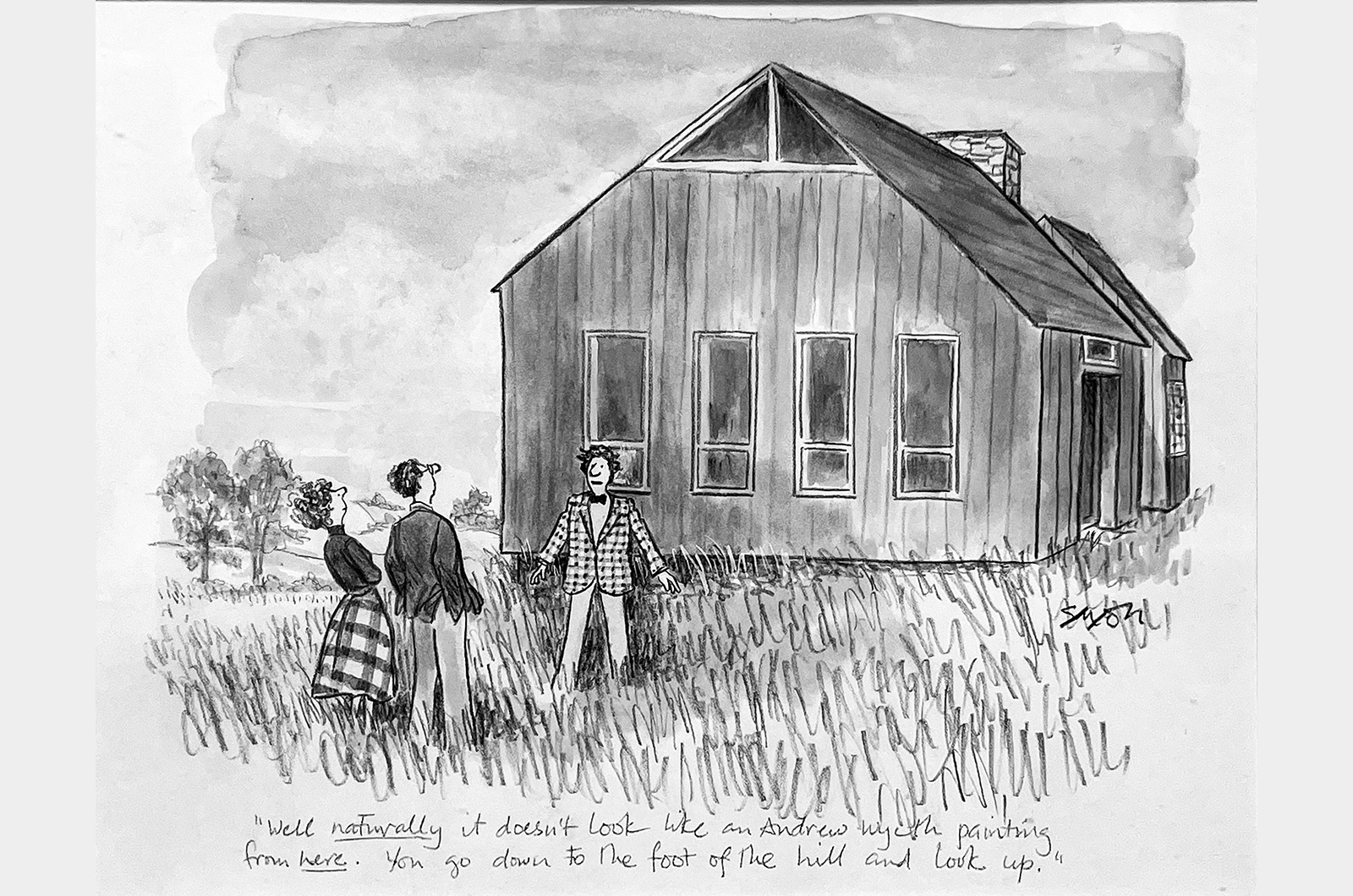
For me, the standouts that benefit from close inspection include works by George Price (whose drawings look remarkably fresh in their staging, use of white space, and his peculiar split-line rendering), James Stevenson (whose decisively energetic line work buzzes seen in full size), and Whitney Darrow, Jr. (whose frenetic scribbly backgrounds are full of specific details that are invisible when reduced for print).
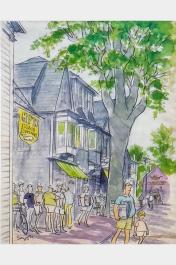
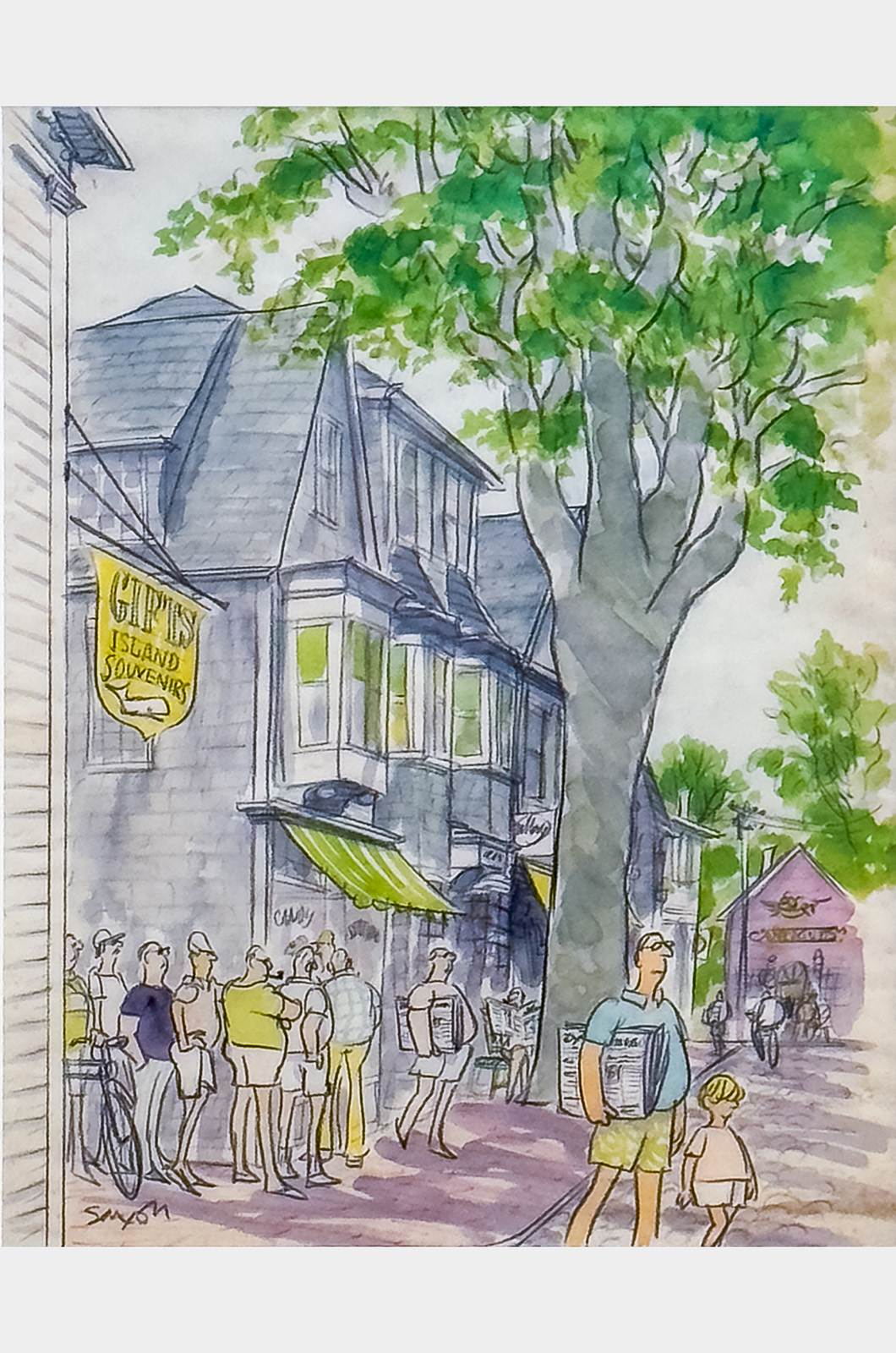
But perhaps my favorite works in the show are a half dozen pencil and watercolor cover drawings by Charles Saxon, the “John Cheever of Cartooning,” a prolific cartoonist whose work I took for granted growing up with weekly New Yorkers stacking up on my parent’s coffee table.
In my youth, my prejudice against the Country Club cocktail party types whom Saxon regularly employed spilled over to a snobby disdain for Saxon’s actual drawings. The man had truly remarkable skill in combining costume, gesture, expression to depict as very specific moment in time/space that was real and at the same time completely fictitious. As a pencil artist, myself, I find the sensitivity in his line weight humbling. Two of Saxon’s cover drawing on display are decidedly Vineyardy.
It is rare to enter a gallery space and hear giggling as attendees point out choice drawings that tickle them. Appropriately, a few of the drawings reference Martha’s Vineyard where the Brown family summered, but they all have that New Yorker sensibility of looking at the world sideways to reveal the hidden truths with a smile.
Add new comment