
To the trained eye, it was crystal clear that this was something different. That trained eye belonged to a scientist that studies jellyfish. Dr. Keith Bayha took note of an otherwise common jellyfish called a sea nettle, and observed that it was a bit different than the ones he usually came into contact with.
To the trained eye, it was crystal clear that this was something different.
That trained eye belonged to a scientist that studies jellyfish. Dr. Keith Bayha took note of an otherwise common jellyfish called a sea nettle, and observed that it was a bit different than the ones he usually came into contact with.
This scientist might be considered a cnidologist, since he studies organisms in the phylum Cnidarians, which includes aquatic invertebrates such as hydroids, sea anemones, corals, and jellyfish. Whatever you call him, he knew to look deeper into the floating form he observed off the coast of Delaware.
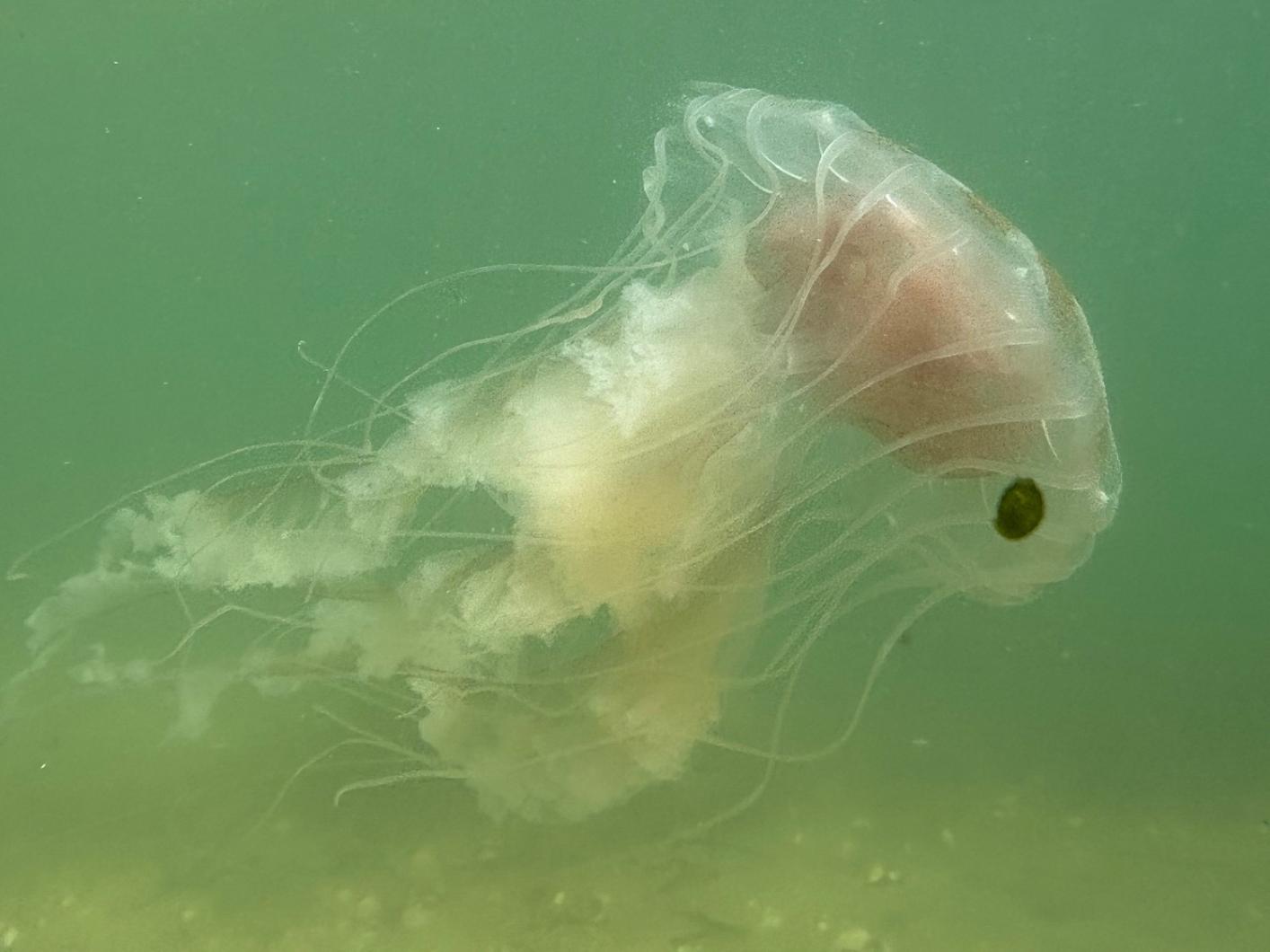
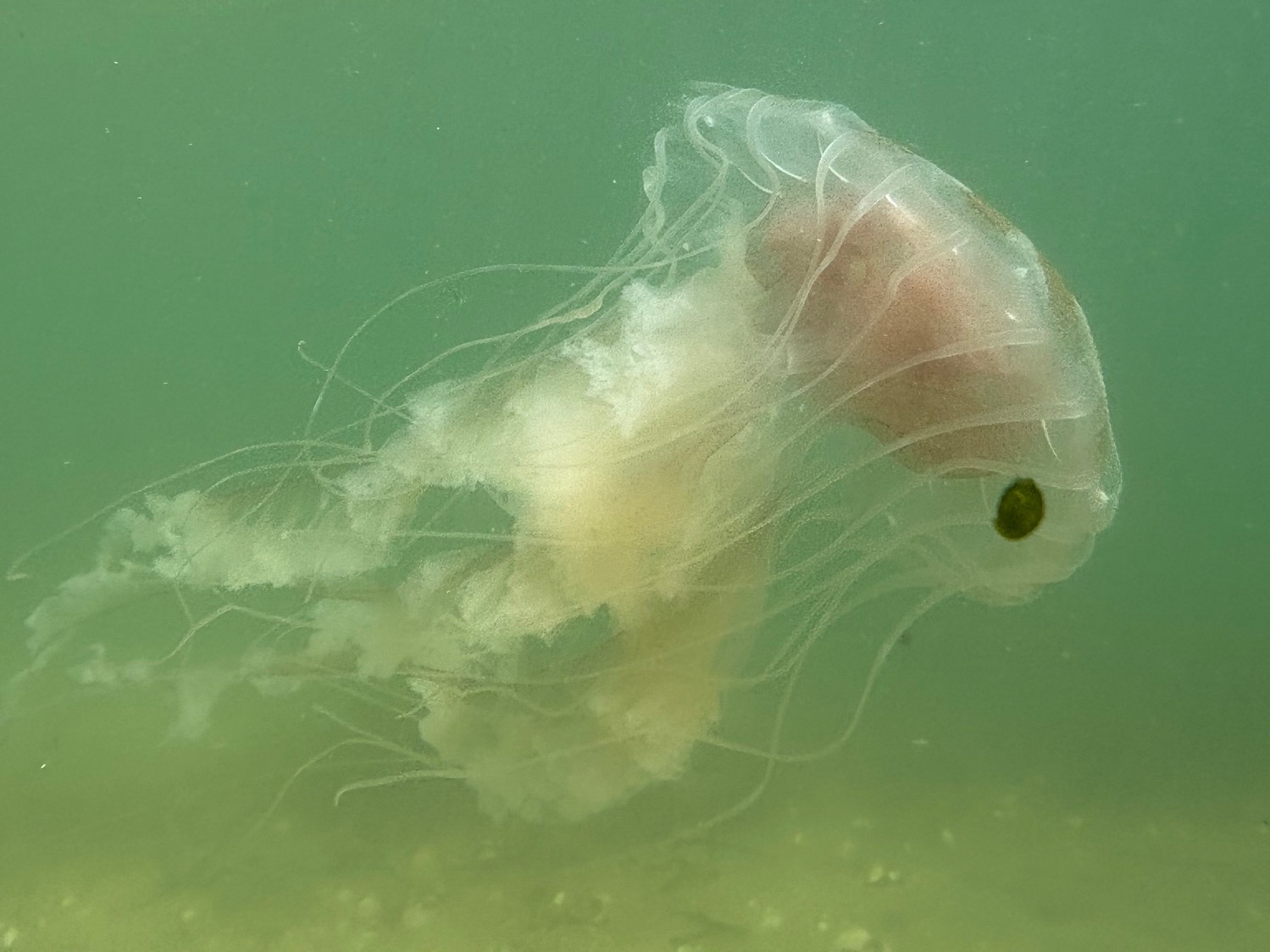
The nettle in question was smaller than most sea nettles, had fewer tentacles, and its oral arms were half the expected size. Sea nettles also have spots on their bell, while this one did not. Working with others and completing genetic analysis led to a surprising find.
Dr. Bayha’s jellyfish was not just a smaller version of the sea nettle known as Chrysaora quinquicirrha; it was its own unique and distinct organism. In 2017, the team found, identified and christened the new nettle the Atlantic bay nettle, Chrysoara chesapeakei. They also discovered that the bay nettle is genetically more closely related to jellyfish off the coast of Ireland, Argentina and Africa than to the local Atlantic or East Coast sea nettle.
Bay nettles prefer estuaries to sea nettles’ coastal and open ocean habitats. Both can be found in our local waters. I know that because I wrote about sea nettles a few years back, but made a mistake caught by the aforementioned scientist. The accompanying photo was a bay and not a sea nettle as identified by the expert himself. Guess I don’t get it right all of the time.
The researcher and his nettles are on my mind because last week reports began to come in of nettle jellyfish on the beach and in local waters. These gelatinous globs can be present in our area from July to September and can sting upon contact, so do give them their space. A recently shared photo showed a nettle which I suspect is a bay nettle, though I will defer to the doctor on that one to avoid another blubbery blunder.
While their stinging may make this nettle a nemesis, another habit may endear them to those who enjoy oysters. Nettles are predators of ctenophores, also known as comb jellies, which, while appearing as small jellyfish, are not classified as such and don’t sting. What those ctenophores will do is consume oyster larvae, so the reduction of this oyster predator could potentially allow for a larger oyster population (and harvest).
Nettles will also eat a variety of other prey species, including small bait fish and their eggs, insects and their larvae, worms (making them a vermivore), plankton, and other marine invertebrates. With their stinging cells, they are prey to only a few animals, notably leatherback turtles, whose papillae or spine-like projections located in their esophagus helps the turtle break down and manage its slippery jelly prey.
While we can see nettles in their natural habitat in Island waters this time of year, not all of us we will train our eyes on them as Bayha did. He comments: “It’s not that I did anything that different, it’s just that no one else looked for a very long time. Jellyfish are something people don’t pay attention to because they’re fleeting. They come and go, are difficult to study, and they don’t have hard parts [like] shells that wash up on the shore.”
Suzan Bellincampi is director of the Felix Neck Wildlife Sanctuary in Edgartown, and author of Martha’s Vineyard: A Field Guide to Island Nature and The Nature of Martha’s Vineyard.
Add new comment