

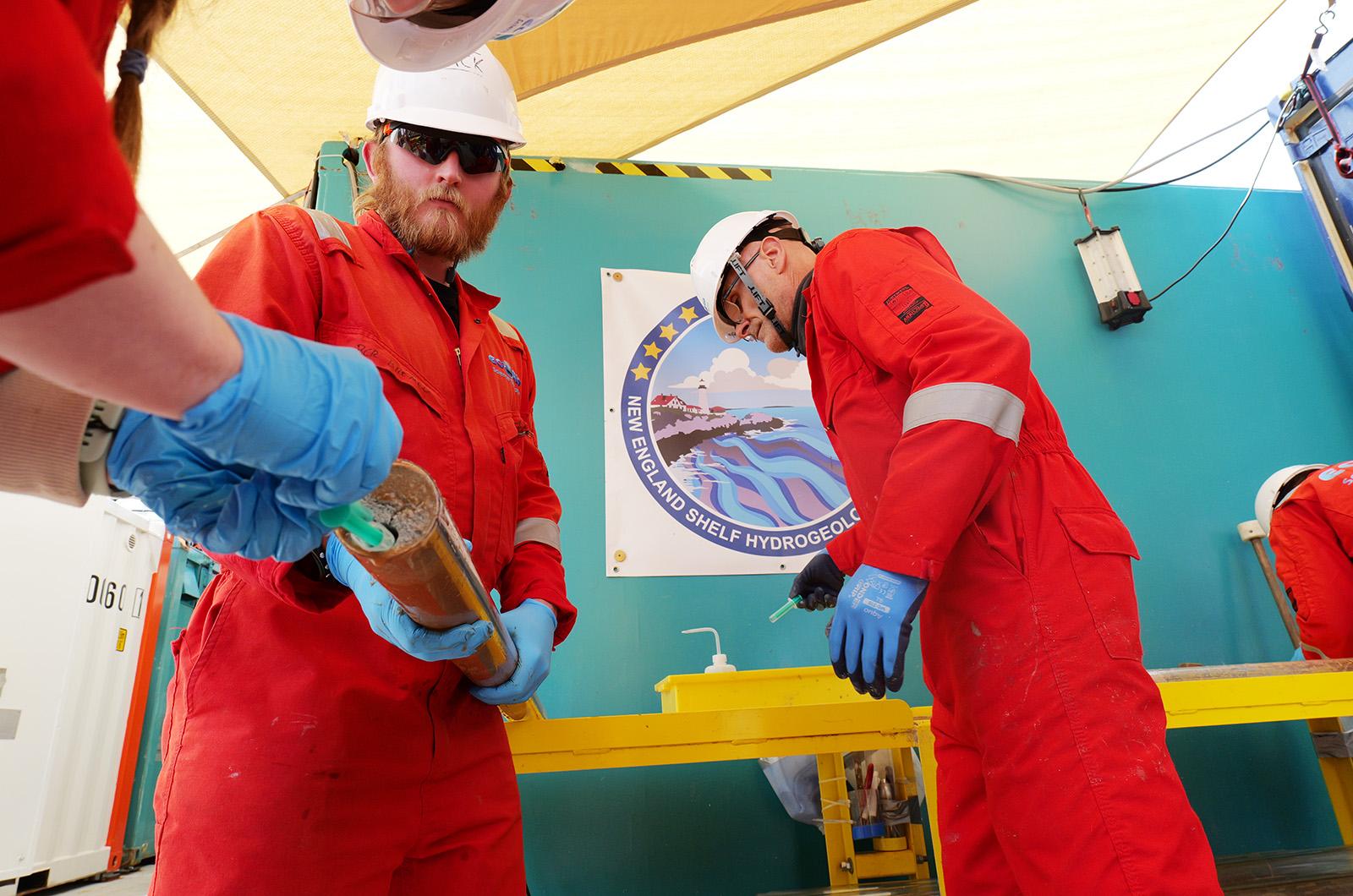
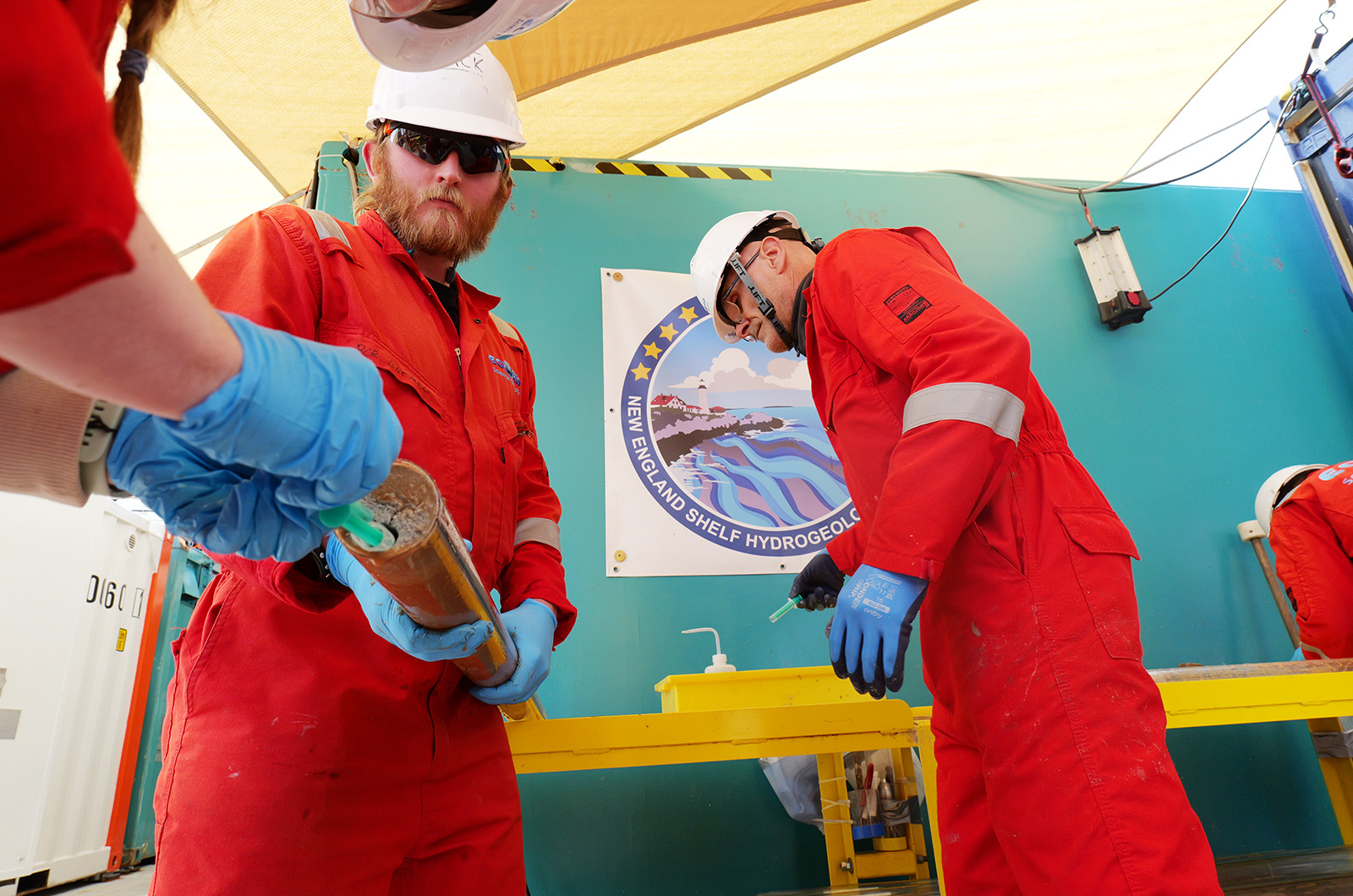
After a 74-day offshore drilling trip south of the Vineyard, a consortium of scientists say they have found a large freshened water aquifer beneath the sea floor.
A first of its kind expedition has found freshwater tucked away in a large pocket under the ocean floor off Martha’s Vineyard.
After a 74-day offshore drilling trip at three sites between 25 and 45 miles south of the Island, a consortium of scientists say they have found water that had the same salinity level of drinking water. The discovery by the International Ocean Drilling Programme and the U.S. National Science Foundation is some of the first research in the unexplored area, and could help tap into new freshwater reserves across the world.
“The presence of freshened groundwater in sandy, unconsolidated Paleogene and even Cretaceous continental shelf sediments 20 to 50 miles offshore is exciting,” said Karen Johannesson, one of the lead scientists. “I look forward to learning more about when these groundwaters were recharged to these sediments and what the past climate was like when these groundwaters entered these offshore aquifers.”
The lift boat provided a home for the group during the drilling expedition.
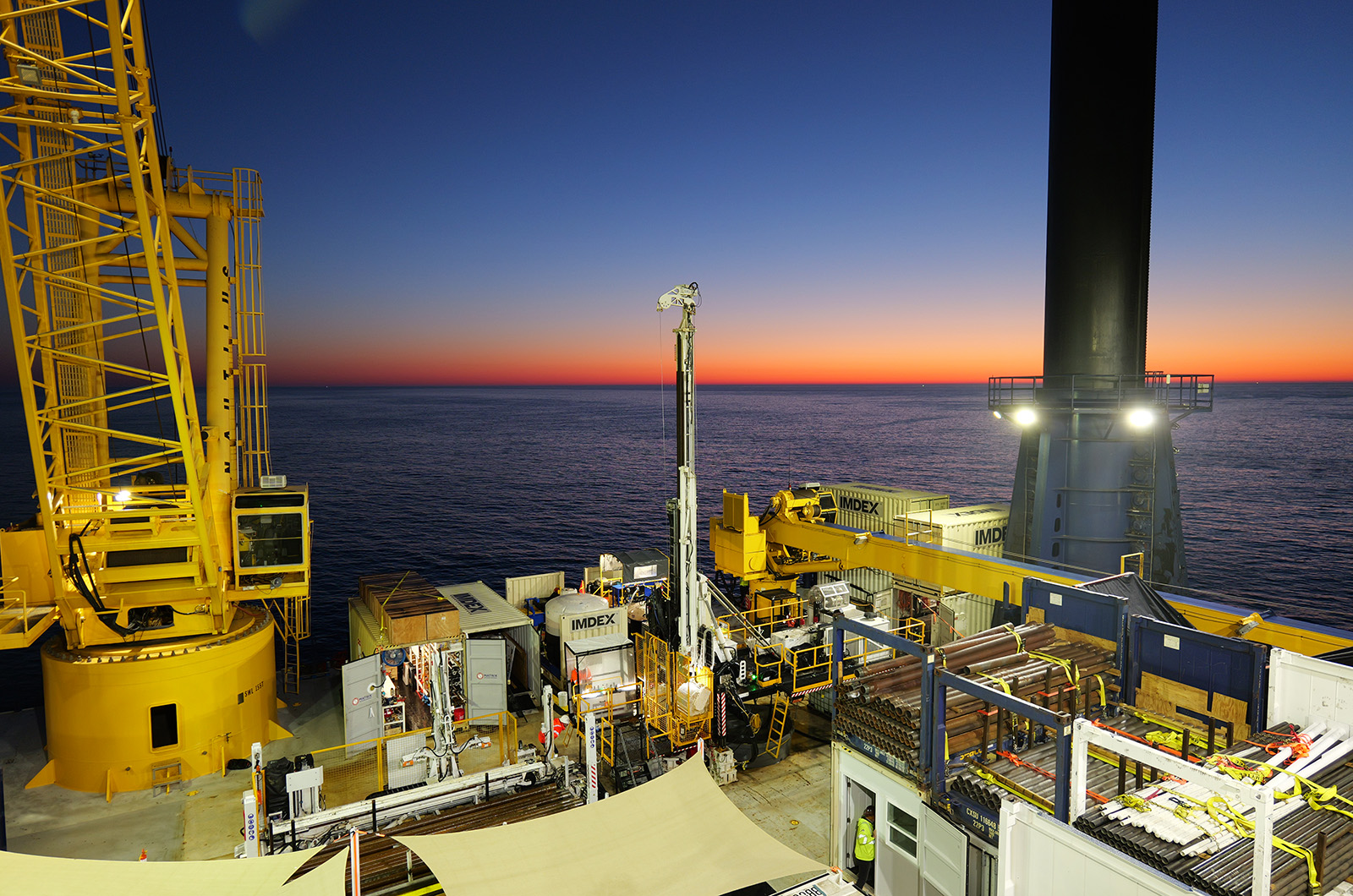
The lift boat provided a home for the group during the drilling expedition.
For decades, scientists have known there is freshwater beneath the New England Shelf, but it had never been sampled until now. Earlier this summer, the team of scientists from 13 countries set out from Bridgeport, Conn. and drilled 718 core samples of the water and the sediment surrounding it.
Similar to a straw being inserted into a birthday cake, the researchers aboard the 185-foot lift boat drilled down and pulled up cross-sections from the ocean.
The areas closer to shore had samples that had the same salinity levels as drinking water; further offshore the water was about half as salty as ocean water.
The samples are now headed to Bremen, Germany where the scientists will continue to analyze them, said Brandon Dugan, an American scientist from the Colorado School of Mines who was on the expedition.
“Now we have the samples for the science team to really dive into the data and understand the system, which will be helpful for understanding other offshore freshened groundwater systems around the world,” he said.
The hope is to learn how long the water has been below the ocean floor, how it got there and how much of it there is.
About 50,000 liters of water were pumped out of the aquifer for the research. Mr. Dugan guessed that in just this pocket alone, there could be enough water to supply New York City for the next 800 years.
“I don’t think that estimate is going to be significantly far off,” he said.

The trip was a first of its kind and could help provide future drinking water options.

The trip was a first of its kind and could help provide future drinking water options.
The area was picked for testing after core samples taken on the Vineyard and Nantucket showed freshwater deeper than previously expected.
There were two layers of freshwater within the pocket, which to Mr. Dugan supported the theory that the water comes from a former glacier that was pushed beneath the seafloor and then later melted, possibly over two different glacial events.
Somewhat surprising to Mr. Dugan was the lack of rock in the area where the drilling took place. Hundreds of feet down into the floor, there was still beach sand, clays and silt.
“Usually when you get that deep, you see a cliff,” he said. “Five-hundred feet down, we saw things like beach sand.”
Layers of shells in the sediment indicated to him that this area was the previous seafloor, and the aquifer had been tucked underneath.
The finding seemed to disqualify the previous belief that the aquifer under the seafloor could be from ancient rainwaters thousands of years ago when water levels were much lower. That still could be true in aquifer sites in other parts of the world.
The discovery by the consortium connects research from the U.S. Geological Survey in the 1970s, which stumbled across the aquifer while trying to better understand the ocean floor along the east coast. Subsequent studies uncovered the phenomenon was found globally.
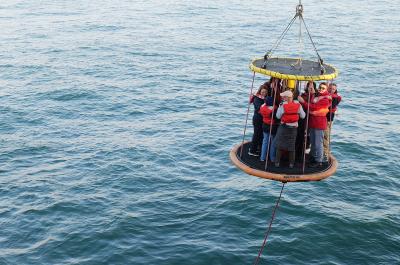
Scientists were from around the globe.

Scientists were from around the globe.
Though this mission was largely to determine the salinity and other scientific measurements in the area, the discovery could help scientists better understand the underwater aquifers so leaders can consider if the resource should be used.
Fresh drinking water across the globe is under pressure due to rising sea levels that can push into local aquifers, along with contamination from PFAS and other chemicals. The United Nations has predicted that about two-thirds of the global population will experience water scarcity by 2030.
“People could start thinking about how they could potentially be used as resource,” Mr. Dugan said.
Mr. Dugan, who used to work in Woods Hole, said he hoped to present the findings on the project in about a year’s time directly to Vineyarders. Supported by public funding, the scientists also plan to publicly release all of the data.
Comments
Finally, some good news this
Christine SengeFinally, some good news this year!
Thank you to the scientists & to their financial supporters.
Woof. This article felt like
Me HereWoof. This article felt like an excellent, slowly unfurling horror movie. Teased along with the exciting science - the what and how and why of the aquifer - but lurking in the back of your mind the constant impending fear that someone's just gonna start pumping it all out and completely change the geology and water patterns of the entire Atlantic ocean.
Tremendous info, thanks
George Stein OBTremendous info, thanks
800 years of water for NYC,
John Aldeborgh Katama800 years of water for NYC, that’s a lot of water and probably a good thing. “The United Nations has predicted that about two-thirds of the global population will experience water scarcity by 2030”, that’s 5 years from now; not to be cynical but how was that a remotely plausible finding? Scientists told us 50 years ago we would deplete the world’s oil reserves by now. Scientists told us 30 years ago NYC would be under water by now. Greta Thunberg, the celebrated activist, told us the world would end by now…..and no scientists spoke up to the contrary. My only conclusion is it’s not about the science because science is dispassionate, science is data based, ment to be vigorously debated and challenged, none of which seems to be happening. More than anything, scientists must be credible and not seen as agenda driven. Draw your own conclusions.
Fascinating article. I found
Lorraine EdgartownFascinating article. I found myself completely immersed in it. As to all the prophecies about doom and gloom and end of world, or at the very least, life as we know it, most, if not all, are driven by computer models. How accurate has that been?
Add new comment