



In an unusual twist for this column, consider four species that have not been reported recently. I mention them now because the next month or so is a good time to find them.
In an unusual twist for this column, consider four species that have not been reported recently. I mention them now because the next month or so is a good time to find them.
Buff-breasted sandpipers live in dry grassy area and by my records they have not been seen since 2021, although they have been found in six of the past ten years. Upland sandpipers are slightly larger and also live in grassy upland habitats. They nested in Katama until 1968, but records show that they have only been seen 13 times since then. They were last reported in 2020.

Bonapartes Gull

Bonapartes Gull
Baird’s sandpipers have been spotted only three times in the past decade, most recently at Long Point on August 18 2024. Yellow-headed blackbirds are the only non-shorebird in this group. This species has not been reported since 2014, with only five sightings since 1998.
Will we find these species this year? Stay tuned.
The possible common ringed plover (a shorebird from Europe and parts of Asia) has been resighted. Two weeks ago, Ruth Richards and Jay Adams reported one at the north end of James Pond on July 19. Then on July 28, Philip Edmundson spotted and photographed what may be the same bird at the southwestern edge of Sepiessa Point Reservation.
The photos were seen by multiple people, but nobody thinks it is the common ringed plover. Matt Pelikan says: “It looks at least plausible to me.” But Bob Shriber says: “I would be afraid to call it.”
Jeremiah Trimble, a curatorial associate for ornithology at Harvard’s Museum of Comparative Zoology, explains: “These birds are exceptionally variable and some characters have full overlap. Unfortunately, most of those characters are not assessable in these images. The broad chest band and even the apparent dark face mark appearing to hit the gape are not super reliable.”
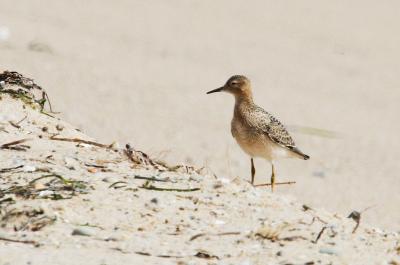
Buff Breasted Sandpiper

Buff Breasted Sandpiper
Jeremiah concluded that the photos are consistent with it being a semipalmated plover. Too bad.
Tim Leland reports the story of an osprey nest that blew down in strong winds, leaving the nest in splintered rubble on July 27, with the adults flying over the pine tree that previously held their nest. Joseph McLaughlin of The Trustees of Reservations learned of the downed nest later that day. With advice from osprey expert Rob Bierregaard, early the next morning he built a new platform nearby using Mr. Bierregaard’s specifications to get the nest off the ground.
Mr. McLaughlin found the two juvenile ospreys crouched in the twisted remains of the old nest and gently picked them up, one at a time and placed them on the new platform along with some of the old nest.
“The adult birds will do the rest,” Mr. Bierregaard said to him. So far so good.
Two Forster’s terns have been reported recently, a new species for the year but one that is reported every year. Al Sgroi spotted one at State Beach on July 23 and Seth Buddy found one on the Mink Meadows/West Chop beaches on July 28. Although there were spring sightings of bobolinks, I observed the first of their southbound migration as one was perched on a sunflower in the sunflower garden at Katama Farm on July 31. Its breast was almost as yellow as the sunflower.
Cynthia Bloomquist and Thaw Malin watched four purple finches at their West Tisbury home on July 27. This seems early for southbound migrants.

Yellow Headed Blackbird
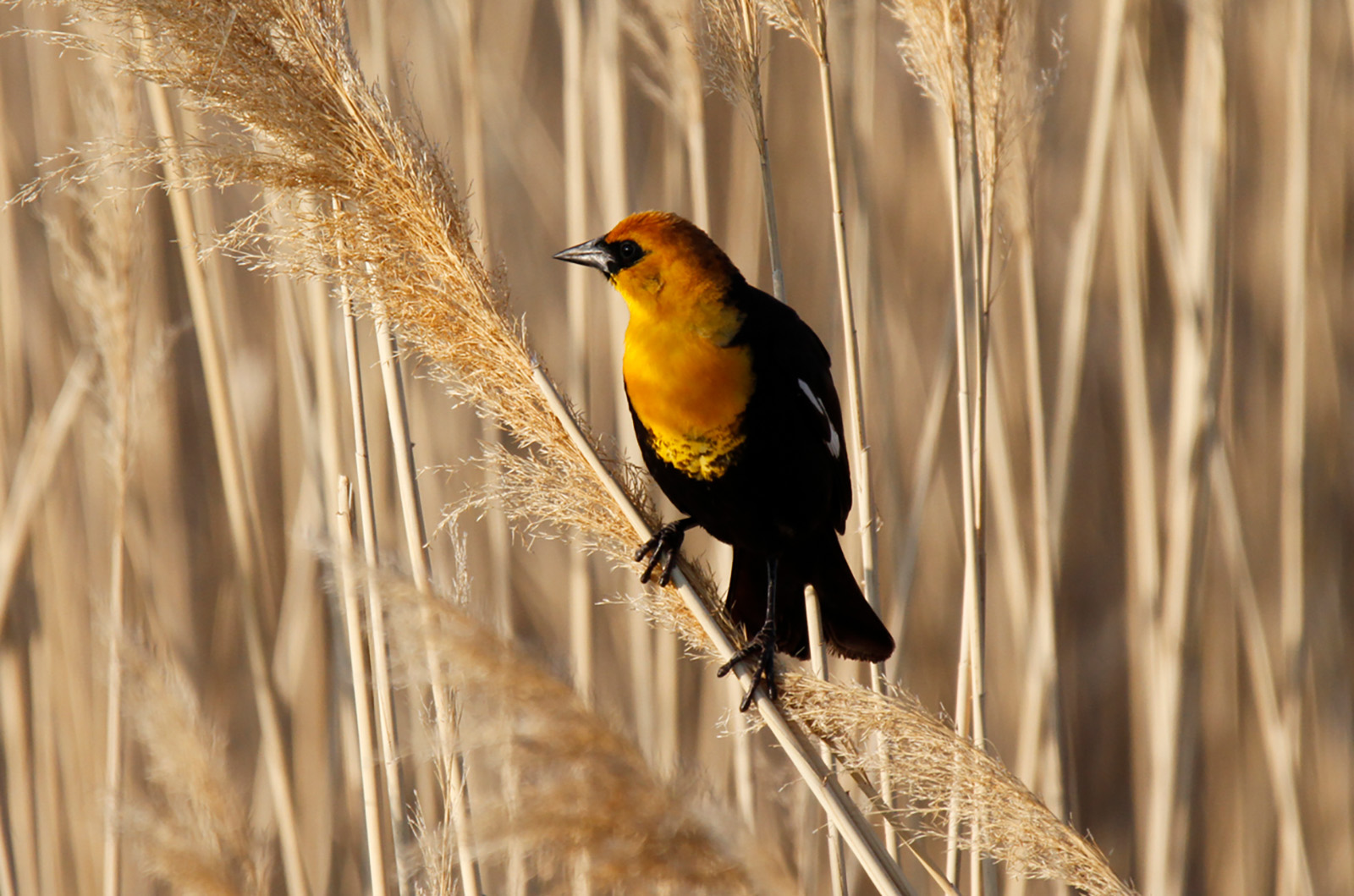
Yellow Headed Blackbird
Warren Woessner and Brian O’Connor found a lesser black-backed gull within a flock of herring and great black-backed gulls at Long Point on July 27.
Andrew Fischer spotted four black terns at Pilot’s Landing on July 29.
On July 30, Lanny McDowell and Bob Shriber both found a Bonaparte’s gull and seven laughing gulls in Lobsterville. Bob also saw an estimated 44 least, 320 common and 300 roseate terns. Andrew Fischer observed three laughing gulls along the north shore of Aquinnah.
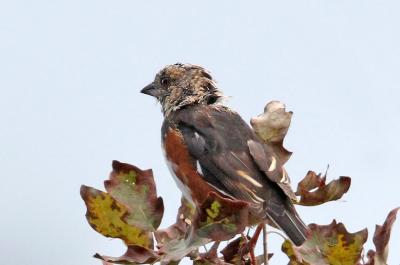
Eastern Towhee

Eastern Towhee
The next day at the other end of the Island, Caitlin Shaughnessy watched 25 least and 500 common terns at Wasque on July 31.
Several miscellaneous sightings include Matt Pelikan’s 40 bluebirds at the eastern end of the state forest. Graham Williams found one wood thrush near Lake street on July 30, and Andrew Eppedio and David Benvent spotted horned larks at State Beach on August 1.
Of shorebirds, Lanny McDowell reports that the first juvenile southbound sandpipers have arrived from the tundra. On July 27, he found and photographed a just-arrived juvenile least sandpiper at Sepiessa Point. The adult plumage was worn and darker while the juveniles plumage is crisp and colorful, a pattern typical of southbound shorebirds.
The breeding season for our summer residents is winding down.

Osprey
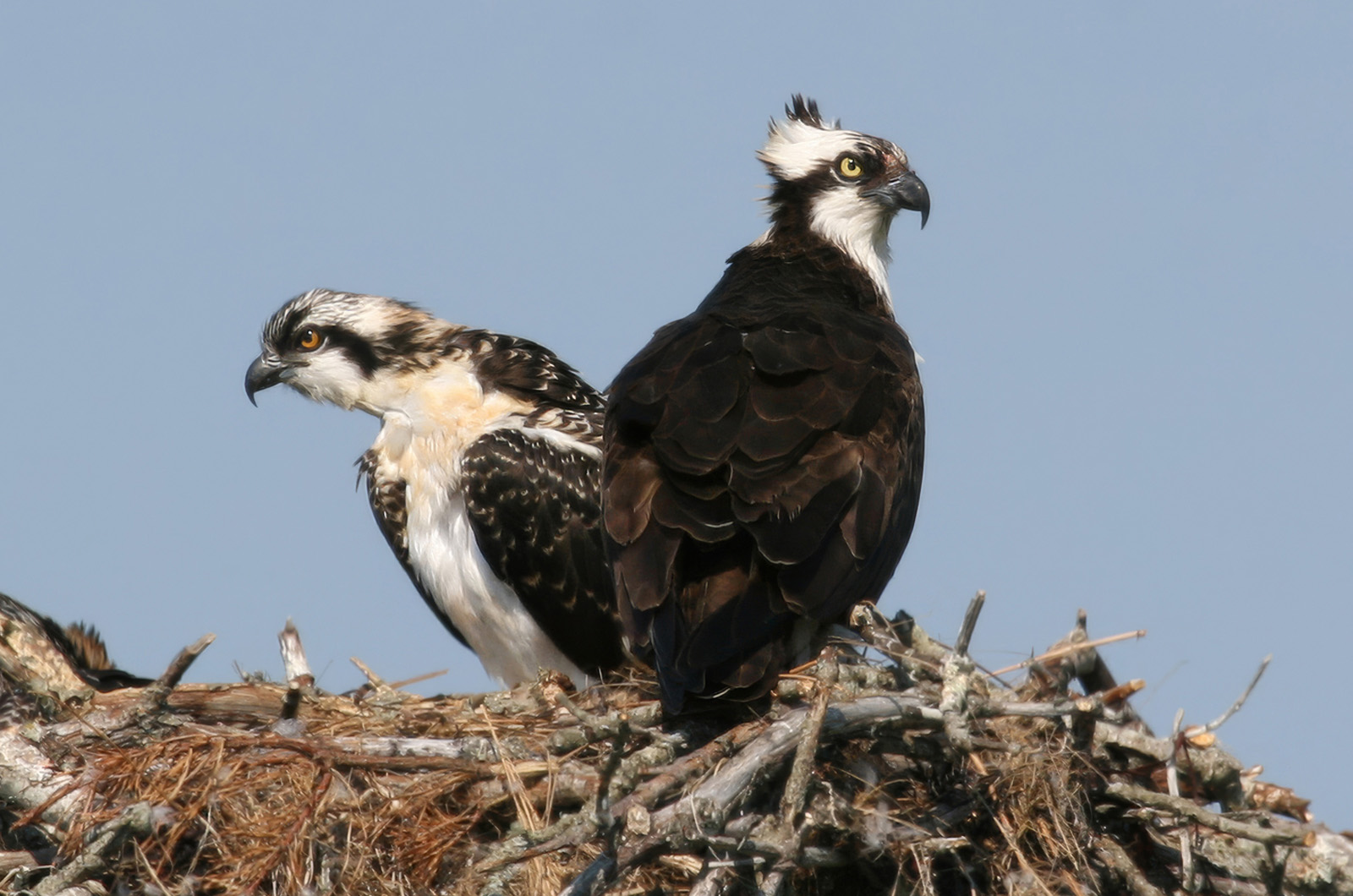
Osprey
On July 27, multiple observers found fledglings. Thaw Malin and Cynthia Bloomquist observed a young towhee (looking nothing like either adult) at their home. They also observed recently fledged black-capped chickadees, gray catbirds and young blue jays being fed by their parents. The same day, Nancy Weaver and Janet Woodcock located two fledgling towhees and two juvenile Cooper’s hawks at Sepiessa Point.
On the brown trail at Cedar Tree Neck on August 2, I observed young Carolina wrens, song sparrows, eastern towhees, red-winged blackbirds and yellow warblers being fed by their parents. No wonder the adults look worn and ragged at this time of the year.
Finally, Seth Buddy reports hearing the two-toned “fee-bee” song of mainland black-capped chickadees near Mink Meadows on July 28. We seldom hear that song, as our chickadees’ songs have both whistled notes on the same pitch.
Please email your sightings to [email protected].
Robert Culbert is an ecological consultant living in Vineyard Haven.
Add new comment