


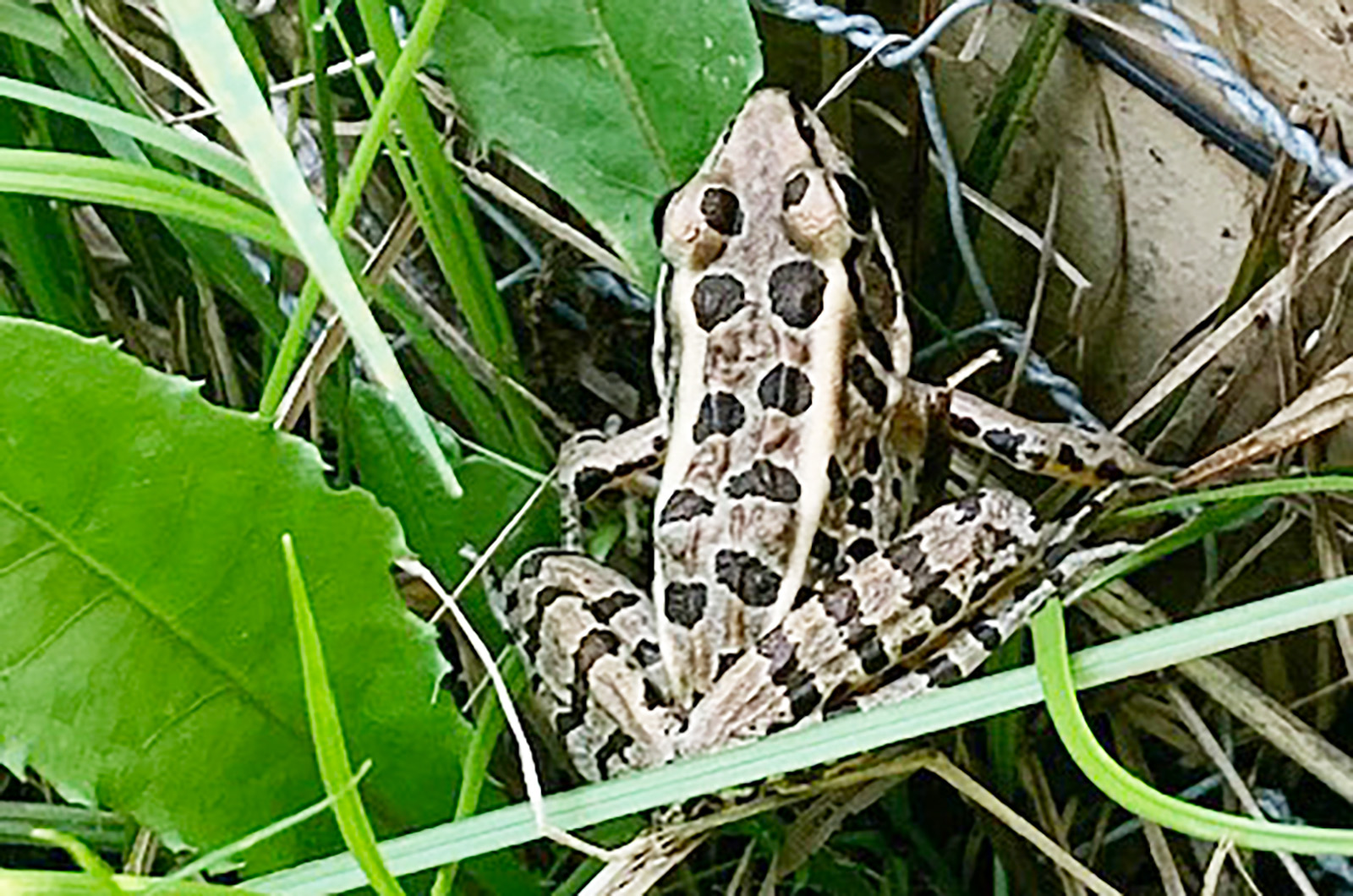
If frogs hitchhiked, this one would always get a ride.
If frogs hitchhiked, this one would always get a ride.
During their spring breeding season, male pickerel frogs are endowed with enlarged thumbs. These swollen digits, also called nuptial pads, help them hold their partner in a mating embrace. Female frogs, which lack these seasonally enlarged thumbs, can be identified by their larger size. The average pickerel is about two inches long, the size of a human thumb.
Breeders are found at or near ponds and wetlands in the spring, and by summer have left their natal nook and can be seen further afield. Last week, I spotted one near my garden.
Spotted might not be the best way to accurately describe this frog’s patterned back. Squared, or more accurately rectangular, would be a better descriptor, and is the way to distinguish between two similar-looking anurans, leopard and pickerel frogs. While both are members of the Lithobates genus, leopard frogs have round markings, while pickerel frogs have rectangular ones.
These irregular brown shapes are oriented in two columns down a pickerel frog’s back and can vary in number from 7 to 21 depending on geographic location. Also note the prominent dorsolateral ridges on the pickerels, which are found on their brown bodies while leopard frogs’ skin color is green.
Pickerel frogs are so named because of their use as bait to catch fish of the same name. Other common names that are used for this eastern north American species include marsh frog, yellow legs, grass frog, swamp frog, tiger frog, zebra frog, poison frog and poison bully. Poison refers to its toxic skin secretions which can harm humans and kill other animals. A warning is therefore in order, to observe but don’t touch these interesting creatures and definitely don’t kiss them while looking for your Prince (or Princess) Charming.
Lithobates palustrus is this species’ current scientific name, and it means “one that walks or haunts stones in the marsh.” As is common in the field, this frog has gone through many nomenclature incarnations.
First described by John Eatton LaConte, this creature was documented in the scientific literature in 1825. John and I share a home county, as both of us were born in Monmouth County, N.J., though neither of us remained there. LaConte left New Jersey to attend Columbia College in Manhattan, joined the military as a topographic engineer, and went on to document nature in excursions to Florida, Georgia and up the East Coast.
LaConte was a naturalist in the truest sense of the word, recording a variety of species. He started with plants of Manhattan, co-authored a book on insects and then moved on to crustaceans, frogs and toads, reptiles and mammals. LaConte’s color drawings of turtles led to him being referred to as the “Audubon of Turtles,” after he described more than 20 species of those shelled reptiles.
Originally, LaConte named this frog Rana palustrus, a designation that stuck until around 2006 when scientists proposed and had accepted a new name for its genus. Lithobates replaced Rana, although some sources still use the original name and others insist the latter is the accepted terminology when referencing this frog.
Scientific terminology differences aside, Pickerel frogs will continue to haunt the marshes, wetlands, and wet places such as my garden into October. After which, they will hibernate and overwinter in pond bottoms or other hidden places. Interestingly, some of these frogs are known to be troglophiles, or cave lovers, and have been observed hibernating in caves and caverns in other parts of the region.
Two thumbs up for a remarkable survivor that prefers the far margins of human development — away from all the “toil and trouble” which that entails — rather than living in the midst of it — and who can blame them? They may have the thurmb of frog if not the “toe of frog” that witches in MacBeth toss into their cauldron, but all of their appendages are importatnt and their lives are dramatic, nevertheless.
Suzan Bellincampi is director of the Felix Neck Wildlife Sanctuary in Edgartown, and author of Martha’s Vineyard: A Field Guide to Island Nature and The Nature of Martha’s Vineyard.
Add new comment