



When Stacey Snider, Scott Frank and Peter Chernin entered the entertainment industry in the ‘80s and ‘90s it looked and functioned vastly different than it does today.
When Stacey Snider, Scott Frank and Peter Chernin entered the entertainment industry in the ‘80s and ‘90s it looked and functioned vastly different than it does today.
“We have no idea about the future of entertainment and anybody who tells you they know is lying,” said film director, producer, screenwriter, and author Scott Frank. “There’s definitely a lot happening, and it’s changing every day, and it’s hard to be creative in that environment when every day...it seems to be a new business.”
The three sat down for a panel discussion on Thursday as part of the Martha’s Vineyard Hebrew Center summer speaker series to discuss the past, present and unknown future of entertainment.
Mr. Frank is an Oscar-nominated screenwriter and among many other film credits, he wrote and directed The Queen’s Gambit and the recent Dept. Q. Ms. Snider is the former head of Universal Pictures and led Twentieth Century Fox Film Corporation as its chairman and CEO, and Mr. Chernin was president and chief operating officer of News Corporation and now leads The Chernin Group.

Panelists all have had long and successful careers in Hollywood.
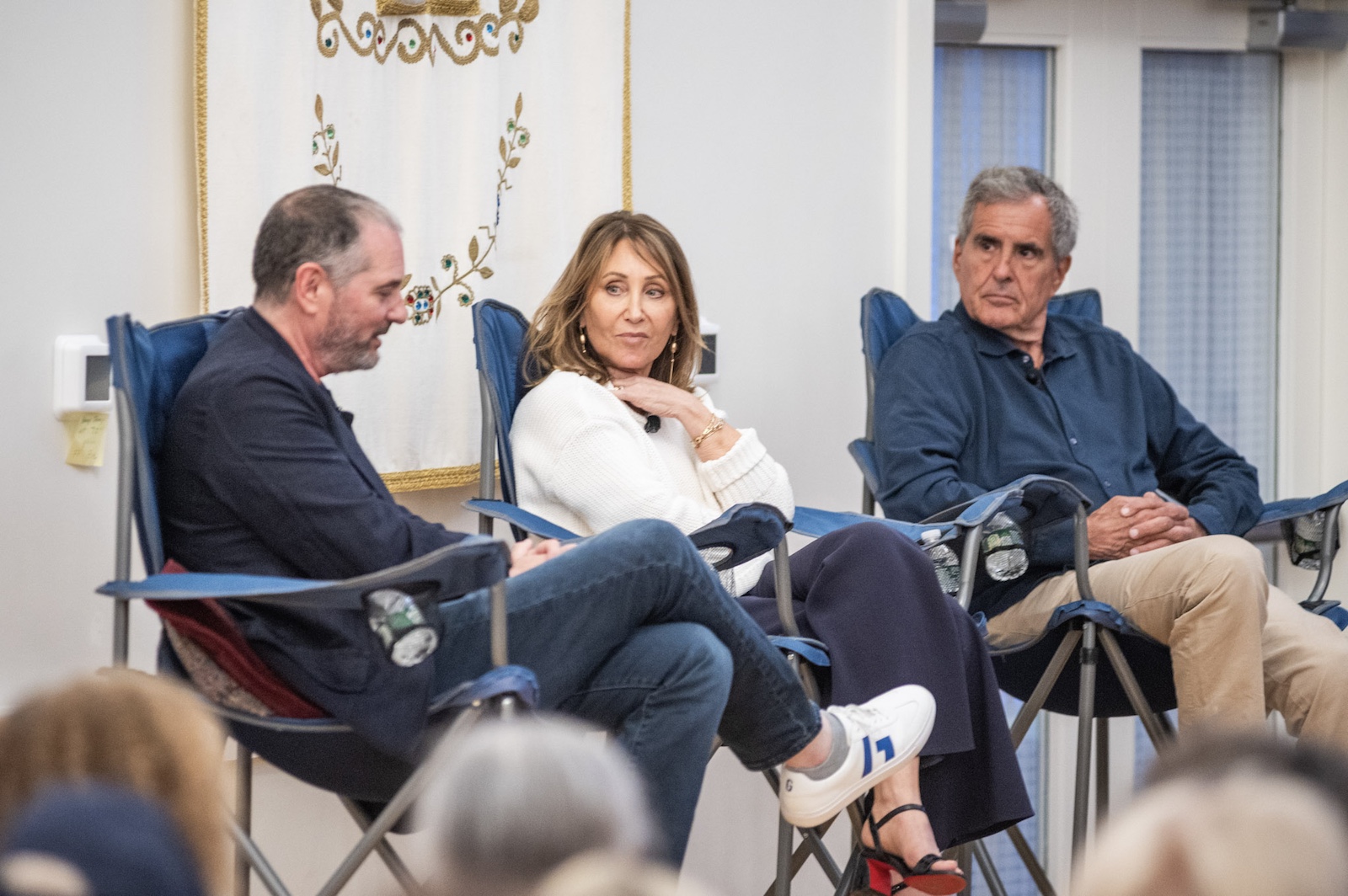
Panelists all have had long and successful careers in Hollywood.
Jim Dale, Martha’s Vineyard Summer Institute co-chair, offered opening remarks on Thursday.
“Hollywood was a simple business made up of a handful of major studios, three broadcast networks and a little thing called cable.... Then it seemed like one day everything changed,” Mr. Dale said.
With the entertainment industry expanding to hundreds of streaming services, social media platforms and now artificial intelligence, it’s hard to know what will happen next, Mr. Dale added, then handed the discussion off to the panelists.
Mr. Frank said that to understand where entertainment is trending, it’s important to look backward.
“There were two big differences, one was the domestic market was bigger than the international market, and the other is at that marketing was not as big a part of the decision making in terms of making something,” he said.
Ms. Snyder agreed that the film industry landscape was much different when she started out.
“There wasn’t a global market, there was one streaming service, and there was a kind of habituated expectation that people would go, and wanted to go, to the movies every Friday night, and it was our responsibility to provide new entertainment for them regularly,” she said.
Mr. Chernin said that with less platforms in the past, there was also less choice which led to less competition. However, this all changed with the growing corporatization of the business, largely fueled recently by big tech companies, he said.
“The truth of the matter is there’s far more money spent on entertainment today than there ever was. There are more jobs and there are more choices,” he said.
All the panelists said that the industry now focuses more on known successes, and is becoming even more adverse to taking creative risks, although Ms. Snyder said there are still those who are willing to explore new terrain.
“Even if it feels like there’s too many choices, or it’s too much the same, I always believe that there’s a way to hunt and peck and find something that’s worthwhile,” she said.
Mr. Chernin added that in recent years advanced technology has taken on a bigger role in filmmaking. While there are good points to this, including cost savings and potential creative contributions, it is also something to be wary of.
“Technology is a wonderful thing and it isn’t going away so the last thing we should do is put our heads in the sand, but we should spend more time thinking about the implications of it,” Mr. Chernin said.
Add new comment