

It’s summer and Island cows are getting fat on tall grass while their calves enjoy their mother’s milk.
It’s summer and Island cows are getting fat on tall grass while their calves enjoy their mother’s milk. Even though I have cattle of my own, I still slow down to look at Fred Fisher’s herd on State Road. I admire his livestock, but also his good fences. Without fencing, cattle will eat your vegetables, leave cow-pies to step in, or worse, cross the road without looking both ways.
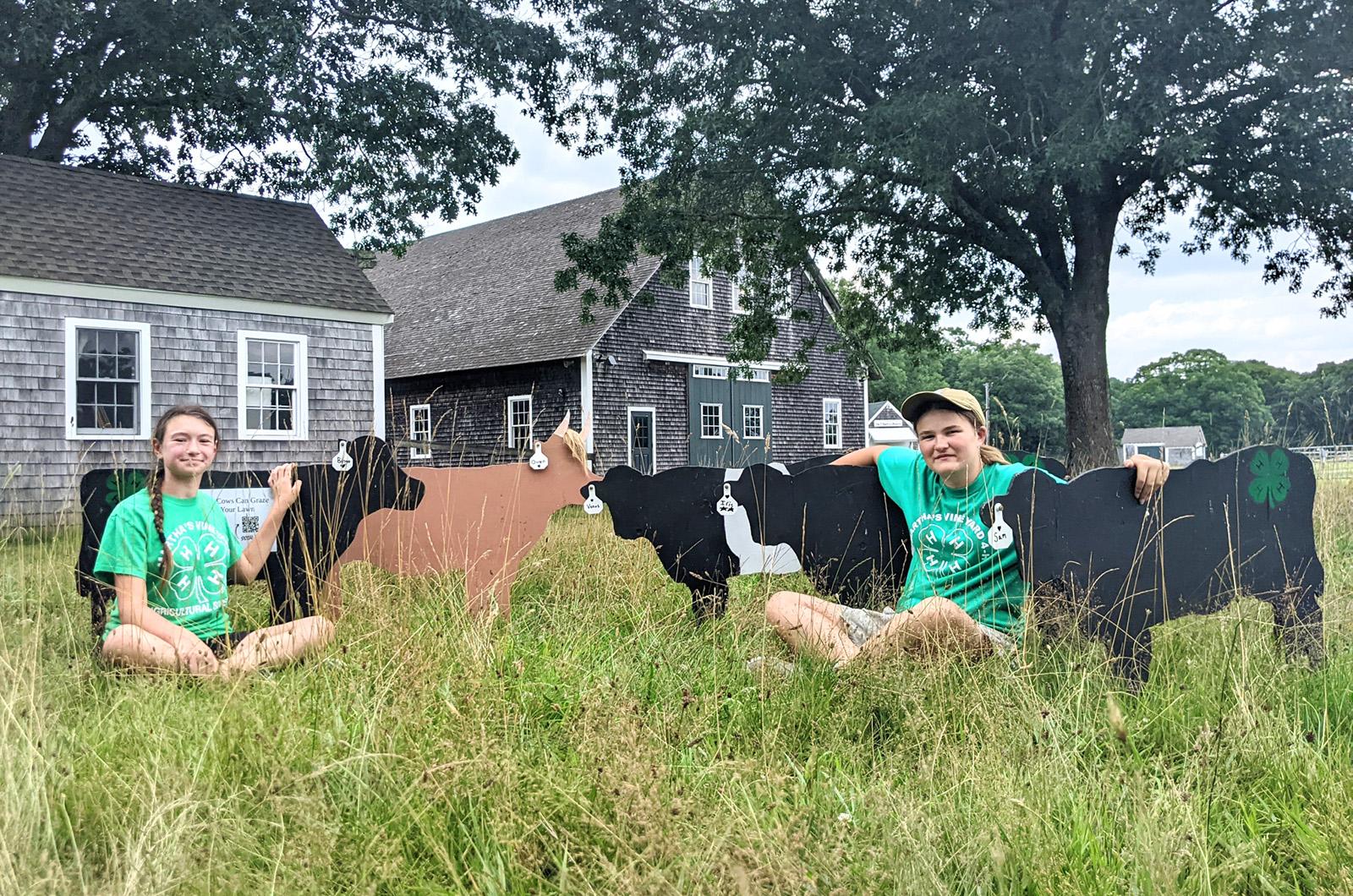
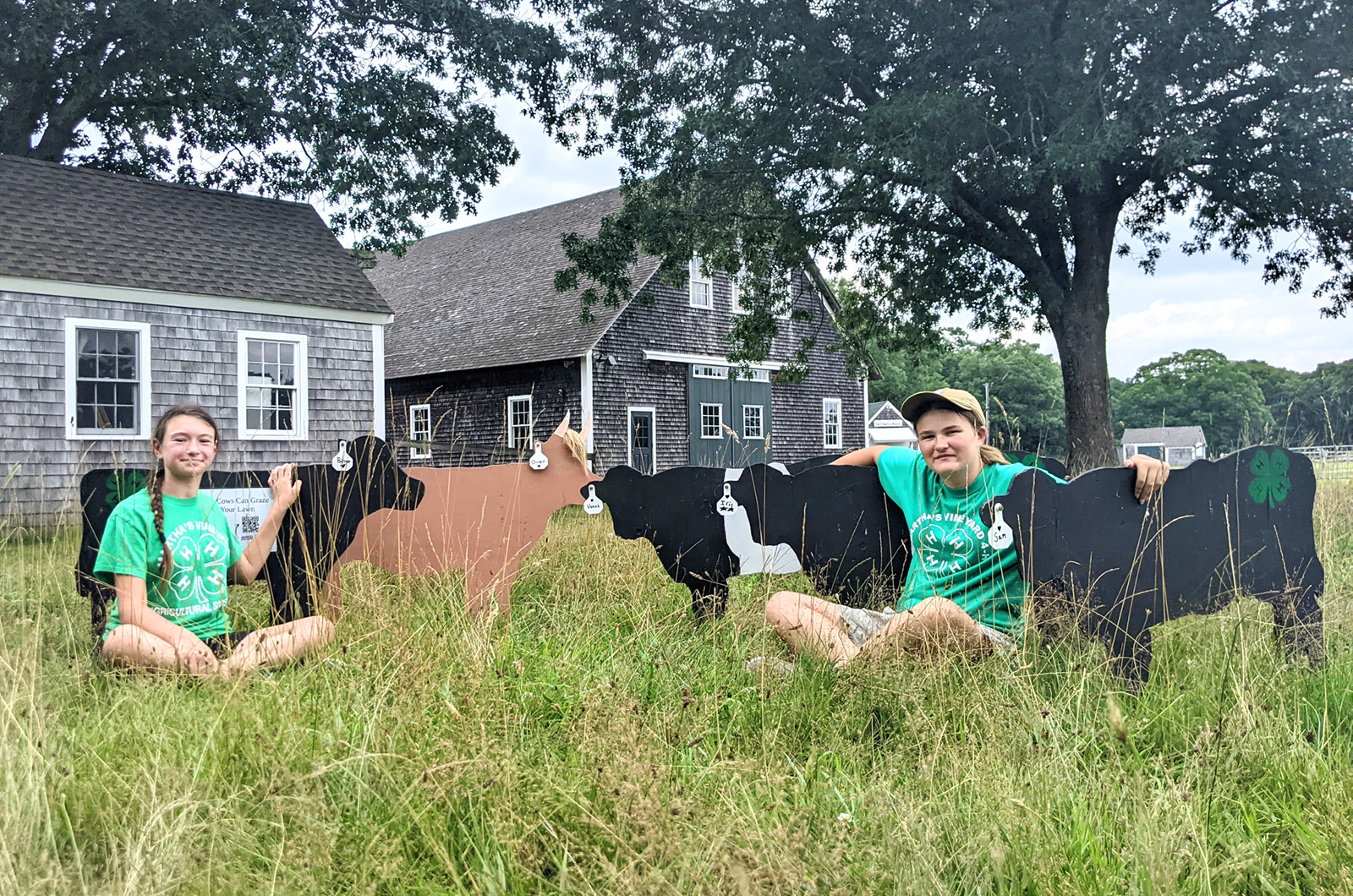
Grazing cattle are a beautiful sight, but that view comes with chores, expense and responsibility — until now! The 4-H Katama Cowpokes have the answer: plywood cattle.
4-H stands for Head, Heart, Hands and Health, and the organization offers programs for individuals ages 5 to 18, focusing on areas such as agriculture, science and civic engagement. The Cowpokes group accept children between 8 and 15.
Last winter, I lent five calves to the 4-H Cowpokes to train for competition at the Agricultural Fair. These calves were housed at the Ag Barn, where the Cowpokes kept them fed and watered, mucked out their stalls and trained them to pull in a harness or yokes.
One was a Scottish Highland steer named Owen, who 10-year-old Charlotte Goekel trained to pull a cart.
“It used to take me 10 minutes to harness him and hook up his cart,” Charlotte said. “Now I can do it in two. When he’s in the pasture, it’s cool how he comes when I call him. Sometimes he walks slowly, but he always comes to me.”
Is she afraid of his horns?
“No, he’s gentle, and I knew he won’t impale me,” she said.
Two of the calves, Sam and Bingo, purchased last year from Grey Barn, had grown to 400 pounds each and were being trained by the Cowpokes to pull loads while yoked together. Cattle that work in a yoke are called working steers until they are four years old — then they’re called oxen.
Training a pair of 400-pound steers to obey voice commands, such as “gee” (right) and “haw” (left), requires confidence that many adults lack, but that’s what the Cowpokes did. When I first met Charlotte, she was shy and soft spoken, but when she lifted a goad stick over her shoulder and called to her team to “walk on,” I saw a confident girl who knew what she wanted the team to do. Priceless.
In April, the Cowpokes decided to make plywood replicas of the cattle to rent to the donors as a fund raiser. We shined a light on a five-inch metal cow and traced the outline of its shadow onto a sheet of plywood. Then, two adults used the Slough Farm jigsaw to cut them out. Even though they only had five calves, we made six bovine forms to include a steer they had worked with the previous year.
Next, the children brought the live cattle into the Ag Barn to pose as models. The Cowpokes drew the cattle’s markings onto the plywood cutouts and painted them to resemble the real thing. One parent cut rebar and added mounting blocks to the back so that these replicas would stand upright when the rebar was hammered into the ground.
The 4-H Cowpokes are on now summer vacation. Owen and Venus are at the Farm Institute, and Sam and Bingo are in New Hampshire. But their plywood replicas are available to “graze” on your lawn. You may have seen them at the Mansion House, Alley’s or in your neighbor’s yard.
You can decorate your lawn without the fencing and clean-up requirements of the real thing. They are in high demand, but for a donation you can have them in your yard for a week or two, knowing that you are helping 4-H Katama Cowpokes learn and grow.
For details on how to invite them to your yard, go to: https://qrco.de/bfvWyR
Comments
A very sweet article about
Bev Parry Boston MAA very sweet article about the Island’s
4-H program. The plywood horses is a brilliant fundraising idea. I hope it catches on and that children and animals flourish.
Add new comment