



Artist and illustrator Margot Datz holds her 16th annual one-woman show at Grange Hall in West Tisbury this Saturday. And an exhibit at the Carnegie Heritage Center is spotlighting her long career.
Artist and illustrator Margot Datz, long known for her public murals, her children’s-book collaborations with Carly Simon and her own collectible paintings and prints, holds her 16th annual one-woman show at Grange Hall in West Tisbury this Saturday from 4 to 8 p.m.
In Edgartown, meanwhile, a new exhibition at the Carnegie Heritage Center spotlights another side of Ms. Datz’s artistry: her work with Vineyard Preservation Trust to restore historic paintings at the Old Whaling Church and Flying Horses.
Titled Margot Datz: Re-creator, the Carnegie show includes a time-lapse video by the Gazette’s Ray Ewing of her progress on the Whaling Church’s trompe-l’oeil arch mural, among many other glimpses of the artist’s process.
The Whaling Church mural, originally painted in the early 1840s by German artist Carl Wendte, had faded from view by 2013, when the preservation trust hired Ms. Datz to restore it.
“The greatest honor of my career was being chosen to paint the Whaling Church,” she told the Gazette, during a conversation on her Edgartown porch this week.

Her one-day show is Saturday, August 2 at the Grange Hall.
Her one-day show is Saturday, August 2 at the Grange Hall.
But before she could pick up a paintbrush, Ms. Datz first had to rediscover the original design.
The years had left little for her to go by, apart from a handful of overexposed photographs with only the faintest of lines showing Wendte’s Greek Revival design.
The Carnegie show traces Ms. Datz’s research, the painstaking process of drafting the mural’s lines and the epic labor of the painting itself, with family members — her brother, sculptor Stephen Datz, and her daughter Scarlet Blair — lending a hand.
“The walls were four scaffold [platforms] high, so we were like 34 feet [up]. And that was on top of the stage,” she said.
Literally miles of paint went into the mural, which called for two dozen different shades of gray to create the highly realistic effect of an archway to an unseen space beyond the church’s back wall.
Ms. Datz’s research also resulted in the ornamental paintings on the church’s side and back walls, which convincingly impersonate fancy white plasterwork from almost any distance.
While not original to the Whaling Church, the designs are copied from a Provincetown church of the same period, Ms. Datz said.
The preservation trust called on Ms. Datz again in 2016, for the more colorful task of restoring painted panels on the Flying Horses carousel in Oak Bluffs. Once again, she embarked on deep research — this time, into the Hudson River School-style landscapes that first were painted in 1876 by Charles Dare, the Flying Horses’ creator.

Carnegie Heritage Center is hosting an exhibit of her work.
Carnegie Heritage Center is hosting an exhibit of her work.
“The great thing about [working for] the trust is that I got to really exercise my curiosity for research and piece it together, like it was CSI — what happened here, what are we missing here,” Ms. Datz said, referring to both the Whaling Church and Flying Horses projects.
“I get to leap back in history and immerse myself in that era.”
The Carnegie is throwing an artist’s reception for Ms. Datz on August 12 from 5 to 7 p.m. and has scheduled a series of Wednesday-morning walking tours this month that include the Whaling Church mural, which is not ordinarily open to the public.
Ms. Datz will discuss her work for the trust in talks at the Carnegie on Sept. 9 and Oct. 14. The show closes Oct. 18.
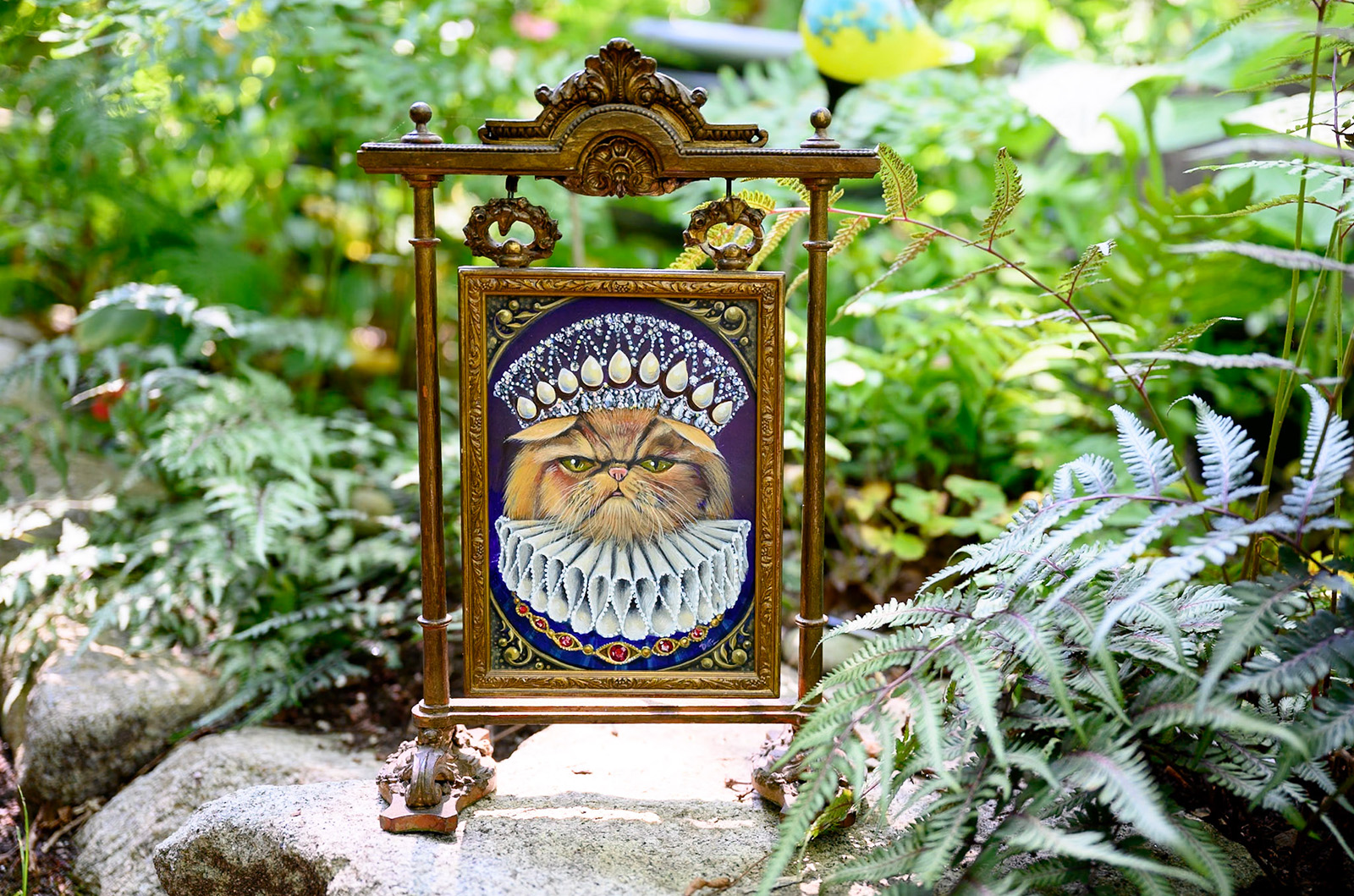
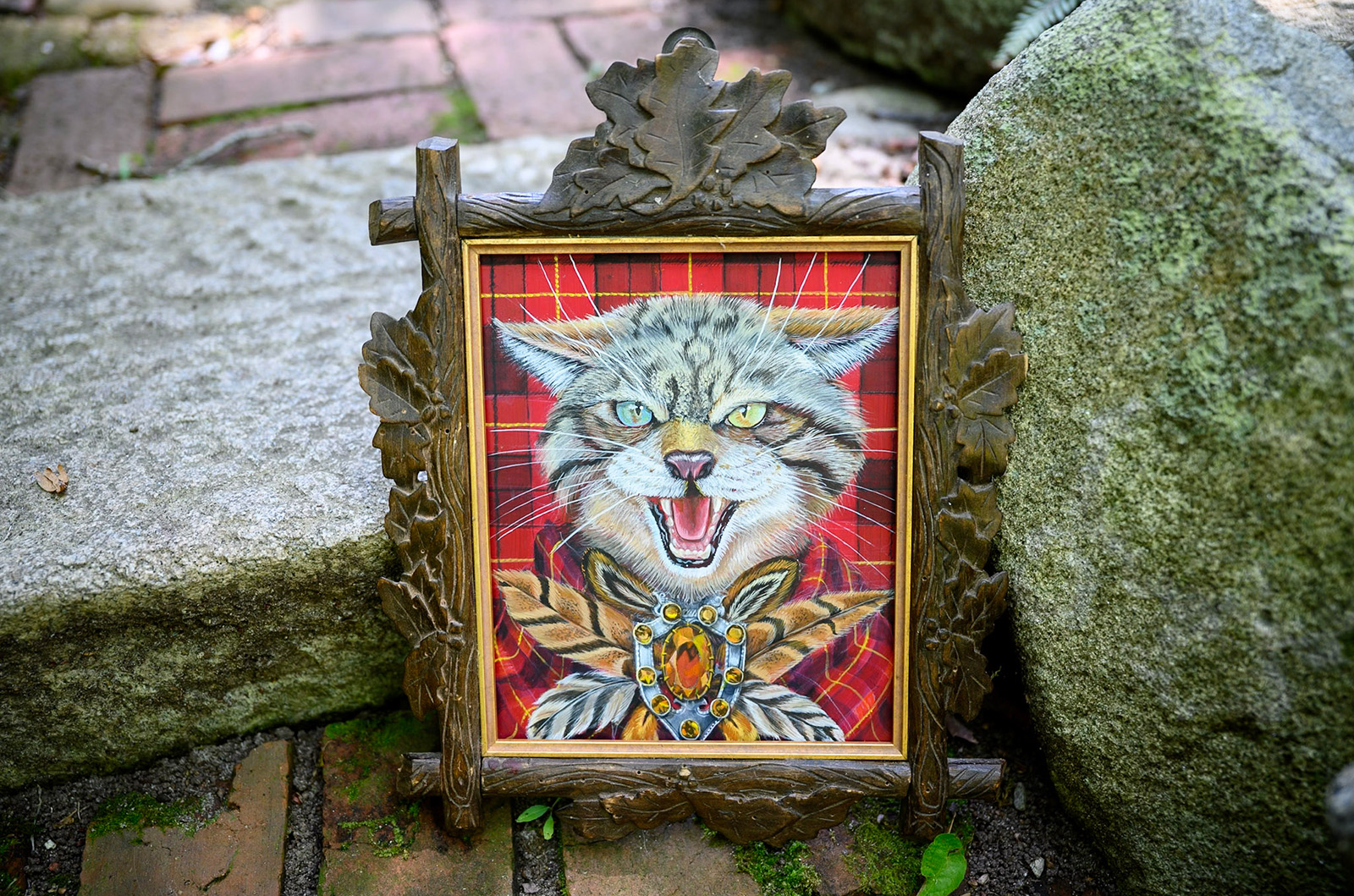
Balancing the size of her public commissions, Ms. Datz’s own artwork tends to be smaller in scale and often allegorical, with portraits of animals, birds and serene women painted in vivid jewel and earth tones.
“When I paint small, it’s almost like I get to step into this little room in my brain where the picture fits,” she said.
Smaller paintings allow her to get closer to both her subject and her spiritual side, Ms. Datz said.
“By looking at something very, very closely, it’s almost a form of expressing my awe,” she said. “When I paint a hummingbird feather by feather, it’s like some sort of praise or prayer or something,” Ms. Datz said. “I get to be really intimate with beauty.”
At her one-woman show this Saturday, Ms. Datz continues her annual tradition of presenting these paintings in antique frames she searches out online, making each work doubly unique.
She’s titled the show, Eyes to See and Ears to Hear, and accompanies each painting with an artist’s statement explaining what she had in mind when, for instance, she painted A Closer Look, in which a common grackle holds a monocle by its chain.
“It’s sort of a ubiquitous bird. It’s almost the logo for black birds, but when struck by the sun, it has the most amazing iridescence,” she sad. “The things that we call common, if we just slow down a bit — they are marvels.
Add new comment