


To put it mildly, semipalmated plovers (common southbound migrants) look very similar to the common ringed plover, which nests as close as Greenland and Europe while it winters in Africa and Asia.
To put it mildly, semipalmated plovers (common southbound migrants) look very similar to the common ringed plover, which nests as close as Greenland and Europe while it winters in Africa and Asia. This European species has only been seen in Massachusetts nine times (1990, 2010, 2013, 2017, 2018, 2019 (2 times), 2023 and 2024.
Ruth Richards and Jay Adams observed one at the north end of James Pond on July 19, the first report for this species. They studied the bird and made a very detailed description of the differences they saw that made them conclude it was a common ringed plover rather than our common semipalmated plover. This is the first report of this species on Martha’s Vineyard, unfortunately, it was not seen the next day, although Susan Whiting, Lanny McDowell, Bob Shriber, Nancy Nordin and I visited the site and looked for it. We do not have a good photo to prove the identification, as seems to be required for sightings of such an unusual and unexpected species in this digital age.
Wood Ducks
Wood Ducks
Hopefully it will be found again. Or, at least, this sighting will be accepted without a photograph.
Another unusual sighting comes from Steve Allen at Felix Neck on July 8. He spotted an almost completely white bird — probably a very leucistic gray catbird, since it had a dark eye rather than the pink eyes of an albino.
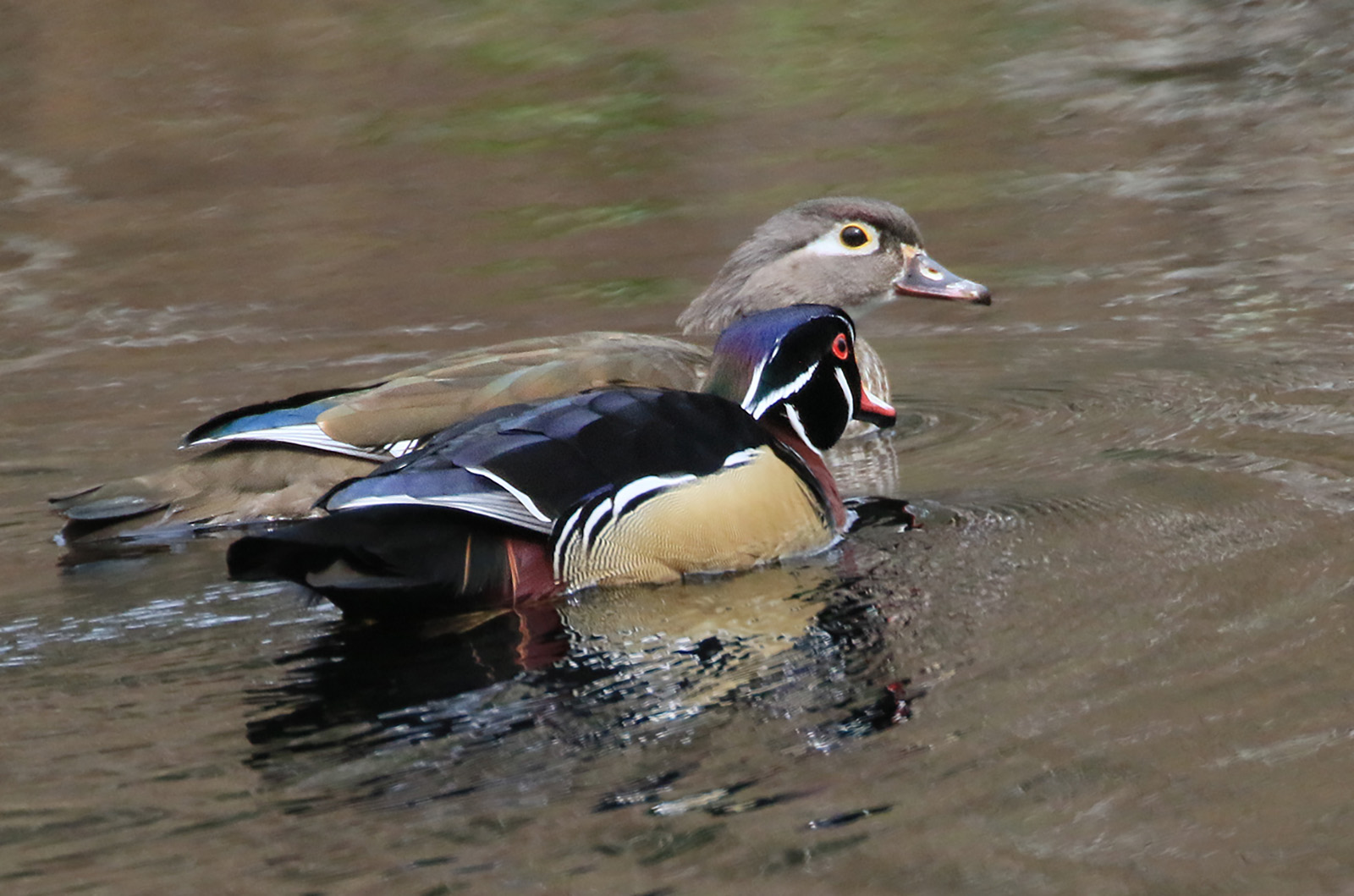
Miles and Seth Buddy spotted a remarkable 32 wood ducks at Cranberry Acres on July 20. “They were flushed from protected overhanging vegetation all the way around the pond, with ducklings accounting for 20 of the birds.”

Ruddy Turnstones
Ruddy Turnstones
Shorebird numbers are increasing and will get even more abundant soon when the young of the year start leaving the northern grounds where they recently fledged. Now a lot of shorebirds can be seen in a few areas, especially at low tides.
Chris Scott observed 12 American oystercatchers, four killdeer, nine piping plovers, four short-billed dowitchers, three spotted sandpipers, one lesser yellowlegs, 16 willets, six greater yellowlegs, 60 sanderlings, six least sandpipers and nine semipalmated sandpipers on Norton Point on July 14.
Bob Shriber located five willets, three American oystercatchers, 14 semipalmated plovers, 11 piping plovers, 47 short-billed dowitchers, one greater yellowlegs, one red knot (the first of the southbound migration), 17 least sandpipers and 64 semipalmated sandpipers in Menemsha Harbor on July 16.
Another long list comes from Susan Whiting and Nancy Nordin at Tisbury Great Pond on July 19: 12 American oystercatchers, six killdeer, 110 semipalmated plovers 10 piping plovers, 40 short-billed dowitchers, five lesser yellowlegs, nine willets, four greater yellowlegs, 11 sanderlings, one white-rumped sandpiper, 22 least sandpipers and 81 semipalmated sandpipers.
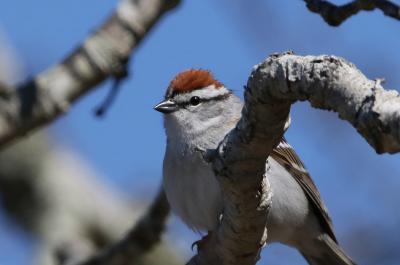
Chipping Sparrow
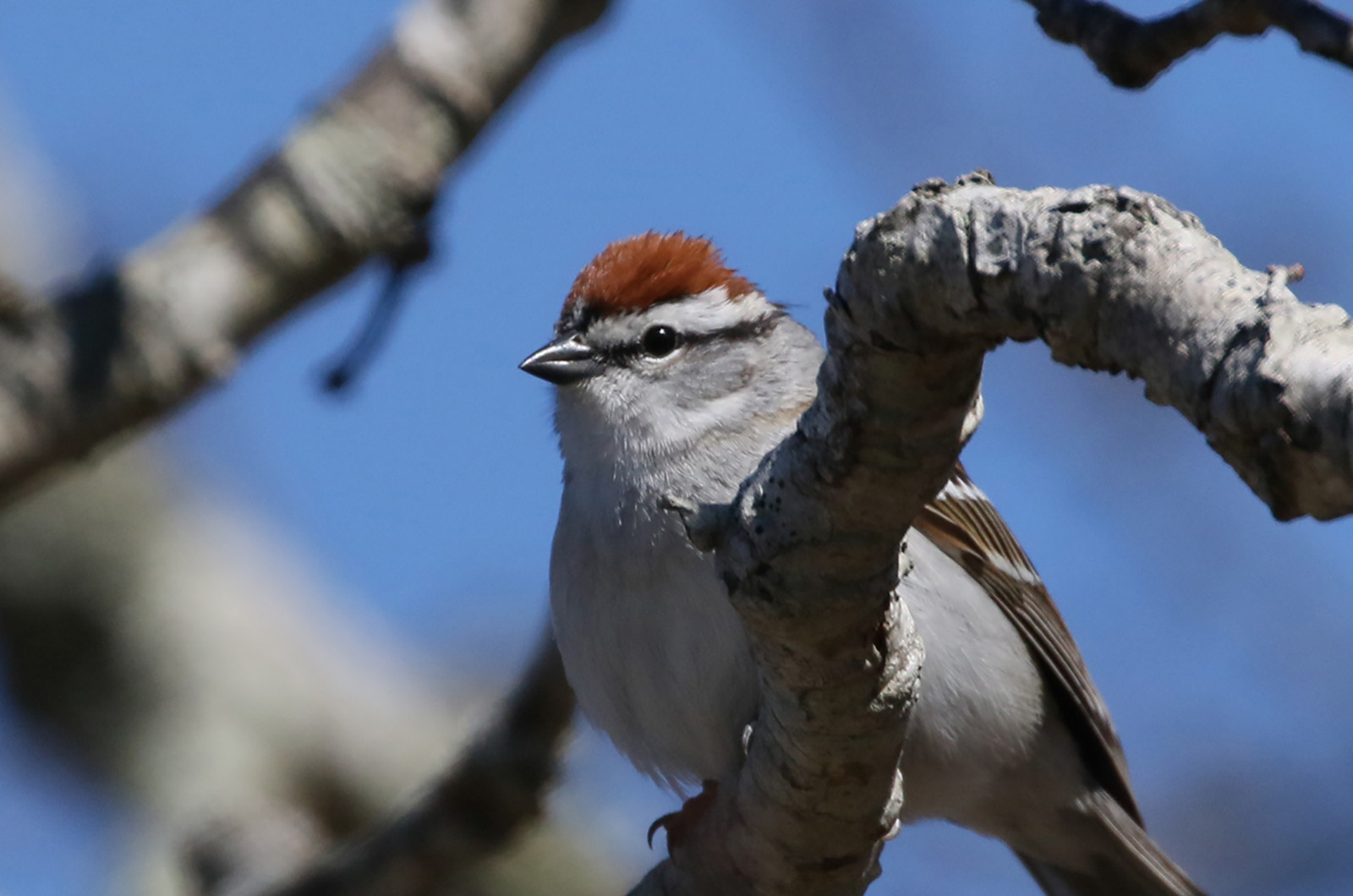
Chipping Sparrow
There are two other reports of lesser yellowlegs, one by Susan Whiting at Old Fields Path on July 17, and another from Steve Allen at Felix Neck on July 18.
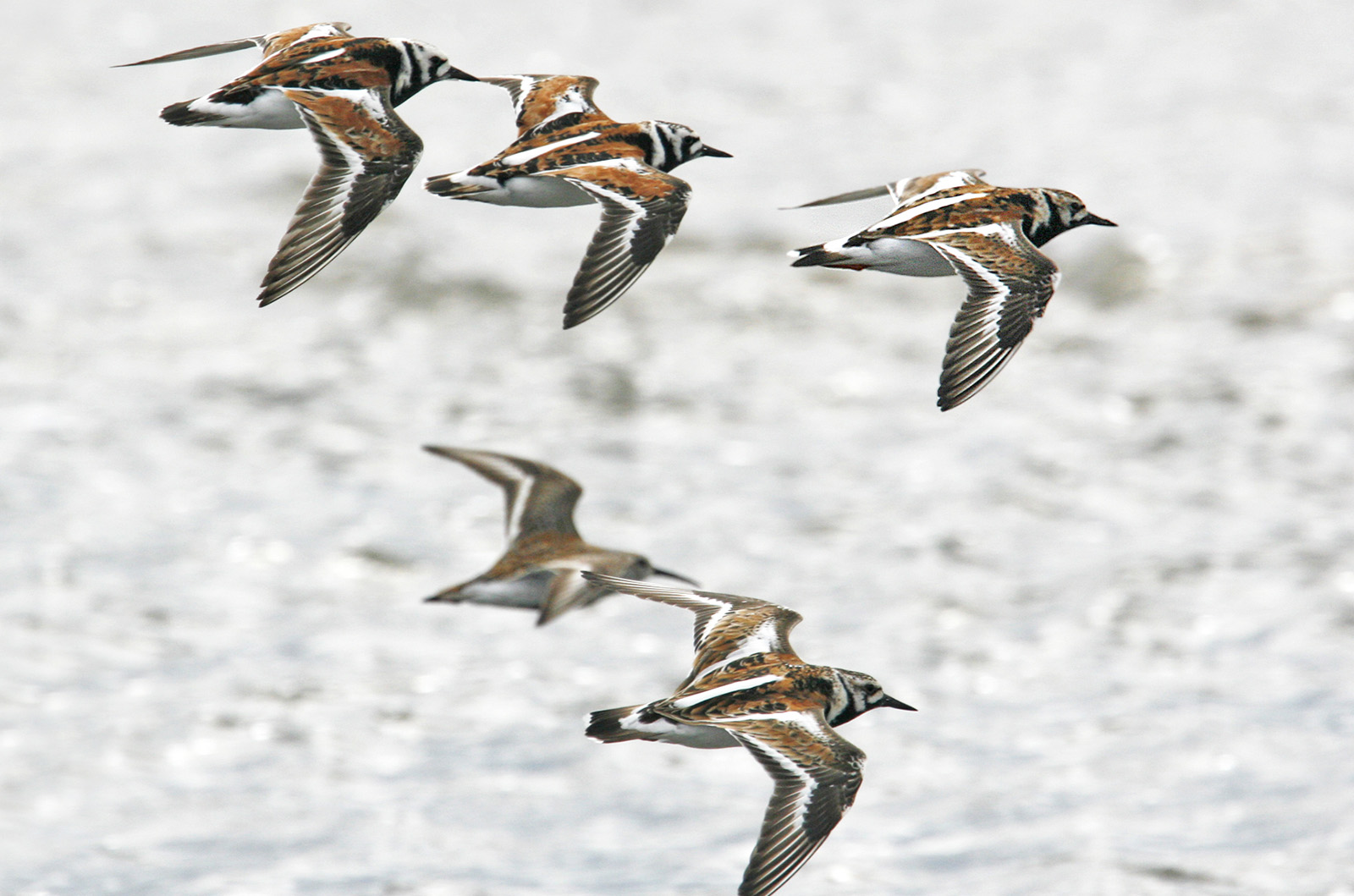
Siobhan Carter found the first ruddy turnstone of the southbound migration at Felix Neck on July 18, along with a willet. And Philip Edmundson watched one woodcock in a driveway near Watcha Pond on July 16.
Laughing gulls are becoming more common as post-breeding dispersal removes them from their nesting colonies. John Liller reports two laughing gulls at Eastville Point Beach on July 15, Chris Scott spotted one at John Butler’s Mudhole on July 16, Susan Whiting and Nancy Nordin saw two at Tisbury Great Pond on July 19, and on July 20 Miles and Seth Buddy found seven at Cedar Tree Neck while Chris Daly watched one at Philbin Beach.
Another interesting gull is the lesser black-backed gull. Warren Woessner saw one in the short grass at the Katama Airpark on July 17, and on July 19 Jeff Peters had two at Black Point Pond. I found two on the Ocean beach at Squibnocket Pond South.
Black terns are also dispersing from their nesting colonies. Chris Scott spotted one black tern at the Mudhole on July 16, and I found two black terns at Squibnocket Pond Reservation South on July 19. This tern is still almost all black at this time of the year and so stands out as something different within the flocks of our more frequent terns (least, common, and roseate).

Red Knots
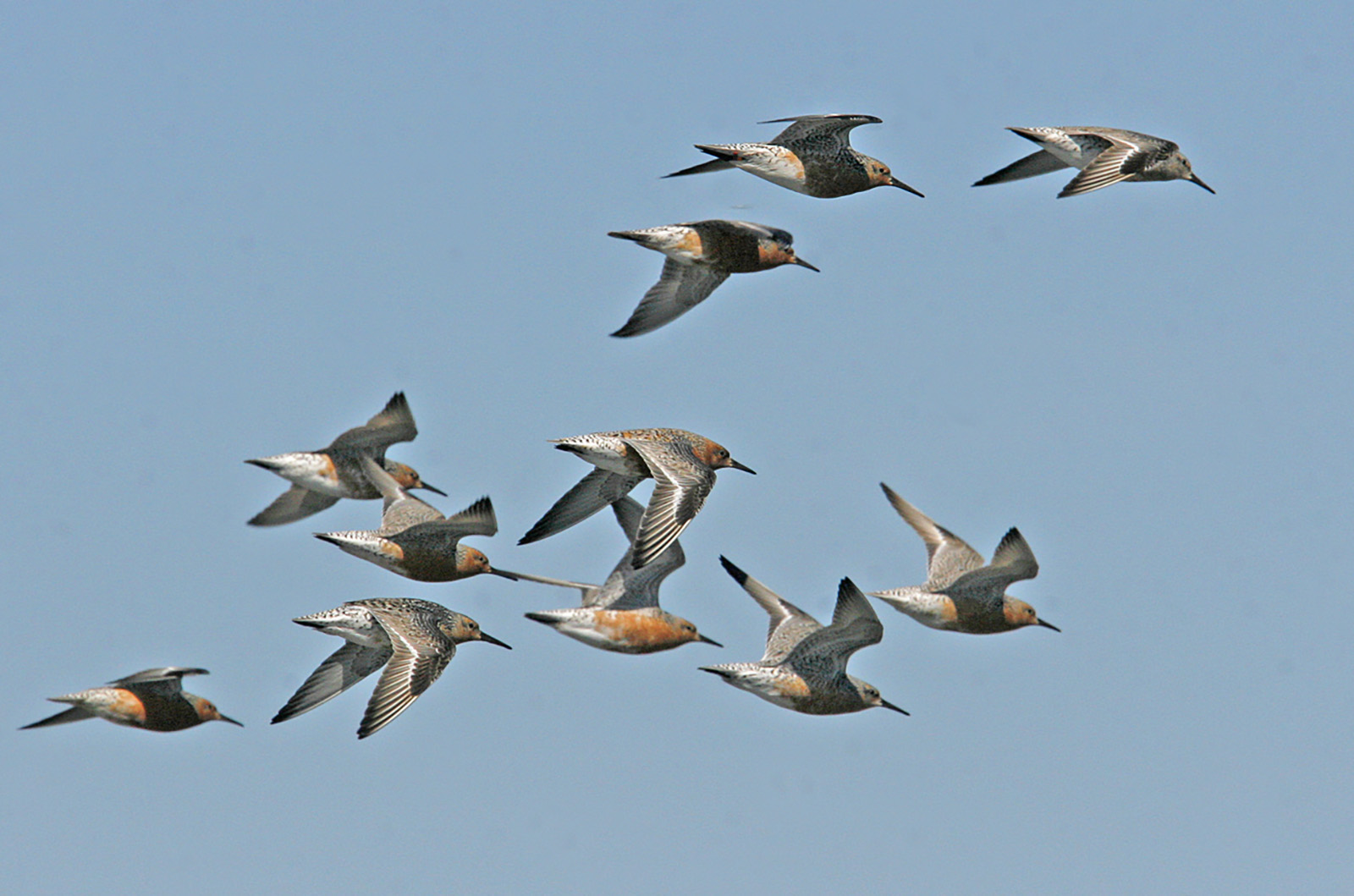
Red Knots
Landbird migration will not heat up for another month or so, but our breeding songbirds are still around. Red-eyed vireos are one of the few birds that are still singing regularly but less frequently that a month ago. They have been seen (or heard) by multiple observers.
On July 15, Seth Buddy spotted one in the Mink Meadows area and an anonymous observer found two at Upper Deep Bottom Cove. Jennifer Slossberg spotted two at Tashmoo Springs on July 16, and Seth Buddy made a conservative estimate of seven while walking the trails at Waskosim’s Rock Reservation on July 19. Jennifer Slossberg located three at the Blackwater Preserve on July 19, and Philip Edmundson discovered two in the Watcha Pond Woodlands on July 20. On that same walk at Waskosim’s, Seth Buddy counted a conservative 15 eastern towhees on July 19.
The flycatcher of note this week is the eastern wood-pewee. An anonymous observer observed one at Upper Deep Bottom Cove on July 15, and Philip Edmundson spotted one in the Watcha Pond Woodlands on July 20.
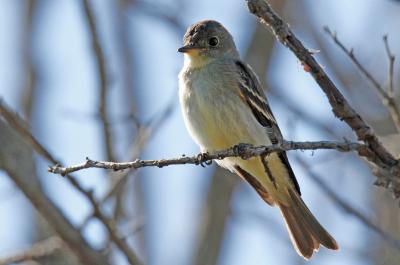
Eastern wood peewee.

Eastern wood peewee.
Finally, some sparrows. Rich Couse saw one field sparrow in the state forest and the Felix Neck Early Birders found one chipping sparrow, both on July 16. Siobhan Carter also had a chipping at Felix Neck on July 18.
Dan Polsby discovered an amazing 50 American goldfinch on Lighthouse Road on July 18, and Donny Gardner found one chipping and four saltmarsh sparrows at Felix Neck on July 19.
Please email your sightings to [email protected]
Robert Culbert is an ecological consultant living in Vineyard Haven.
Add new comment