

French scientist Louis Augustin Guillaume Bosc declined an invitation to be a naturalist on a round-the-world expedition in 1785.
French scientist Louis Augustin Guillaume Bosc declined an invitation to be a naturalist on a round-the-world expedition in 1785.
Though this initially seems like a missed opportunity, it turned out to be the best decision of his life. Both the ship and its crew were lost on the trip, sadly enough, having wrecked on reefs near the Solomon Islands.
Bosc, however, fortunately went on to have a brilliant career in government, academia and science. He did eventually travel, studying and naming species of plants, mushrooms and invertebrates across the world. One curious creature he described in 1802 impressed him with its sheer numbers. He observed “thousands or even millions” of waving crabs on a coastal South Carolina beach.
Waving crabs?
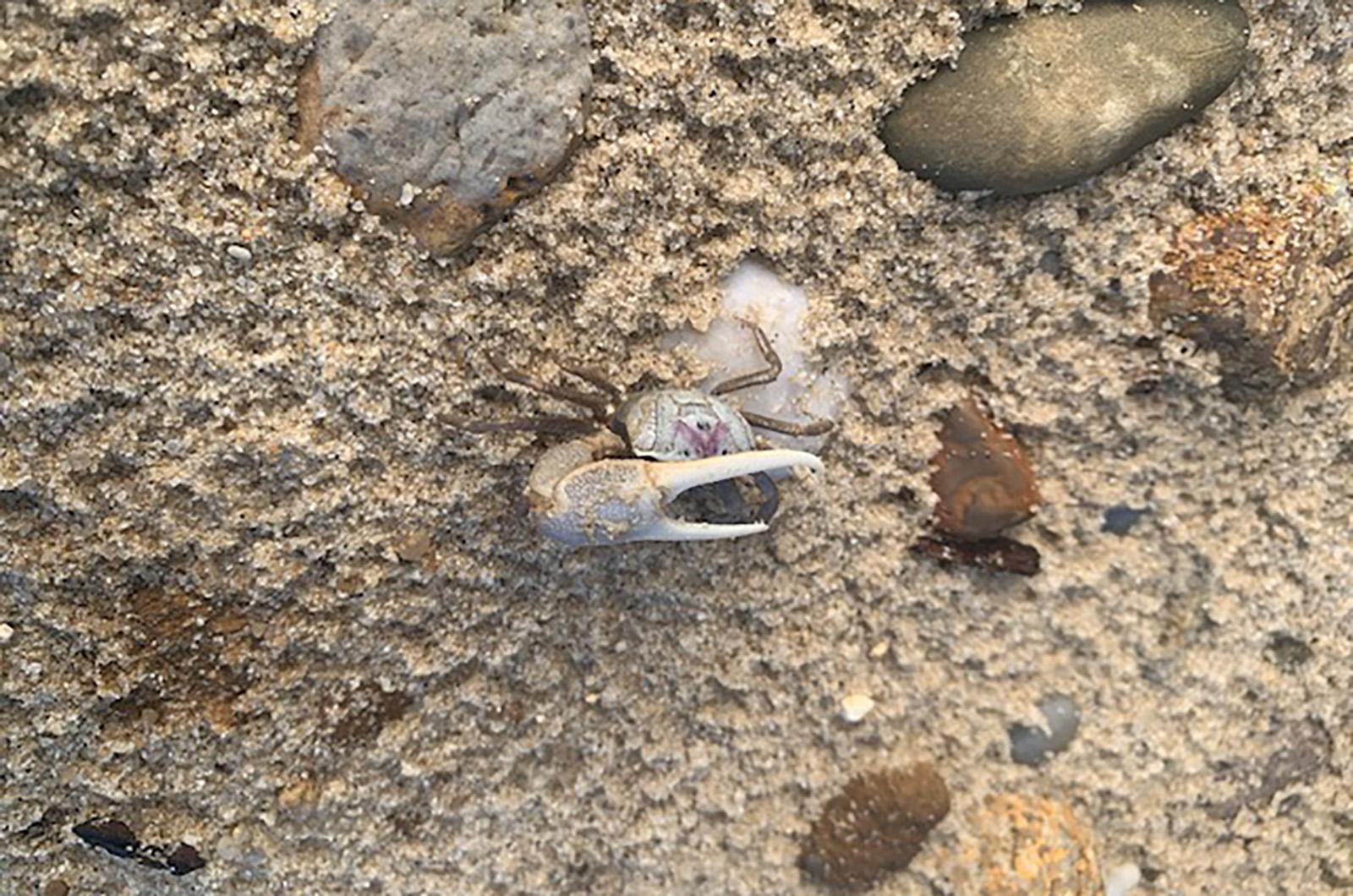
This winkerkrabbe (German for waving crab) is a species that Bosc described and provided with the scientific name Uca pugilator. “Pugilator” implies a boxing ability or tendency in this creature, akin to the word gladiator. We know this little crawler as the fiddler crab, though its scientific genus has changed in recent times. The crabs’ numbers have likely declined since Bosc’s time, but they still impress with beach colonies of up 75 crabs per square meter.
These one-inch-long crustaceans boast two mismatched claws: one is small and the other quite large, though these mismatched appendages are only on male crabs. The female has matching though significantly smaller claws. The male’s oversized claw can be up to four times as big as the crab’s body, and is 50 per cent as massive as the rest of the animal.
Gentlemen fiddler crabs can be either left- or right-clawed, meaning that the large claw occurs on either side of the body and can even alternate. If a crab loses a claw through battle or through autotomy (self-amputation), the lost claw can regrow, but it won’t be as strong or large as the original was. In fact, the smaller or minor claw will enlarge and become the dominant (larger) one, and the new one that is growing becomes the small one.
The function of these fiddles (so named because their appearance and movement resemble the use of the musical instrument) is thermoregulation, dominance establishment, mate attraction, protection and burrow excavation. Quite a versatile appendage!
Females find themselves drawn to the larger burrows of the owners of the largest claws. The waving display and subsequent thrumming on the burrow walls entice the female to come hither and go into his burrow, where, once ensconced, the two will mate.
She lays eggs and holds them in a spongy mass on her belly for two weeks, after which she will release them with the high tide. Millions of planktonic larvae float away, and those that survive will become the next generation of fiddler crabs. They can replay the love story every few weeks during the summer breeding season.
Perhaps most curious, though, are the piles of round sand or mud balls outside of their burrows. Called pseduofeces, the balls are the discards from the crustacean’s feeding process. Fiddler crabs eat algae, organic materials and detritus from scaping the sand surface. The nonedible portions are expelled out of their mouth (think spitballs) and molded into these orbs.
Fiddler crabs can be seen most often during low tide. They will hole up inside their burrows which they plug with mud as the tide rises and covers their subterranean home. No matter if there is any leakage, since these crabs have both lungs and gills and can breathe in and out of water.
Next time you are on the beach, look for the telltale burrow holes of the fiddler crab. Walk softly and listen for the clicking sounds of hundreds of these calico-colored crabs. When they sense the vibrations of your footfalls, they will scurry below into their borrows. Be patient; they will reemerge and wave hello. Be sure to wave back.
Suzan Bellincampi is director of the Felix Neck Wildlife Sanctuary in Edgartown, and author of Martha’s Vineyard: A Field Guide to Island Nature and The Nature of Martha’s Vineyard.
Add new comment