

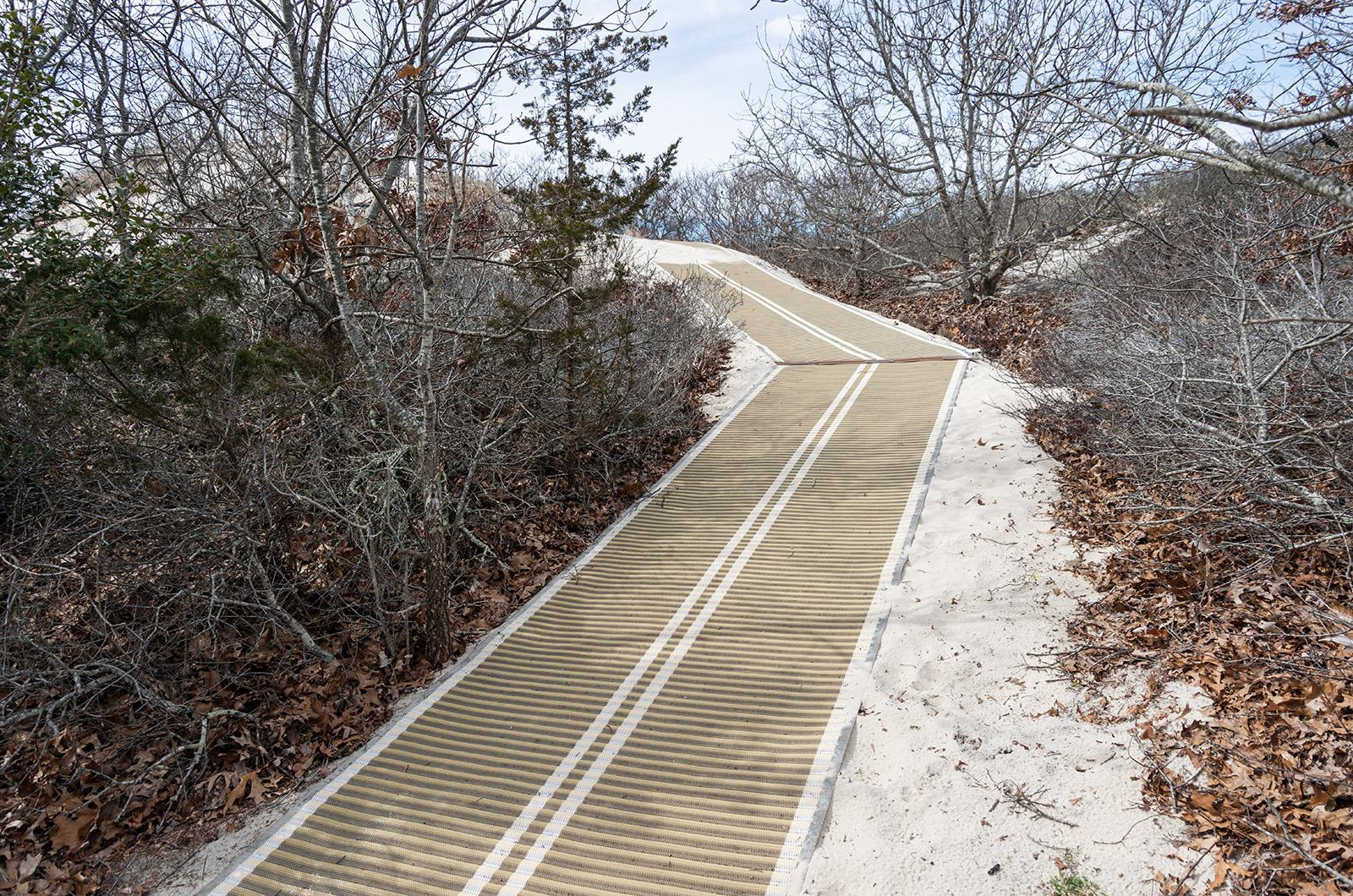
A new report found that Island beaches are not fully accessible, prompting officials to consider ways to make it easier for people to enjoy the Vineyard’s coastline.
A new report found that Island beaches are not fully accessible, prompting officials to consider ways to make it easier for people to enjoy the Vineyard’s coastline.
The analysis, titled “Beach within Reach,” determined that while some beaches are close to meeting accessibility standards, none of them have the infrastructure needed to allow people with mobility issues to get into the water and otherwise access the shores available to everyone.
A survey was conducted last year by Healthy Aging Martha’s Vineyard, Martha’s Vineyard Community Services, and the Dukes County associate commissioner for disabilities to address the state of beach accessibility across the Island. The coalition released the new report earlier this year that found out of the 35 assessed beaches, not one was fully accessible under federal standards.

From left to right: Kate Lefer, Iris Freeman, Cindy Trish and Dick Cohen.
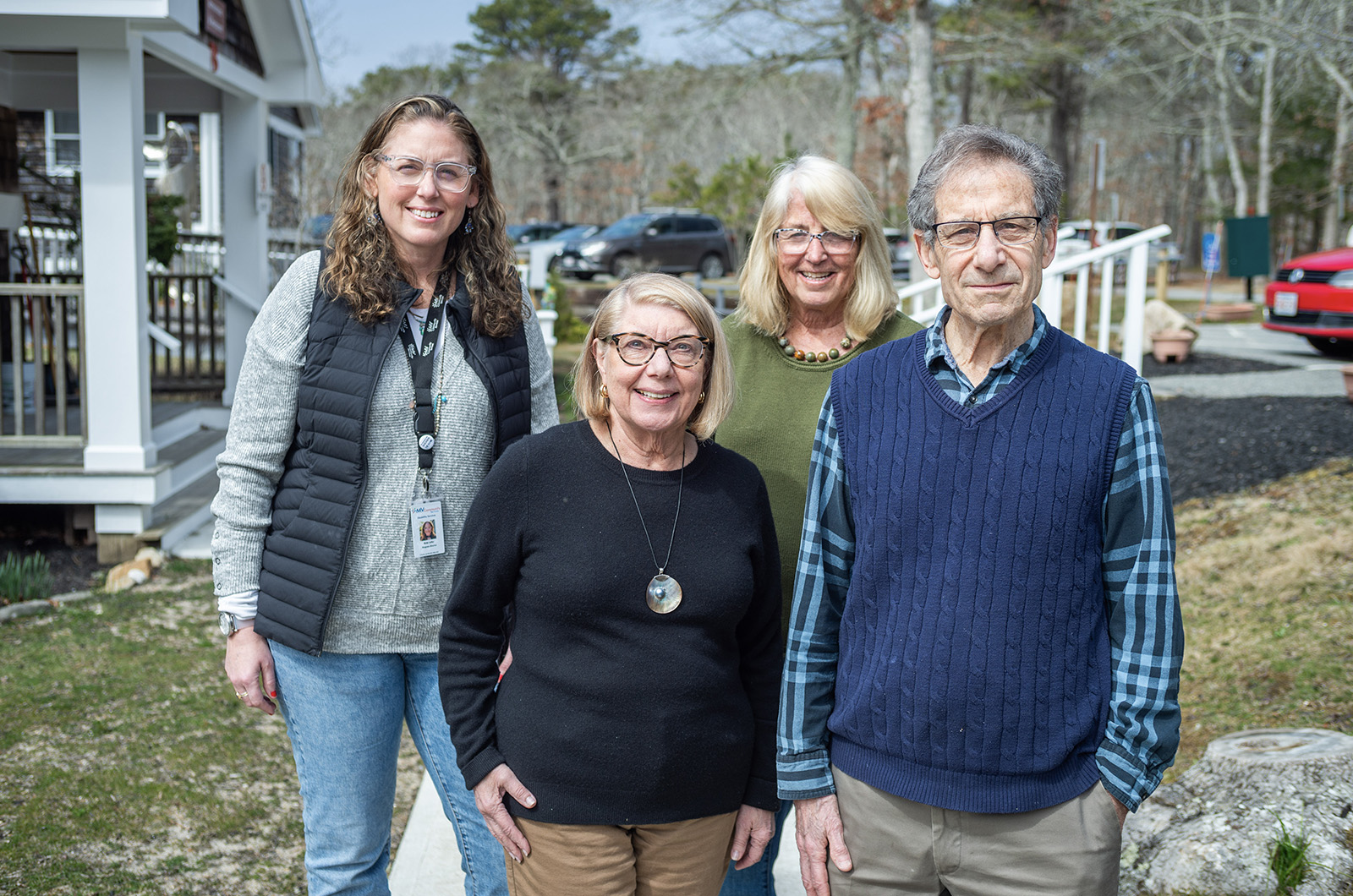
From left to right: Kate Lefer, Iris Freeman, Cindy Trish and Dick Cohen.
The initiative sprung out of a larger plan in 2023 to review the Island’s infrastructure to make the Vineyard more aging and dementia friendly. In February, the coalition released its findings and suggested the addition of more accessible paths to water and better signage to make the beaches more open to all.
Kate Lefer, the program director of disability services at MVCS, said that being able to access what was offered to the population at large was a shared concern for the disability community.
“We want to make sure that community spaces reflect the diversity of our Island,” she said. “And in order for that to happen, we have to think about access and make sure everyone can get to those community spaces.”
The most common obstacle is a lack of an accessible route from parking areas to the water, said Dick Cohen, the Dukes County associate commissioner for disabilities. While some beaches are close to full accessibility, none of them have a suitable route from parking lots and bus stops to the water.
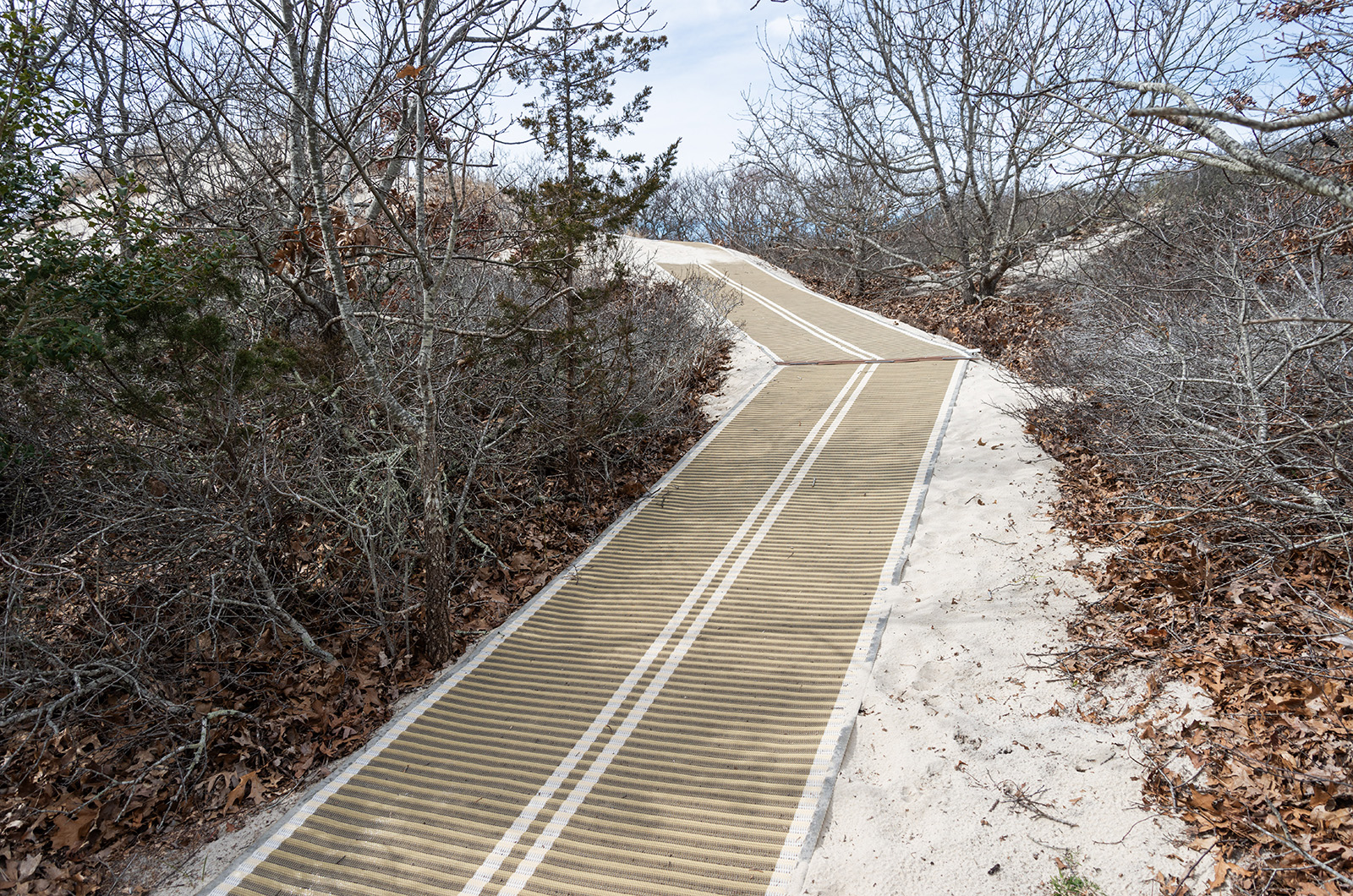
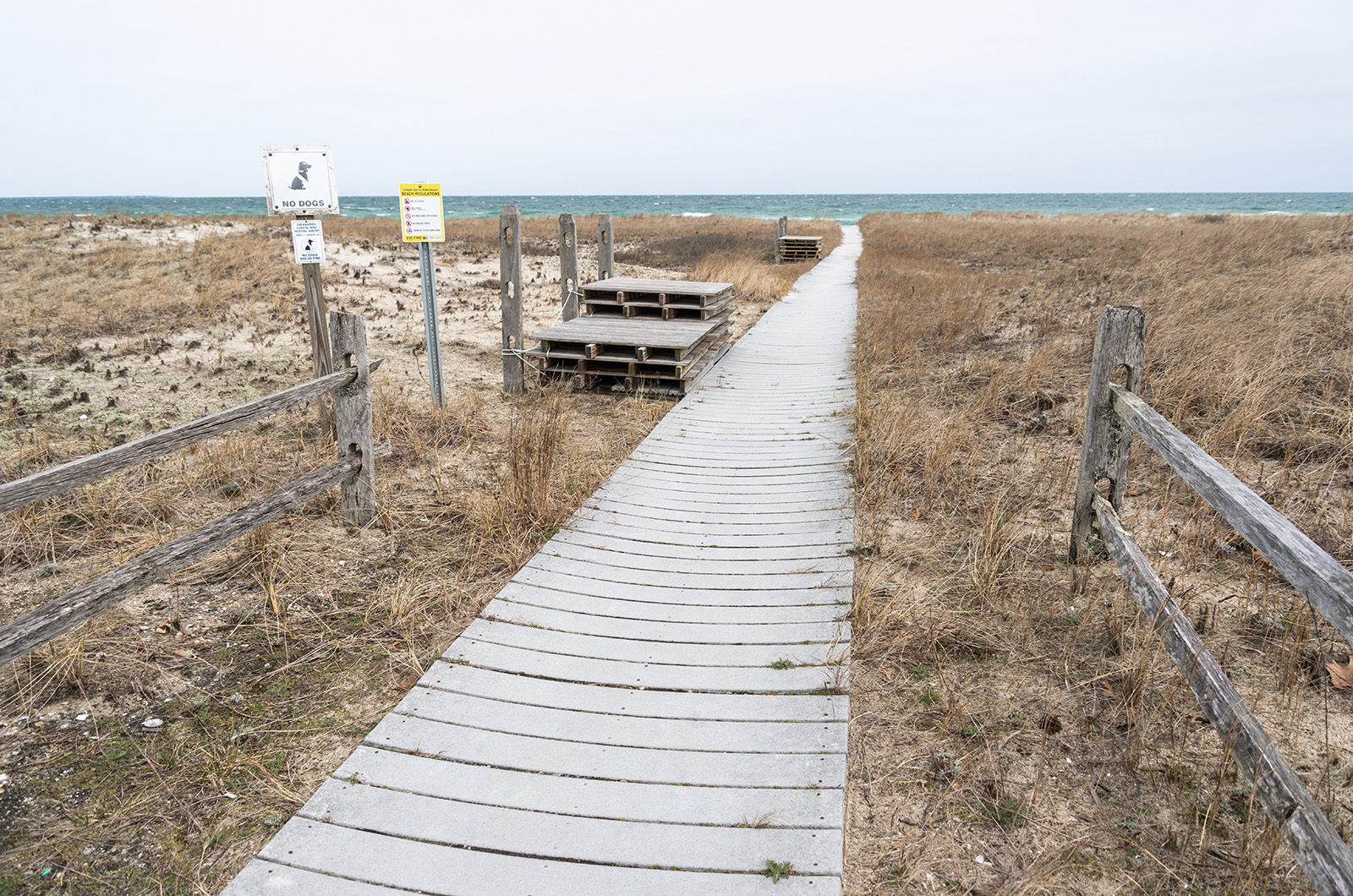
An accessible route has to be wide enough for wheelchairs with no protrusions into the walkway, have firm ground for all mobility aids, and reach the high-water mark so people can enter the water.
The most common options to achieve this, according to Mr. Cohen, is by putting down a beach mat or building a wooden walkway.
Signage is another obstacle in beach accessibility. Even beaches that have accessibility features – such as accessible parking spots or beach wheelchairs – may not have signage that lets visitors know what is available.
“There may be a spot in the parking lot, but there may not be a designated sign indicating it’s an accessible spot,” Mr. Cohen said.
None of the 35 beaches assessed on the Island were deemed fully accessible.
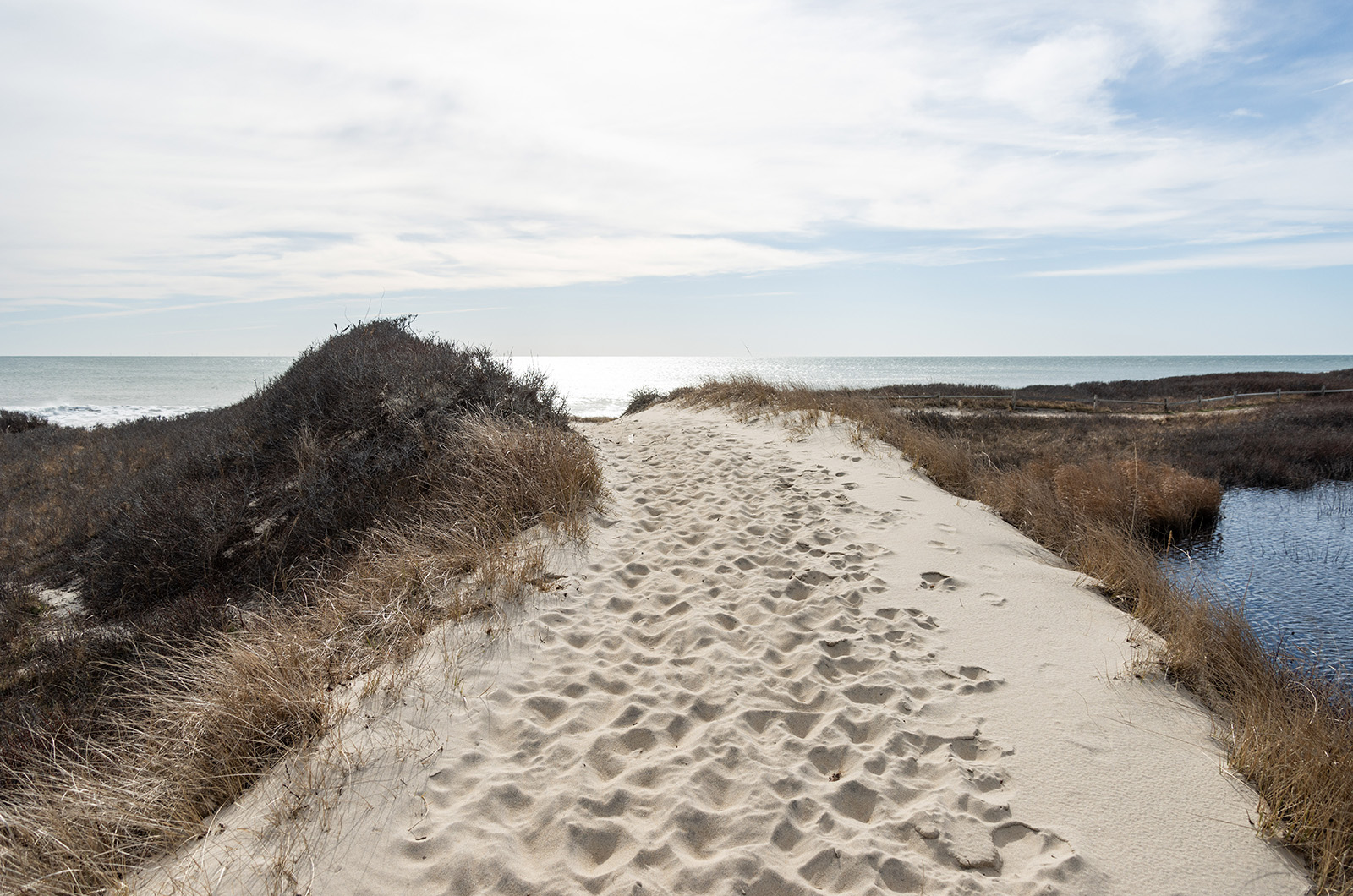
None of the 35 beaches assessed on the Island were deemed fully accessible.
The groups also emphasized making sure mobility aids, such as beach or water wheelchairs, are easy to access. Cindy Trish, HAMV’s executive director, points to Camp Jabberwocky, a sleep away camp for people with disabilities in Tisbury, as a good example of what to do.
“They have opted to leave their beach wheelchairs on the beach all the time, so that anyone can come and use it in the evening,” she said. “It’s like a spirit of shared assets.”
The recommendations were developed after the coalition conducted an Island-wide survey on public beaches. Over the summer, the group contacted 30 beach managers to fill out a survey, the results of which are available on the initiative’s website.
“One of the reasons why we did the self survey, as opposed to going out and doing the visits ourselves, is that it was a really good educational tool,” said Mr. Cohen.
Harrison Kisiel, the land superintendent for Martha’s Vineyard Land Bank, met with Mr. Cohen to go through the coalition’s recommendations. They put together a timeline for the changes that need to be done for both the beaches and other trails belonging to the Land Bank.
Although the Land Bank reviewed its properties for accessibility standards five years ago, the Beach within Reach initiative helped the organization broaden its understanding of accessibility, according to Mr. Kisiel.
“It was more of a verification of efforts on our end, although the broader topic about getting accessibility to the high-water was something we took from it,” he said.
Once the beach managers filled out the 27-question survey, the Beach within Reach group sent Mr. Cohen and volunteers to conduct site visits. Mr. Cohen also assessed five additional beaches that were not included in the initial survey.
Camp Jabberwocky leaves its beach wheelchairs out for others to use.
Camp Jabberwocky leaves its beach wheelchairs out for others to use.
Five sites, including the Chilmark Pond Preserve and Cape Pogue, have not been visited because getting to them is too inaccessible, according to Mr. Cohen. Volunteers were members of two groups— the Daybreak Clubhouse, which is a group for people with mental illness, and the Vineyard Independence Project, which is a group for people with developmental disabilities. Volunteers were trained on how to test for accessibility.
The fact that site visits were done by people with disabilities helped inform the coalition of what they want to do moving forward.
“If you have access to the beach, that’s great,” said Ms. Lefer. “But when you get there, there still needs to be some consideration for people with disabilities as far as recreational engagement.”
Ms. Lefer said that feedback from the volunteers will factor into longer term plans about making sure that events at the beach are accessible.
For now, the coalition is focused on giving specific feedback to different beach managers and select board members across the Island. One-on-one meetings allow the coalition to give specific advice in addition to addressing overarching access needs.
“We’re probably about a third through those meetings right now,” Mr. Cohen said on Wednesday, “It’s very heartening because there’s a great deal of receptivity so far.”
Martina Mastromonaco, the beach superintendent in Chilmark, met with the coalition this week. She said the town will be focusing accessibility efforts on Menemsha Beach because it is the beach easiest to make accessible.
Officials acknowledge that not every beach can be made accessible, but still its important to consider what can be done without hurting the environment.
The rocks and erosion on Squibnocket Beach mean there may not be enough flat ground to install a beach mat, Ms. Mastromonaco said.
“I believe it is going to be impossible to meet any of the recommendations for Squibnocket,” she said. “Lucy Vincent is pretty compliant except for a walkway all the way down to the water.”
Exceptions are made for accessibility when the modifications would destroy the environmental or cultural nature of a site. In that case, whatever modifications can still be made to make an area accessible to some people should be made, according to Mr. Cohen.
“There’s always something you can do,” he said. “You may not be able to do the Cadillac model, but you could at least do the Buick model.”
Comments
Thank you for reporting on
EmmettThank you for reporting on this! A very important issue -- and will only become more important as time goes on!
Wow! It's cool to know that
MatthewWow! It's cool to know that disabled people were an active part of the site visits. So glad to read they're working on improving accessibility and really taking into consideration who will be using the accommodations.
It's about time. And a lot of
Charlie Callahan So Boston/EdgartownIt's about time. And a lot of the snobs here will do what they can to keep the beeches inacessible
I find the Land Bank
MartyI find the Land Bank properties to be intentionally difficult to access and traverse, and I am a fully able bodied adult. The parking lots seem to be deliberately remote and the trails are twisty and full of roots and obstructions one could easily turn an ankle on. It is a damn shame considering how much money they have raked in over the years. They recently purchased a 9+ million dollar property for housing, offices and equipment in a residential area in Edgartown, and seem to provide housing and benefits for an awful lot of employees, yet they contribute to our housing crisis by reducing availability while adding to the cost of purchase. I once tried to walk on their path adjacent to Morning Glory Farm in Edgartown and it was not even passable. Haven’t walked it lately, but hope they do better.
The land bank needs to walk a
TrudyThe land bank needs to walk a fine line. If all the parking lots, roadways, and trails were fully paved over they would be more accessible, but it it would ruin the natural landscape that others seek. Some people want to walk a hilly dirt trail and not see any evidence of human development. A balance needs to be found were some popular properties have more accessibility but others are purposefully kept natural and remote.
I absolutely love the
Tamar May Brookline, MAI absolutely love the Vineyard however have not been able to visit there since becoming reliant on crutches. I miss the beautiful beaches terribly and wish some means of access can be established so that I and others may return!!!
Add new comment