

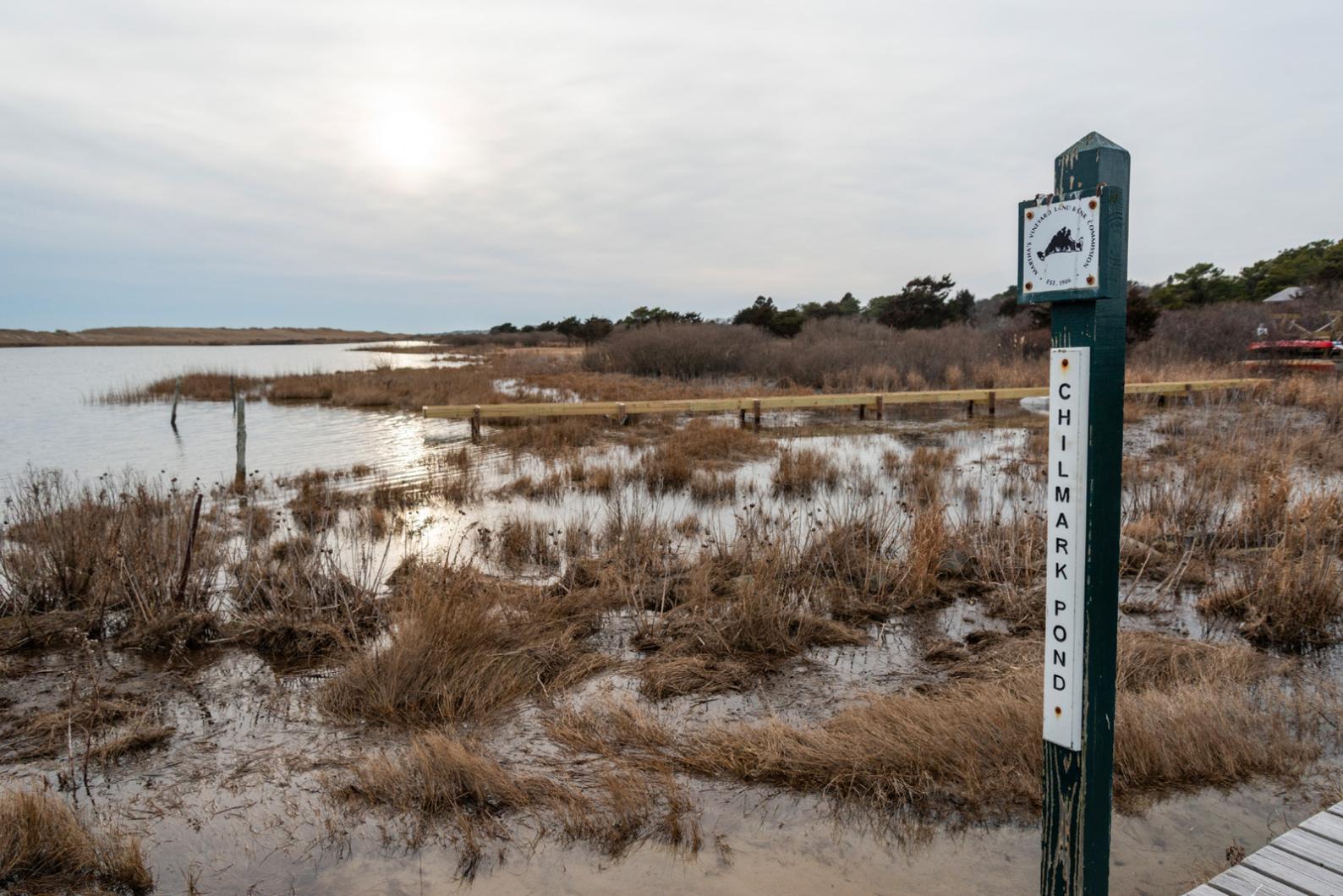
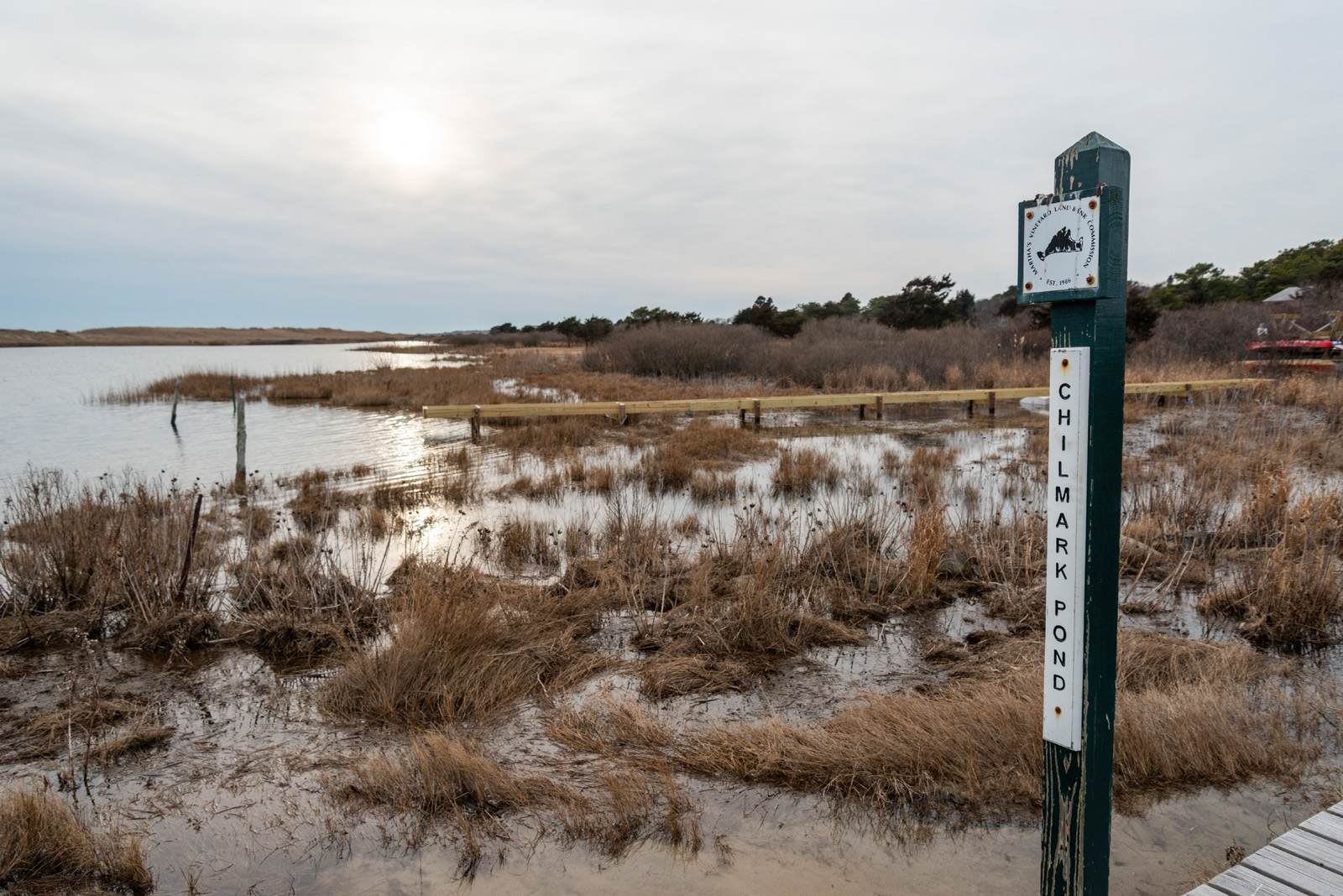
The storms have rung alarm bells about potential environmental hazards, both from the continual undermining of the south shore’s barrier beaches that protect these ponds and from the longer-term effects of more salt water breaching the fresh water environment.
When a trio of winter storms smacked the Vineyard this winter, they caused severe erosion and raised concerns about the future of the Island’s south shore.
For the Island’s ponds, however, the effect was more complex.
Several ponds along the southern coast of the Vineyard received a large influx of salty ocean water when 50 mile per hour winds kicked up the surf during the storms of Dec. 18, Jan. 9, and Jan. 13.

Edgartown Great Pond received a large influx of salt water, helping the pond in the short-term.

Edgartown Great Pond received a large influx of salt water, helping the pond in the short-term.
At Edgartown Great Pond, the storms did what humans have struggled to accomplish in recent years: created a long-lasting cut that allowed a large flush of the 890-acre system. Chilmark Pond had a similar experience.
In the short-term at least, that’s a positive development for brackish and saltwater ponds that have benefited from having their nutrient-dense water refreshed with new clean salt water.
“On the good side, the pond water is nice and cold and salty and the nitrogen load has probably diminished,” said Amelia Salzman, the president of the Chilmark Pond Association.
But the storms have rung alarm bells about other potential environmental hazards, both from the continual undermining of the south shore’s barrier beaches that protect these ponds and from the longer-term effects of more salt water breaching the fresh water environment.
“We saw impacts we hadn’t in the past,” said Emily Reddington, the executive director of the Great Pond Foundation. “It brings up questions like how prepared is the Island for coastal storms?”
Created some 20,000 years ago by a roving glacier, the Vineyard’s great ponds are held dearly by Islanders but have been under pressure due to rising temperatures and increased nitrogen from development.
One of the biggest concerns for pond conservationists coming out of the recent storms is the fast-eroding shoreline that previously kept the ocean and ponds, for the most part, separate. For instance, the back-to-back storms created a consistent opening between the historically freshwater Long Cove in West Tisbury and the ocean.
That sudden shock of salt water can be hard for a system to recover from, said David Bouck, the director of science and collaboration at the Great Pond Foundation.
“The deterioration of the barrier beach habitat, that’s a concern,” he said. “That is the foundation that these ponds, these estuaries are built upon.”
The south shore erosion from the recent storms has been compared to the damage from Hurricane Bob in 1991. Beaches such as Lucy Vincent and South Beach had their dunes flattened, meaning even minor storms in the future could have outsized effects on the environment.

Rising water in coastal ponds raises concerns for conservationists.
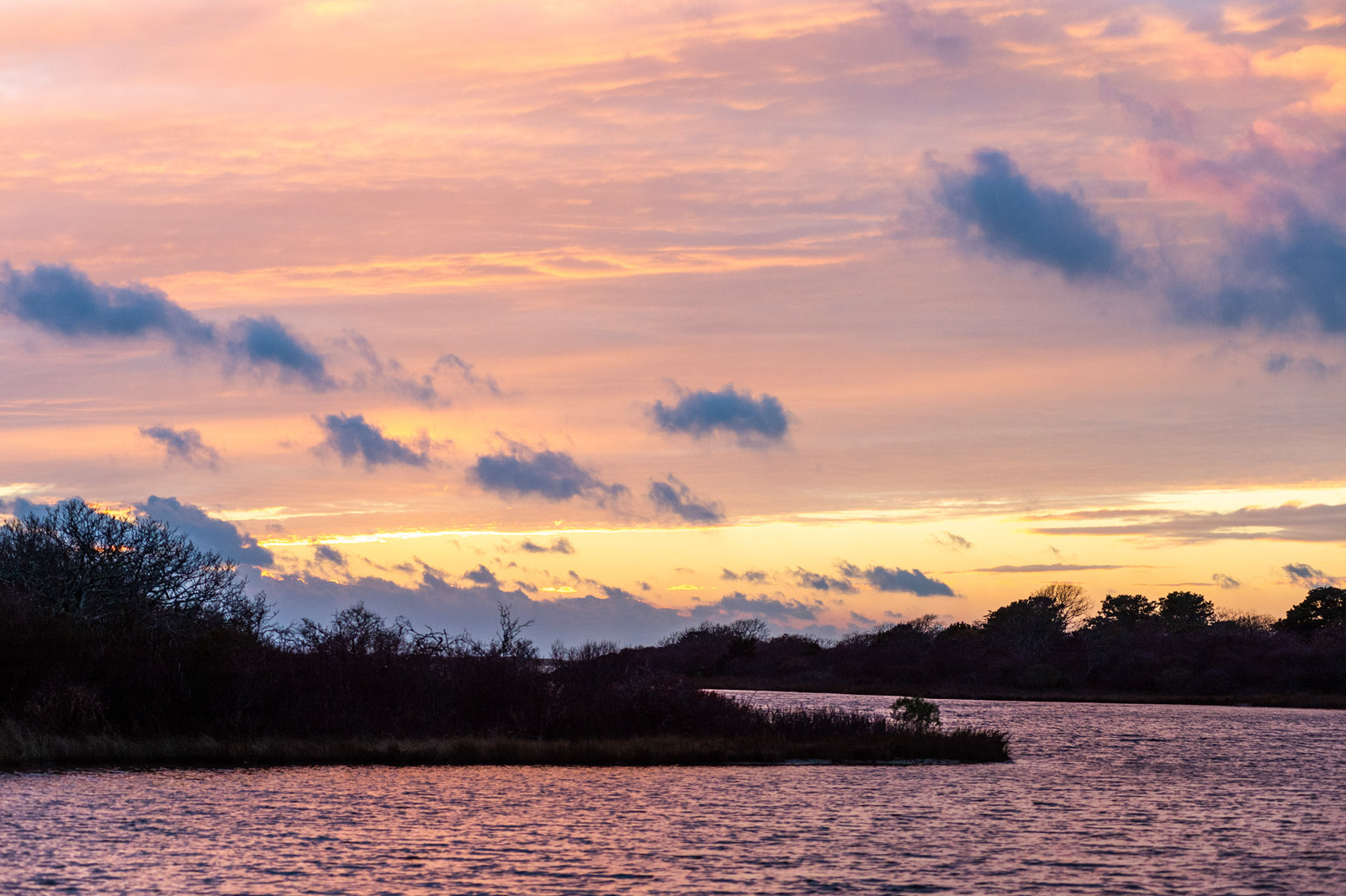
Rising water in coastal ponds raises concerns for conservationists.
A fluctuation of more water into the ponds worries Ms. Reddington. Higher water levels could mean the ponds have an increased chance of connecting to nearby yards with septic systems.
In 2018, Edgartown Great Pond was about 5 feet above sea level. Later that summer, the pond had an algal bloom, and Ms. Reddington feared something similar could happen this year.
“We don’t know if there is an impact, but that’s something that needs to be monitored,” she said.
Algal blooms in Chilmark Pond are a concern as well. The pond’s water quality has been deteriorating in recent summers and has seen elevated levels of the harmful toxins released by cyanobacteria.
Cyanobacteria, also known as blue-green algae, is a group of single-celled, photosynthetic organisms found in ponds, oceans and estuaries across the globe. When present in high concentrations, known as blooms, some cyanobacteria species can produce cyanotoxins that are toxic to humans and dogs.
The recent storms whacked the dunes at Lucy Vincent Beach, pushing sand back into Chilmark Pond. The pond is now shallower and more prone to overheating in the summer.
Such a situation could bring blooms earlier in the year, said Ms. Salzman.
“I fear the pond will be worse off than it has been,” she said. “I was out there [last week] and the dunes have been pushed back at least 20 feet, many of them have been topped off.”
Many of the concerns about the Island’s pond health likely won’t play out until summer, when the weather warms and life in the pond life kicks back in gear. But if some of the ponds do get saltier due to additional ocean water, it’s unclear how cyanobacteria will respond.
Dunes that once protected coastal ponds are fast eroding.
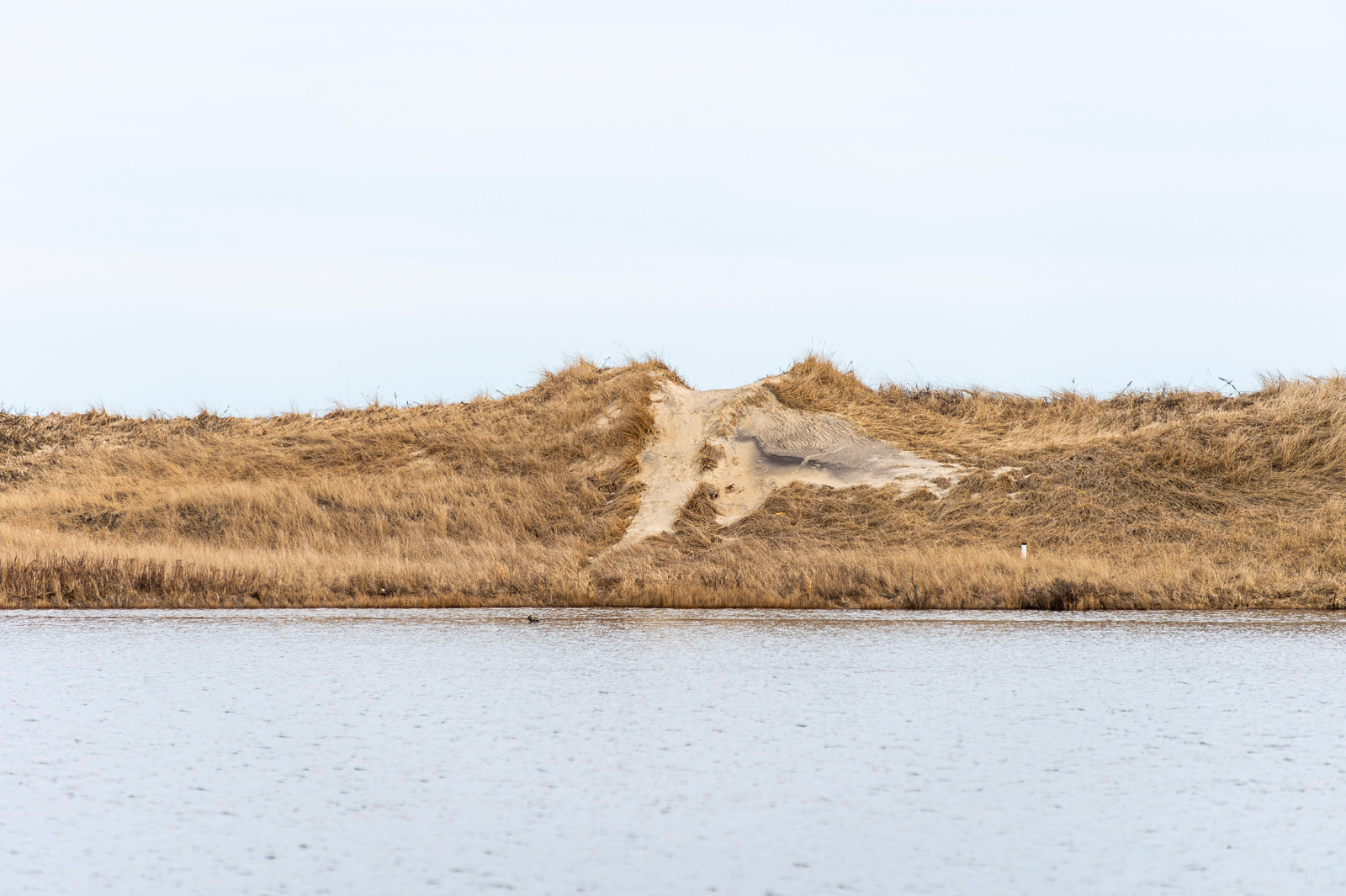
Dunes that once protected coastal ponds are fast eroding.
Most of the past research into the toxins released by the bacteria has been conducted in freshwater, not brackish and saltwater environments. Ms. Reddington theorized that if the bacteria is present in saltier water, it could get stressed and spread more toxins.
Scientists emphasized that though the situation may sound bleak, there are still things that can be done to help.
The Chilmark Pond Association has been trying to dredge Chilmark Pond for the last four years to help refresh the body of water, which is actually a trio of water bodies known as Upper, Middle and Lower ponds. The permitting process has been arduous, though, so both of the pond organizations continue to make man-made cuts to let nutrients out and cleaner water into some ponds.
On an individual level, Ms. Salzman encouraged people to cut down on fertilizers and consider better septic systems that can pull out nitrogen. This could help save the water bodies, which are a major part of the Island culture.
“Everything we can do right now to bolster the existence of our native ecosystems, we should be doing,” Mr. Bouck said. “There’s a chance they will be severely tested in the coming decades.”
Comments
Vineyard towns should
Erin ChilmarkVineyard towns should consider banning lawn fertilizer and upgrading sewer and septic systems. It needs to be done now before it’s too late and more costly measures are required.
A moratorium on new
Jeff R.A moratorium on new development that is not connected to a sewer system would go a long way to stopping pond pollution. It seems unconscionable that Edgartown allowed development of Navigator Homes without it being on town sewer. Developments of that size on septic are only making the problem worse. Short term greed over long term caring.
What exact impact will
Brad ChappyWhat exact impact will increased salinity in the ponds caused by the storms have on the ponds? On one hand, it helps them due to increases in nutrients but just wondering what the downside is?
The article introduces and
David Foster West TisburyThe article introduces and then conflates two separate issues concerning our ponds that are quite distinct. For 20,000 years the coastline of the Vineyard has been readjusting and retreating rather spectacularly as coastal storms have battered the barrier beaches; inundated, filled, and obliterated coastal ponds; and undermined headlands around the island. As long as we allow them to proceed unimpeded these processes will continue and the shoreline will proceed to repair through beach-building and the transport of new sands by longshore currents. There is nothing happening today that is more extreme than has been documented in detail by and since Henry Whiting took the first good measurements of the south coast in the 1840s when it was a thousand feet further out to sea. What has changed is that we have imposed new structures and new dangers around the coast that constrain these processes, subject expensive infrastructure to damage, and threaten the ponds with harmful chemicals. We can anticipate what the future course of coastal damage and retreat will be and we should do everything possible to allow this to happen naturally by removing infrastructure that is standing in the way. At the same time we should address the human imposed stressors on these systems that do impair their ability to function normally. Above all we should not view these natural coastal processes of erosion, loss of land, and pond infilling in negative terms but rather should embrace them as simple expressions of the natural dynamics of a landscape comprised of complex ecosystems that are functioning as they should.
Nice to see an accurate
Otto West TisburyNice to see an accurate account of what is occurring. We live on the edge, our coast is sculpted by wind and sea. Some people seem unable to accept that.
David, would love to hear
Danny East ChopDavid, would love to hear your opinion on the idea of installing a reef outside the swim zone at south beach to cause large 15sec+ interval swells to break offshore instead of running full speed into the shore break? There is a place in Australia called snapper rocks that has had success using a perpetual dredge to place strategic sandbars outside susceptible coastlines.
Is there a plan to connect
MarieIs there a plan to connect more residents to the Edgartown sewer system? How would the cost be shared with the homeowner?
Add new comment