

Michael Kim, the owner of Michael Kim Architecture in Brookline and the governor’s appointee on the commission, presented a study last week to the MVC that looked at the viability of housing for workers on employer-owned properties across the Island.
An architect who serves on the Martha’s Vineyard Commission is floating a new housing strategy that he believes could help businesses construct low-cost workforce housing.
Michael Kim, the owner of Michael Kim Architecture in Brookline and the governor’s appointee on the commission, presented a study last week to the MVC that looked at the viability of housing for workers on employer-owned properties across the Island. The study was conducted by students in the graduate architecture program at MIT.
Eight locations on the Vineyard were analyzed using two prototype housing designs that could blend in with existing neighborhoods, while also managing to break even in the current sky-high Vineyard housing market.

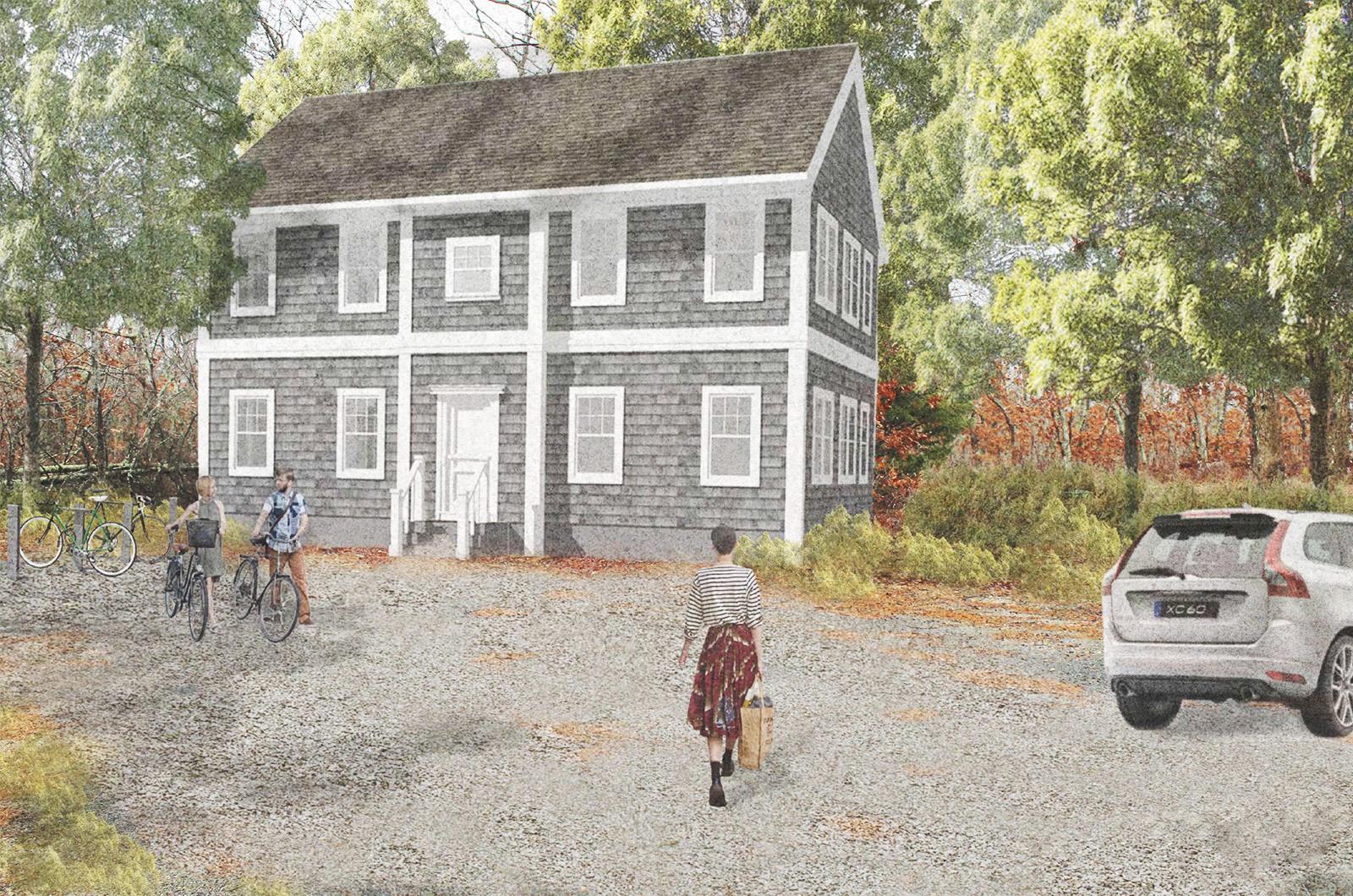
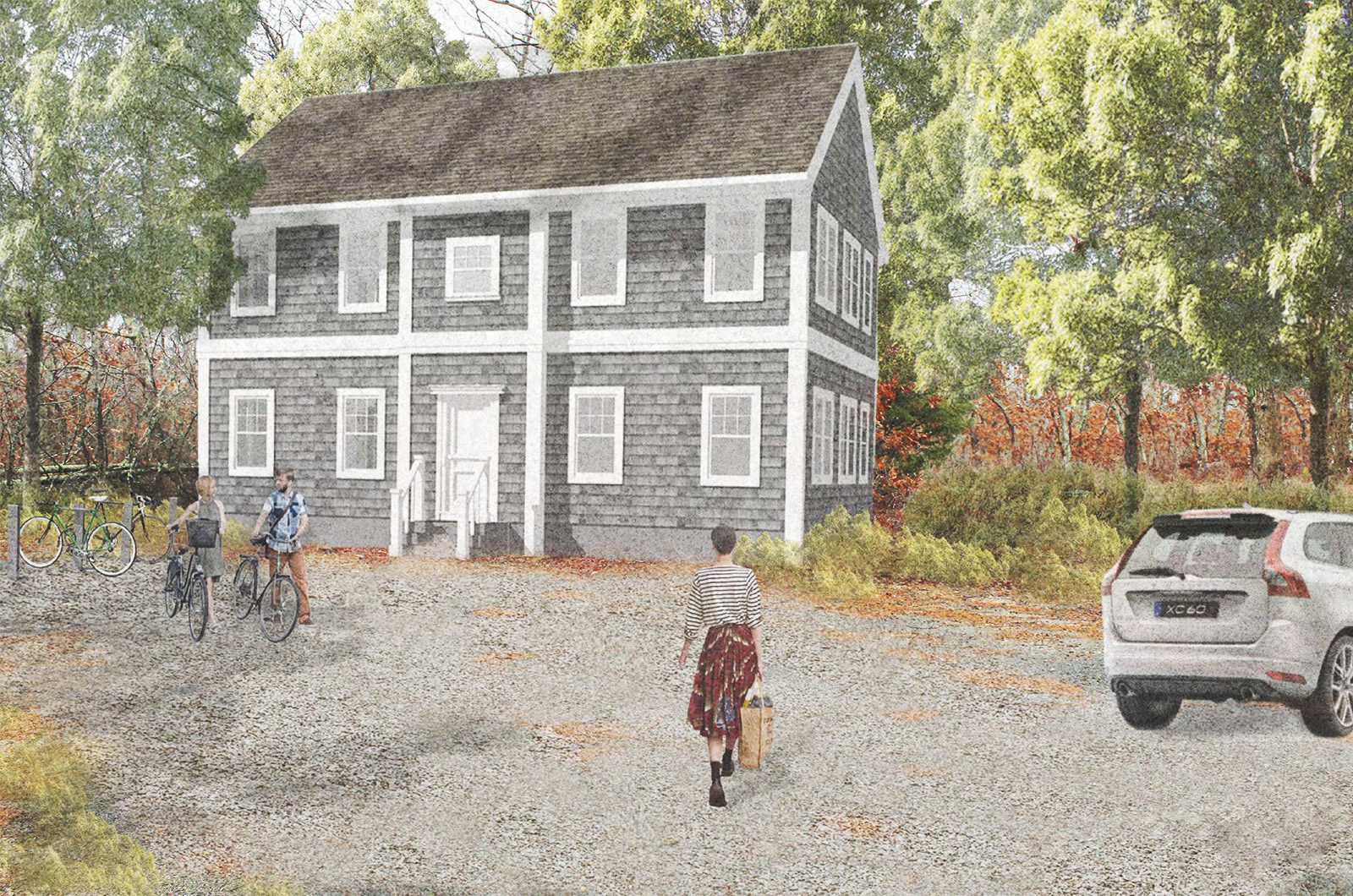
This rendering shows one of several locations that were studied.
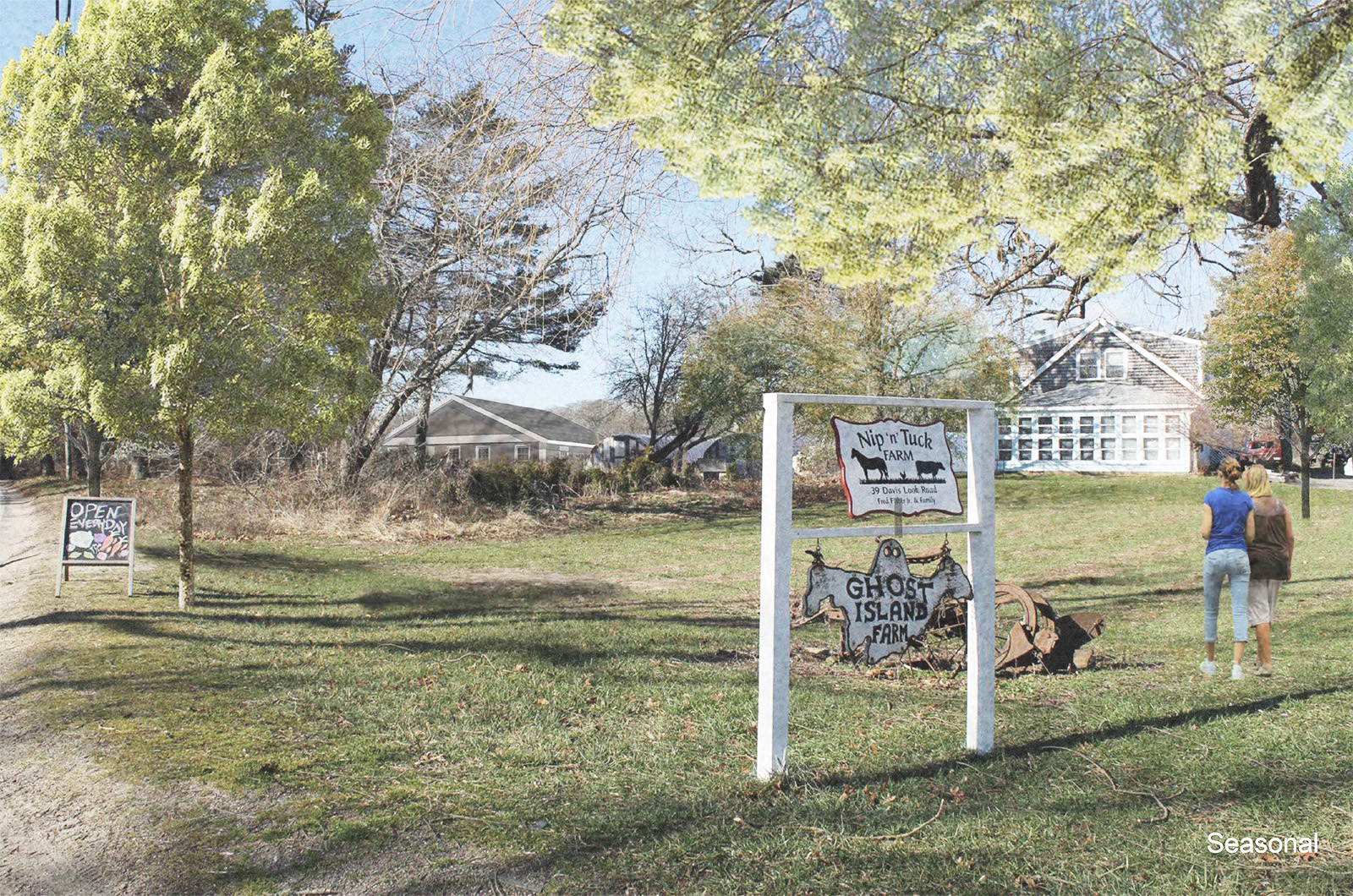
This rendering shows one of several locations that were studied.
The study found, according to Mr. Kim, that building small-scale housing could be accomplished a near net-zero cost to owners and be built quickly, potentially in as few as four months. At the Nov. 16 commission meeting, Mr. Kim said that the idea, while not a silver bullet, could chip away at the Island’s housing crisis while also boosting local businesses in need of workers.
“This is not going to solve the problem but it can help with resources we already have,” he said.
The concept comes as major housing projects, including the 60-unit Southern Tier affordable housing development in Oak Bluffs and the 40-unit Meshacket project in Edgartown, have been cleared for construction. But those large undertakings take years to work through permitting, financing and building, and often cost millions of dollars.
Mr. Kim, who has a home in Oak Bluffs, said the long red tape, high price tags and pushback that comes with these larger projects pushed him to explore other avenues.
The first prototype home design is five apartments in a single 3,000-square-foot, colonial-style home, geared toward year-round affordable housing. The second envisioned an industrial-style building that would have four bedrooms around a central living room and kitchen for seasonal workers.
The latter design could be uninsulated to keep down costs or partially insulated to accommodate winter rentals.
The concepts hinge on being built on land that entities, such as schools and businesses, already own to keep costs down. One Island builder estimated the year-round housing design could cost about $1.2 million and the seasonal housing would be about $268,000.
The study explored building these types of homes near Aquinnah town hall, the Martha’s Vineyard Public Charter School, Island Gymnastics, Ghost Island Farm, hospital land on New York avenue in Oak Bluffs, the regional high school, and the Martha’s Vineyard Boys and Girls Club.

Michael Kim

Michael Kim
The sites were all picked because they had the need for housing and the space to potentially accommodate the buildings.
The analysis found that the designs could skirt design concerns that larger affordable housing projects run into by looking like single-family homes or utility buildings that are already commonplace on the Island. They could also avoid the higher cost of building and the regulation-heavy process that larger projects endure and eventually break-even, Mr. Kim said.
The idea would not work for housing developers because the residences would turn only meager profits, according to the study. The exercise is also highly theoretical, Mr. Kim warned, though nearly all of the sites surveyed participated in the process.
“It’s just a study to place various buildings and price them,” he said.
Mr. Kim got the idea during a visit in San Francisco, where he said he saw schools build residences on their properties.
“It seemed like a good idea and I wondered, ‘Could this work on the Island,” he said. “The study shows, at least on paper, it very well could.”
Zoning changes that could make these sorts of homes allowable by right would further ease the burden of building, according to the report.
Fellow commissioners praised the idea, though several questioned the finances and practicality of having largely uninsulated houses for seasonal workers, even if only for the warmer months.
Joan Malkin, the chair of the commission, said the regional body could run workshops if people were interested in learning about the concept.
In an interview with the Gazette, Mr. Kim said those workshops have not started yet, but he wants to see Island businesses take the idea and run with it.
“We’re hoping to get a couple employers to come forward and say ‘Yeah, I need this.’” he said.
Comments
There’s very little actual
Business 101There’s very little actual will to “solve” the issue. This is a great example, spend time and energy on outlandish concepts. It’s actually a really simple issue, businesses need to make owning housing part of their business model. If you can afford a second home, boat, GMC Denali truck for a 100k or a BMW etc you can afford to house your staff. All other staff as in municipal (teachers, police etc) should be done through 40b and added to the tax basis, as it’s a service being supplied to the taxpayer. If that municipal employee owns housing and does not need to be supplied with housing, they should receive a stipend to help offset their mortgage. Of course, you can free up hundreds of illegally built housing units by simply inspecting short term rentals for health, safety and zoning which will instantly put them back into the workforce pool (think basement apartments etc)
This is brilliant. Let’s
Debra Blair EdgartownThis is brilliant. Let’s embrace thinking outside the box to solve our housing crisis. Mr. Kim is an established and esteemed architect with an island lens. Tell me more!
We need affordable housing
Jared Colburn West TisburyWe need affordable housing for teachers and other members of society whose line of work benefits the community as a whole. But making it easier for more tradespeople and hvac technicians etc to live here doesn’t do anything but overwhelm our system. Why are we making it even easier for their bosses to make even more money off of this place? Let the market work itself out with people who contribute to building and development here. Let’s use affordable housing for people whose jobs contribute to a public good.
This sounds like a good plan
Mike EdgartownThis sounds like a good plan as long as taxpayer monies are not used to subsidize and zoning and planning regulations are followed. We need to apply regulatory, zoning, planning and financing fairly to all and not change requirements for those seeking to build housing under guise of affordable housing. We are on the verge of a recession rising ok interest rates and high inventory. The market will regulate itself real soon. We need to under at and we need to be fiscally ready fprma downturn not anticipating growth and tons of surplus tax revenues.
This is an interesting idea
Marty MVThis is an interesting idea being put forth. It seems that most workforce housing is geared toward a few large employers on the island who want to hire people who are content to rent for a few years and then move on, possibly to buy a home elsewhere. The few very small businesses left on the island seem left out of the affordable housing equation. I have a business which serves summer visitors and occasional winter visitors. I want employees who are connected to the island and consider it their home. Rentals tend to be more transient as well as financially limiting for long term renters, unless the monthly savings is great enough to allow a home purchase elsewhere for vacations and retirement. I don’t claim to know the answer. I would like to see more ADUs allowed, as well as cluster housing owned by workers. Employer owned housing has historically been not great for the workers.
Let’s chat about workforce
Tina Bean Vineyard HavenLet’s chat about workforce housing and what it actually does look like according to some who use it.
Owners of businesses rent out a bed in rooms. Some consisting of three bunk beds to a room charging upwards of a thousand dollars a bed a month. Four bedroom units houses
Upward to 24 workers which means employees make 24 thousand a month off their workers. This is happening. This is definitely happening. We need to have a watchful eye on folks claiming to build affordable housing and there must be some checks and balances to it.
I also hear that housing is also used as a leverage one might say coercion to have employees work crazy hours or lose their jobs and therefor their housing. Again, the lingo employee housing sounds good but we need to be mindful what it really means to the users. Not everyone who provides employee housing but there are those businesses that do. Employee housing is a great idea I just hope those in charge of giving permission are also clued into what sometimes happens. Good
Luck bringing good ideas to fruition with the proper over site
What about incentivizing
Tony SopranoWhat about incentivizing building owners within downtown areas to turn the spaces above their storefronts that are used for storage (or sitting empty) into apartments? Main street in Edgartown is a good example. Reduces overbuilding, revitalizes downtowns, structures are already built.
I would encourage more
Michael edgartownI would encourage more development, and affordable housing up island, including more in Chilmark West Tisbury and aquinnah.........there is a lot of open space, and lots available for them to help out on this so called crisis.......I dont think oak bluffs needs anymore development for this so called crisis. it seems the up island towns encourage this upon the oak bluffs residents, as long as their town doesn't have it.. it the mentality, in your town, not ours...
I've been advocating for
Nelson Smith Oak BluffsI've been advocating for barracks style housing similar to the Navy housing at the airport. I remember
getting used furniture from them when I was a boy. Business would benefit mostly, but everyone wants someone else to pay for it
It seems that employer owned
MartyIt seems that employer owned housing is going to bring us even fewer, more powerful, corporations in our community. Less mom and pop stores and services. The down side of that is that small local businesses will be forced out if they cannot afford to purchase or build employee housing, and consumers will have fewer choices. Who will set the rental rate of employer owned units? Will we move towards the old Appalachian model of company towns with workers paid in script, only for use in company stores? Will fees be tacked onto the rents? Seems ripe for usury.
Add new comment