

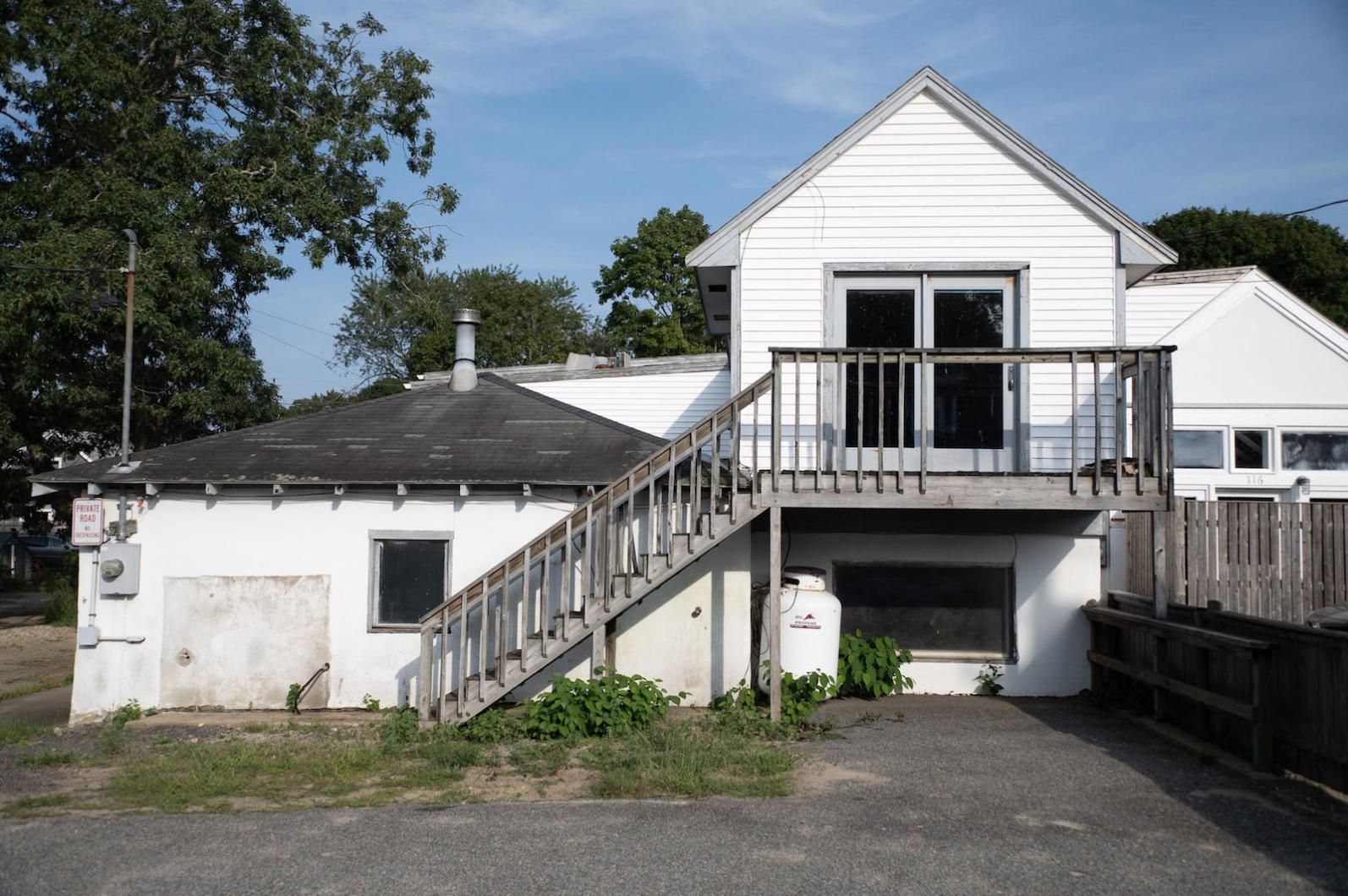
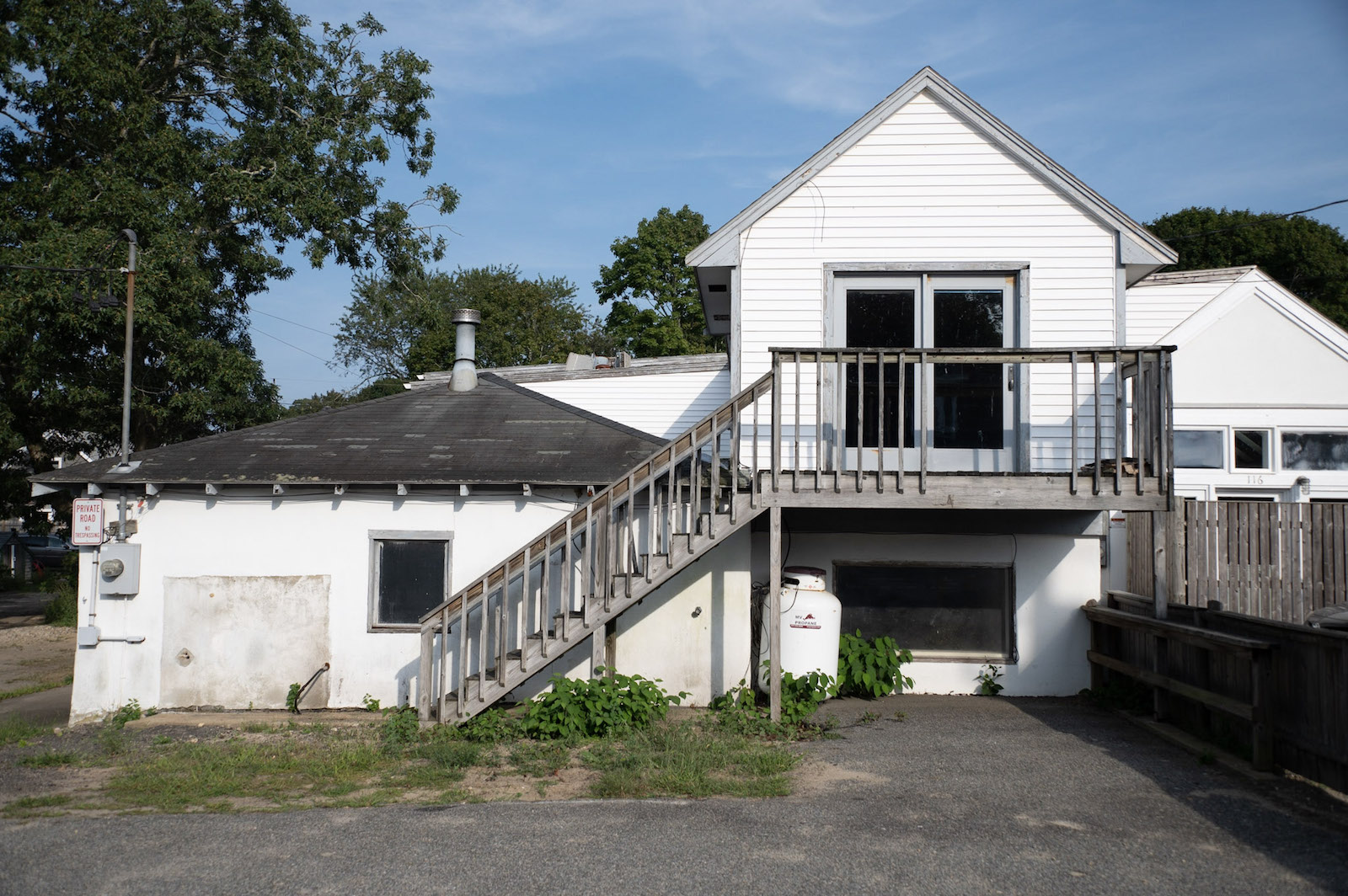
Island Grown Initiative seeks to move its food pantry to Dukes County avenue in Oak Bluffs, while in Vineyard Haven, landowner Michael Sawyer is applying to replace a demolished building on Lagoon Pond Road with two four-story apartments.
The Martha’s Vineyard Commission opened public hearings Thursday on proposed developments in two down-Island towns.
The nonprofit Island Grown Initiative seeks to move the Island Food Pantry to a permanent location on Dukes County avenue in Oak Bluffs, while in Vineyard Haven, landowner Michael Sawyer is applying to replace a demolished building on Lagoon Pond Road with two four-story apartments.
Commissioners expressed concern about the food pantry’s impact on traffic and parking in its proposed new neighborhood, a mix of homes and businesses including Tony’s Market and Bombay Indian Cuisine.
“That’s a pretty competitive spot [for parking],” commissioner Greg Martino said.
Island Grown executive director Rebecca Haag said the future pantry has ample off-street parking and a plan for operation that no longer relies on the current model of first-come-first-served shopping in a limited window of time.
Most food pantry clients will select their groceries in advance with a simple phone-based application that allows them to set a specific pick-up time, Ms. Haag said.
With pick-ups scheduled 15 minutes apart, clients will drive or walk to one door to give their names and then proceed to a second door where their food will be waiting, packed to order by pantry volunteers, she said.
Food for the pantry will be delivered by truck four times a week, Ms. Haag said.
“They’ll pull in, there’ll be volunteers there to unpack them and then they’ll go off,” she said.
Volunteers also deliver food to shut-ins and others who can’t get to the pantry on their own, Ms. Haag said.
Moving to the Dukes County avenue location will get the food pantry out of its current, cramped rental space at the Portuguese American Club while keeping it within reach of thousands of Islanders who are registered for food assistance, Ms. Haag said.
“We want to make it easy for clients to access our services,” she said.
While demand has eased slightly since the pandemic, Ms. Haag said, more than 18 per cent of the Vineyard’s year-round population is still registered with the pantry.
Ninety per cent of pantry clients come from down-Island towns, Ms. Haag said.
“In O.B. alone, we serve 1,030 people,” she said.
In addition to providing more room for operations, the new location — which Island Grown is calling the Island Food Center — has enough food storage space to sustain the pantry over periods of stormy weather or other emergencies when ferries don’t run, Ms. Haag said.
“We need at least two weeks of [backup] food,” she said.
Two owners of nearby properties spoke in favor of the Island Grown plan, saying Ms. Haag and food equity director Merrick Carreiro had walked them through the location and answered all their concerns about how the pantry will operate.
“Somebody’s helping people, and it’s not about greed and more-more-more. I welcome them to the neighborhood,” said residential and commercial landlord Candace Nichols.
Abutter Veta Richardson echoed Ms. Nichols’s support.
“I have a lot of confidence that they are working to keep the disruption … to the community to a minimum,” Ms. Richardson said, noting that the pantry operates during business hours and will be quiet at night.
However, Ms. Nichols said that stormwater runoff is a problem at the Dukes County avenue property, which Island Grown purchased for $1.72 million earlier this year.
Commissioners asked Ms. Haag and Ms. Carreiro to submit a stormwater study.
The hearing will continue Nov. 2.
The 33 Lagoon Pond Road demolition in Tisbury came before the commission retroactively, because the original building was more than a century old when it was torn down early this year by order of the Tisbury building inspector.
In a letter to Mr. Sawyer’s company dated Dec. 30, Tisbury building inspector Ross Seavey found the structure “extremely susceptible to catastrophic failure,” and ordered it removed.
The demolition came as a relief to Lagoon Pond Road neighbors including Chicken Alley Thrift Shop manager Jessica Tartell, who wrote a letter to the commission supporting Mr. Sawyer’s application to replace the old house with a two-unit apartment building.
“[T]he structure at 33 Lagoon Pond Road was an eyesore,” Ms. Tartell wrote.
“It deterred customers and donors from visiting our store, and before Mr. Sawyer purchased the property, the Tisbury police would regularly request to review our security camera footage with a view of the structure so that they could see the activity happening,” her letter continued.
Mr. Sawyer’s application to replace the condemned house with a four-story apartment building found less favor with the Tisbury Historical Commission, which wrote the MVC opposing the design.
“[T]he submitted design is in no way sympathetic to the neighboring properties and, in this board’s opinion, should be redesigned in a more cohesive and complimentary way,” the historical commission letter reads, in part.
Current drawings for the project show two side-by-side units, with the first floor providing the 11-foot clearance required for building in the flood zone and living space on the second, third and fourth floors. A recessed balcony appears on the top floor of each apartment.
Martha’s Vineyard Commission chair Joan Malkin suggested deferring to the Tisbury planning board, which is taking up the project later this month.
“The cohesiveness of the character of that street isn’t immediately obvious to me,” Ms. Malkin said.
The planning board will hear the application Oct. 18, according to its chair Ben Robinson, who also sits on the MVC.
The commission hearing will continue Nov. 2.
Comments
Jump up and down complain
Tom Engley West TisburyJump up and down complain scream this will get built I hope it’s year round housing but May end up being a weekly rental. Know the history of this developer.
Originally the MVC was formed
Mark Aker VhOriginally the MVC was formed to regulated projects that were of a regional nature or impacted multiple towns. But we have here are projects a town can handle themselves, and do a better job at that. All the Island gets back in return is more lawsuits and higher taxes from having the MVC expand their control,
It's a great, clear article
Jennifer WollockIt's a great, clear article about a tricky problem with many moving parts. To the outside viewer one problem that the pantry needs to be alert to is the fate of clients who do not have smart phones. There are more of us out there than anyone who cannot live without one can imagine. For
plenty of people they are not even affordable. The idea that they will order from an app on their phones cuts them off from that pantry. (Then there are people who have to get around on foot. Is there public transport?
2) For the developer and the cause of historic preservation: the greenest building is the existing building. A well-rehabilitated historic building benefits the community—not just a mansion but human-scale local domestic architecture with a history. It's also less likely to attract summer partiers, though that's still a risk. Glitzy New is not appealing to many inhabitants, permanent or temporary. Remember the great Malvina Reynolds' "Little Boxes" and Gertrude Stein's complaint on revisiting Oakland in search of the house where she was born: "There is no there there." And thanks for a thoughtful article and a great paper.
Add new comment