


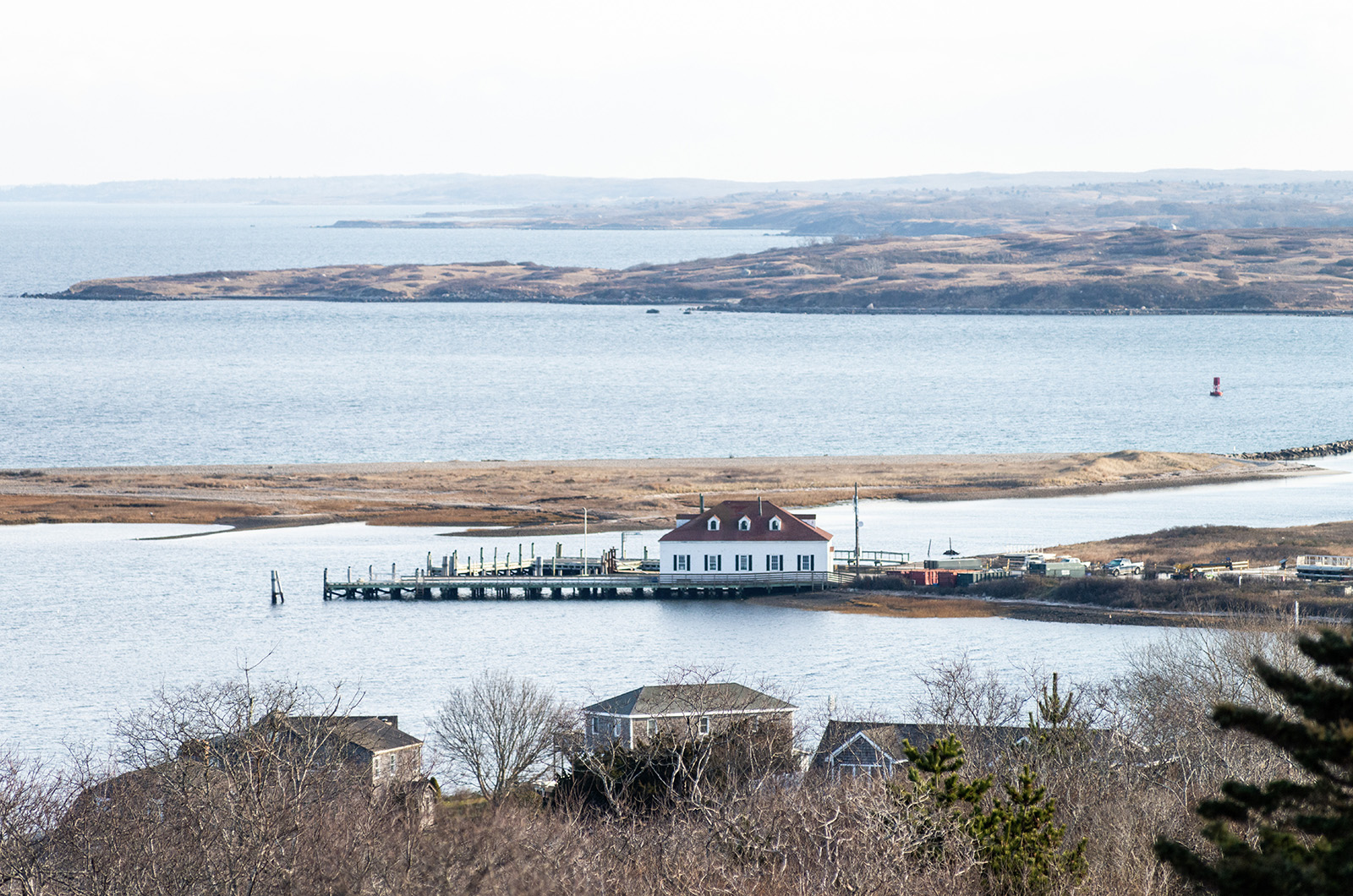
A recent state Seaport Economic Council grant will give Cuttyhunk the ability to complete a permanent fuel farm facility so it no longer has to transport fuel from other communities, as it has for the past three years.
GOSNOLD — The off season on Cuttyhunk isn’t supposed to be easy.
A small semicolon of sand, golf carts and cottages situated at the furthest reaches of the tiniest town in the Commonwealth, the seasonal island is only publicly accessible by ferry on Mondays and Fridays in December. There are no police, no hospitals, no grocery stores, no restaurants and definitely no secrets. There is a schoolhouse, but there are currently no students. There is a church, but there is no pastor.
It may be the most beautiful place in the state. It also may be the quietest.
And for the island’s approximately 100 registered voters, about a dozen of whom remain on Cuttyhunk through winter, that’s exactly the point. They can get milk on the mainland. They get serenity off of it.
“You have to be creative, and innovative,” said town clerk Lisa Wright, who lives on Cuttyhunk year-round. “And here, if you want pizza, you make the pizza.”
But for the past three years, Ms. Wright and the other residents have been without a different necessity, vital for both mainland and island life. In 2019, the state DEP sent notice that R.M. Packer Company, which installed, supplied and operated the island’s six underground fuel tanks for the past two decades, would have to upgrade the small facility, adding environmental improvements to put it in compliance with state regulations. But combined with the recent installation of a solar farm, which has decreased fuel usage on-island by about 40 per cent, the upgrades proved too expensive, prompting the company to pull the tanks, and leaving Cuttyhunk residents without their own fuel source, residents said.
“[Mr. Packer] felt that it was not doable, and we understood that completely,” selectman Gail Blout said in a phone interview. “But it means we’ve been without fuel on the Island for three summers.”
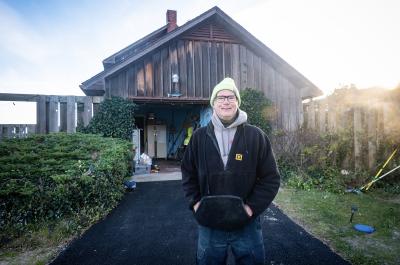
One of the few winter residents, Seth Garfield is an oyster farmer, fire chief, landscaper and so much more.
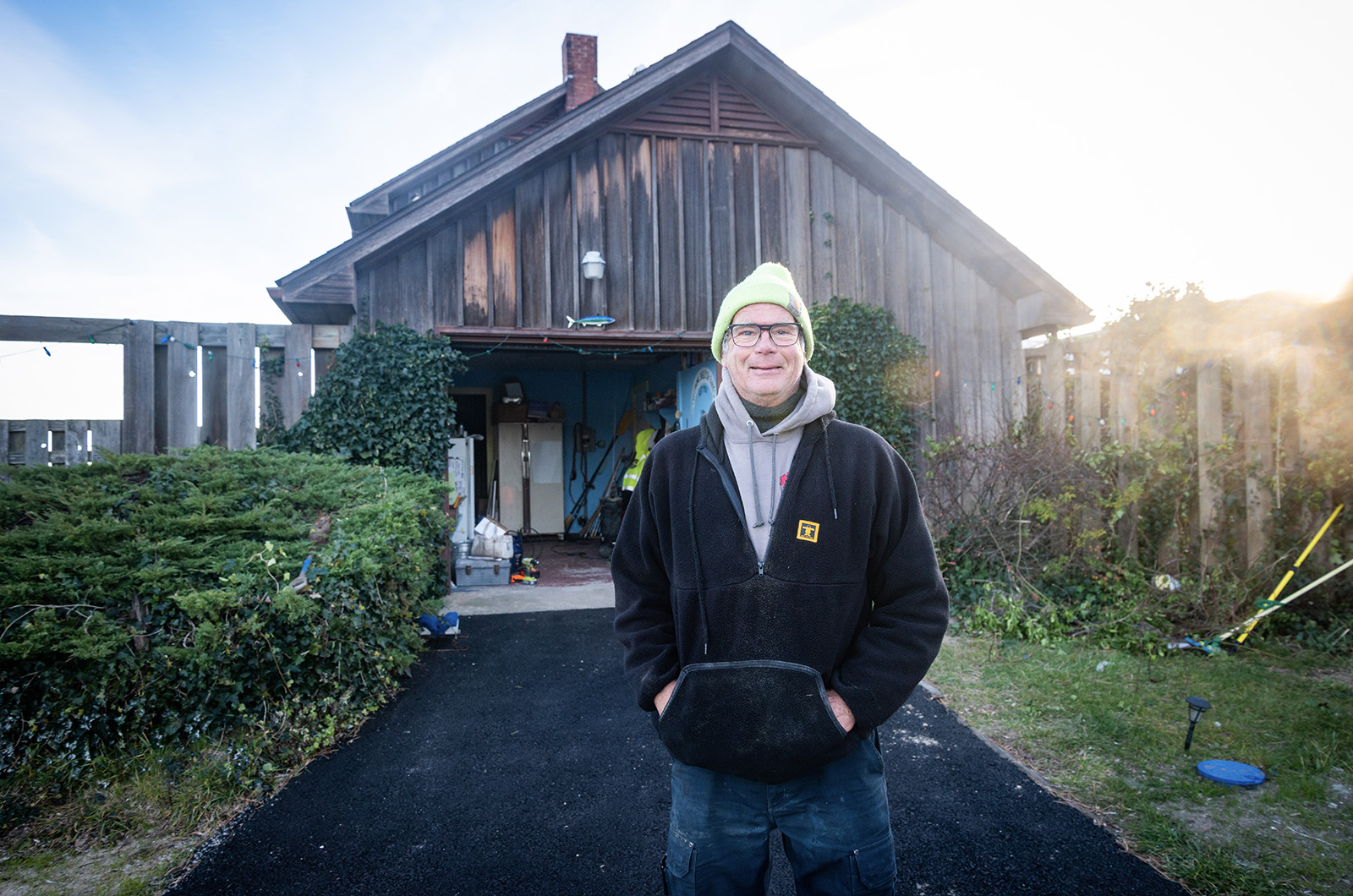
One of the few winter residents, Seth Garfield is an oyster farmer, fire chief, landscaper and so much more.
While Mr. Packer has continued to supply the island with fuel in an ad hoc capacity, a recent state Seaport Economic Council grant has given Cuttyhunk a more permanent lifeline. Announced last week, the grant awarded the town of Gosnold $510,000 to complete a permanent fuel farm facility so it no longer has to transport fuel from other communities, as it has for the past three years. The money comes in addition to a September grant of $573,000 from the state’s office of Coastal Zone Management.
The project includes the installation of a concrete foundation, two above-ground tanks, electrical and piping to connect the tanks to the town dock, dispensing equipment, a containment sump and a high-level alarm system.
The town also received $457,000 to replace its aging, 20-year-old public bathroom facility on the town marina. The waterfront bathrooms are the island’s only public bathrooms other than a pair of facilities at town hall.
Ms. Blout praised the more than $1 million in grant money in an interview, thanking Lieut. Gov. Karyn Polito, who has visited the island multiple times and announced the grants last week.
“The [seaport economic council] has been so responsive, and so very supportive of us over the past years,” Ms. Blout said. “It is a huge amount of money for this smallest town in the Commonwealth.”
“They love us,” Ms. Wright added.
Cuttyhunk has been searching for a permanent solution to its fuel issues since before the pandemic. Recreational boaters and visitors, who keep the harbor bustling in the summer, can’t refuel when stopping over — making Menemsha, about 10 nautical miles away, the closest fuel port. Ms. Wright said recent summers have been the busiest on-record, despite not having a fuel source. Although the island has very few cars, residents do use fuel for golf carts — the island’s main form of transportation.
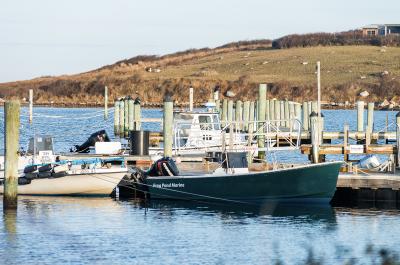
Winter is a quiet time in the Cuttyhunk harbor.
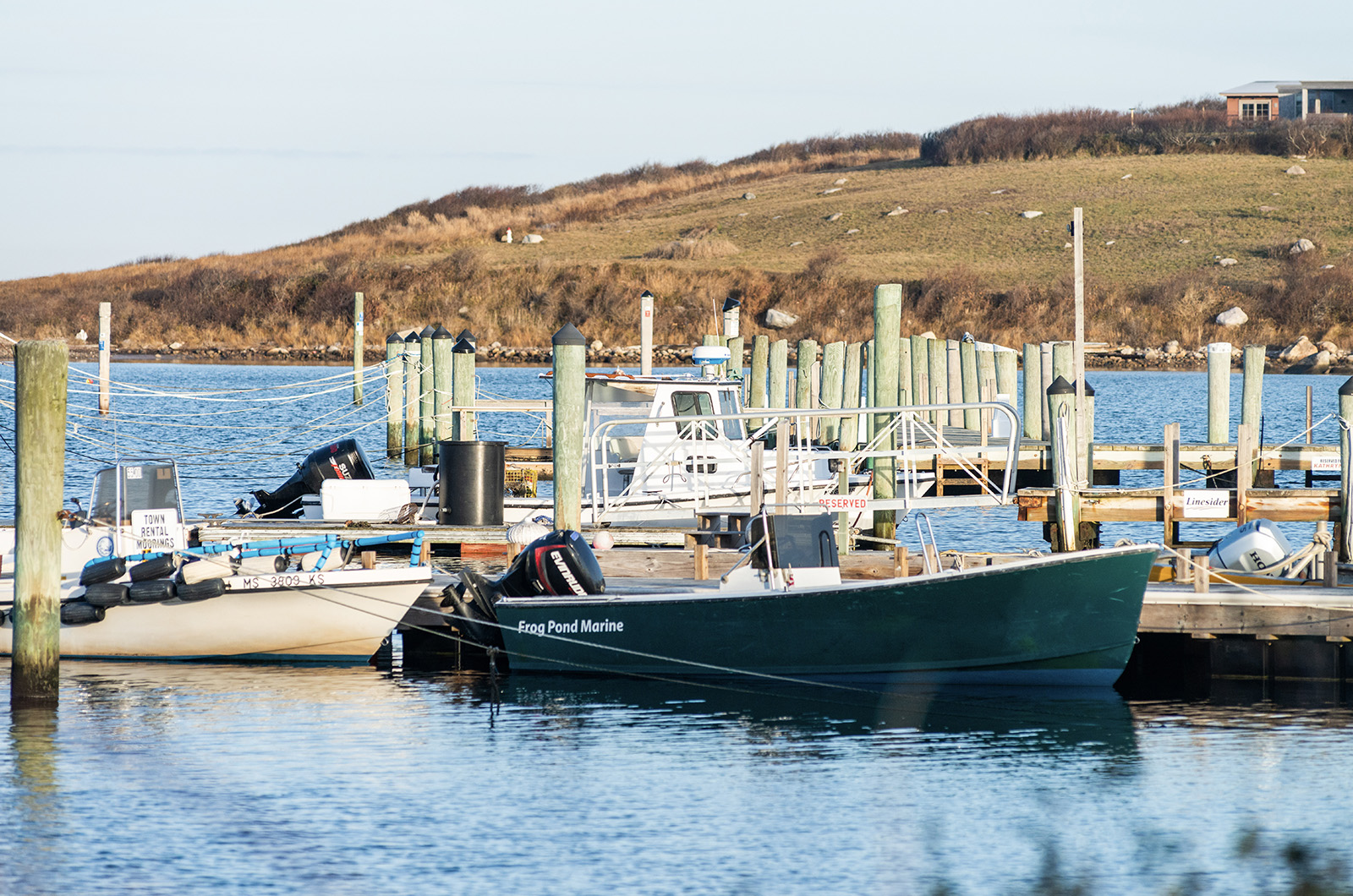
Winter is a quiet time in the Cuttyhunk harbor.
“It was really a challenge for everyone,” Ms. Wright said. “People may only need 20 gallons for the whole summer if you have a golf cart, but how are you going to get it over here, and store it safely? It’s been a public safety issue. And then, of course, there are the town vehicles that use fuel.”
Seth Garfield, an island oyster farmer, fire chief and landscaper, among myriad other things, said he’s had to scavenge his own fuel for the 40 or so lawns that he mows, as well as his vehicles.
Most importantly, for the handful of year-rounders, the lack of a depot means that residents have to rely on an off-island source of heating fuel for their homes. “We need to decrease the potential for accidents,” Ms. Blout said. “We need to discontinue residents and boaters bringing over jerry-rigged gallons of fuel and storing them. And we really need to have a properly run, safe facility, like every other town in the Commonwealth has.”
The seventh town in Dukes County and the least populated in the state, Gosnold sprawls across all nine Elizabeth Islands, from Nonamesset just off Woods Hole to Cuttyhunk more than 14 miles to the southwest. Almost all of its residents live on Cuttyhunk, which is the only one of the islands with a permanent settlement.
The town has a spartan annual budget of about $1.5 million, Ms. Blout said, and despite the more than $1 million from the state, Gosnold will still need to pursue long-term financing for the fuel farm project, which it hopes to complete before next summer.

Lisa Wright, town clerk, library trustee, and more.

Lisa Wright, town clerk, library trustee, and more.
A special town meeting has been scheduled, on-island, for Jan. 23. There is no quorum.
“We’ll be advertising that extensively,” Ms. Blout said. “And because it is such an important issue, people will come over.”
The past few years have been a heady time of change and transition for the normally quiet island, which has a summer population that gets close to 1,000 before plummeting to around 10 in the offseason. In addition to the planned fuel farm and bathroom upgrades, the town recently repaved almost all of its approximately two miles of roads with an $800,000 grant from the Massworks Infrastructure Program. It was the first significant roadwork that had happened on Cuttyhunk in 25 years, and added storm drains to the century-old stone walls that span Tower Hill Road.
In the last six months, the town also replaced about 1.6 miles of its original, 1960s asbestos cement water pipes with PVC, a million-dollar project funded partially through grants and financing. With no vehicles or heavy construction equipment on island, pavers and plumbers had to come in by boat — an enormous logistical hassle that complicates every major public works project, Ms. Wright said.
Gas dock which fuel farm will help.
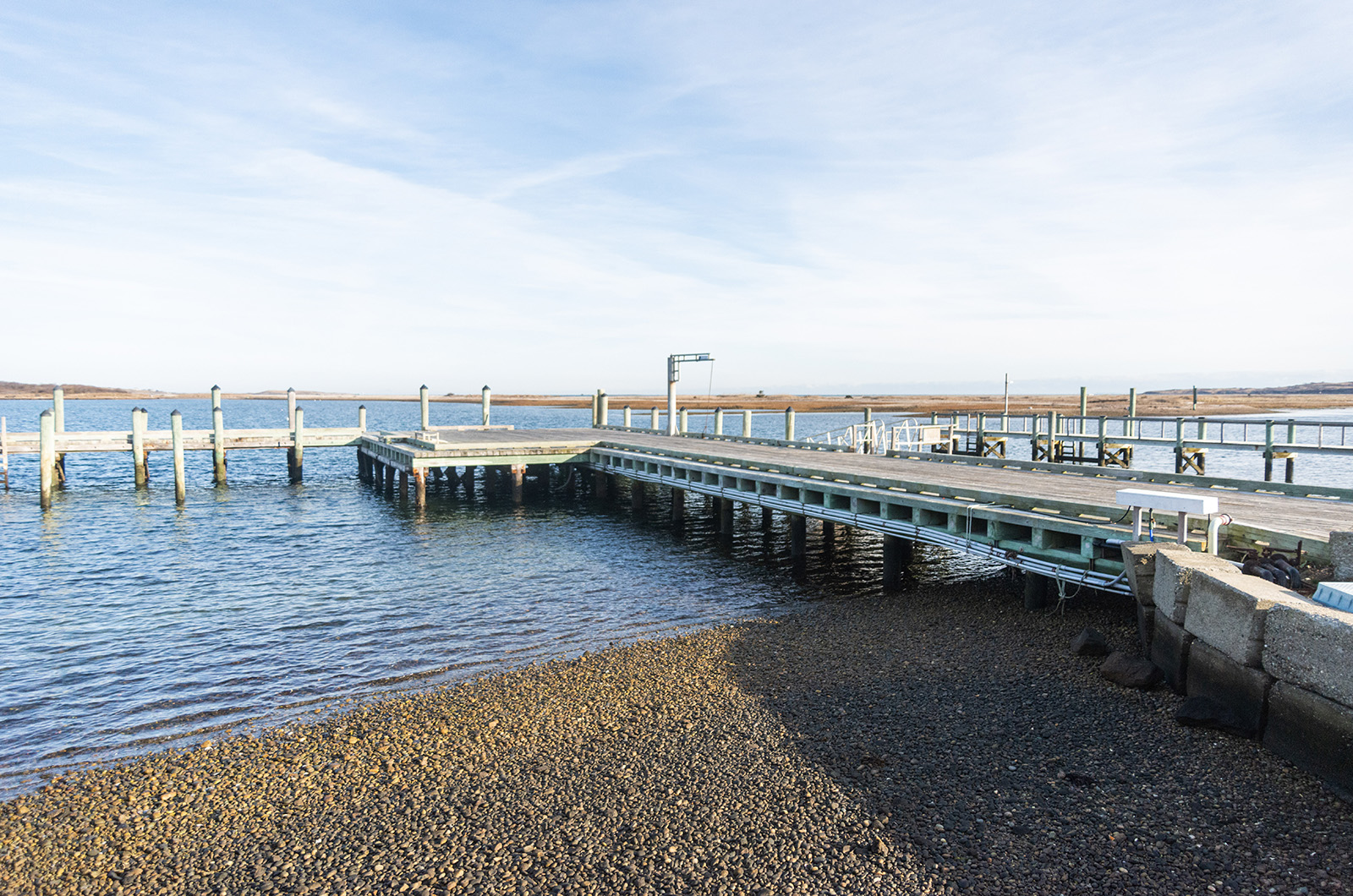
Gas dock which fuel farm will help.
“They all came on barge after barge after barge,” Ms. Wright said. “A lot of people, when they do work here, will get an estimate, and then jack it up 75 per cent. They call it the Cuttyhunk contingency.”
The lowest bid the town has received for the fuel farm project is still about $1.5 million.
“The bids were just phenomenally expensive,” Ms. Wright said. “So that’s why we pushed for the economic council grant.”
But with work on the roads and pipes finally completed, Ms. Wright had the chance to show off the new blacktops on Wednesday. They sparkled in the low, early morning sun of the winter solstice.
Walking down the new road from the harbor, one of the first stops was Mr. Garfield’s garage, his ATV and truck parked outside. Mr. Garfield grew up on Cuttyhunk before going off to college at the University of Rhode Island. He came back and started an oyster farm with his wife in 1981, raising three kids and employing hundreds of others.
“I’ve been here since I was zero,” Mr. Garfield said. “I’ve employed probably 80 per cent of the kids on the island over the generations.”
But Wednesday marked a period of transition for him, too. Mr. Garfield recently sold his oyster farm business to Charmaine Gahan, a summer visitor from Concord who previously worked for Mr. Garfield. He is now her employee.

The newly paved roads sparkled.
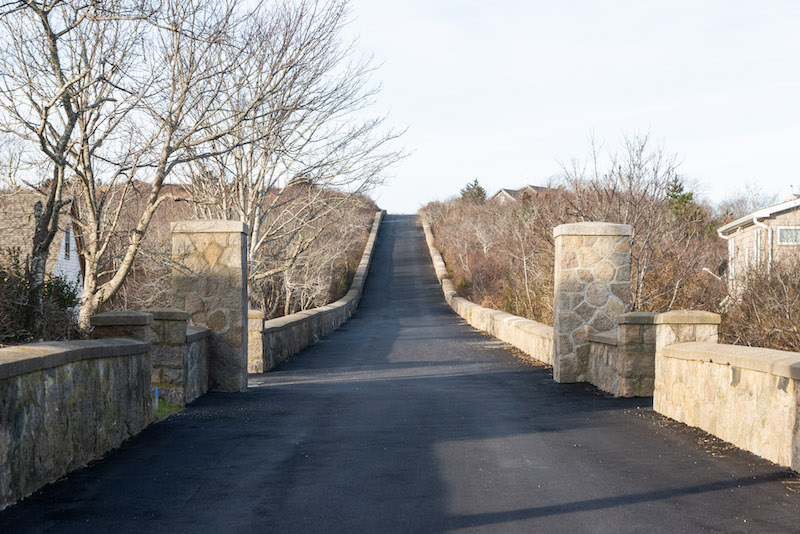
The newly paved roads sparkled.
Ms. Gahan hesitated when asked if she was a full time resident.
“You’re a registered voter,” Mr. Garfield prompted. “You’re on the finance committee. You’re on your way.”
The tour continued up Tower Hill Road to the Lilliputian but dignified town hall. An antique, 1920 voting machine rested on a small stage in the back room, showing 55 people cast ballots in the recent midterms.
“I think about 10 voted in-person,” Ms. Wright clarified. “But we were open 7 a.m. to 8 p.m., like everywhere else.”
She continued to the glistening new town library, which was recently rebuilt through about $550,000 in private fundraising. Unlike the Vineyard libraries, the Gosnold library does not have CLAMS reciprocity. That didn’t dampen Ms. Wright’s spirit, who — full disclosure — also happens to be a library trustee in a town where every year-round resident wears many hats.
“We pride ourselves on our selection,” she said.
Next to the library stands the schoolhouse, which currently has no students but boomed to eight during the height of the pandemic.
“That was unheard of,” Ms. Wright said. “They didn’t stay.”
Just behind the playground, Ms. Wright pointed to the dozens of acres of inland property that became conservation land in 2020 after a landmark purchase by the Buzzards Bay Coalition. The land, once part of a private estate, was put on the market for development before the sale, which included a popular stretch of southeast-facing beach front.
Ms. Wright then strolled through town to the abandoned Coast Guard station, noting that Gosnold also received money to convert the interior of the large building into a visitor’s center, honoring the history of the town and the former military presence on the island. On Wednesday, the inside of the building was packed with faded buoys and signs of the offseason — the dusty vestiges of a marine railway partially visible on the floor.
The last stop was a vacant, sandy, rectangular fenced parcel just south of the island’s solid waste receptacles. It was barren and empty, not even a scallop shell in sight. But just beyond, dune grass swayed in the wind, silhouetted by the shadow of a shorebird flying above.
Ms. Wright unlocked the gates and laughed.
“This is it. Future home of the fuel farm,” she said. “Beautiful, right? And you came all this way to see it.”
Comments
I’m sure what I’m about to
Christine SengeI’m sure what I’m about to say, will sound like heresy to some people. But there seems to be a good deal of state money being spent to support 10 people who choose to live year-round on this tiny piece of environmentally threatened land, without a medical facility, nor significant food, sources, etc. The rest of the Gosnold islands are privately owned. It may be time for the state to sell Cuttyhunk to a private owner and reappropriate the funding that will undoubtedly be needed on Cuttyhunk ongoing for the greater good of the commonwealth.
The State essentially owns no
Albert NauThe State essentially owns no land on Cuttyhunk.
I have been on the island multiple times every month of the year.
I have never seen less than 40 people, the average is north of 400.
Thousands of State residents spend time there every year.
The greater good of the Commonwealth is a greater Cuttyhunk.
With Cuttyhunk 'sold off' where will the Town of Gosnold Town Hall be located?
The K-8 school?
As a frequent and fortunate
Dana Nilson Marion, MAAs a frequent and fortunate visitor over the past 60 years, Cutty Hunk has always been one of my familiy's favorite haunts. A place where time seems to crawl a bit slower than anywhere else. It's residents are friendly and welcoming. The scenery is both breathtaking and serene. Somehow my batteries get re-charged after every visit.
maybe we turn the tables on
Michael edgartownmaybe we turn the tables on islanders...you dislike summer, and seasonal owners, maybe you could find peace on this abandoned island. no tourists there and you get your peace and quiet....
Cuttyhunk sees thousands and
Albert NAUCuttyhunk sees thousands and thousands of tourists every year.
Most of the owners are seasonal.
Cuttyhunk is no more abandoned than Chappaquiddick.
December's astronomical event
Jeff DelawareDecember's astronomical event is the Winter Solstice—not the "winter equinox." It's the shortest day of the year, after which the sun begins its northward trek to June's Summer Solstice. The equinox(es) occur in March and September as the sun passes the Tropics of Cancer and Capricor), marking the beginning of Spring and Fall.
Oh, and bravo for Curryhunk! One of the most beautiful places I've ever been.
The article has been updated.
editorThe article has been updated. Thank you.
From this summer's Cuttyhunk
James Conway Hollis NHFrom this summer's Cuttyhunk Poetry Contest courtesy of Ian Walsh:
Far away across the waves
A sentry warm and weathered
Stands true for old Elizabeth
A chain for ever tethered
Four hundred years of dreams and fears
Have lived upon this place
The countless blows of wind and snows
etched across its face
The families, both and new
All different, all the same
All here because they feel that pull
That thing without a name
The summer suns, the winter winds
The rocks, the salt, the sand
Oh Cuttyhunk, our island heart
Forever may it stand!
Cuttyhunk should be
Emily L. Ferguson North Falmouth, MACuttyhunk should be completely electric. Why are there any gas powered golf carts on the island? Why does anyone need oil for heat? Get on about it, folks. And get a private contractor in there to run your fuel depot. It's only for the tourists, and the few of you who have big enough boats in the summer. Dinghies don't need gas fueled motors in the harbor. People can row, and electric motors can work just fine and be recharged off the solar that the island runs on. Every house should have electric heat pumps and appliances. Noone should be using petroleum products to operate their vehicles or houses.
Should Cuttyhunk follow North
Albert NauShould Cuttyhunk follow North Falmouth's lead?
Mainlanders telling Islanders how they should live is always amusing.
Have you checked your
Rational Person Oak BluffsHave you checked your electric bill lately?? It's astronomical.
Add new comment