

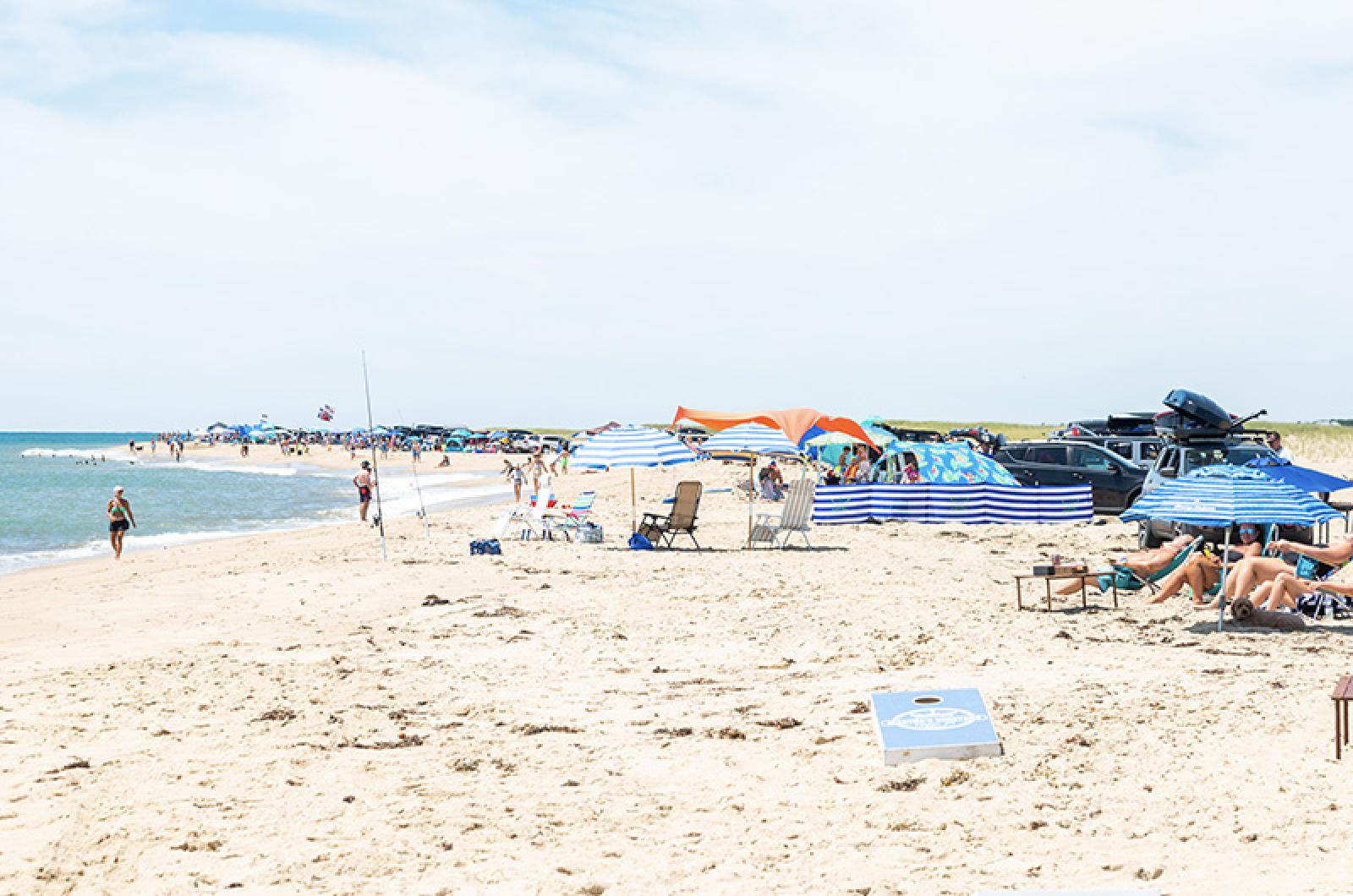
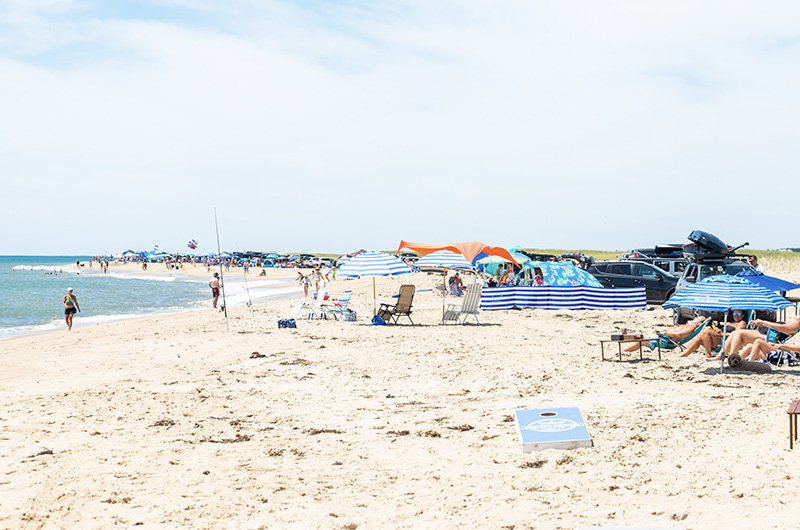
The Trustees of Reservations, which owns or manages some 12 miles of public beach from Norton Point to the Cape Pogue elbow, is under pressure on all sides this summer over a new draft management plan
It’s the last Friday in July. At the edge of Katama Bay just west of Wasque Point, a tiny plover chick skitters nimbly across a patch of sand flecked with shells and seaweed. Nearby, a parent bird keeps a watchful eye as the chick forages for food.
This has been a banner summer for shorebirds on Chappy beaches, with piping plovers, least terns and skimmers nesting in record numbers. Still, the newly hatched chicks face long odds for survival, as they are under pressure on all sides: from predators, humans and even the forces of nature that have shaped these dynamic barrier beaches for centuries.

Migrating marshes at Poucha Pond.
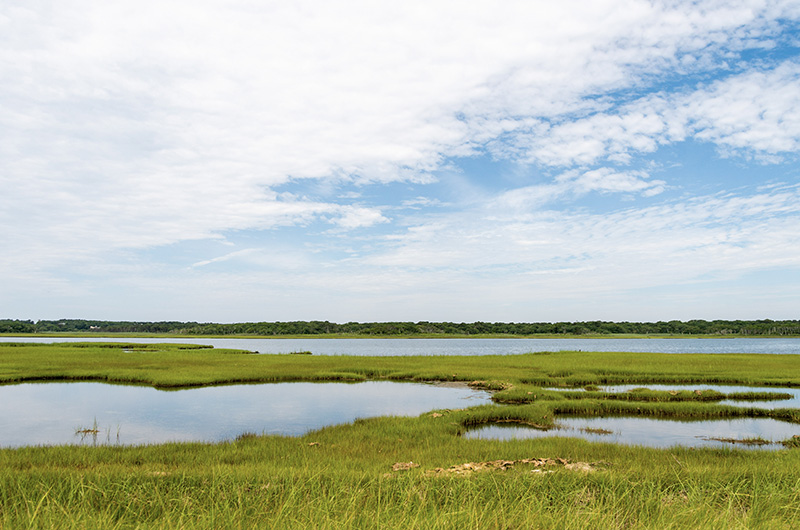
Migrating marshes at Poucha Pond.
The Trustees of Reservations — the venerable Massachusetts conservancy that owns or manages some 12 miles of diverse public beach from Norton Point to the Cape Pogue elbow — is under pressure on all sides too this summer: from angry landowners, fishermen and others over a new draft management plan that would have brought sweeping changes to these remote outermost beaches used by thousands of Islanders and visitors every year.
The draft plan was abruptly scrapped last week, barely a month after it was released. Acknowledging the public backlash, Trustees president John Judge said his organization would start over this fall, convening local stakeholders and others to draft a new plan.
“We’re going back to the drawing board,” Mr. Judge told the Gazette. “We want to expand the process and tap the collective intelligence of folks . . . including the many people that are passionate about the beach and passionate about the ecological treasure we have there.”
Three years in the making, the plan was grounded in broad scientific study by the Woods Hole Group around the effects of climate change on the beaches and tidelands at Norton Point, Wasque, Leland Beach and Cape Pogue. Leaders at the Trustees, one of the oldest land trusts in the country, described it as an innovative blueprint for the future as they wrestle with the increasingly complicated balancing act of managing privately held conservation lands for public use.
“We’re at the intersection of where recreation meets resiliency . . . they need to be connected with the urgency around stewardship,” Mr. Judge said.
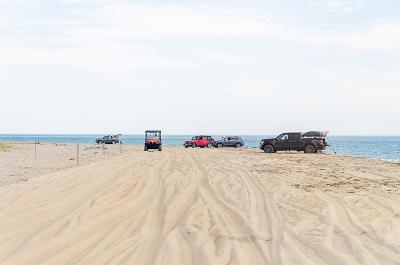
Oversand vehicles at Leland Beach.
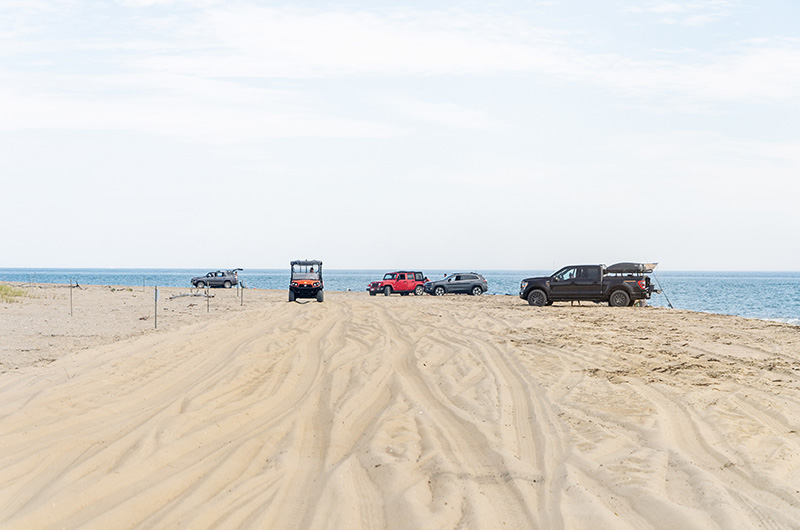
Oversand vehicles at Leland Beach.
“The issues that are being raised in the beach management plan are issues we have been thinking about for many years,” said Bob Mason, who heads the Chappaquiddick advisory committee for the Trustees, a local group. “Issues around shorebirds, challenges around OSVs [oversand vehicles] . . . and that third leg of complexity around climate change.”
But vocal critics — including the recently retired longtime Chappaquiddick beach superintendent for the Trustees — say the plan fails on a number of levels, did not include enough involvement from local stakeholders and is a troubling sign that the organization has grown out of touch with the Island community.
“They’re not communicating. They’re not talking to the neighbors,” said Chris Kennedy, who retired in August 2020 after working in various management capacities for the Trustees for 32 years. “Without community support, there is no plan.”
In a letter to Mr. Judge last month that was published in the Gazette, Mr. Kennedy blasted the draft management plan.
Poucha Pond
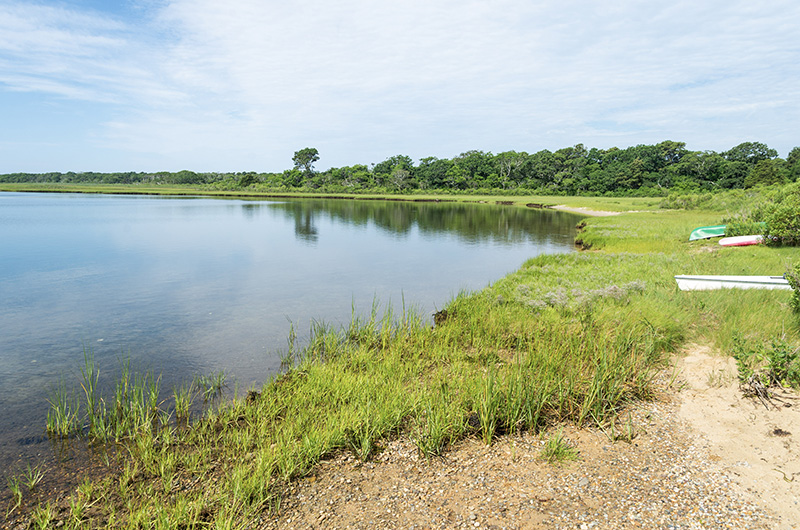
Poucha Pond
“I wrote the letter to provide constructive criticism,” Mr. Kennedy said by phone this week from Provincetown where he now lives. “I love the Trustees, I spent over three decades working for them for them . . . and when I saw the management plan and the tremendous disconnect between the authors of this plan and the community, I knew it was destined for failure.”
His letter has had a ripple effect, among other things sparking an online petition that collected more than 1,100 signatures in a matter of days. Much of the criticism is from those who believe that birds are being protected above the interests of sportsmen.
“There is no trust in the Trustees on this Island,” said Peter Sliwkowski, a Chappy resident, fisherman and tackle shop owner who founded the Facebook group MV Beach Access and started the petition. “Their orientation . . . has evolved into much more of a marketing focus.”
Mr. Sliwkowski said his group has since hired Mr. Kennedy as an independent consultant.
Darci Schofield, the Trustees Islands portfolio director for Martha’s Vineyard and Nantucket, bluntly acknowledged there had been gaps in communication over the management plan, pointing to senior staff turnover and other issues. Ms. Schofield, who previously worked at the nonprofit Trust for Public Land, began work on the Island in March. Mr. Judge, who formerly headed the Appalachian Mountain Club, took over as president in January.

Darci Schofield, portfolio director for the Trustees.

Darci Schofield, portfolio director for the Trustees.
“We could have done a better job [on communications] and we’ll own that,” Ms. Schofield said in an interview last week. Two days later, Mr. Judge announced that the plan would be rescinded, with upcoming meetings to discuss it cancelled.
There have been other pressures.
A couple that owns property adjacent to the Cape Pogue Light filed a lawsuit last year against the Trustees claiming that OSV use is overburdening the ecologically fragile area. The Trustees prevailed at a preliminary injunction hearing this winter, but the case remains pending in the Massachusetts Land Court. Citing the litigation, Ms. Schofield declined to provide any specifics around OSV sticker sales or visitor numbers at the Chappaquiddick properties. She also declined to comment on revenues from the Chappaquiddick properties.
“We are a private organization,” she said.
Meanwhile, she confirmed there had been vandalism this summer around shorebird nesting areas, and said young beach rangers had been confronted by angry beach goers. The incidents were all handled by Trustees staff and not reported to the police, Ms. Schofield said.
Mr. Kennedy said beach staff needs to be prepared to explain the rules and the rationale behind them.
“No one should be surprised the staff is being questioned,” he said. “People are being asked, ‘Why are you doing this?’ ... that’s not harassment, that’s part of the job.”
But Mr. Mason expressed consternation at the reports.
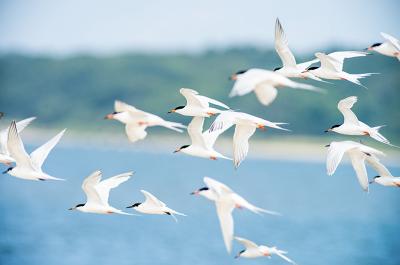
Terns at Wasque
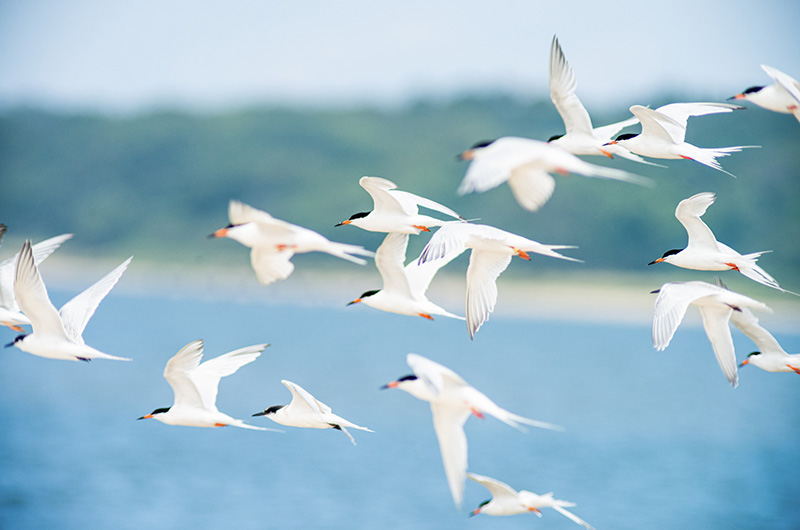
Terns at Wasque
“One of the things that does concern me is the intensity and vitriol of the conversations [and] the impact on staff and rangers,” he said. “It seems inappropriate and unfair for people who are passionate about their work and trying to protect the land.” He concluded:
“Part of what we want to achieve is lessening the heat of the conversation and making sure the community understands it [the management plan] is a draft. I think sometimes the Trustees don’t get credit for listening and local engagement.”
On Friday morning Ms. Schofield deflated the tires on a white truck emblazoned with the Trustees logo and drove across the Dike Bridge on Chappaquiddick, a photographer and reporter in tow. The day was hot and windless. The Leland Beach oversand vehicle trail had reopened that morning after a nearly summer-long closure due to nesting plovers. The truck crawled slowly through deep sand, turning south along Poucha Pond. An osprey looked on from a solitary perch on an old piling in the pond.
The 100-acre stretch of beach that lies between the Dike Bridge and Wasque was acquired by the state in 1993 in an eminent domain proceeding that paid $1 million to the Leland family, which had owned the beach since the early 1900s. The state contracts with the Trustees to manage the beach, with a primary purpose of providing public access for fishing.
Farther south is Wasque Point, where the currents of Muskeget Channel collide with currents in the Atlantic, creating a powerful rip tide and making it a world-renowned spot for saltwater fishing. On Friday a handful of fishermen lined the beach, and as if on cue, one landed a good-sized bluefish just as the Trustees truck pulled into sight.
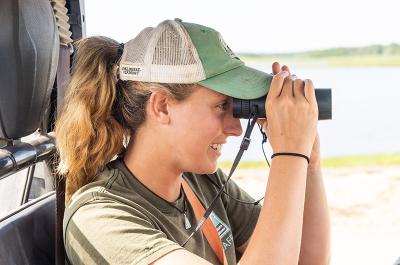
Trustees ranger Maggie Wertheimer at the Dike Bridge.
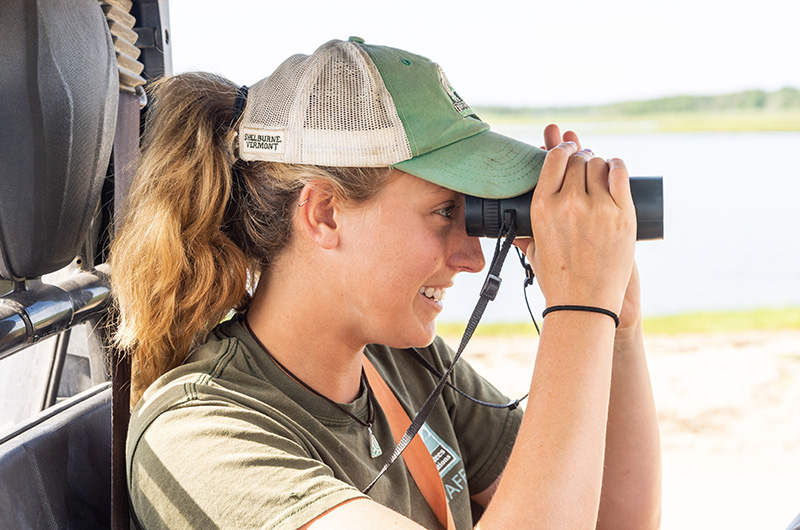
Trustees ranger Maggie Wertheimer at the Dike Bridge.
Rimmed by a broad expanse of rare heathlands, Wasque Reservation was saved from development in 1967 by a group of Islanders who raised $208,000 to buy the 200 acres and give it to the
Trustees. Like all the Island beaches, Wasque has a rich human and geological history dating back thousands of years. A spine of rocks running into the sea near the point is a vestige of the receding glacier that formed Martha’s Vineyard more than 20,000 years ago.
The OSV track ends before Wasque Point due to a steep dropoff, so Ms. Schofield turned around and headed back toward the Dike Bridge. North of the bridge lies Cape Pogue Wildlife Refuge. Comprising some 500 acres of dune and marshland, the property began as a gift of beach to the Trustees in 1959 from the late Oliver Filley and Charles Bird, Chappaquiddick summer residents. The Trustees was founded in 1891 by Charles Eliot, a late 19th century conservationist. (Originally called the Trustees of Public Reservations, the name was shortened in 1959.)
“It’s another world,” Ms. Schofield said, speaking about the wild, windswept Cape Pogue refuge with its twisted cedars, historic lighthouse, shellfish-rich saltwater coves and vast marshy areas.
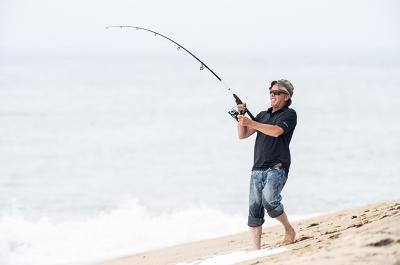
Bluefish at Wasque.
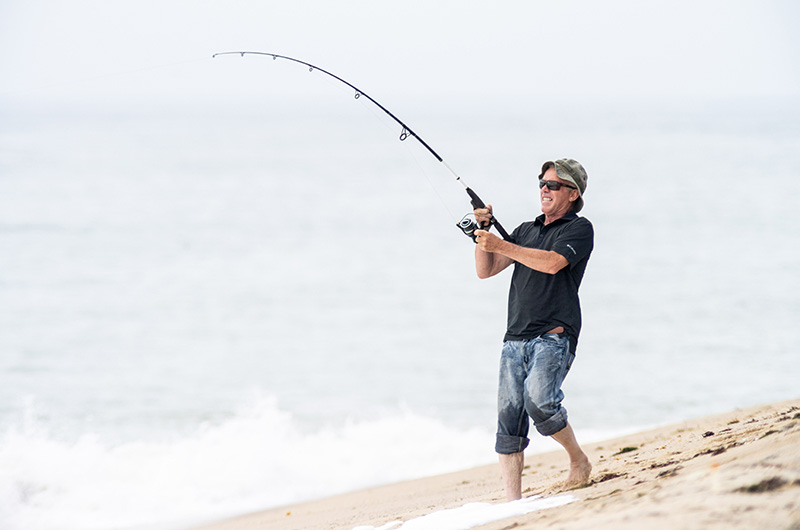
Bluefish at Wasque.
Tours of the lighthouse were suspended during Covid and have not yet resumed, and the refuge has been closed to oversand vehicles since early June to protect nesting birds.
After recrossing the Dike, Ms. Schofield inflated the tires and took the paved road to the Wasque parking lot, where it was a short walk to the tip of Katama Bay. Half a mile or so down the beach, hundreds of least terns gathered around nests, alternately swooping and settling. Beyond the nests, a neat line of parked OSVs was visible in the distance at Norton Point Beach, near the Edgartown end of Katama Bay.
Owned by Dukes County and managed by the Trustees since 2006, Norton Point is a highly dynamic, roughly two-mile barrier beach that protects the bay and Edgartown harbor. The beach is subject to overwash, breaching and extreme erosion, especially during storms. The last breach occurred in 2007 and took eight years to close, migrating slowly eastward until it reached Wasque. Old maps document the historical nature of the breaches and their effect on a shoreline that is constantly changing.
Last year the Trustees collaborated with the town, the county and the state in an ambitious dune restoration project at Norton Point. The coastal resiliency project is an environmental bulkwark against the next major storm and a vivid illustration of the never-ending battles humans wage against the encroaching sea — battles that are almost certain to intensify in the coming years.
With its easy access point near South Beach, Norton Point is extremely popular among recreational beach-goers, creating conflicts when plovers nest in the jeep track, as happened this summer.
As a result, this year the Trustees began a first-of-its kind management protocol, where a ranger individually escorts oversand vehicles onto a designated area on the beach in the mornings, Friday through Sunday. In mid-afternoon, the OSVs are escorted back again.
The new protocol is staff-intensive, Ms. Schofield said, but it falls within state guidelines for protecting the birds and allows recreational vehicle users to enjoy the beach.
A wait at Dike Bridge.
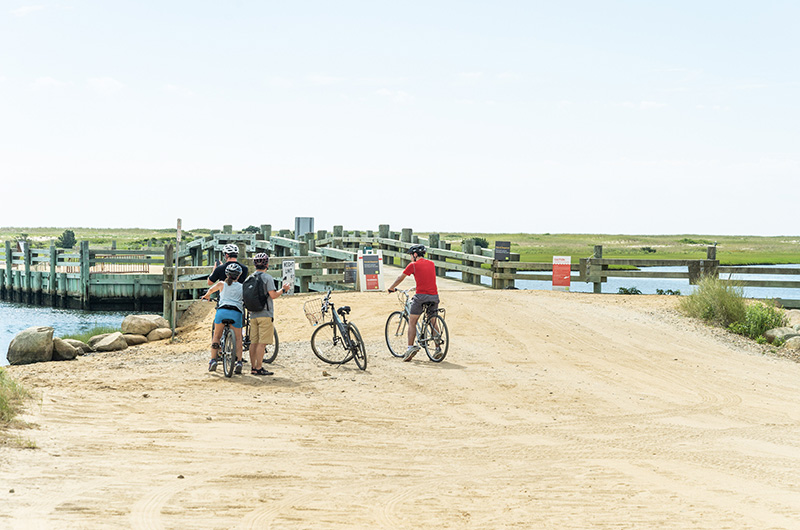
A wait at Dike Bridge.
The program has earned praise, even from vocal critics like Mr. Sliwkowski.
“What they did at Norton was heroic,” he said. “That was not an easy task.”
Through the years the Trustees have prepared numerous special reports and management plans for Cape Pogue and Wasque. Gazette archives contain copies of management plans from 1990 and 2004, along with stacks of other historical and ecological reports. Common themes run throughout the hundreds of pages that still hold true today:
• The need to manage and restrict OSV use;
• Pressures on Chappaquiddick, a small island accessible only by a three-car ferry and over sand via Norton Point Beach;
• The constant quest to find balance between increasing recreational use and protection of natural resources.
Mr. Kennedy, who participated in past management plans for the Trustees and was involved in the early stages of the 49-page draft plan now on hold, praised Mr. Judge for having the courage to take a step back.
“The sea level rise information is invaluable . . . how they have interpreted the historical data, that’s where they have fallen flat,” he said, adding: “Any management plan will only have a useful life of five to 10 years. With this plan, it seemed to me they were looking for a permanent solution.”
He said the Trustees face a complicated dilemma.
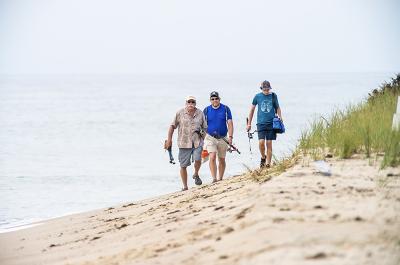
Fishermen round Wasque Point.
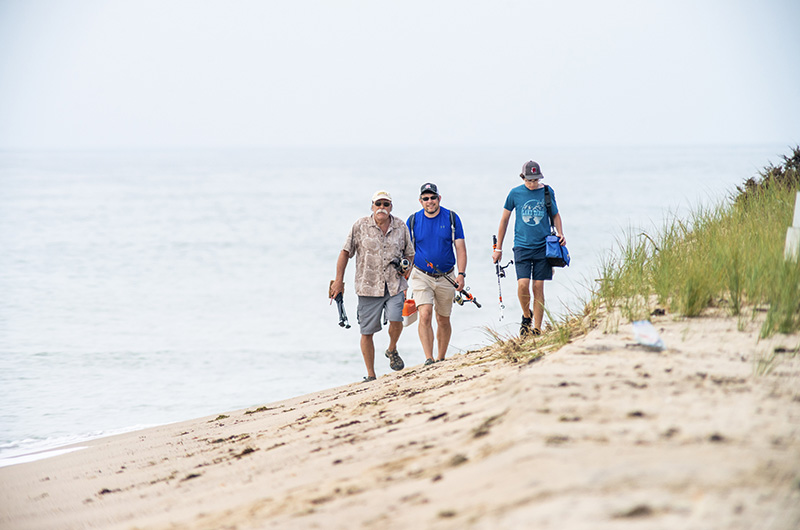
Fishermen round Wasque Point.
“Managing barrier beaches in Massachusetts is not an easy thing to do,” Mr. Kennedy said. “You can’t take people and just stick them in this position and say ‘manage’. The Trustees have to figure this out . . . or else they are going to get slammed because of this management plan and this corporate mentality.”
Mr. Judge was more sanguine.
“We’ve been managing beaches on the Vineyard for 60 years, and have an incredible group and have worked with hundreds of thousands of folks,” he said. “We’ve heard the criticism that members of the community expressed, that their voice wasn’t heard. We’re going to pull this plan and reach out to key stakeholders.
“It’s going to be good for us as an organization that holds eight properties and thousands of acres of conservation land on the Vineyard.
“First and foremost we are committed to protecting this dynamic and beautiful space.”
Comments
Communication is key.
Kenny Oak BluffsCommunication is key. Islanders know when they're being strung along or excluded from a process. We're not the Appalachian Mountain Club. I'm hopeful Mr. Judge can shift gears in this new role and work with those of us who don't have fancy hiking boots but still want to enjoy Chappy.
Massachusetts is one of the
Rebekah TisburyMassachusetts is one of the few states that allow private beaches. For residents of the vineyard that don’t live in elite sections of the island that have town exclusive beaches these beaches are invaluable for recreational use, especially for those that have mobility issues. The security of two plover nests on Norton point can be managed by an intern or two as the plovers personal security guards. Interns are free or can be hired on a stipend. As our access to beaches dwindled do not take the few beaches we have for 8 weeks away.
"Citing the litigation, Ms.
Peter J Edgartown"Citing the litigation, Ms. Schofield declined to provide any specifics around OSV sticker sales or visitor numbers at the Chappaquiddick properties. She also declined to comment on revenues from the Chappaquiddick properties. We are a private organization,” she said.
A private organization perhaps, but they are managing managing state and County owned lands that they did not pay to get control of...and Ms. Schofield believes she does not need to answer any questions. And that illustrates the problem with the current Trustees' management: a sense of entitlement, "we know better," and we don't need to explain.
An important question is still out there, one that Ms. Schofield now say she will in no way help answer: how much revenue and fund raising does the Trustees harvest from our island, and how much of that money stays on the island vs. heading back to Boston to fund off-island projects?
We've been coming to Chappy
Gayle Turowski Poughkeepsie, NYWe've been coming to Chappy for OSV for many, many years (usually in beginning June). We have always respected the rules of the Preserve. After Covid, the amount of people coming to Chappy was overwhelming. So much so, that we didn't want to go over due to the tremendous overcrowding. I hope that after all this, the preserve will allow OSV's (especially Cape Poque) but limit, each day, with reservations on the Chappy ferry, to prevent this overcrowding. The deliberate ignorant actions of many people is ruining it for all the others that do respect the rules. There has to be a control. Or even the ferry operators can limit (for the day) how many cars are going over. But I think having reservations is the key. I'd rather have a reservation, than not go at all. We love Cape Poque. We love the beach there. It is heart-wrenching to think that it won't be the same anymore. People do not obey rules anymore and that has to be dealt with once and for all but not to the detriment of the people who do. Thank you for listening to a "June/Sept" visitor for 40 years.
I am perplexed and annoyed by
DB EdgartownI am perplexed and annoyed by the ranger vehicles that are ranging over the South Beach dodging people on the beach. I don't understand their purpose and they frequently stop abruptly as a child runs to the water. Their noise and frequency is very annoying.
I agree completely. What
RB EastvilleI agree completely. What exactly is their purpose? I'm not sure when they first appeared, but the beach functioned just fine without them. At the right fork, there is a lane coned out, which I assume is to give those quads access. This limits space at the crowded beach even more than it already is. Get rid of them.
I agree completely. What
RB EastvilleI agree completely. What exactly is their purpose? I'm not sure when they first appeared, but the beach functioned just fine without them. At the right fork, there is a lane coned out, which I assume is to give those quads access. This limits space at the crowded beach even more than it already is. Get rid of them.
Trustees deserves all of this
JaredN Boston/ChappyTrustees deserves all of this backlash. They went about this the wrong way. They drafted this plan without any public input, assuming that they could then tinker around the edges after stakeholders saw the draft. This process marginalizes the stakeholders and makes them understandably angry that their input was not considered while creating the plan.
During the 2010s, Massachusetts Department of Conservation & Recreation (DCR) created two new parks from brownfields sites. DCR did not draft plan and then bring that plan to the stakeholders (the town leadership, neighborhood groups, environmental groups, etc.) and say "here is our plan". Instead, DCR held numerous public meetings to get stakeholder input BEFORE drafting their plan. That way all of the stakeholders were able to have their say, and to know that their input was considered -- they may not have gotten everything that they wanted, but they knew that they were heard.
That is the fundamental disconnect. Trustees should have engaged the stakeholders before drafting the plan. What Trustees needs to do now is to start from a clean state. Engage all of the stakeholders without preconditions about what the final result will be.
I was struck by this sentence
Richard OBI was struck by this sentence: “Much of the criticism is from those who believe that birds are being protected above the interests of sportsmen.” Yes, the lives and continued presence of animal life is of far greater importance than the hobbies of a small minority of so-called “sportsmen.” Kill birds so you can have bluefish for dinner? Many years ago I owned a Jeep and rode on the Trustees beaches. Now I own an all-electric car. Someone should analyze the excess pollution and global warming of the sort of vehicles used by “sportsmen.”
Nobody is saying kill the
Alex EDGARTOWNNobody is saying kill the birds. Fishermen/Sportsmen on the island have been losing access to beaches all over the island. So when there is a plan that proposes to shut down trails permanently that historically islanders and visitors have had access to, people need to speak up. After birds fledge all trails should be open.
If you ban OSV use you lose
Paul E Rudy Lancaster, PAIf you ban OSV use you lose my family as yearly visitors who enjoy fishing. Along with it you lose the several thousand dollars we spend for housing, groceries, gas, fishing tackle and ferry fees.
I understand the need to protect the environment, but think about the small businesses you will be hurting, maybe even putting out of business.
Think about the small
DeborahThink about the small businesses that will be hurt and maybe put out of business if the environment is not put first. Without the spectacular environment of the Vineyard who would want to come here? It's not just about protecting the environment it's about preserving it for many generations to come. I've been here for over 50 years and the changes are disconcerting to say the least. I liked it better then. There is just too much of everything now...but not enough ways to limit growth in a fair and equitable manner. Just my 2 cents.
Norton Point is owned by
Owen EdgartownNorton Point is owned by Dukes County. TTOR manages the beach and gives 20% of the Norton Beach sticker permit fees collected to Dukes County. We need to leverage the”Freedom of Information Act” and get the amount of money Dukes County was paid by TTOR. That number will shed light on the amount money TTOR is generating off North Point. The lack of transparency and comfort they find in telling the community (via local newspaper) that they are a private organization demonstrates the disconnect.
Great point
Amy EdgartownGreat point
Sixty five years I've spent
Ted Dutchess and Dukes countiesSixty five years I've spent enjoying the Vineyard (part time) for the love of its natural beauty, sense of community, and careful planning of all that makes it a special place. This has included the sustenance its coastal fisheries provide to me and my MVY family. Most of what I have taken was from the shore and much of that has been shore fishing on Trustees' lands. Endangered species are designated for a purpose, generally because humans have led to their impending demise. But I will never be party to any activity that could end a species forever. I respect Mr. Sliwkowski when he says that “There is no trust in the Trustees on this Island” because trust has to be earned to be respected. Let's never forget however, that the Trustees are "entrusted" with conservation of the Island's flora and fauna, not with protection of monster SUV's that seek to ply its trails. We need to find common ground to move ahead, I think everyone can agree on that. But wiping out Piping plovers should be viewed as a slippery slope that has no end if allowed to continue and, in my opinion, has no place on lands and waters that have been dedicated forever for conservation purposes.
Excellent article,
CA EdgartownExcellent article,
Loving it is preserving it. Science can tell me when I can go out and enjoy it, maybe I will.
To clarify, TTOR did not
Jane V EdgartownTo clarify, TTOR did not implement the first of its kind management to escort vehicles past yet to fledge chicks. TTOR obtained a Conservation Management Permit in 2020 and just chose to take the option given to them by the Mass Division of Fisheries and Wildlife for this season. Many beaches in the State have similar plans and permits and have been using the option for some time now.
Add new comment