

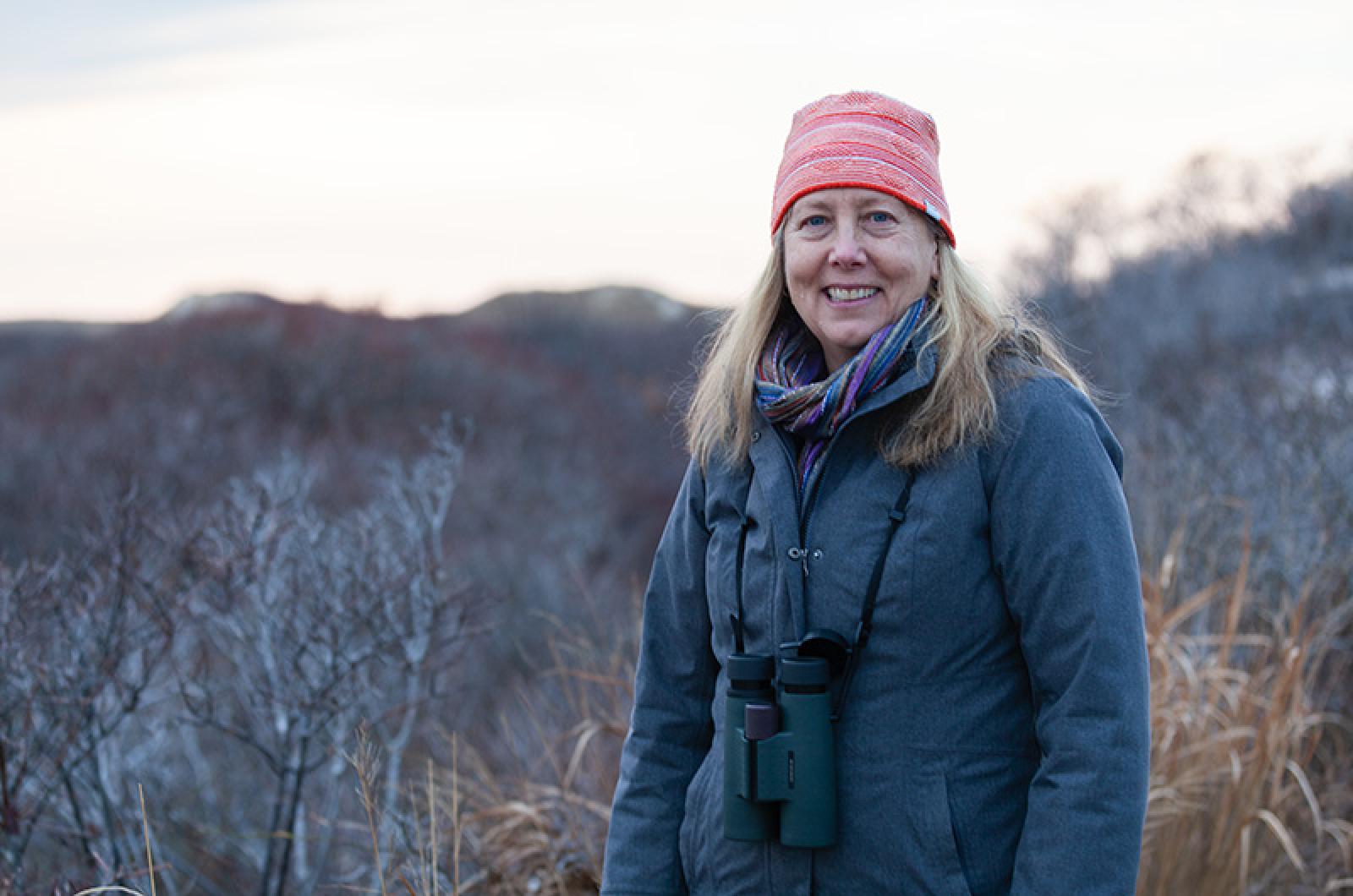
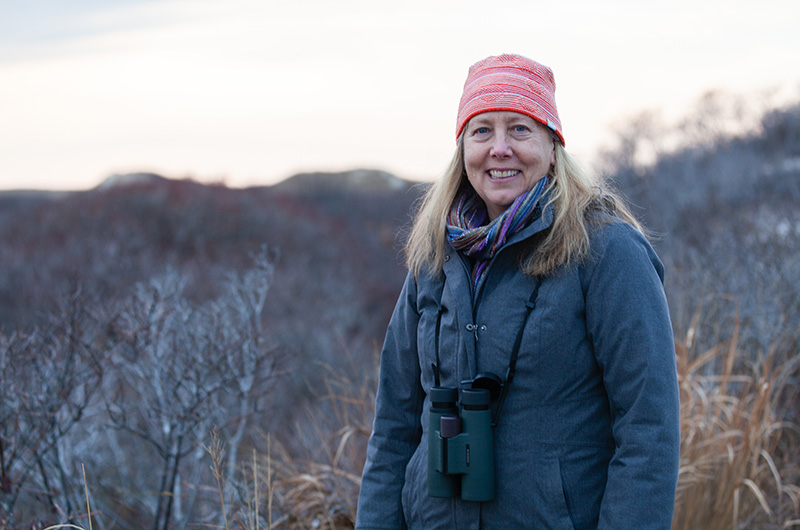
Luanne Johnson’s to-do list runs to the wild side: study otter scat, track owls by moonlight. Last week the founder, director and biologist for BiodiversityWorks was in Aquinnah.
Ordinarily a to-do list runs more to the mundane: take out the garbage, fix the leaky faucet, oil that squeaky hinge. Luanne Johnson’s to-do list is a bit more wild: study otter scat, track owls by moonlight, ponder how to protect the piping plover nesting areas.
Last week she was in Aquinnah to check off two more boxes on her list: scout potential black racer snake road crossings and watch the woodcock mating dance.
As founder, director and wildlife biologist for BiodiversityWorks, Ms. Johnson had been hearing reports for a few years of black racer snakes getting run over each fall on Moshup Trail near Philbin Beach.
“It’s the top predator in this Moshup system,” she says, describing the snake and its importance in the Vineyard ecosystem. “It can grow to five feet. You could mistake it for a garden hose.”
The black racer is non-venomous, like all Island snakes, but its size puts it in a class by itself. Ms. Johnson has tracked them via radio transmitters on Long Point, where they also get run over.
“That’s the leading cause of death, that and loss of habitat,” she says.
In Aquinnah she is on the hunt for potential sites to create a snake crosswalk that could be dug beneath the road. The project is just an idea at the moment; she would need numerous participants to sign on, including landowners and the town engaged. But dreaming up innovative ways to save animals is essentially her life’s work.
Ms. Johnson has devoted her life to the majesty of nature.
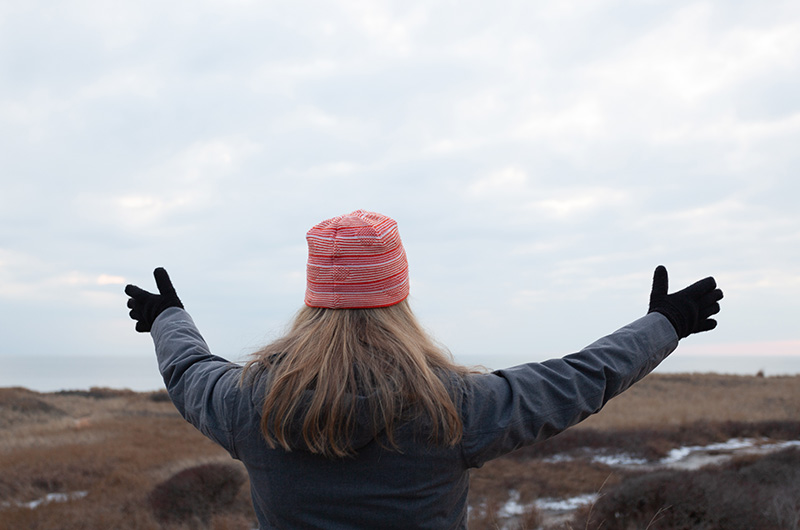
Ms. Johnson has devoted her life to the majesty of nature.
“My world is non-game wildlife,” she explains. In other words, she speaks for the animals that have no advocates. Even game animals, the ones people hunt, have more backers because to hunt an animal is to need the animal, she says.
In the halls of academia Ms. Johnson has a PhD in skunks. On the Vineyard she holds the equivalent of a black belt in black racer snakes, northern long-eared bats, piping plovers, otters, turtles and nearly everything else that roams the woods and shores. When she talks about animals, people usually listen. But sometimes she feels like she is speaking a different language. Especially when the talk turns to habitat fragmentation.
It’s a topic of intense interest for her.
“Everything about the way we develop the Island leaves chunks of fragmented habitat,” she says. “It’s like the integrity of a wall. Too many cracks and it falls down.”
And it’s not just housing and construction that cause problems for wildlife, she says. Take hiking trails, for example.
“We put a new trail in and everyone says great, but now that trail may run through a spotted turtle wetlands. Predators like raccoons and skunks like a good trail too, it’s the path of least resistance. We have to remember we are not the only ones who are going to use that trail. Birds like an Eastern towee are nesting in an impenetrable area and then trails are cut. Now every feral cat can find them. Raptors too. It’s the unintentional consequences of what we do.”
She continues: “That’s why I made such a stink about the state forest trails last year. I spend a lot of time thinking about this, about where we can save wilderness around here, because there isn’t much left.”
She pauses and concludes: “I guess I am the Debbie Downer of trails.”

Looking out for black racer snakes, woodcocks, skunks, turtles, otters — anything to crawls, flys, slithers and swims.
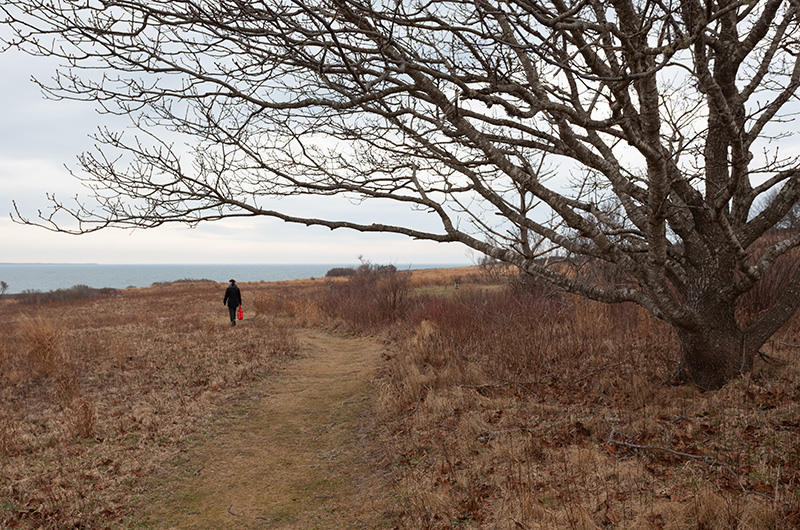
Looking out for black racer snakes, woodcocks, skunks, turtles, otters — anything to crawls, flys, slithers and swims.
Ms. Johnson grew up in northern Indiana, and as a young girl was obsessed with animals. Her parents weren’t big nature people but they let their daughter follow her interests, wandering the creeks and woods all day, watching Mutual of Omaha’s Wild Kingdom, and choosing Jane Goodall and Dian Fossey as role models.
At Butler College she studied zoology, and after graduation she went to work at the Indianapolis zoo. But she soon realized she wanted to study animals in the wild, in their own habitats. She applied for a Dian Fossey internship, ready to follow her idol into the field, but the organization looked at her zoo-keeper resume and hesitated.
“They were like, well, you haven’t really lived in out in the wilderness and so we’re a little concerned about that. And they gave it to somebody else,” she recalls.
Rather than letting the decision get her down she took the advice and ran with it, heading straight to Alaska with her boyfriend to lead tours in the summer and spend the winter caretaking a cabin so deep in the bush there were no roads to it, only a plane dropping her off and a radio phone to connect to the outside world.
“I loved it,” she says. “We lived in the moment and outside there were wolves howling.”
Eventually her boyfriend got a job doing bear work with the Maine Department of Fish and Game and she came East too. A job search led her to Tom Chase, who at the time was working for the Trustees of Reservations on the Vineyard and needed help with a piping plover survey. Ms. Johnson arrived on Easter Sunday, 1992.
“I met Tom at the ferry and I followed him out to across the Chappy ferry to where I was going to live at Mytoi above a garage. It was nighttime and Tom said, I’ll be back in the morning to take you out and show you around the property. And I remember waking up and I walked down the Dike Road to the old Dike Bridge before it was restored. And I was standing there and a river otter was drifting under the bridge, and riding the current. It was sunrise and it was beautiful. And I was like, man, do I like this place.”
Since then, Ms. Johnson has devoted nearly 30 years to piping plover research and protection. She left the Island for a few years to live in Hawaii and study the endangered palila bird, but returned and wrote her PhD thesis for Antioch University on the behavioral ecology of the Vineyard’s coastal striped skunks.
The woodcock dance floor in Aquinnah.
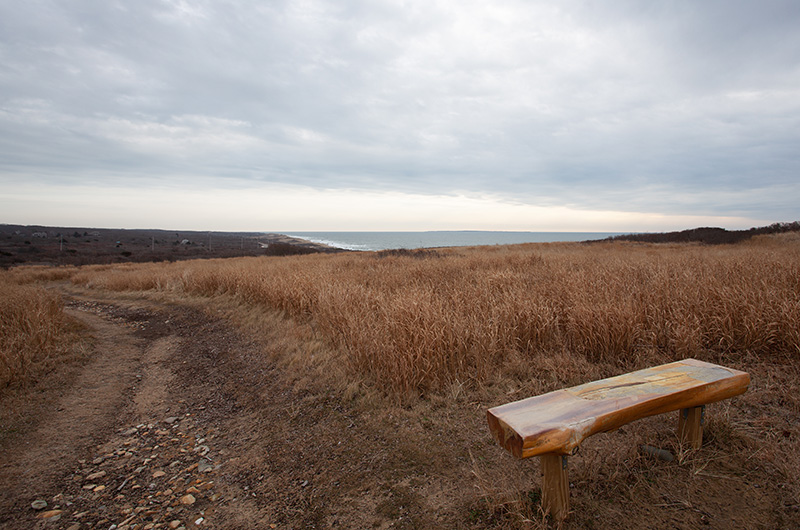
The woodcock dance floor in Aquinnah.
“Yeah, I’m the skunk lady,” she admits.
As for the perennial question of who brought skunks to the Island, she smiles. “They are indigenous,” she says. “There’s plenty of historical record that they were here.”
Records show skunks were killed off sometime in the mid 20th century, according to Ms. Johnson. “Probably during the Depression or some economic downturn. People used to sell them in the fur trade and they would make collars and hats out of them.”
Skunks returned to the Island around the 1960s, most likely when skunk pets were all the rage, she says, and were released into the wild.
Her time studying skunks sowed the seeds for starting her own organization, one devoted to studying and protecting Vineyard non-game wildlife.
“I ended up in a lot of people’s backyards,” she says. “And I talked to a lot of people and realized that people really don’t know anything about wildlife.”
She teamed up with Liz Baldwin (now Liz Olsen), another wildlife biologist on the Island and in 2011 they founded BiodiversityWorks. The organization’s mission is to focus on Island wildlife, monitoring, researching and advocating for those that crawl, slither, fly and flit about the Island, often unseen. Today the nonprofit organization includes five employees and operates out of a building adjacent to the Wakeman Center off Lambert’s Cove Road that was purchased in 2020.
The work is wide-ranging, but Ms. Johnson remains in the field as much as she can. Back in Aquinnah, day has turned to evening and she shifts her attention from black racer crossings to woodcocks. Mating season will really get going closer to spring but woodcocks often push the boundaries, she says.
“Waterfowl are always ready to go. They are notorious and randy when it gets dark.”
She walks down Moshup Trail and turns onto a small trail that hugs the edge of woodlands on one side and a wide expanse of underbrush on the other. She stops and stays silent for a bit, waiting to hear the familiar peet, peet of woodcocks calling to each other. At first there is nothing, just the rumble of waves hitting the shoreline in the near distance. But then a woodcock calls out, and a flash of wings can be seen in the dim dark as a solitary bird checks out the dance floor. But tonight there are no partners, other than Ms. Johnson, her binoculars at the ready.
“Being a wildlife biologist, part of my job is to just sit and watch nature
, to witness it,” she says after the disappointed dancer disappears. “When nature goes back to doing what it was doing before you got there, you get into nature’s baseline and get to see what it looks like for say a bird household, trading off domestic duties. It’s been my privilege to witness this and know what nature’s baseline feels like.”
“And so I ask myself how I can be a lamplight, illuminating a problem and not just screaming,” she continues. “Can’t we just have some wild areas that we don’t go to, where nature can be nature.”
Comments
Important work. We’re lucky
Art D. Vineyard HavenImportant work. We’re lucky to have her and her organization.
Skunks are cute but there are
Margot Lane MenemshaSkunks are cute but there are a SEA of them…just wander around the tabernacle any evening. Aren’t they eggnappers of ground nesters?
You are correct, Margot, that
Luanne Johnson Vineyard HavenYou are correct, Margot, that skunks are abundant here- especially in areas where they get a lot of food from people (food on sidewalks, from garbage, open compost, seed under feeders, grubs in turf lawn, etc..). They are predators of eggs/nests and do cause problems, which was the focus on my PhD work. The fact that they are abundant and problematic, however, has nothing to do with whether or not they are native. Mortality for striped skunks anywhere they occur is usually 30% - 40% disease (distemper, rabies, parasites), 30-40% human caused (vehicle mortality, lethal removal as nuisance animals), and a small amount of predation. Limiting food and shelter is one way to curb their populations here.
We owe gratitude and
Jody PrincetonWe owe gratitude and appreciation to Luanne, Gus Ben David and many others who keep the Vineyard wildlife alive.
Wonderful article! Such
Barbara Parker EdgartownWonderful article! Such important work for the wildlife, as well as humans, to remind us to slow down in order to listen and learn. Thank-you!
Luanne is in a league all her
Prudy Burt West TisburyLuanne is in a league all her own, and of her own making. I so admire her commitment to wild things and the necessity of preserving wilderness where it remains. That she and Liz created BiodiversityWorks from the ground up is a testament to their dedication. Bravo!
We are so lucky to have
Laurie David ChilmarkWe are so lucky to have Luanne using her expertise and her passion for the good of the Vineyard and all it’s creatures. My favorite quote in this article is “ Debbie Downer of trails”. Thank goodness Luanne!!!
That cracked me up too. If
Eva Faber West TisburyThat cracked me up too. If you know Luanne you know how accurate it is :)
For those of us committed to
Nancy Rose Steinbock EdgartownFor those of us committed to turning our yards/gardens into sanctuaries, the work of Luanne and Liz has been essential! As a admirer myself, I have taught my dogs to turn away at the call, 'Skunk!', so that we can live in harmony as they feed at night under our numerous bird-feeders. It is such a reward for us on-island, to have these women who drive our understanding of our environment and how we can participate in being partners and protectors. Thank you!
Luanne is, quite simply, an
Carlene Gatting TisburyLuanne is, quite simply, an Island treasure. She has helped me and many others to appreciate all that crawls, slither and flies about our island.
Having worked with Luanne and
Sammi Chaves EdgartownHaving worked with Luanne and BiodiversityWorks… I️ know firsthand how much this organization is positively impacting the wildlife of Martha’s Vineyard. I️ highly recommend you attend one of Luanne’s wildlife lectures in the future when you.can!
Luanne's passion for wildlife
Eva Faber West TisburyLuanne's passion for wildlife is certainly unrivaled by most. Perhaps no one speaks the language as well as she does but she has helped so many of us understand it better. I will never forget when Luanne taught me to recognize one of my first bird calls. Knowing the Eastern Towhee's easy to learn tune, "drink your tea," suddenly made the familiar forest come alive anew. There are simple ways we can all tune in more. The Island is very lucky to have Luanne's eyes and ears for what remains unnoticed by the rest of us – she is a great translator.
Add new comment