

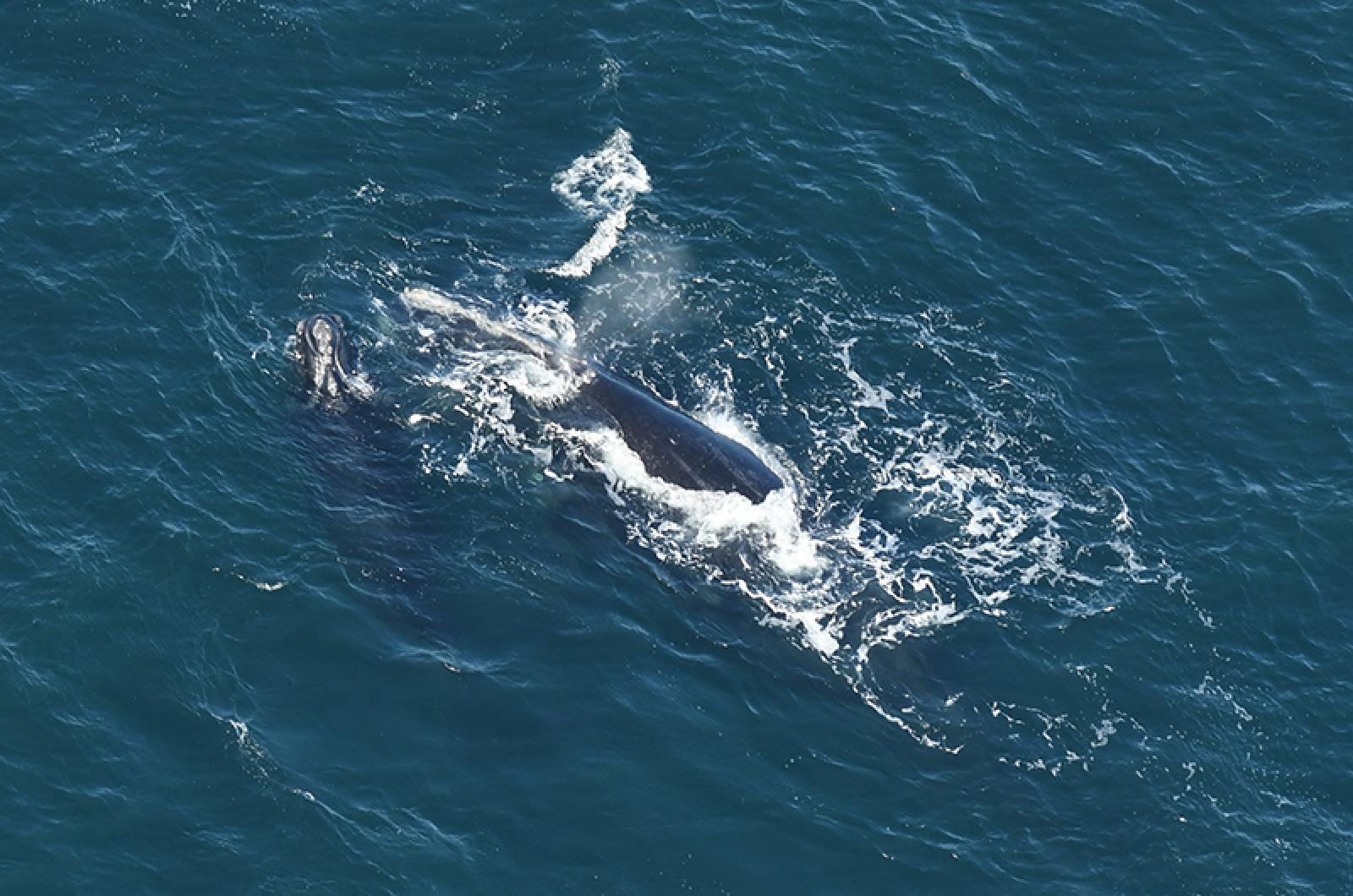
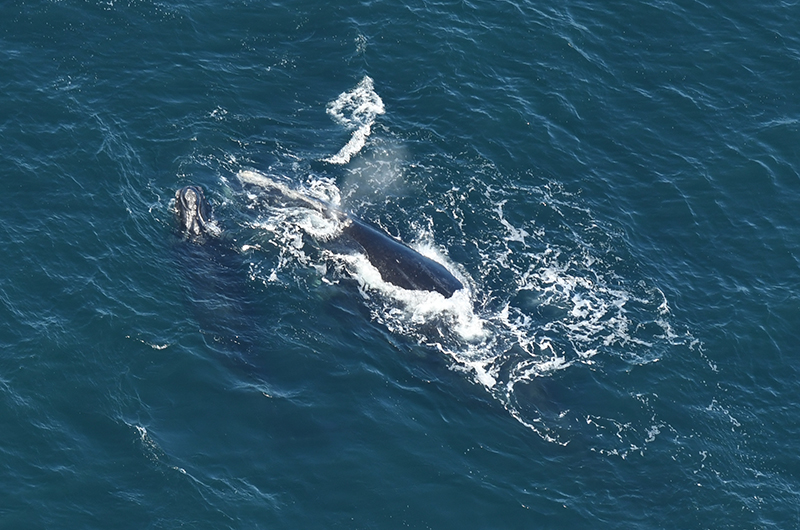
The critically endangered North Atlantic right whale registered another grim milestone this week, with a new estimate showing further declines in its population. A report Monday said a census found just 336 whales left.
The critically endangered North Atlantic right whale registered another grim milestone this week, with a new estimate showing further declines in its population.
The North Atlantic Right Whale Consortium said in a news release Monday that a census for 2020 found just 336 remaining members of the species, an eight per cent decrease from 2019 when the population was estimated at 366. The new figure marks the lowest number in nearly 20 years.
The discouraging news comes as the consortium prepares to hold its annual meeting online Tuesday and Wednesday. The organization is made up of more than 200 individuals and three dozen groups, including the New England Aquarium, Woods Hole Oceanographic Institution and the New Bedford Whaling Museum, pledged to researching and applying science-based conservation measures to save the right whale.
Heather Pettis, associate scientist in the New England Aquarium’s Anderson Cabot Center for Ocean Life and executive administrator of the consortium, said in the release that researchers were disheartened, but not surprised.
“The right whale research and conservation communities know that while widespread efforts to change the trajectory of the species have been undertaken, they have not been enough,” she said.
Research by members of the consortium has confirmed that vessel strikes and entanglements in fixed fishing gear have posed the biggest threat to the species’ survival.
A study published earlier this year by scientists at the New England Aquarium found that 83 per cent of identified right whales have been entangled one or more times in fishing gear.
“There is no question that human activities are driving this species toward extinction. There is also no question that North Atlantic right whales are an incredibly resilient species,” Dr. Scott Kraus, a wildlife biologist who chairs the consortium, said in the release.
“No one engaged in right whale work believes that the species cannot recover from this. They absolutely can, if we stop killing them and allow them to allocate energy to finding food, mates, and habitats that aren’t marred with deadly obstacles.”
Comments
Is saving these whales at
B NYIs saving these whales at odds with the area slated for Vineyard Wind? If so, what are the plans, if any, to keep whales safe?
Did you miss the part of the
Tim Johnson Vineyard HavenDid you miss the part of the article where it states that 83 percent
have been entangled in fishing gear?
Did you read the report itself?
Please share with the community where it says that whales regularly
run into fixed objects like rocks, sea walls, bridge foundations?
Should we ban bridges?
It's at odds with fishing
Carol formerly ChilmarkIt's at odds with fishing gear, especially lobster gear, in which they get tangled when they feed, as well as being struck by cargo ships going too fast (& other big ships). I wish we would focus on what is actually killing them - it's right there in this and every article about right whales. We need to force the lobstering industry to go to ropeless gear NOW and subsidize that change 100% with our tax dollars. We also need to slooow down cargo ships in the shipping lanes where whales are - and use the Coast Guard to enforce those regulations. That's how we save them. Don't twist this to make it about a wind project that isn't even built yet.
Yes, this is a terrible story
Robert Labaree MenemshaYes, this is a terrible story, but it is more than simply a tear-jerker. These days there are stories of extinctions by the thousands, but unless these stories give us more to go on, we are left with a sentimental tug at the heart-strings over the loss of yet another other cute, or gorgeous, or exotic creature. The deeper problem is more than sentimental and aesthetic. When a species goes extinct, its impact on its habitat disappears. Massive creatures like whales are indispensable players in the circle of resources that replenish the sea with nutrients, control the populations of certain species, fertilize the necessary bacterial and nutrient content of the ocean with their wastes, and much more. This is what we need to hear: the loss of a species in a habitat diminishes the survivability of all the species in the habitat, including t the human fisherman whose nets are the cause of so many whale deaths. To allow for a thriving fishing industry, we have to pay attention to the whole system that supports any fish species. Yes, this is a more complicated story to tell, but we need stories about extinction which give us more than this one does.
Vineyard Wind poses no threat
Steve ChilmarkVineyard Wind poses no threat to the whales. As stated in the article, their biggest threat is fishing and lobster lines, followed by large ships that may hit them while they sleep. The "Vineyard Wind is Bad for Whales" idea is due to an astroturf campaign funded by the Koch family (among others) who have opposed offshore farms and wind energy in general.
HAve you noticed the Alliance
Tim Johnson Vineyard HavenHAve you noticed the Alliance to Protect Vineyard Sound is back with
It's misinformation campaign on cable television commercials.
And once again, it is funded through the wonderful oil and gas folks
at Koch Industries.
Exactly. Thank you.
Carol formerly ChilmarkExactly. Thank you.
To say that Vineyard Wind
WBC EdgartownTo say that Vineyard Wind poses no threat to Right Whales is patently false. It's located in the middle of Right Whale winter and early spring habitat and on their migratory route and boat strikes are one of the leading causes of Right Whale fatality. How do you think the people who work on the turbines will get to and from the area? And all the suppy and service runs? What of the construction of the turbines - how do you think all those materials will arrive on the site and be erected? As a result of that project there will be a historically unprecedented amount of boat traffic in that area. Vineyard wind claims to be "committed to instituting a variety of protective measures to keep Right Whales safe while installing and operating Vineyard Wind". And I have zero doubt in my mind that their intentions are pure and good. But it's simple law of averages - more boats is going to mean more potential boat strikes. I am as cognizant as anyone of the need for clean renewables. But let's not kid ourselves and live under the illusion that VW will somehow be zero impact. It won't.
What happened to the idea of
Margot MenemshaWhat happened to the idea of finding lobster traps via sonar or Internet? I seem to recall reading that in the Gazette?
Yes. Ropeless gear: https:/
Carol formerly ChilmarkYes. Ropeless gear: https://ropeless.org/background/
Add new comment