

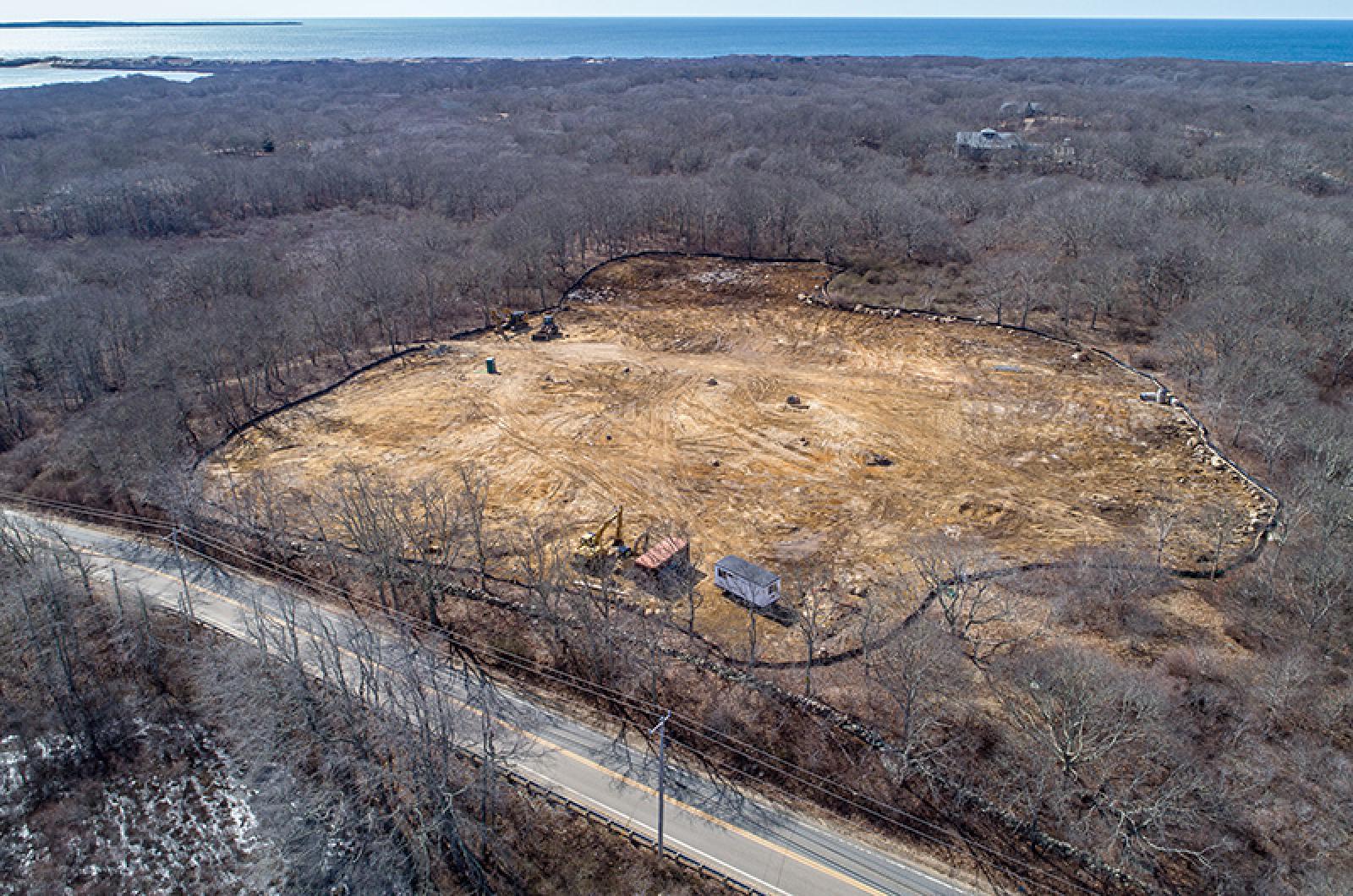
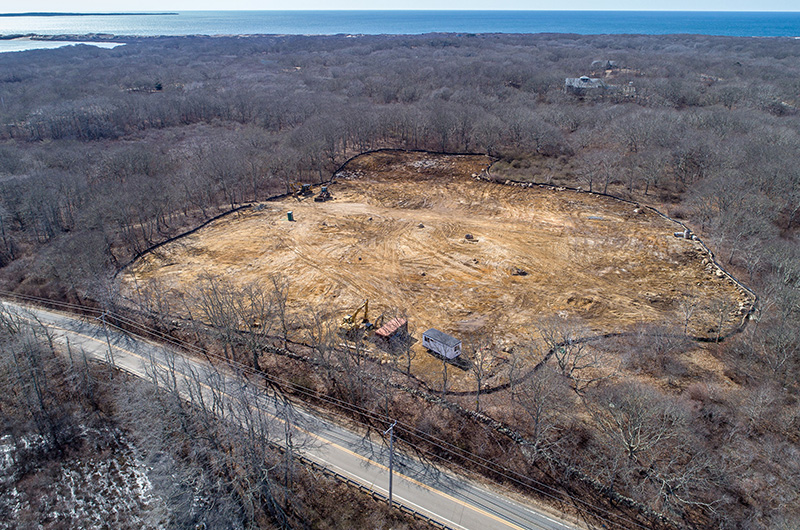
In a pivotal decision, the high court upheld a lower court ruling that requires the Wampanoag tribe to obtain building permits for a planned bingo hall in Aquinnah.
In a pivotal decision, the U.S. First Circuit Court of Appeals has upheld a lower court ruling that requires the Wampanoag tribe to obtain building permits before construction can begin on a planned bingo hall in Aquinnah.
Issued late Thursday, the ruling added another twist to the long-running legal dispute between the town and the tribe over the gaming facility planned for tribal land off State Road.
The 2-0 ruling in favor of the town of Aquinnah was made on largely technical grounds, and came after more than six months of anticipation, the death of one of three judges that heard the case, and years of acrimony in town-tribe relations, as both sides waited for the court to rule on a matter that has left the town bitterly divided.
The author of the 37-page opinion, Judge O. Rogeriee Thompson, said the court took no pleasure in basing its ruling on a procedural issue.
“... Because the tribe did not pursue the permitting issue . . . though it could have, and because this case does not present exceptional circumstances, we have no choice but to find the permitting issue waived,” she wrote.
The opinion was also signed by Judge William J. Kayatta. It noted that Judge Juan Torruella, who died in October, had heard oral arguments in the case, but did not participate in the ruling.
Aquinnah town counsel Ron Rappaport hailed the appellate court’s ruling Thursday evening.
“We are very pleased with this decision, and that the judgment and injunction of the district court has been upheld, ” Mr. Rappaport said.
Reached by phone on Friday, Goodwin attorney William Jay, who argued the case for the town, also praised the decision and said he was not surprised by the court's procedural finding.
"The tribe chose its issues last time, and chose not to appeal those this time, and now was back for a second bite at the apple," Mr. Jay said. "Our lead argument was that you are not allowed to do that — that procedural rules forbid you from going back in a second appeal to raise issues you didn't raise in the first. So, it wasn't at all a surprise that the court very carefully went through all of the applicable law, and explained all of the doctrine, and agreed with us at every step."
The tribe still has the option of appealing the decision to the U.S. Supreme Court.
The decision effectively stops any construction on the facility until the tribe obtains permits from the town of Aquinnah and the Martha’s Vineyard Commission — dealing a blow to tribal leaders who began construction on the site almost two years ago, only to be halted by legal action from the town.
In an assertion of its sovereignty, the tribe has refused to obtain state and local building permits or participate in reviews of the casino development in the Island’s smallest and most remote town. The Martha’s Vineyard Commission denied the project without prejudice back in late 2019 on the basis that it did not have enough information to conduct a fair analysis of its benefits and detriments.
In an email Friday morning, tribal Chairwoman Cheryl Andrews-Maltais did not say explicitly that the tribe planned to appeal the ruling, but remained steadfast about the tribe's right to game.
"We are obviously disappointed in the court’s wrongful decision supporting the town’s continued persecution of the tribe’s rights," Ms. Andrews-Maltais wrote. "However, nothing about this opinion changes the fact that the tribe can conduct gaming on our settlement lands, and the decision further makes clear that neither the town nor the Martha’s Vineyard Commission can use the permitting process to stop the tribe’s gaming facility from opening. We will continue to press forward in asserting our right to conduct tribal gaming as an option for providing for our tribal members."
The case dates back more than three years, when the tribe appealed a complicated ruling in favor of the town by U.S. District Court Judge Dennis Saylor 4th, on the grounds that the Indian Gaming Regulatory Act preempted state law regarding gaming on tribal lands.
While the First Circuit Court of Appeals overturned Judge Saylor’s ruling in favor of the tribe, allowing it to construct the class II gaming facility, the decision did not address the issue of building permits because that had not been raised by the tribe. The appellate court's ruling was upheld when the U.S. Supreme Court declined to hear the case.
Approximately six months later, the tribe announced that it had begun construction on a 10,000 square-foot, sprung structure for electronic games on a tribal site just off State and Black Brook roads in the town.
The town quickly filed an injunction in U. S. District Court on what amounted to little more than a legal loophole. Attorneys asked Judge Saylor to issue a final judgment that said the tribe could build the casino, but had to abide by state and local building permits because it had only appealed the gaming parts of Judge Saylor’s decision. Judge Saylor agreed, thereby freezing construction.
In its ruling Thursday, the appellate court agreed with Judge Saylor, if a bit reluctantly.
“The district court . . . sliced right through the Gordian knot,” the ruling said. “It drew a bright line between the permitting and gaming issue. We nevertheless cannot say that the district court’s distinction was ‘unreasonable or obviously wrong such that it would permit us to overlook the tribe’s waiver.’”
In an unusual move, Judge Thompson added “closing thoughts” to the end of the opinion, saying that nothing in the decision precluded the tribe from taking legal action if the town acted “in a non-neutral way in order to unduly burden or harass the [T]ribe or to prevent them from opening the casino.”
And she ended the decision by quoting from another precedent-setting ruling concerning the Narragansett tribe:
“The parties have been litigating this dispute since 2013, and ‘we do not mean to encourage the protagonists to litigate ad infinitum. If cool heads and fair-minded thinking prevail,’ we may yet avoid a third round of appeals between these parties.”
The Aquinnah selectmen are expected to discuss the matter at a meeting scheduled for Tuesday.
And at a meeting of the MVC Thursday night, executive director Adam Turner reacted to the court ruling.
“I take no great pleasure in any of this,” Mr. Turner said. “We weren’ t looking to go against their desire to operate a gaming facility, but we wanted to make sure it was done right, and that we protected the Island. And I think after the decision, I feel exactly the same way.”
He also said: “Whatever they want to do, we will be back at the table as soon as they want.”
Comments
Good
Cement Truck Driver Edgartown but used to be VHGood
did they really clear out
mike edgartowndid they really clear out that land for bingo hall? what a shame
What was the Tribe thinking.
Mike SomewhereWhat was the Tribe thinking. No permits required on the loop hole of being a sovereign nation is the farce here. The Tribe needs to show that whatever they are building, if it will be used by the public is safe and adheres to current safety standards, what's the question - that it does not have to? Preposterous. Thank you Judge Thompson for seeing through this for what it actually is., a move from off island tribe members to make a buck. Will all proceeds be kept on island to help the tribal members here, on island where the impact of the facility will felt most or be dispersed at the tribes discretion to whom ever and tribal group they see fit. Ah, yes, The tribe from Oklahoma that is funding the majority of the build. 60-40 if the island tribe is lucky.
This gaming project is ill
Rowland AquinnahThis gaming project is ill-conceived and will never work. There were many others possibilities for the tribe to launch economic activities that would benefit them and promote their history and culture and serve the island.
You almost have to wonder if
Tom MVYou almost have to wonder if this lawsuit saved the casino endeavor? If the tribe had gone ahead and built the casino would they have been able to service their debt given the pandemic? Would the project have abruptly gone into bankruptcy? Of course they could have restructured and come back for a second try.
This is not over... this will
Mike OBThis is not over... this will go on for many years... While the lawyers line there pockets at the taxpayers expense.
Hard for me to see how the
Rich Vineyard HavenHard for me to see how the MVC could allow this project to proceed in light of its impact on Chilmark. Chilmark will get no benefit from having inebriated slots players speeding on its narrow roads after dark.
Maybe the other towns could
Mike SomewhereMaybe the other towns could post police with speed traps. Big bucks.
Rich, the MVC cant stop it.
Paul Oak BluffsRich, the MVC cant stop it. Basically the court said they need permits which shall not be denied. This slows things down a little but at the end of the day, only the lawyers made out.
So all this talk of the
Jenny WTSo all this talk of the Wampanoags being a sovereign nation is just bunk? The Federal courts control the tribe? It would seem the Wampanoags have been sold a bill of goods. Again.
Jenny,
Mike SomewhereJenny,
Who said it is bunk. Not so, it is law.
The Tribe is a recognized Sovereign Nation.
Federal courts do not control the Tribe.
Public safety laws should be followed when providing a public attraction.
It's that simple.
Add new comment