

<p>The Martha’s Vineyard Land Bank Commission voted unanimously Monday not to delay construction of a protective fence at Trade Wind Fields Preserve.</p>
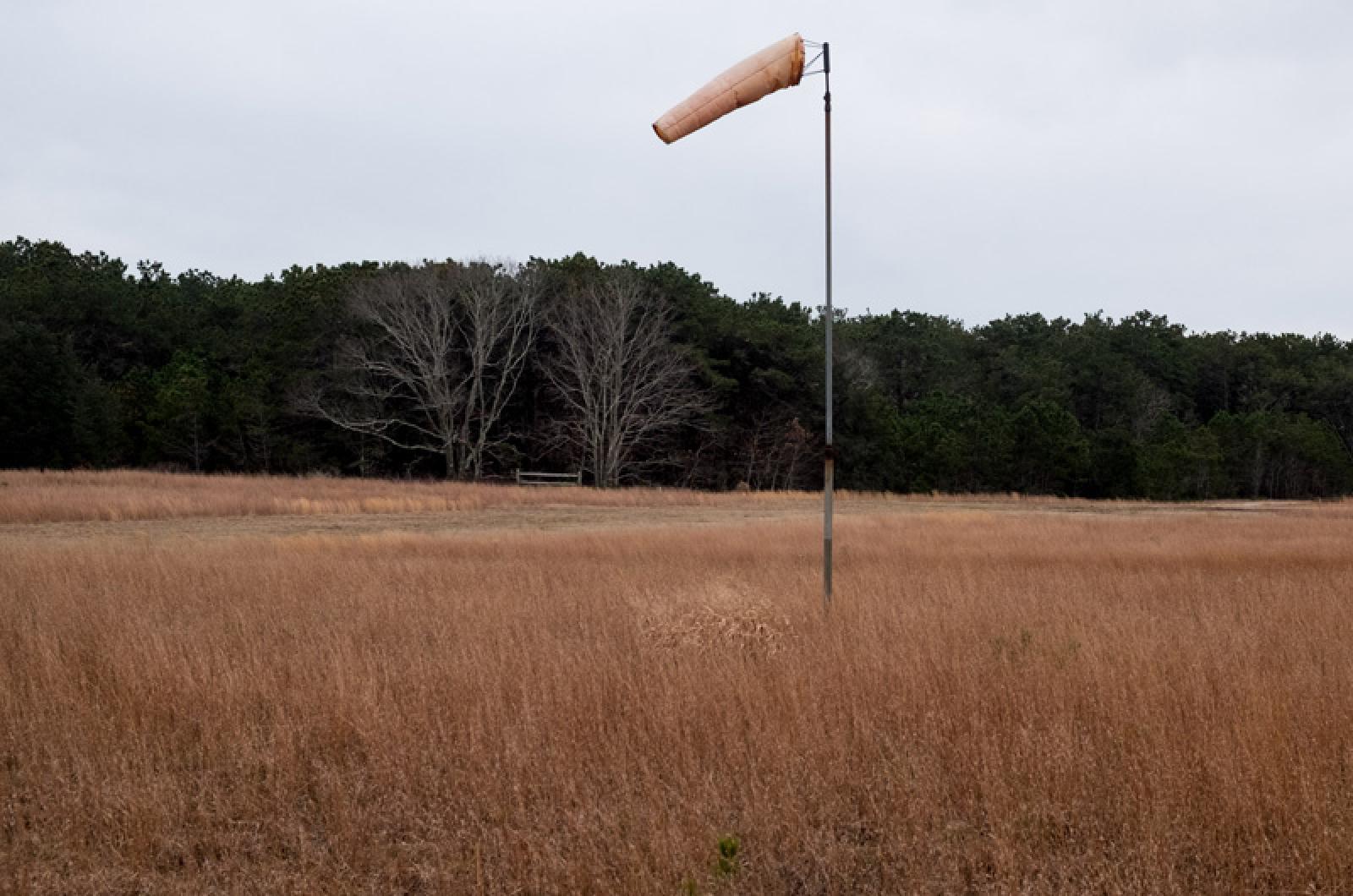
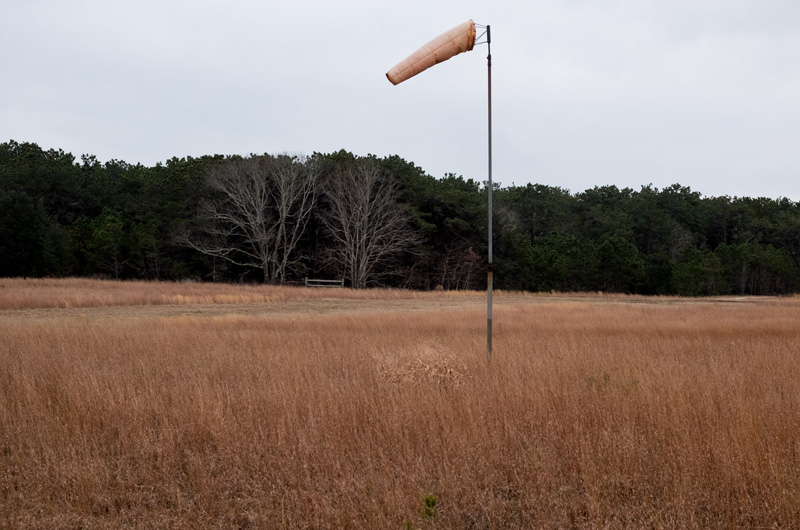
The Martha’s Vineyard Land Bank Commission voted unanimously Monday not to delay construction of a protective fence around the Trade Wind Fields Preserve in Oak Bluffs, but to design the fence as close to the open sandplain grassland as environmental restrictions allow.
In practical terms, that means the fence surrounding the preserve will be abutting the field in about half the area, and at least 10 feet into the woods in the other half of the preserve.
The land bank commissioners vote rejected the advice of the Oak Bluffs land bank advisory board, which voted last week to delay the fence construction for six months to evaluate and explore other options.
Land bank ecologist Julie Russell said a delay risks losing endangered species.
“This fence is necessary to save this habitat,” Ms. Russell said. “If we want to save the sandplain grasslands, the diversity of species in it, and do it justice, then the fence is what’s necessary. Our signs have not kept people out, our information has not kept people out.”
Ms. Russell said the land bank decision to fence off the preserve triggered an application to the Massachusetts Natural Heritage and Endangered Species Program (NHESP). That organization agreed with the land bank request to put up a fence, but required it to be at least 10 feet from any endangered species.
Sarah Thulin, a land bank commissioner from Aquinnah, questioned whether a delay was a wise decision, in light of the NHESP restrictions.
“They do give you time frames,” said Ms. Thulin. “I don’t know if delaying the fence puts us in jeopardy of losing good graces with this organization.”
Land bank commissioner Mary Ravitch from West Tisbury called the fence a reasonable course of action.
“I am not quite seeing that that use would change all that much,” Ms. Ravitch said. “It would move the trail, but the people would still use the trail. There would still be a fence but you would still view the grass plain area. It wouldn’t be open to people crossing it. I think it’s a reasonable thing to do.”
Land bank commissioner Pamela Goff of Chilmark agreed. “You have to look to the future population that is going to use the property in question,” she said. “If there is something really in jeopardy, then you have to act for the property.”
The decision did little to appease about a dozen Island residents who oppose the fence plans and attended the meeting. Some disputed the ecologist’s contention that lack of attention to signage has further damaged the conservation parcel.
“She says the signage hasn’t worked,” said Jane Hawkes of West Tisbury. “It has, that’s exactly our point.”
“She herself said she could not speak to whether it has improved or not improved because she hasn’t surveyed it in two years,” said Idalyn Gilstad of Vineyard Haven.
Comments
Land bank ecologist Julie
Philip Cordella Oak BluffsLand bank ecologist Julie Russell, what are her credentials?
Julie is a outstanding
Tim Boland West TisburyJulie is a outstanding ecologist with a deep knowledge of the Islands flora. She has a plant biology degree from the University of Vermont, but more impressive, a long history of field botany, and botanical inventorying.
She has taught numerous classes at the Polly Hill Arboretum on rare plants and rare plant habitats to both professionals
and non-professionals. She also works with the Arboretum as part of the Martha's Vineyard Floristic Research group. This group includes the Nature Conservancy, Sheriffs Meadow Foundation, and the MV Landbank. The goals of the group include mapping and monitoring rare plant species, biological inventories, and creating a awareness of rare habitat. She has discovered new records for plants that were not known to be present here. She is a extremely qualified and capable person.
Tim Boland (Botanist) Executive Director, The Polly Hill Arboretum
That is all well and good but
OB rn OBThat is all well and good but where are the stats on this particular property which the Land Bank keeps insisting is in a state of decline. How is driving on it with trucks to mow and install fencing and plane tires going to influence the species? Is this going to become just one more piece of Vineyard property that the rich , plane owners, will have access to while we, the plebeians of Oak Bluffs have to stand outside the gate?
@OB rn: I recall the Land
Neil Off Island@OB rn: I recall the Land Bank was created to preserve natural lands of the Island, to prevent loss of native flora and fauna and avoid developing still undeveloped land. Would you rather this be a golf course that some wanted? Then no walking trails for nonmembers at all.
So, will the site still serve
Maureen M Oak BluffsSo, will the site still serve as an airfield? Do the planes land on the protected area that will be fenced?
I don't know whether there
Neil Off IslandI don't know whether there were stipulations when the Land Bank was given control. I'm guessing the FAA required continued access as an airfield, meaning conservation efforts are made with respect to the possibility of planes landing. As for humans walking across what are still runways, shouldn't there be safety rules against?
There's a huge housing crisis
George OakbluffsThere's a huge housing crisis here on island, a man made problem and there's land bank commission that buy these lands for " ecological " reasons is a man made excuse. Think about who has more power in this decision process.
Where is the scientific
OB rn OBWhere is the scientific method and statistics, in Julie’s report. We need facts, not statements based on no hard science. What is the rate of decline. How many species per square meter now vs 10 years ago? Wishful thinking on the part of the land bank isn’t science.
Science then. How long for
Neil Off IslandScience then. How long for developed land to return to its natural state?
That depends on what you mean
Steve There in spiritThat depends on what you mean by the land's natural state. 15,000 years ago it was under quite a bit of ice (https://pubs.usgs.gov/gip/7000013/report.pdf), it would take a while to get back to that natural state. Perhaps you mean the natural state at the time the endangered plants first appeared at Tradewinds - I assume that would predate human settlement of the island. I suspect it will also take quite a while for the land bank to restore those conditions. Airplanes have been landing on it for almost 80 years (https://en.wikipedia.org/wiki/Trade_Wind_Airport), is that what you mean by natural state?
Add new comment