


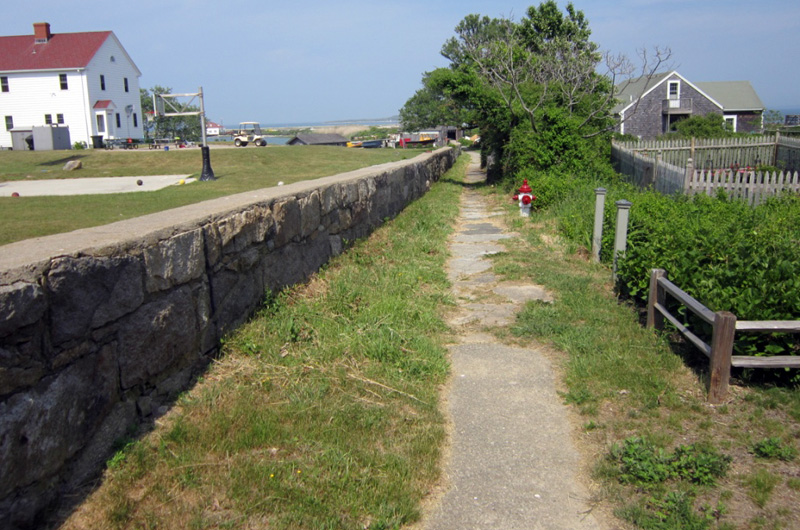
<p>Some of 20 or so year-round residents are now working to expand Cuttyhunk's population by improving services and offering more housing on the small island.</p>
Winter is an especially quiet time of year on Cuttyhunk, where the golf carts — a primary mode of transportation — far outnumber the 20 or so residents who inhabit the island year-round. Some residents are now working to expand the population by improving services and offering more housing on the small island that lies at the farthest tip of the Elizabeth island chain, just west of Aquinnah.
Staff members at the Martha’s Vineyard Commission recently spent a day on Cuttyhunk to meet with selectmen and continue working on a number of initiatives, including improved internet access, and efforts to document the island’s historic buildings and paths. The Elizabeth islands comprise Gosnold, the seventh town in Dukes County.
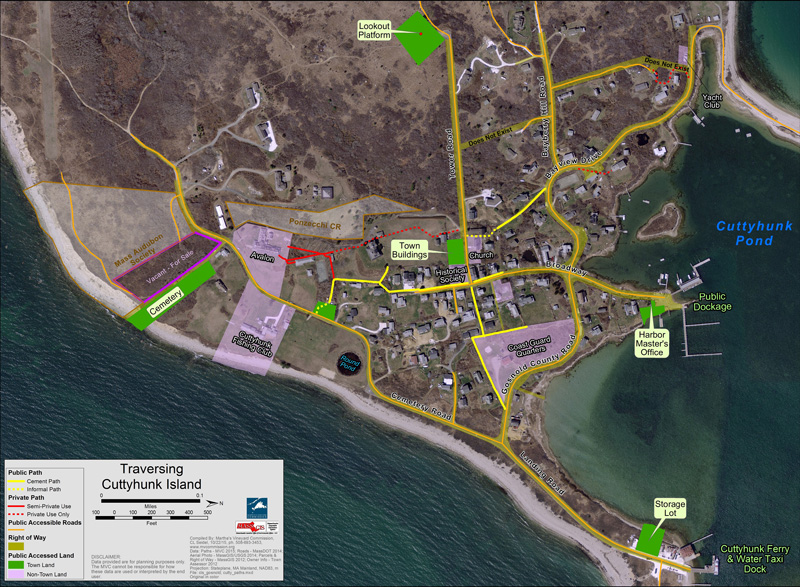
MVC is providing planning assistance to Cuttyhunk, including mapping.
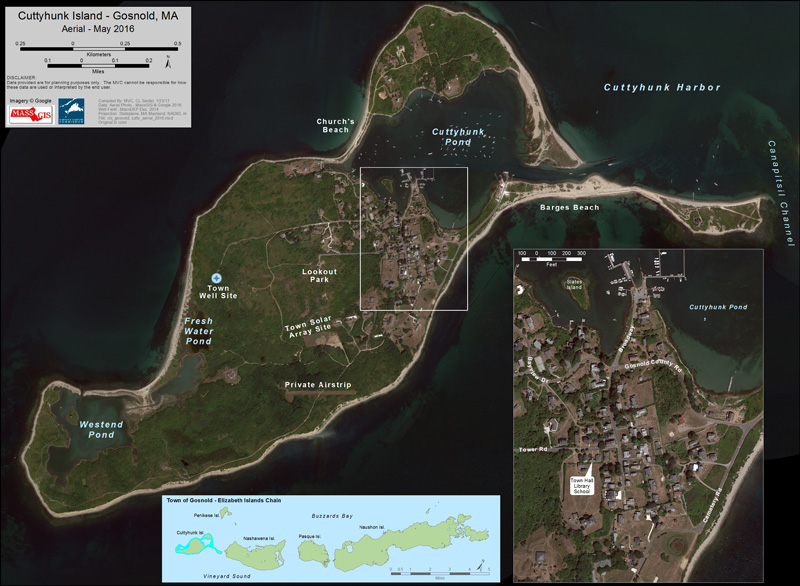
MVC is providing planning assistance to Cuttyhunk, including mapping.
Soon after arriving on the job in 2015, commission executive director Adam Turner visited Cuttyhunk along with cartographer Chris Seidel, who has been working with the Gosnold selectmen and other MVC staff members on the initiatives.
Speaking to the Gazette by telephone this week, Sarah Berry, chairman of the Gosnold selectmen, said the commission has become more of a resource in the last three years, helping the small community plan for the future, especially against the backdrop of an eroding year-round population. “The population has dwindled to about 20,” Ms. Berry said, “and we very much want to find ways to encourage people to make a living on the island and work year-round, and maybe get it back up to the 50s where it was for quite a long time.”
One of the two students in the one-room Cuttyhunk elementary school will soon graduate. “The concern is that if they don’t get some more year-round population, specifically year-rounders who happen to have some young children, then the school will close until more children show up,” Ms. Seidel said.
Cuttyhunk’s population swells to around 400 in the summer, although many seasonal residents live on boats. Ferry service from New Bedford operates once a day during the summer and twice a week in the off-season. And while a few small businesses stay open through the shoulder seasons, the island has no dedicated business district.
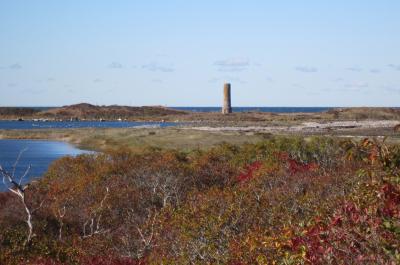
Year-round population on Cuttyhunk has dwindled to about 20 residents.
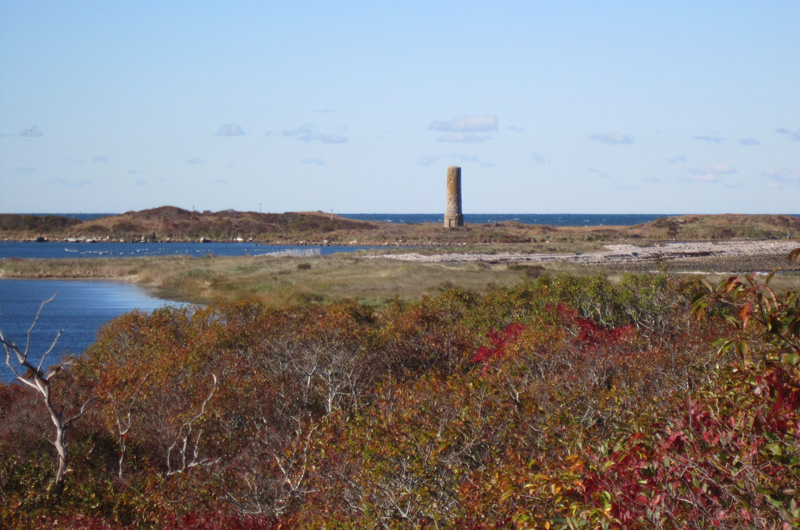
Year-round population on Cuttyhunk has dwindled to about 20 residents.
Ms. Berry said a key goal has been to draw more year-round residents and business activity by improving access to the internet. Residents often rely on their smartphones to extend internet service to other devices, and the island has no undersea cable to the mainland, limiting the options for improved service. The commission applied for a $100,000 federal grant on behalf of Cuttyhunk to expand internet access last year. The funding was denied, but Ms. Seidel said the commission may reapply in the future.
Ms. Berry said few people on Cuttyhunk are able to telecommute to work. “Even now, they have to move to the Vineyard for the winter,” she said.
Without an undersea cable, Cuttyhunk relies on its own power station for electricity, although a municipal solar array was recently completed on about three acres, which the selectmen expect to supply up to 50 per cent of the island’s electricity needs and help extend the life of the generators at the power station. “Any day now, they will flip the switch,” Ms. Seidel said in an email on Monday.
In another effort to attract year-rounders to Cuttyhunk, Mr. Turner is working with the selectmen to draft new job descriptions and salary structures for town employees, possibly with an eye toward consolidating various part-time work into full-time positions.
The selectmen and a long-range planning committee in Gosnold are also pursuing more affordable and workforce housing. Officials are working to develop a detailed inventory of buildings on the island (there are about 180) with commission assistance. The selectmen plan to meet with affordable housing planners and developers on the Vineyard in the near future to determine the next steps.
Few people drive on Cuttyhunk; walking and golf carts are primary modes of transportation.
Few people drive on Cuttyhunk; walking and golf carts are primary modes of transportation.
But more housing could also put more pressure on island infrastructure, including the sole municipal well that provides all of the island’s potable water. Looking ahead, the town is considering a saltwater inundation barrier around the well, and has plans for a hydrological study to define the limits of the aquifer and its future capacity.
As with the six towns on the Vineyard, Gosnold contributes to the annual commission budget, but only for planning and assistance. (The town paid about $8,000 last year, based on a total property valuation of about $231.7 million.) The other towns also pay for regulatory work, which makes up a smaller portion of the budget.
On another front, Ms. Seidel said a number of buildings on the island are potential candidates for the National Register of Historic Places, and the town has been waiting for funds related to Hurricane Sandy to use for an inventory of historic buildings. In addition, Ms. Seidel has mapped the island’s distinctive walking paths, which often run alongside low walls that are in need of repair. (Portions of Tower Hill Road are also slated for repair.) The commission is exploring possible funding sources, and working to identify desired easements, among other things.
Few people drive cars on Cuttyhunk’s narrow roads, opting instead to walk or drive a golf cart. Ms. Berry estimated the number of golf carts on the island — some electric, some gas-powered — at around 150. Most are stored in garages or sheds for the winter.
To help lower municipal costs, Cuttyhunk hopes to reduce the number of annual barge trips that carry waste to the mainland. The community already uses a central trash compactor, and the selectmen are looking into the possibility of smaller compactors in each home and more widespread composting and recycling.
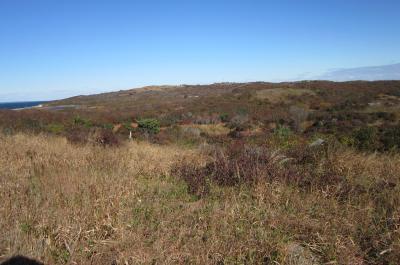
"We very much want to find ways to encourage people to make a living on the island," board of selectman chairman Sarah Berry said.
"We very much want to find ways to encourage people to make a living on the island," board of selectman chairman Sarah Berry said.
Less urgent projects include a new town library and changes to the former US Coast Guard building that now houses art exhibits and other events in the summer. The town already has permission from the Coast Guard to redesign the interior of the building, which could serve as a welcome center with small businesses. The town hopes to use state money left over from the building of a new ferry dock to help fund the project. A proposed 1,200-square-foot library would cost between $800,000 and $920,000, with the town envisioning a private funding source. Ms. Berry said the current library is straining under the weight of the collection, and that the new building would be slightly larger. She said architectural drawings have already been approved.
Perhaps most ambitiously, the town is hoping to restore two of its beaches, including a barrier beach where sand movement into the channel at Cuttyhunk Harbor could prevent access for the ferry and other boats. Ms. Berry said the Army Corps of Engineers, which manages the area as a federal harbor of refuge, added stone barriers at least 40 years ago, but that an exposed portion of the beach has begun to wash over. The Woods Hole Group has recommended beach improvement projects, but funding remains out of reach. Together, the two desired projects could total between $3.4 million and $4.3 million. “It’s kind of an overwhelming project for Cuttyhunk and its budget,” Ms. Berry said.
Commission coastal planner Jo-Ann Taylor has suggested pursuing a grant from the National Oceanic and Atmospheric Administration this winter for the beach projects, and additional funds from the Federal Emergency Management Agency in the spring.
Ms. Berry said no decisions about the restoration efforts have been made.
Comments
Speaking as someone who lived
Grant Schenckj West Tisbury and CuttyhunkSpeaking as someone who lived on Cuttyhunk for three years and actually did full time software development work from my home I can say that the reason we left had nothing to do with the state of the Internet. The reason we left was because we didn't feel safe.
Why didnt you feel safe?
John geraghty NjWhy didnt you feel safe?
Might it be the Sparrowhook
Edgartown workerMight it be the Sparrowhook Curse? Descendants of William M. Wood have many secrets.
Safe??..really...move to new
Don lynch Vineyard havenSafe??..really...move to new bedford and see how safe you feel...lol. i grew up there and out of all the places ived lived the little rock is the least of my worries as of saftey. I grew up there so yeah i have grounds to add a comment..anyhow cuttyhunk is not crime ridden, or full of heroin junkies..apparently your "safe" is unexplained. Or you just cant hack it..not too many can,takes an islander to live there, not a summer tourist for three years.
I feel safest on Cuttyhunk.
Claire Reynolds PhiladelphiaI feel safest on Cuttyhunk.
Kind people who care for each other. Everyone I know feels safe there. It is a haven to many. If my situation was different I would live there year round. Just returned from CH off season and love sereneness of the island. Truly a gem. As a summer person when it is "crowded" I have never heard of any safety issue.
I've heard ticks are really
Steve FalmouthI've heard ticks are really bad there, including lone star ticks? Also tularemia... maybe these are reasons people stay away...
I have never felt safer in my
Susan Lord Aucock Worcester MassI have never felt safer in my life when
I was on Cuttyhunk! And you just don't
go into the high overgrowth with your
dog!Guess you have to mingle with the
natives! Some great people !
The Cornell side of my family
Caleb Cornell Potter Cypress, TexasThe Cornell side of my family were raised there and I spent my summers there as a child. Great people, wonderful community and always looked out for. Safety never an issue.
Perhaps he is referring to
Rob Banks Martha's VineyardPerhaps he is referring to the lack of EMS/Fire/Police?
I grew up on the island, as
Beverly Snow West Palm Beach, FLI grew up on the island, as did 5 generations of my family before me. I feel safe in the summer. However, once everyone leaves in the Fall and the ferry switches to twice a week service, I wouldn’t feel safe either, for health reasons. I wouldn’t fear any people harming anyone, rather having an accident or a health crisis. A cousin’s
Husband had a heart attack one September weekend. It took 3 hours for Traumahawk to arrive, and by the. The EMT folks had done all they could, to no avail. Back when I was a kid, the Coast Guard Station was active, and the 40-footer could get you to a mainland hospital in 30 minutes. Once the Station was closed, the safety net is gone.
Add new comment