

The commission voted unanimously last week to designate a new DCPC to control fertilizer use. Voters in Island towns will be asked to adopt regulations this spring. The plan has strong support from boards of health, landscapers and golf course managers.
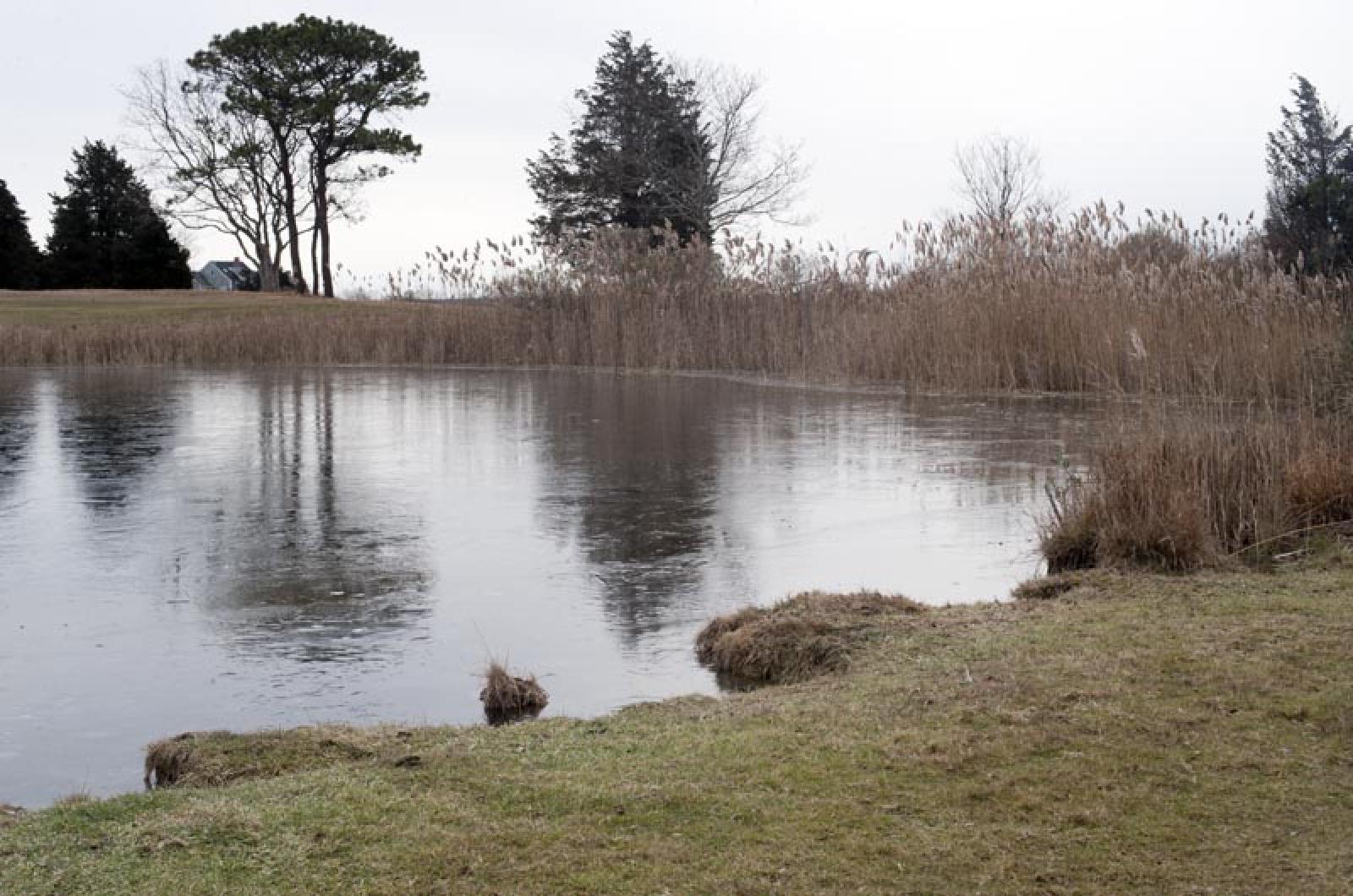
Islandwide regulation of fertilizer use, aimed at protecting drinking water and coastal ponds, took another step forward last week as the Martha’s Vineyard Commission designated a lawn fertilizer control district.
Regulations for the district are being reviewed as a potential Islandwide district of critical planning concern (DCPC), a special overlay planning process allowed through the commission. Voters in each Island town will be asked to adopt the regulations at town meetings this spring. If it is adopted, the fertilizer control district will be the first of its kind on the Island.
The fertilizer DCPC was set in motion by Island boards of health, who formed a working group to draft the regulations. In February, the commission voted to accept the DCPC nomination, which was submitted by five Island towns. The sixth town, Aquinnah, supports the plan.
“This is a chance for us here on the Vineyard to get out ahead of something that’s not staring us in the face,” said Edgartown health agent Matthew Poole, who helped spearhead the effort.
In 2012, the state began an initiative to regulate fertilizer use, and the Cape and Islands were given a window to make their own, more restrictive policies through their regional bodies.
The proposed DCPC would include all six Island towns, except for the Indian common lands and settlement lands and Noman’s Land.
“Groundwater doesn’t respect town boundaries,” commission coastal planner Jo-Ann Taylor said, noting the need to make the entire Island part of the district.
Tisbury health agent Michael Loberg told the commission that lawn fertilizers account for five to 15 per cent of the Island’s controllable nitrogen, and the DCPC was a low-cost response to high nitrogen levels found in some coastal ponds.
The regulations would stipulate that fertilizer cannot be applied between Nov. 15 and April 15, and shouldn’t be applied before or during a heavy rainfall. Regulations also stipulate the frequency with which fertilizer can be used. There are specific regulations for fertilizer use in the buffer zone close to ponds, and for golf courses. Use of phosphorus is prohibited.
Towns would be required to adopt the regulations by March 1, 2015.
There would be exemptions for home vegetable and flower gardens, landscape ornamentals, shrubs, trees bushes and container plants, agriculture and horticulture.
Landscapers would be required to take a test to obtain a three-year license to apply fertilizer; the license would be good in all Vineyard towns. The test fee would be $100, and each company can have up to eight employees working under a licensed person.
Mr. Loberg noted that the financial penalties for failing to follow the regulations are not high, but the regulations would also be informally enforced neighbor to neighbor, landscaper to client, retail to customer and community associations to community.
Violations would tallied within a 36-month period; the first violation would be a written warning, the second a $50 fine and the third a $300 fine. Violations would not travel across town lines.
Commissioners expressed concern that the penalties were too lax.
“You could get six written warnings,” commissioner Doug Sederholm said. “If you do it again it should be a second violation, it shouldn’t be your first.”
Town health agents said they only have jurisdiction in their own towns.
In addition to Mr. Poole, Mr. Loberg and other board of health representatives, the working group that drafted the regulations included landscapers and golf course representatives. Several members of the landscaping community attended the meeting Thursday.
“I think it’s great,” said Jude Villa, owner of Working Earth Organic Gardening and Landscaping. She said she’s already been working on her own practices to control nitrogen. “It’s not going to be perfect but it’s a good start and it’s just going to be tweaked over the years.”
Mink Meadows superintendent Matthew Crowther said his pet peeve was being retested every three years noting that drivers don’t retake a drivers license test every three years. “We’re not all thrilled with every aspect of every part of this process but we all walked away with what we thought we could do,” he said.
“I’m just so impressed with the buy-in that the working group got,” said Martha’s Vineyard Water Alliance chairman Megan Ottens-Sargent.
Mr. Loberg complimented the technical feedback received from golf courses and their willingness to participate in the process. “I happen to think the regs are good but they’re not perfect and there will be people on both sides who think they’re not perfect . . . all I would say about the process is that we shouldn’t let perfect be the enemy of good,” he said.
The commission voted 11-0 to approve the designation of the proposed district and agreed that the regulations conform to guidelines.
Comments
Excellent, and shows real
CarolExcellent, and shows real leadership. Great decision.
I doubt the island's homes
Louis EdgartownI doubt the island's homes that are closest to the sea are going to give up on the lollipop-green lawns and sprinkler systems that flood the grass even in the rain. I think real change will only happen when lawns are replaced by new trend in ground covering. They are currently seen as an integral part of a yard. What they really are is a losing battle against nature. Natur always wins.
Thank you Michael Loberg,
Richard toole oak BluffsThank you Michael Loberg, Matt Poole and all others getting this to this point and the MVC for supporting it.. Please, all voters go to your town meeting and vote for this!!!!
i ved been using this
keith kensington ct.i ved been using this fertlizer for years from mr. jon fragosa @fragosa land and tree. in west tisbury...just thought you should like to know, they have the best price too !!!
Testing every 3 years is
Elizabeth Toomey West TisburyTesting every 3 years is rather silly. I suggest retesting every 5 years like commercial kitchen workers are required for Serve Safe. Can we regulate herbicides and pesticides, too?
I am pleased this discussion
Kristin Henriksen Vineyard HavenI am pleased this discussion has been initiated and the process of protecting our land and water from nitrogen overload is moving forward. Although, as a landscaper for 20 years, I think the exception for ornamentals and perennial beds is unnecessary. I also think many people would support a ban of inorganic pesticides and herbicides and that sounds like a great place to visit in the future conversations.
Excellent - can we take the
MA Whitton Chilmark + Greenwich VillageExcellent - can we take the next step and ban glysophates and other pollutants to our water supply? 'Cause without water= game over.
Add new comment