

I’m a lifelong Chilmarker. Growing up, Nashaquitsa Pond and its surroundings were my world. I consider myself both fortunate and extremely blessed to have had the opportunity to play amongst those hills as a child. This is where I was raised. This is where my father grew up, where my grandfather and great grandfather grew up . . . all the way back to the home of the first Benjamin Mayhew, whose father, John, was Chilmark’s first English settler.
I’m a lifelong Chilmarker. Growing up, Nashaquitsa Pond and its surroundings were my world. I consider myself both fortunate and extremely blessed to have had the opportunity to play amongst those hills as a child. This is where I was raised. This is where my father grew up, where my grandfather and great grandfather grew up . . . all the way back to the home of the first Benjamin Mayhew, whose father, John, was Chilmark’s first English settler. My Island roots reach back 370 years.
Over the generations my family has lived, loved, worked and helped contribute to what these days many like to call “the character of Chilmark.” We were fishermen, sheepherders, hunters and farmers. We’ve witnessed huge waves of change, as up-Island actually became a desirable place for “mainlanders” to vacation in the summer (it wasn’t always so) and then to buy property for second, third, or fourth homes and now a few not-so-humble palaces.
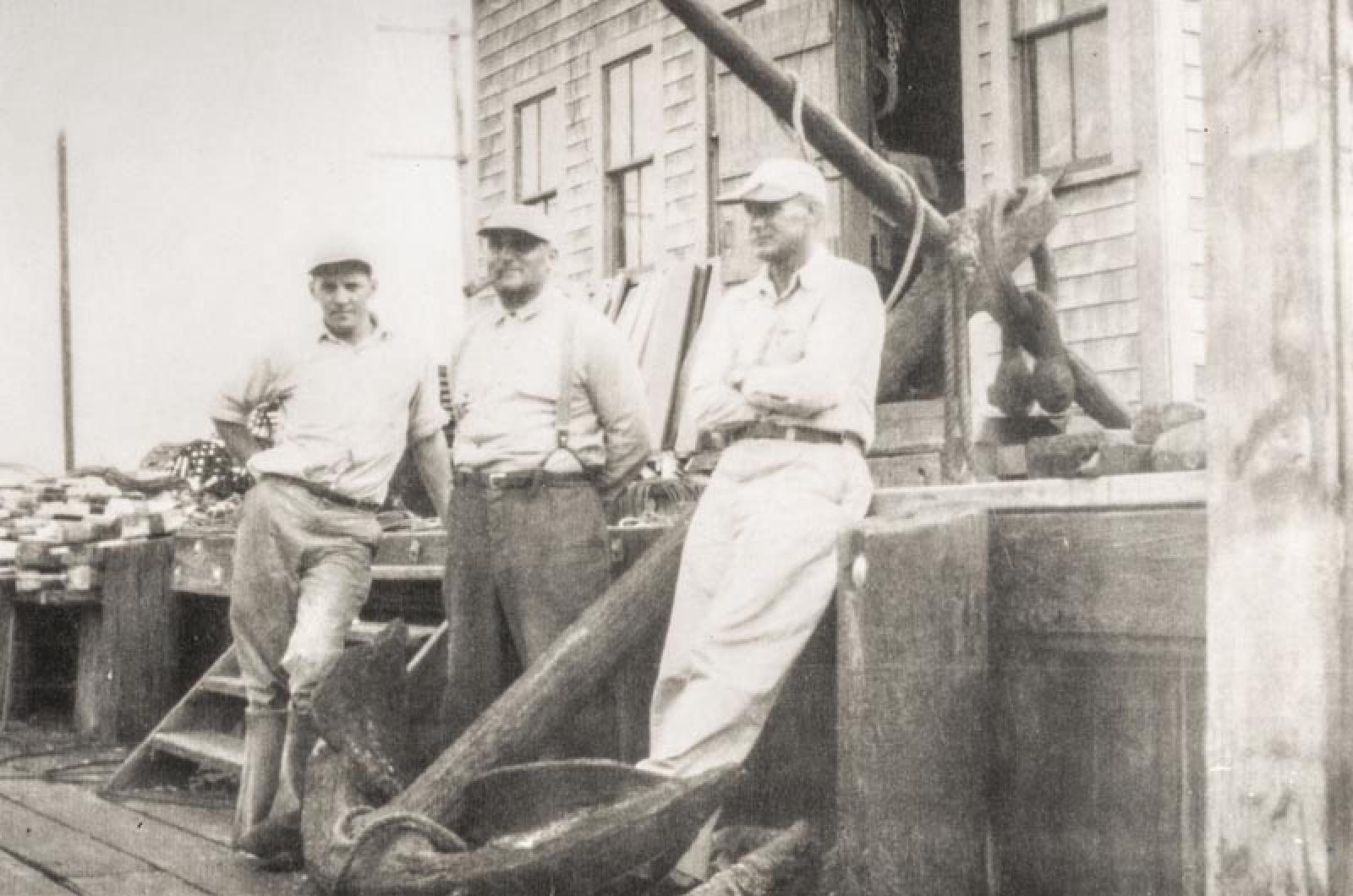
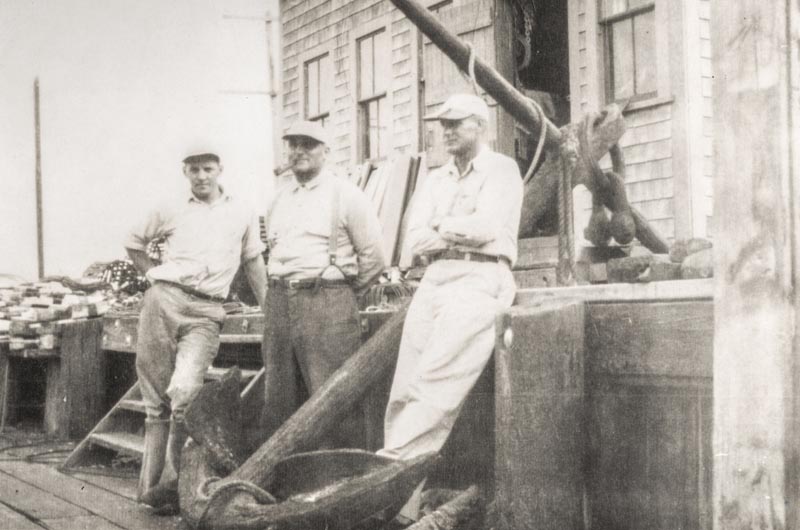
My Grandpa Mayhew (Benjamin Carleton Jr.) and Grandmother Mayhew (Eileen Sullivan Mayhew) raised their children in “old Chilmark,” near the Quitsa overlook. The surrounding pond was largely undeveloped. Across the way were some close friends of the family, including the Pooles. Grandpa was a local swordfisherman, lobsterman, caretaker and our state representative for a period of time. I always wonder what his view on today’s Chilmark would be. Unfortunately, he died seven years before I was born.
When I was young, Grandmother lived at the top of our dirt road in the Big House where dad grew up. Uncle Skip, Aunt Eileen and Uncle Jonathan all had homes along our dirt road from subdivisions of the property they grew up on. As a boy, it was a wonderful feeling having so much family around. My cousins and I used to run around, exploring the natural world and exhausting ourselves until the sun set or our moms called us back for supper.
Clam Point Cove, Quitsa Pond, July 1942.
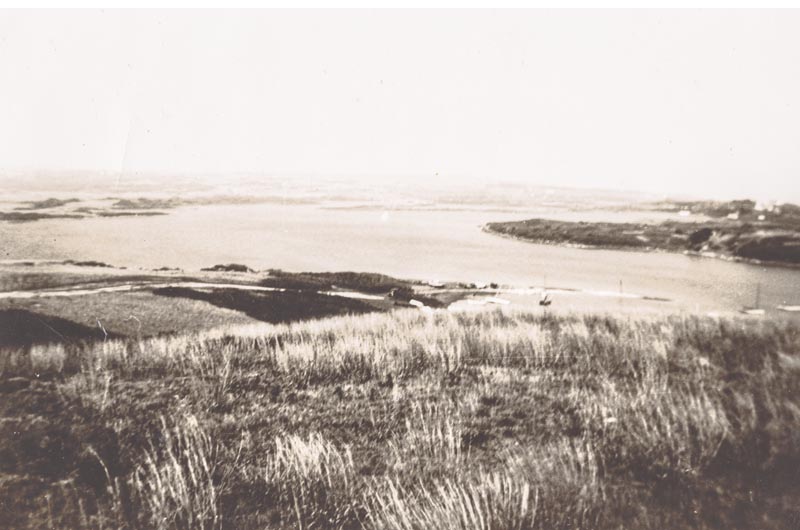
Clam Point Cove, Quitsa Pond, July 1942.
As a kid I remember noticing some changes on the other side of Clam Point on up to the Quitsa Bridge. The landscape appeared to be sprouting some other buildings. I would later earn summer money mowing lawns and cleaning houses over there, the Iscol house included. Trespassing on summer properties became an enjoyable off-season pastime. It fascinated me to hike around and see what these “strangers” did with their landscaping and house design. It astonished me how much some people had, even if they were only around a few weeks a year, but it seemed like this was the natural state of things somehow. Everything is always changing. And some folks just have more than others (myself included).
I remember learning that all the undeveloped land on the other side of the pond became James Taylor’s and then that Aunt Ernestine would be selling her property. Then Uncle Skip needed to sell his home at the top of our road. Grandmother was getting older and her house soon became a rental house. Many around here now refer to it as the Wedding House. Aunt Eileen died and her home was sold, torn down, replaced.
Trouble with my father’s health, combined with exceedingly complicated commercial fishing regulations and expensive boat maintenance, made selling our home an eventual necessity, too.
I mourn some of these losses but am grateful for the many good times we all had there. I’m saddened not at its sale so much as for the strife such difficult decisions can cause within one’s consciousness or within the family and community. The place where one was raised can feel like an old friend or family member.
Looking back, I believe my parents held on as long as they could in what Joel Harrison calls “a kind of no-man’s land between loving and leaving.”
Joel wrote a piece for the Gazette last summer titled, “Taking Stock in a Village, Razing a Home.” I appreciated hearing his perspective and was touched with its honesty. He is the former owner of what is now the infamous Zoia property overlooking Quitsa Pond.
“Many Island families have dealt with this scenario,” wrote Joel. “And more will soon enough.”
For me, this scenario is compounded by the fact that as this process occurs — as families can no longer make sense of holding a family property or can even afford to hang on to the lands they’ve been stewards of for generations — they and the year-round community here are beginning to realize a type of loss of self. It’s more than a material exchange when someone buys a property, tears down a home and builds a new one. I believe members of the community here (and elsewhere) are beginning to really reevaluate our connection to things, to the history of a place, to the living things around us, to those who came before us and those who will follow. For many of us, these things are sacred.
The new Zoia development appears to be the opposite of all these values, an enormous compound that was seemingly constructed by slickly navigating the limits of current regulations and throwing aside any consideration for the unique history of stewardship of the land or its neighbors. Now it sits, like a boil in the side of these ancient hills, and the family doesn’t understand why anyone is upset. Their lawyers have repeatedly reassured the community that they abided by all applicable zoning laws at the time. It’s true. The place is completely legal.
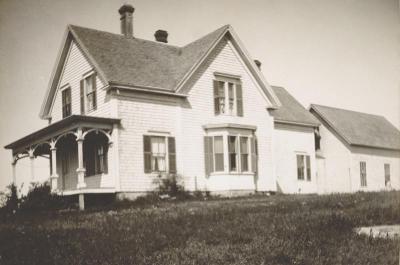
The old Mayhew homestead know as the Big House, circa 1901.
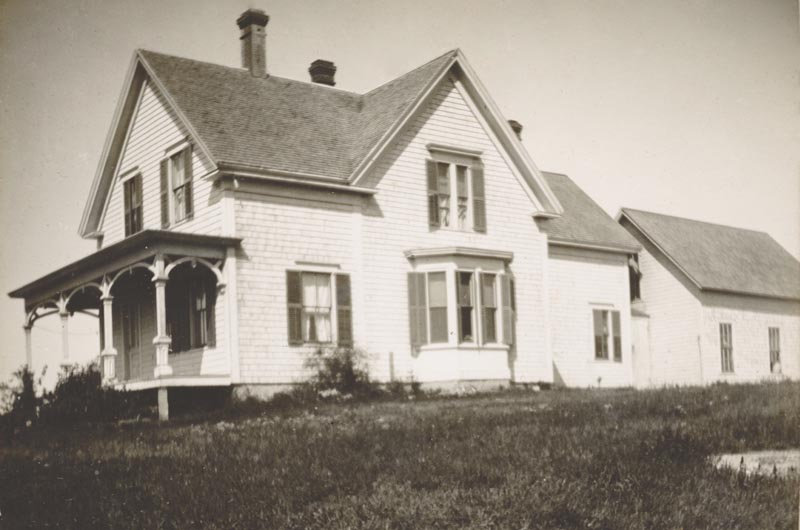
The old Mayhew homestead know as the Big House, circa 1901.
This has become the tipping point for a groundswell of agitation. There’s a general feeling that these oversized houses are somehow sneering at the working class who helped build them, yet others argue that they are good for the local economy. Then there’s the fact that they are environmentally greedy. But at this point you can be environmentally greedy if you can afford it, right?
It starts to become a classic debate over supporting a culture of material wealth and “freedom to do what I want no matter your opinion or the cost” versus a culture of environmentalism, justice and equality that says “let’s create an ever-expanding labyrinth of rules and regulations to protect each other from all possible exploits.” Angers have escalated, and all sorts of rhetoric is being thoughtlessly thrown around: “class prejudice,” “witch hunt,” etc. There is surely some of that here but all of this is just inflammatory and misses the point. The Zoia fortress is a sign of disconnect. And if that is a sign of things to come, the better part of the community is scared.
So now we have a very dedicated group of forward-thinking Chilmarkers who have been working hard to process what seems wrong with this and to come up with some kind of protections to keep this from continuing in the future. Currently they are proposing a zoning bylaw that would limit the square footage of “livable space” one could build based upon a formula they’ve devised from the size of your lot. I find this a valiant effort and applaud them all for finally shining a spotlight on this thing.
For me, the issue has less to do with square footage, though. You could build a 3,500-square-foot structure in the wrong place with no regard for its history, your neighbors, other people’s views or the environment and it would still just be another fresh wound helping to bleed out the very soul of this place. Why is 3,555 square feet not okay when 3,500 square feet is? I can respect that this is intended to slow things down so there is less likelihood the community will somehow feel hoodwinked later, but then what would the review process for special consideration look like? Wouldn’t people who can afford large properties simply be able to subdivide or use some other method to skirt around these bylaws? Why do those with lots under three acres get a decrease of 250 square feet of permissible living space per acre? Surely those with youth lots and resident homesites aren’t going to build Hampton-style megamansions?
I personally cringe at excessive regulation yet understand why so many get created for the sake of protecting ideals. This is good, but tricky because we have to agree about our ideals for this to work. I believe the newly-proposed zoning bylaw has most of our ideals at heart, though I’m not so certain I like its gray areas. Even if it passes, it only lightly touches the steering wheel in Chilmark’s pilothouse. The Chilmark of our ancestors is no more. We’re all onboard, many of us throughout the year. The ship seems to be drifting. Do we trust these currents or want to wrestle control? If we wrestle control, how are we setting our compass?
Comments
Great commentary. I'm a
Bob Giordano North Shore Long IslandGreat commentary. I'm a summer visitor but your feelings are a carbon copy of what's going on in our beach association, founded around the turn of the century here on Long Island. People maximizing build-able lots within and to the fullest extent of town codes. Gone are the smaller homes on large lots.
Get proactive, I've seen what it did to the East End of Long Island in Montauk. Now a chi-chi town that has some fishing where it once was a fishing town with very little to any fashion, style and place to see and be seen.
Right on Jeremy! Let's not
Janice Bianco Garfield Heights OHRight on Jeremy! Let's not ignore our past for the sake of "more, bigger economy".
Thank you, Jeremy, for
Liz Witham AquinnahThank you, Jeremy, for putting in to words so beautifully and honestly what is so difficult to articulate. I am right there with you, hoping that we can find the way to hold on to what we treasure about our home.
Well put Jeremy. If I might
Katherine Mayhew May-Waite Oak BluffsWell put Jeremy. If I might add as the last hold-out to selling my mother's (your Aunt Eileen) Clam Point home - she died in January 1999 and the house was sold in March of 2008 -sadly enough, sheer determination is not enough to overcome the forces you write about.
A well written essay showing
Susan Racine East Northport, NYA well written essay showing the struggle that all homeowners face as their community becomes "the place" to be by people of greater means.
Katherine, as I read your comments I realize that I may have known your mother. Did she ever live in Amherst? If so, I knew her 20 years ago before I moved to New York. She was alway kind to me, and shared some of her wonderful recipes. Her fish chowder was my family's favorite Christmas Eve dish.
Good piece here as it's
Steve Metcalfe ChelseaGood piece here as it's jarred loose a few thoughts in the noggin. First off, I'm not, but if I were Native American, I might read this and think to myself: "Well, now you know what it's like to lose your ancestral lands."
Secondly, your family got 370 years on the Island. My son and I had 14 years before crazy real estate costs forced us off. I'm grateful for the decade-plus I enjoyed there.
Finally, it seems to me that Islanders who are landowners walk around with 2 brains. In one, they calculate their equity (a half mill, maybe $1.5 million and up) and feel pretty satisfied. In the other brain, they fret over the greed taking over the Vineyard. It's an interesting place to live. Back here on the mainland, the world is teeming with people who lost their homeland, cut off from family and ancestral lands -- they're called immigrants and refugees. More food for thought. Thanks for the essay.
You lived on island 14 years
Katherine Mayhew May-Waite Oak BluffsYou lived on island 14 years and never learned about the Wampanoags and refer to them only as "native Americans"? You say we have two brains and feel satisfied? You say we are only calculating the money ... that's an
off island attitude... you're not understanding what my cousin is saying...
The beauty of a good writing
Steve Metcalfe Chelsea, Mass.The beauty of a good writing is that it evokes different responses in readers, not carbon copy impressions. My reference to Native Americans was meant generally, not specifically to Gay Head Aquinnah Wampanoags. I've been on reservations in the western U.S. and seen real poverty, sadness and loss.
And all I was suggesting to Jeremy and other readers is a different perspective. You say off-Island as if it's a despicable state of being. It's just a different context which shapes different perspectives. Jeremy, as a filmmaker, can likely appreciate that. Change, market forces, capitalism, war, politics, crime or rising sea levels ... shift people's lives. It could be the guy I know who fled Honduras and lives in Chelsea, never gets a day off from working 2 jobs. Or it could be Jeremy, wanting to salvage what's left of a meaningful community he knew as a boy and as a younger man.
I applaud you for bringing up
BetsyI applaud you for bringing up the issue of taking that land over from the Wampanoag. To the writer: Cry me a river, being born into a privileged family is not an accomplishment. Move to somewhere less beautiful, far less popular with billionaires.
You're missing the point...
Katherine May-Waite Oak BluffsYou're missing the point... you don't understand the point... you're from "off-island" and yes, I am implying all that's despicible with the "off-island" reference, $$$ is what drives "off-island" and its been on island for decades, but that doesn't mean I have to like or accept it... you've obviously lived on island enough (14 years) to understand that I'm blatantly making a slur. And as for the other "off-island" comment, read a little more about the Wampanoag/Mayhew relationship through the centuries. I'll entertain criticism from Jason Baird, and anyone with the last name of Vanderhoop, Manning or Smalley, etc. but not from you. Our Grandfather, the late Rep. Benjamin Carlton Mayhew, Jr. is still the only white male pictured in the showcase at the Aquinnah Restaurant. You deny our roots and call us "privileged?" You don't know anything... I've lived here 22 years and summered here all my life and I'm not an "islander" - I know the true definition, I wasn't born here, I didn't grow up here... I'm not an islander... just related... Why don't you move "somewhere less beautiful with far less popular with billionaires?" My mother grew up in Chilmark without electricity "Betsy"... is there no one who remembers? Before there where "billionaires" and "Betsy"s without last names? Is there no one who thinks wealth has corrupted the island and displaced our children?
"What will grow after the roots are severed?" The question is broader than just the Mayhews, there are island and native (Wampanoag) families in every town...
Beautifully written piece.
Shelley Chilmark and Pound Ridge, NYBeautifully written piece. Although we have only been in Chilmark since 1992, we see vast differences as we drive around. Changes have even come in what was a simple pleasure of going to Lucy Vincent Beach. Hopefully some regulation will encourage more discussion and changes.
With all due respect, Shelley
Gregory B. NY- Paris- Tokyo- St.Barth's-Martha's VineyardWith all due respect, Shelley. I am not quite sure you have truly tapped in to depth of this very personal and Oh so meaningful piece. I am afraid that the "what was a simple pleasure of going to Lucy Vincent Beach" pre-dates 1992 by at least a full decade, if not much more. Be that as it may, although my feet are not now on Vineyard soil, my soul is, as it was born and raised there. But I became overwhelmed by the need for the restrictions, and a few other things, to the point where it was already too late to fend off what had become of what Martha's Vineyard was for me. But every so often I get a chance to smile through the tears when I think of the time when someone asked "Pops" (Louie Armstrong, for the uninitiated) "What is Jazz?" His response? "Baby, if you gotta ask, you'll never know !"
Fabulous letter. I am both grateful and humbled to have read it.And ya'know, there are a few places on the island where I'd love to just sit down at dusk, bathed in that Vineyard late day light, and re-read it. That is, if those places still exist by the time I get back there.
A beautifully written if
Alex Friedman EdgartownA beautifully written if heart-wrenching piece, Jeremy, and kudos to the Gazette for publishing ... thank you for your thoughtful articulation. Crossing Vineyard Sound at night during the off-season, notice how many of the giant trophy homes are dark; the Island has inexorably become a status symbol, and for those who still struggle to live here but make their living off the service of these ever-increasing "seasonal residents", ask yourselves, "at what cost?" According to the recently published historical census in this newspaper, the Vineyard saw little if steady growth between the 1930's and 1970's ... the true community is being bought out and squeezed away. At what point do the mega-millions, mega-egos and mega-mansions finally extinguish what precious little true character is left? I fear the tipping point is near, and lament the progressive Hamptonization of Martha's Vineyard ...
i think the key difference is
gabrielle whitcombe aquinnahi think the key difference is that when you truly know and love a place and the community born from that place, you respect the values and traditions beyond your own self interest. Whether or not one can legislate such a sentiment is debatable, but its a good first step. After all, many people objected to the creation of the MVC and the landbank tax; and yet these mandates have proven immensely worthwhile. When we protect land, not only do we protect a natural resource but we protect a way of life and for that I am forever grateful.
Thank you for an excellent,eloquent piece.
This is beautifully expressed
Kate Putnam EdgartownThis is beautifully expressed. I grew up running around with my cousins in Edgartown and remember halcyon days. I also remember trips to visit my great, great Uncle Charlie in Chilmark as time for running barefoot in the woods, playing in the stream and watching Uncle Charlie in his 90's walk with us and point out places to go. One day he appeared in his doorway wearing shoes, which I had never seen on him. He needed 2 canes. Looking at my astonished 8 year old face, he explained that when his toes could not touch the dirt, he needed canes and he needed to wear his shoes to go to Vineyard Haven. Some of Uncle Charlie's land is in conservation, but most is now dotted with summer homes. The same is true in Edgartown, where we have an architect who gets pad by the yard and therefore maximizes the building envelope without regard to neighborhood fit. My. Mayhew says boil - I say the beautiful face of the Vineyard is covered with pimples. I don't know how you legislate or regulate taste, consideration or thought for long term consequences when short term pleasure can be gratified.
I love this piece -
Jane Flanders Majewski ConnecticutI love this piece -
It illustrates the very feelings I have of the vineyard- my grandfather was also born in chilemark on a kitchen table- and his mother is a mayhew.
Going up island to new lane as a child- hearing the history of my family/- gave me a deep sense of belonging-
The pain of the cottage being sold- torn down and some other building that doesn't even look like it belongs on the island- was heart breaking. Not being able to take my kids to grampa and grampa cottage - waking to alleys - picking blueberries is a huge loss.
Here in Connecticut we are caught up in the rat race of work- shopping at chain stores - ans living the American materialistic dream.
Gone are the simplistic summers walking barefoot in grass that was prickly and sandy- of connecting to the rhythms of nature-
Privileged family has nothing to do with this article! Lol
Simplistic summers relaxing at the shores and connecting to family members cost nothing-
Yet the cost of those days gone are not calculatable -
For me the rock is going "home" yet I was born in Hartford - and never held a vineyard residence-
I pray too the balance gets worked out-
And save our lighthouse from collapsing ! Lol
Thank you for writing.
Been coming to Chilmark for
John Moore MiltonBeen coming to Chilmark for summers since in-utero some 55+ yrs ago and even lived year round for a short period after college. Like others, have seen so many changes to this land I call home (my father was in the military, only Chilmark has been the one constant in my life and where I will eventually be buried when that time comes.) Some of these changes were expected, but not all welcomed. As Gabrielle put so well, can you legislate to have people understand a sense of place, what makes it special, what gives it its unique character? I tend, for better or worse to believe that by and large, people will do the right thing if they take the time to understand and I would like to believe that legislation is not required. Unfortunately, direct experience has taught me as in the case of the Zoia property and similar situations played out elsewhere, there are those with such large egos, they simply cannot see beyond themselves leading to their desire to for example, create mini-mansions to themselves that honor their perceived greatness. Thus the need to legislate to preserve what those of us hold dear. Thank you Jeremy for this articulate letter.
Island native. Looking for
M. Bernadette Davis 6999 Maplewild road, Nichols S.C. 29581Island native. Looking for pictures of my family. My grand parents raised me ,know news as Major JLabell. I would love to have any pictures or info .
Add new comment